Bacterial Wilt on Pothos: Causes, Checks & Fixes
Quick answer
True bacterial wilt on pothos is caused by Ralstonia solanacearum-a soilborne bacterium that blocks water flow, turning leaf and stem veins black while vines collapse on moist soil. First step: isolate the plant immediately before touching other pothos or aroids.
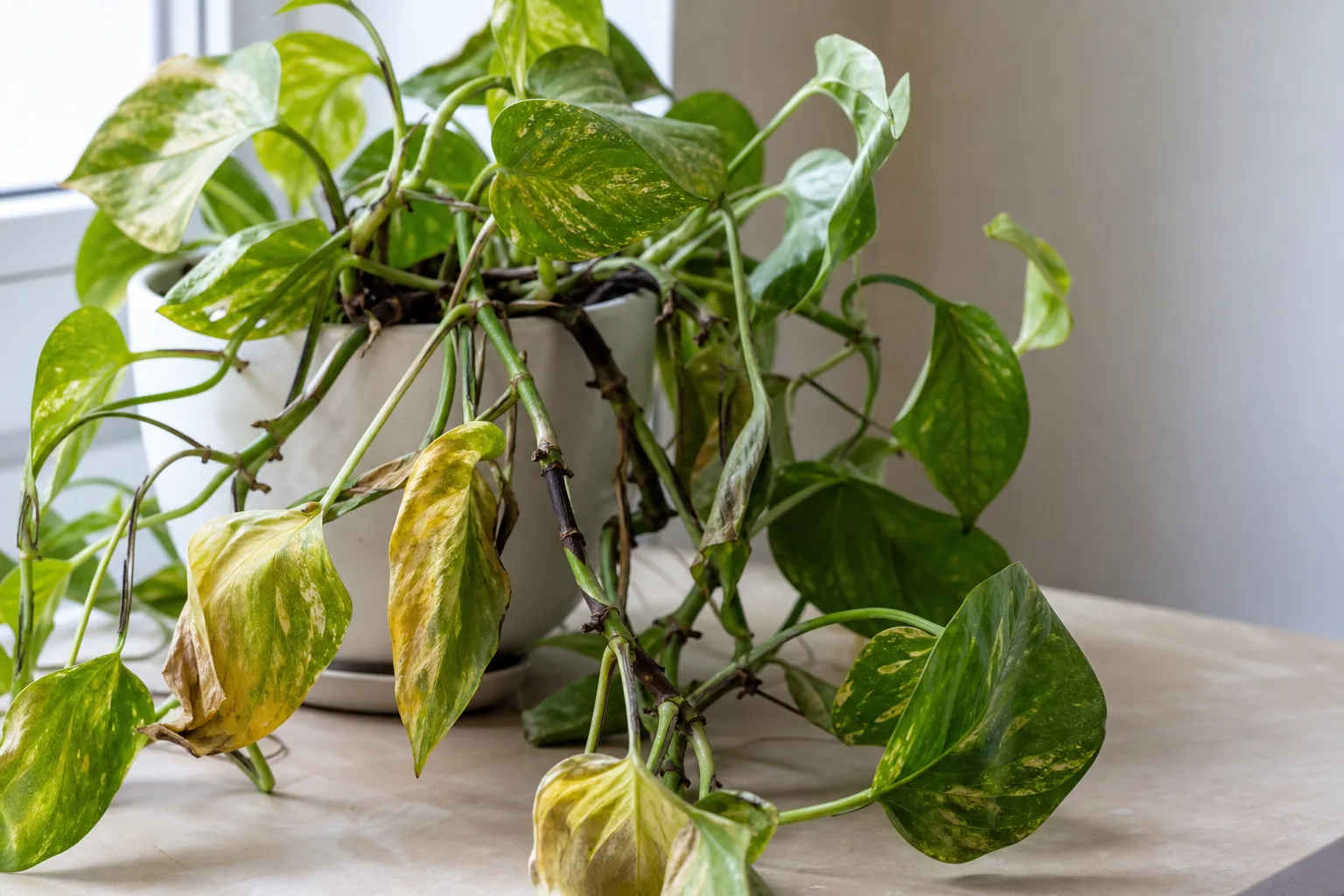
Bacterial Wilt on Pothos: Causes, Checks & Fixes
This guide covers bacterial wilt on Pothos. See also the general Bacterial Wilt guide, watering, and light pages for this plant.
Bacterial Wilt on Pothos: Causes, Checks & Fixes
Quick answer
True bacterial wilt on pothos (Epipremnum aureum) is caused by Ralstonia solanacearum-a soilborne bacterium that clogs the vascular system so water cannot move, even when the mix feels moist. On pothos, the telltale pattern is wilting vines with blackened leaf and stem veins, sometimes with sticky bacterial ooze on freshly cut stems.
First step: isolate the plant away from other pothos, philodendrons, and aroids before you water, prune, or repot. Bacteria spread through contaminated water, hands, and tools. Do not add fertilizer or mist hoping to revive collapsed tissue.
What bacterial wilt looks like on pothos
Pothos wilts from many causes, but Ralstonia wilt has a distinct vascular signature documented on commercial pothos production:
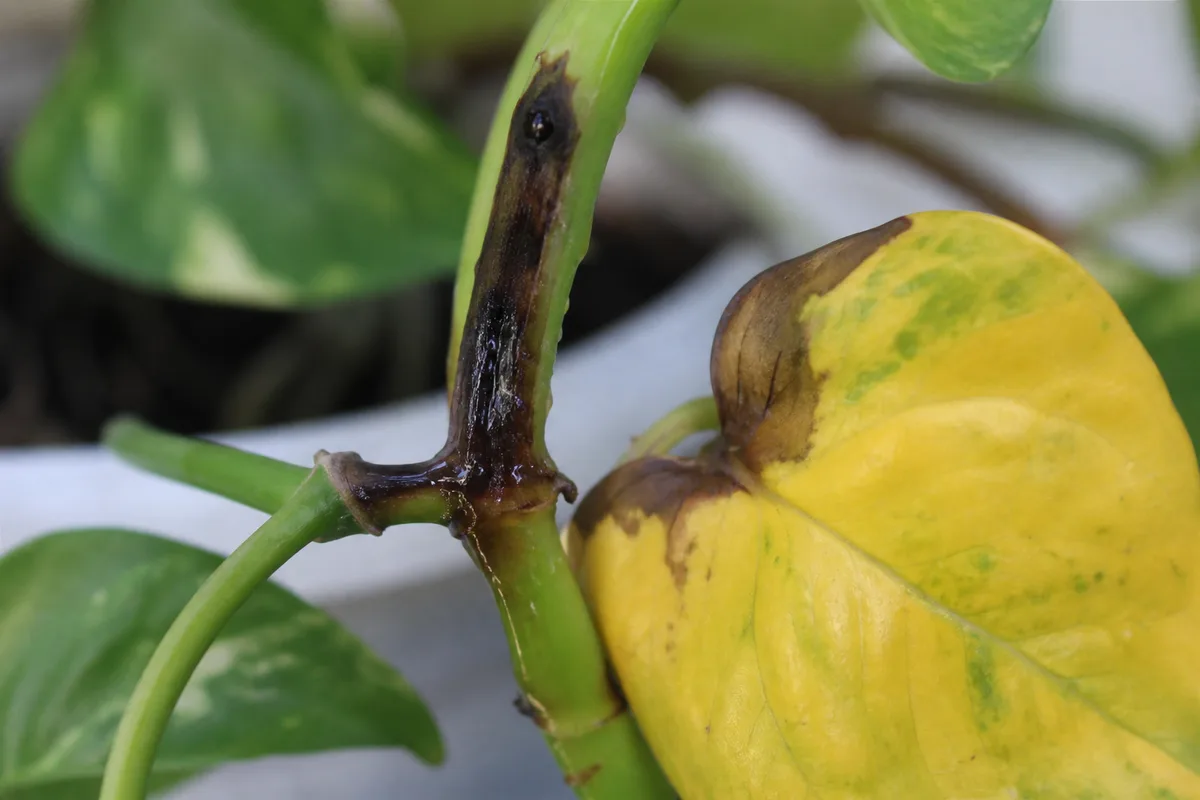
Bacterial Wilt symptoms on Pothos - compare with healthy tissue on the same plant.
- Wilting leaves and limp vines while the root ball is still damp-not the light, crispy collapse of drought
- Black discoloration along leaf veins and stems-a key pothos-specific sign that separates this from Phytophthora root rot on Pothos, where leaves turn dark brown but veins do not blacken
- Bacterial ooze on recently cut stems-a slimy white exudate that may also stream into water during a stem-cut test
- Rapid decline during warm weather, when symptoms are especially severe and plants may wilt during the hottest part of the day yet appear slightly recovered overnight
On mature home pothos, symptoms often start on one trailing vine or a section of the plant before spreading. In propagation setups, infected single-node cuttings may fail to root entirely, with losses approaching total crop failure in warm, wet rooting beds.
Lower leaves may yellow or brown as xylem blockage advances. In late stages, stems and roots brown and collapse, and the plant can die within one to two weeks of obvious wilting.
Why pothos gets bacterial wilt
Pothos is a tropical Araceae vine that tolerates a wide indoor range, but that resilience does not protect against systemic bacteria once they enter the vascular system.
Ralstonia solanacearum in pothos tissue
The bacteria Ralstonia solanacearum causes bacterial wilt on pothos. The pathogen is soilborne, enters through root hairs and wounds during handling or propagation, then multiplies inside stems. As it clogs vascular tissue, water transport fails and leaves wilt despite moist soil.
Warm, wet conditions
Disease development is favored by warm temperatures above 85°F and wet soils. Pothos in sunny windows, propagation trays, or summer patios meets that profile easily. Overhead watering, shared saucers, and pots that stay heavy for days give bacteria passive transport through irrigation water and splashing.
Infected propagation material
Much commercial pothos stock arrives as imported cuttings. UF/IFAS documents bacterial wilt most commonly at the single-node rooting stage, meaning a healthy-looking cutting purchased online or from a big-box store can carry latent infection. Home collections rarely develop wilt from scratch-they usually receive it on new material or contaminated tools.
Wounds and crowded shelves
Pruning reverting vines, Pothos repotting guide, or snapping stems during moves opens entry points. Crowded plant shelves slow leaf drying and make it easy to handle one sick pothos, then touch a healthy monstera or philodendron with the same hands.
How to confirm the cause
Work through these checks in order before repotting or spraying:
- Isolation check - Note whether wilting is on one vine or spreading across the whole pot.
- Pot weight and moisture - Heavy wet mix with limp vines could be root rot or bacterial vascular blockage. Light dry mix points away from bacterial wilt toward drought.
- Vein color - Lift a wilted leaf and look at the underside. Blackened veins in leaves and stems strongly support Ralstonia on pothos. Uniform brown leaves without black veins fit Phytophthora better.
- Stem firmness - Pinch stems at the soil line. Soft mushy tissue with sour smell suggests fungal root or stem rot. Firm stems with black streaks and wilting leaves above suggest bacterial vascular infection.
- Ooze on fresh cuts - Snip a wilted stem. Bacterial ooze on recently cut pothos stems is a strong field sign.
- Streaming test - Place the cut end of a wilted stem in a clear glass of water. Milky white strands streaming from the cut within about 15 minutes are presumptive confirmation of Ralstonia.
- Recovery pattern - If the plant perks up after the soil dries for several days, overwatering or root rot is more likely. Bacterial wilt often wilts again when temperatures rise even though soil is moist.
Positive streaming or obvious black-veined collapse is enough to act-even without a lab diagnosis.
First fix for pothos
Isolate the plant immediately. Move it to a separate room or at least several feet from other plants, shared trays, and hanging baskets. Wash hands and disinfect pruners before touching healthy pots.
This single step comes before watering, copper sprays, or repotting. There are no effective bactericides for Ralstonia in nursery or home settings, and systemic bacterial wilt is difficult to control once vascular tissue is colonized.
Step-by-step recovery
After isolation, choose a path based on how far infection has spread:
Mild, localized wilting on one vine
- Remove only the affected vine back to firm, green tissue with sanitized shears.
- Bag and trash cuttings-do not compost indoors.
- Keep the remaining plant isolated for at least three weeks and watch for new black veins or midday wilting on moist soil.
- If symptoms return, escalate to discard.
Confirmed Ralstonia or positive streaming test
- Bag the plant, soil, and pot and remove them from the home.
- Disinfect the shelf, saucers, and tools with a 10% bleach solution or commercial greenhouse sanitizer.
- Do not reuse the pot without thorough cleaning.
- Consider salvaging cuttings only from vines with no black veins, no wilting, and negative streaming tests-and root those in isolation, not beside your main collection.
What damaged tissue can recover
Yellowed or wilted leaves will not re-green. Recovery-if any-is judged by new nodes producing firm leaves on clean stems, not by old foliage improving. Once black vein streaking reaches multiple vines, discard the plant.
Lookalike symptoms
| Pattern | More likely cause |
|---|---|
| Wilting, then firm after soil dries | Overwatering stress or early root rot |
| Dark brown leaves, veins stay green | Phytophthora root rot on pothos |
| Light brown leaves, wilted on moist soil in winter | Ethylene exposure from heaters or shipping |
| Crispy leaves, light pot | Underwatering |
| Uniform limp plant, no black veins, recovers overnight | Temporary heat stress or draft |
Pothos is famously forgiving, which makes owners wait too long. Black veins plus moist-soil wilting is not a care tweak problem-it is a pathogen problem.
Mistakes to avoid
- Watering a wilted pothos because leaves look thirsty when soil is already wet-this spreads bacteria and worsens root stress.
- Misting or showering leaves on a suspected bacterial case-wet foliage and stagnant air favor spread.
- Repotting on day one without confirming the cause-disturbing infected roots can move bacteria to benches and neighboring pots.
- Applying fungicide alone-fungicides do not kill Ralstonia in vascular tissue.
- Composting infected cuttings indoors-bag and trash them.
- Propagating from a sick plant without isolation-latent bacteria can kill new cuttings before they root.
Wear gloves when cutting wilted tissue. Pothos contains calcium oxalate crystals that irritate skin and are toxic to pets if chewed.
Recovery timeline
Localized vine removal may stabilize a plant in two to three weeks if vascular tissue below the cut stays clean. Confirmed systemic infection usually progresses to collapse within 7 to 14 days after first obvious wilting.
Signs the problem is worsening: black streaks climbing new stems, more vines wilting on moist soil, positive streaming from additional cuts, or neighboring plants developing matching symptoms.
Signs of genuine improvement: isolated plant produces new firm leaves on vines with no black veins, no midday wilting on damp soil, and negative streaming tests from sample cuts.
How to prevent bacterial wilt on pothos
- Quarantine new pothos for two to three weeks before placing them beside existing vines.
- Buy from licensed, reputable sources when possible-imported propagation material is the main documented entry route.
- Sanitize pruning tools between plants, especially when taking cuttings.
- Water at soil level and let foliage dry between drinks. Allow soil to dry between waterings in a well-draining perlite-amended mix.
- Avoid chronically wet roots in warm rooms-oversized pots and heavy peat mixes stay soggy in bright summer windows.
- Space plants for airflow on crowded shelves so leaves do not stay wet overnight.
- Scout weekly during routine care-early isolation limits spread more than any spray.
Pothos care cross-check
Bacterial wilt is not caused by low light or missed fertilizer, but weak plants in poor conditions are harder to save once infected. Match normal pothos care while monitoring:
- Bright to medium indirect light so the plant uses water predictably
- Water when the top 2 inches of soil are dry
- Light, well-draining potting mix with added perlite
- Temperatures roughly 65–85°F, avoiding hot drafts above 85°F that favor rapid bacterial multiplication
If the pot stays wet for weeks, fix drainage and light before the next drink-even when bacteria are not involved.
When to worry
Treat as urgent when:
- Wilting spreads across multiple vines while soil is moist
- Black vein streaks appear on new leaves
- Cut stems release milky ooze or stream in water
- Multiple plants on the same shelf show matching midday wilting
At that point, discard infected material and disinfect the growing area. Saving one pothos is not worth losing a whole collection.
Conclusion
Bacterial wilt on pothos is uncommon in established home collections but serious when it appears. Black-veined wilting on moist soil and milky stem streaming point to Ralstonia-not a watering adjustment. Isolate first, confirm with a stem-cut test, and discard confirmed infections. Prevention comes down to clean cuttings, quarantine, dry-down watering, and sanitized tools-the same habits that keep this otherwise easy vine thriving for years.
When to use this page vs other Pothos guides
- Pothos watering guide - Use for routine moisture checks before assuming bacterial wilt is the main issue.
- Pothos problems hub - Browse all 39 common issues on this species.