Pothos Repotting: When, How, and Mistakes to Avoid
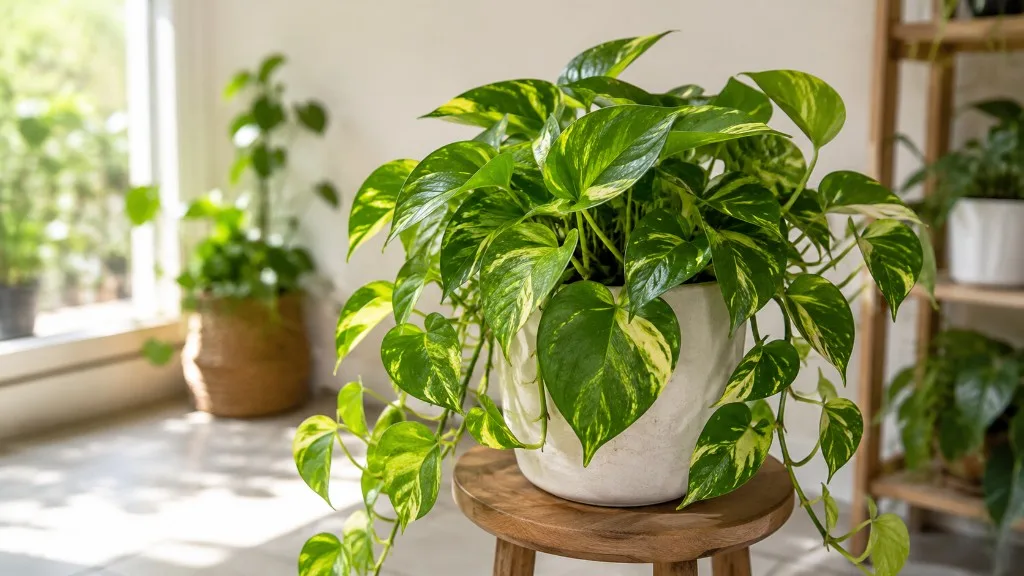
Pothos Repotting: When, How, and Mistakes to Avoid
Pothos Repotting: When, How, and Mistakes to Avoid
Pothos (Epipremnum aureum - devil’s ivy, money plant, golden pothos on most tags) is the houseplant most people learn on first, and one of the fastest to silently outgrow a nursery pot. A vigorous trailing specimen in bright kitchen light can fill a 12 cm container’s root zone in a single growing season while the vines above still look manageable. Repotting is how you restore drainage, replace collapsed mix, and inspect roots before yellow leaves and wilting become the story you have to untangle. This genus-level guide covers Epipremnum repotting for every cultivar sold under the pothos name; for an extended golden-cultivar walkthrough with additional procedural detail, see the companion golden pothos repotting guide.
Done with the right pot size, fresh airy mix, and minimal root disturbance, a pothos repot is usually an hour of careful work and a quiet week of adjustment. Done in an oversized container, mid-winter, or after stripping every fine root hair bare, the same plant can limp for weeks despite its tough reputation. The sections below walk through when to repot, when to wait, how to execute the move step by step, and the mistakes that turn routine maintenance into a recovery project.
Why Repotting Matters for Pothos (Epipremnum aureum)
Repotting solves three separate problems that all eventually show up as leaf symptoms if you ignore them. First, roots circle the pot wall into a dense mat that absorbs water and oxygen poorly. Second, peat and coir compress over time - perlite floats or crumbles, pore spaces disappear, and the mix turns hydrophobic. Third, salts from tap water and fertilizer accumulate at the root zone, burning fine hairs and producing brown tips or pale new growth even when your watering looks careful.
Pothos belongs to the Araceae family alongside philodendrons, monsteras, and peace lilies. Aroids share a low tolerance for roots sitting in stagnant, airless wet soil. That biology explains why the most common repot failure - jumping to a pot much too large - creates chronic bottom wetness while the upper mix looks dry. The plant above ground behaves like a forgiving trailing vine; below ground it wants evenly moist, well-aerated mix, not a swamp. Repotting is your chance to rebuild that balance before decline becomes obvious.
Aroid root-airflow biology and wet-soil failure
Fresh mix restores structure: air pockets, organic matter, and drainage speed that compacted old soil lost months ago. Extra root room lets white root tips spread outward instead of spiraling, which directly improves uptake after each watering cycle. You will notice the difference in pot behaviour - a root-bound pothos often dries in hours then wilts dramatically between waterings because water channels through the mat without wetting it evenly.
Repotting also gives you the only easy moment to inspect root rot - brown, mushy, sour-smelling tissue that needs trimming before it spreads. Catching rot during repot is far simpler than diagnosing from yellow leaves alone, especially on a vine that naturally drops older foliage. If roots are mostly white and firm, you are upgrading space and soil. If they are not, repotting becomes a rescue operation with more aggressive trimming and a lighter watering hand afterward.
How fast pothos outgrows indoor containers
Most indoor pothos reaches roughly 2–3 m of trailing vine at maturity, though individual stems grow longer with support or regular pruning. Growth is fast in warm, bright conditions and slows sharply in cool, dim winter months. Clemson HGIC notes that pothos generally benefit from repotting when roots emerge from drainage holes or growth slows. A working baseline is a full repot every 1–2 years for an actively growing indoor specimen, or sooner if multiple root-bound signals appear at once. The calendar is a reminder to check, not a command to repot regardless of what the roots look like.
Hanging baskets bind faster than deep shelf pots because the root zone is shallow - check the bottom drain holes twice as often on trailing displays. Top-dressing - replacing the top 3–5 cm of mix without disturbing roots - can refresh salts in early spring when the plant is not yet root-bound, but it will not fix circling roots at the bottom.
Signs Your Pothos Needs Repotting
The clearest sign is visual: roots emerging from drainage holes or circling the surface when you slip the plant partway out. Less obvious but equally reliable signals include water that runs straight through without absorbing, a plant that wilts hours after a thorough watering, and growth that stalls even though light and feeding have not changed. When two or more of these appear together during active growth, repotting is usually the right move.
Do not repot simply because one leaf turned yellow. Yellowing can mean overwatering, cold drafts, low light, or natural aging of lower leaves on a long trailing vine. Repotting a plant already stressed for unrelated reasons adds another variable and often makes diagnosis harder. Confirm that the root zone is the bottleneck before you commit to the work.
Root-bound, drainage, and hydrophobic channeling signals
Lift the pot and look at the bottom first. Roots peeking through holes mean the plant has used the volume it was given. Slide the plant out gently - if the root ball holds a perfect pot-shaped mold with little visible mix on the sides, you are looking at classic root-binding. Circling roots at the bottom are not automatically an emergency, but they tell you the plant has been asking for space for a while.
Fast drainage sounds good until you realize water is bypassing the root mass because the center is hydrophobic. If you water thoroughly and the pot feels light again within an hour, the mix may be spent. Slow drainage combined with sour smell or mushy stems points to rot that requires immediate attention - see the root rot guide before you assume more water will help.
| Situation | Pot action | Timing |
|---|---|---|
| Two or more root-bound signals, healthy white roots | Routine one-size-up repot | Spring or early summer |
| Mushy roots, sour smell, chronic wilting on wet mix | Trim rot, same-size or one-size-up with fresh mix | As soon as found |
| Slightly tight but still growing; yellow leaves from overwatering | Fix water and light first; defer repot | After stress clears |
| Only surface salt crust; roots not circling | Top-dress or flush; full repot optional | Early spring |
When Not to Repot Pothos
Yellow leaves alone are not a repot trigger. Clemson HGIC lists overwatering as a common cause of yellow foliage and root problems - repotting a wet, suffocated plant into fresh mix without fixing the watering rhythm often recreates the same failure in new soil.
Skip repotting when:
- Leaves yellowed after a recent watering binge - let the mix dry, inspect drain holes, adjust watering checks first.
- The plant just arrived from a store or shipment - quarantine and stabilize one to two weeks unless mix is clearly failing or pests are visible (see the overview guide).
- Only lower leaves on long vines are yellow while tips keep growing - often normal aging, not a root crisis.
- Active pest treatment or major environment move - let the plant settle unless rot or severe binding forces your hand.
Indoor pothos rarely flowers; you do not need bloom-timing rules meant for outdoor perennials. Focus on root evidence, not leaf panic.
Best Time of Year to Repot Pothos
Timing matters because pothos recovers fastest when it is already geared for growth. Spring through early summer is the safest window for most indoor growers. Wisconsin Extension recommends repotting during active growth when days lengthen and temperatures rise. Avoid extreme heat or cold snaps during recovery, and keep indoor temperatures in the 18–29°C (65–85°F) range the plant already prefers.
Spring and early summer windows
During active growth, pothos can start showing new turgid leaves within two to four weeks after a well-executed repot - a home-climate heuristic, not a guarantee in dim rooms. Roots begin exploring fresh mix almost immediately if temperatures are warm and soil stays evenly moist but not soggy. Spring is also the best time to combine repotting with pruning if you want a fuller plant, because the vine has energy to branch from nodes near the soil after the move.
If you missed spring, early summer still works. Avoid repotting during the hottest week of the year if your home lacks air conditioning. Shade the plant slightly for the first week after a summer repot, then return it to bright indirect light.
When winter repotting is still justified
Winter repotting is a backup plan, not a default. Growth slows, days are short, and a disturbed root system sits in wet mix longer because the plant is not pulling water actively. Skip winter repotting if the plant is merely slightly tight but still growing a little and watering normally.
Repot in winter only when delay would clearly harm the plant: severe root-binding with repeated wilting, active root rot that requires trimming and fresh mix, or a pot that has cracked or become unusable. If you must repot then, use a modest size increase, keep temperatures above roughly 18°C, provide bright indirect light, and water more cautiously than in spring - let the top of the mix dry slightly further between waterings until new growth appears.
Choosing the Right Pot Size and Material
The single most important pot decision is diameter, not aesthetics. Pothos wants one step up, not a mansion. Jumping from a 12 cm pot to a 20 cm pot feels generous, but the unused soil volume stays wet for days while the small root system catches up. That wet zone is where aroid roots struggle most.
Measure the current inner diameter and choose a new pot 2–5 cm (about 1–2 inches) wider, with the same depth profile or slightly deeper if the plant is top-heavy. Penn State Extension recommends moving to a container only one size larger with drainage holes. From a 10 cm nursery pot, 12–13 cm is appropriate. From 15 cm, move to 17–18 cm - not 20 cm in one jump.
The one-size-up rule and pot materials compared
The one-size-up principle matches root biology: roots grow into soil progressively, and until they do, excess mix is a water reservoir with no uptake capacity. More soil without more roots means the lower half stays saturated while the upper half looks dry - a pattern that confuses watering checks and encourages rot.
Every pothos pot needs drainage holes for long-term indoor care. Decorative cache pots without holes work only if the plant remains in a nursery pot that drains freely into a saucer you empty after every watering.
| Material | Moisture retention | Best for |
|---|---|---|
| Terracotta | Dries fastest | Heavy waterers, bright rooms |
| Plastic | Holds moisture longer | Dry air, consistent waterers |
| Glazed ceramic | Middle ground; adds weight | Top-heavy trailing plants |
| Hanging basket | Shallow; dries quickly after repot | Trailing displays; check roots often |
Clemson HGIC notes that plastic pots hold moisture longer than terracotta - factor that into your first post-repot watering rhythm. A gravel layer at the bottom does not improve drainage; it can create a perched water table. Mix structure matters through the whole column, not a single layer.
Soil Mix for Repotting Pothos
Pothos wants well-draining standard potting mix that stays airy after repeated watering. The Missouri Botanical Garden describes Epipremnum as preferring evenly moist, well-drained soils - the same tension every good houseplant mix balances. Target pH near 6.0–6.5; standard peat- or coir-based indoor mixes land close enough for most homes.
A reliable DIY blend for repotting:
- 60% quality peat- or coir-based potting mix
- 20% perlite or pumice for aeration
- 20% orchid bark or coarse coco chips for chunk and long-term structure
Clemson HGIC recommends fresh airy indoor mix with perlite or orchid bark - components that keep aroid roots breathing. Adjust upward on perlite if your home is cool or you tend to water heavily. For a deeper mix discussion paired with watering rhythm, see the pothos soil guide.
Mix ingredients in a tub before repotting rather than layering in the pot. Avoid garden soil, which compacts and introduces pathogens. Avoid pure cactus mix unless you amend it heavily with potting mix and bark - pothos is not a desert plant.
Step-by-Step: How to Repot Pothos Without Shock
Repotting pothos is straightforward if you prepare materials first and minimize root exposure time. Gather the new pot, pre-mixed soil, clean scissors, a chopstick or pencil, and a watering can. Work on a surface you can wipe clean - pothos stems are tough, but rough handling can snap brittle older vines.
Step 1: Water the plant 24 hours before repotting. A lightly moist root ball holds together and slips out more cleanly than a bone-dry or soggy one.
Step 2: Add a small mound of fresh mix to the bottom of the new pot. Do not create a thick gravel drainage layer.
Step 3: Turn the pothos on its side and slide it out, supporting the base of stems with your hand. Squeeze flexible nursery pots or run a knife around the inside edge of rigid pots.
Step 4: Inspect roots. Trim brown, mushy tissue with clean scissors. Tease circling roots at the bottom and sides gently so they point outward.
Step 5: Set the plant in the new pot so the previous soil line sits about 1–2 cm below the rim. Pothos should not be buried deeper than it was growing; buried nodes invite stem rot.
Step 6: Backfill with fresh mix, working soil between roots with a chopstick while holding the plant centered. Firm lightly - enough to remove large air gaps, not enough to compress mix into concrete.
Step 7: Water thoroughly until excess runs from drainage holes. Empty the saucer. Place the plant in bright, indirect light, out of direct sun, for 7–10 days.
Step 8: Hold fertilizer for at least four to six weeks while roots settle. Resume normal watering checks rather than a calendar schedule.
Teasing circling roots and placing the soil line
The goal of root teasing is to redirect growth, not destroy the root ball. Pothos relies on fine root hairs for water uptake; bare-rooting by washing every particle of old soil away strips those hairs and extends recovery time unnecessarily. Keep most of the original root mass intact while freeing the outer circling layer.
If roots are densely matted, you may slice 1–2 cm off the bottom of the root ball with a clean knife to stimulate new white tips. Avoid removing more than one-third of the total root mass unless you are rescuing rot. If the plant has multiple stems, you can divide it at this stage by separating root sections with a clean knife, provided each division has roots and at least one growing tip - useful when a single pot has become an oversized tangle; rooted divisions can also feed the propagation guide workflow.
Worked example: A pothos in a 12 cm nursery pot showed roots circling the drain holes after one bright season on a kitchen shelf. In early April it moved to a 15 cm plastic pot with the 60/20/20 blend above. Mild wilt appeared on days 3–5; the plant perked after a careful drink. The first new leaf opened around week 3 - typical for warm spring repots when pot size stayed modest.
Common Repotting Mistakes and Recovery
Oversized pots top the list. More soil without more roots means chronic bottom wetness and yellow lower leaves that look like nutrient problems but are really oxygen problems at the root level. Stick to one size up even if you imagine the plant will grow into the container soon.
Bare-rooting or over-washing removes fine hairs that absorb water. Tease, do not scrub. Aroids recover from gentle disturbance; they struggle after aggressive stripping.
Immediate fertilizing after repot burns tender new root tips in fresh, already nutrient-rich mix. Wait until you see new growth matching normal leaf size and colour, then resume diluted feeding.
Repotting for the wrong reason - yellow leaves from cold drafts, direct sun scorch, or recent overwatering - adds stress without fixing the trigger. Diagnose first; repot when roots or mix are clearly the issue.
Using a pot without drainage holes turns repotting into a long-term rot trap. If you love a decorative container, use it as a cover pot only.
Root-rot rescue during repot: When you find mushy tissue, trim back to firm white roots, optionally dust cuts with cinnamon (home practice, not a cure-all), repot into fresh mix in a same-size or one-size-up pot - never a huge jump - and water lightly. Place in bright indirect light and watch for recurring wilting on wet mix; that pattern means rot persists and needs another inspection.
Recovery Timeline After Repotting
Mild transplant shock on pothos usually shows as slight wilting, a pause in new leaves, or one or two dropped lower leaves for one to two weeks - a practical home-climate rule of thumb, not a published extension interval. The plant should still perk up after watering and should not smell sour at soil level.
Full root re-establishment typically takes four to six weeks in warm, bright conditions before you should expect normal growth rhythm. New firm leaves along the vines are the clearest success signal - damaged older leaves will not heal, but fresh leaves in the right size and colour mean roots have colonized the new mix.
Place the plant in bright, indirect light, not direct sun, during recovery. Keep humidity ordinary (30–50% is fine). If wilting persists beyond three weeks, check for rot, buried stems, or a pot that is too large. After recovery, check moisture with your finger rather than assuming the old watering schedule still applies. Persistent problems may overlap with repotting stress - compare symptoms before stacking more changes.
Pothos Cultivars and Repotting
All common pothos cultivars are Epipremnum aureum or closely related Epipremnum sold as pothos - the same repot mechanics apply. Variegated forms do not need different pot sizes, but they often grow slightly slower in dim rooms and may tolerate repot deferral a little longer if roots are not circling.
| Cultivar | Repot notes | Deep-dive guide |
|---|---|---|
| Golden pothos | Reference cultivar; fastest growth in bright light | Golden pothos repotting |
| Marble Queen | Slower variegated growth; avoid oversized pots in low light | Marble Queen repotting |
| Manjula | Patchy variegation; inspect roots gently - stems bruise easily | Manjula repotting |
| Neon | Bright chartreuse fades in shade; repot in spring for best recovery colour | Neon pothos repotting |
| Pearls and Jade | Compact nodes; shallow baskets bind faster | Pearls and Jade repotting |
When in doubt, read the golden pothos repotting page for extended step photos and cultivar-specific recovery notes, then return here for genus-level cluster navigation.
Pet Safety During Repot
Pothos contains insoluble calcium oxalate crystals if chewed or ingested. The ASPCA lists golden pothos as toxic to cats and dogs, causing oral irritation, excessive drooling, vomiting, and difficulty swallowing. Repotting is messy - trimmings, loose leaves, and spilled mix attract curious pets.
Keep the work area closed off, bag debris promptly, and wash hands after handling sap. If a pet chews plant material during or after repot, contact ASPCA Animal Poison Control at (888) 426-4435 and your veterinarian promptly. All Epipremnum cultivars should be treated as toxic, not only golden pothos.
How We Wrote and Verified This Guide
Author: sai-ananth · Reviewer: LeafyPixels Review Board · Reviewed: 2026-06-15
Recommendations were checked against NC State Epipremnum aureum, Clemson HGIC pothos indoors, Wisconsin Extension pothos, Penn State pothos houseplant, Missouri Botanical Garden E. aureum, ASPCA golden pothos toxicity, and LeafyPixels pothos cluster data. Recovery timelines are labeled home-climate heuristics where extension sources do not publish exact day counts.
When to use this page vs other Pothos guides
- Pothos overview - Start here for whole-plant context before deep-diving this topic.
- Pothos problems hub - Jump to symptom-specific fix guides when this care topic does not resolve the issue.
- Repotting Stress on Pothos - Escalate here when repotting adjustments are not enough.
- Root Rot on Pothos - Escalate here when repotting adjustments are not enough.
Related Pothos guides
- Pothos overview
- Pothos watering
- Pothos light
- Pothos soil
- Pothos propagation
- Pothos fertilizer
- Repotting Stress on Pothos
- Root Rot on Pothos
- Pothos problems
Conclusion
Pothos repotting comes down to reading the roots, choosing spring or early summer when you can, moving the plant one pot size up with fresh, well-draining aroid-friendly mix, and giving it a quiet week in bright indirect light while roots settle. The genus grows fast enough that checking every twelve to eighteen months is smarter than waiting for obvious distress - but never repot on autopilot when the real problem is light, water, or temperature.
Get pot size and soil right and pothos rewards you with a quick recovery and a fresh burst of trailing growth. Oversize the container, fertilize too soon, or bare-root without cause and the same plant will look punished for weeks despite its tough reputation. Watch roots, not just leaves, treat repotting as a targeted fix, and use the cultivar and problem links above when symptoms outlive a normal recovery window.