Wilting on Pothos: Causes, Checks & Fixes
Quick answer
Wilting pothos usually means a water pathway problem-dry soil, failed roots, or heat stress-not simply 'needs water.' First step: stick your finger 2 inches into the mix; water thoroughly if dry, stop watering and inspect roots if wet.
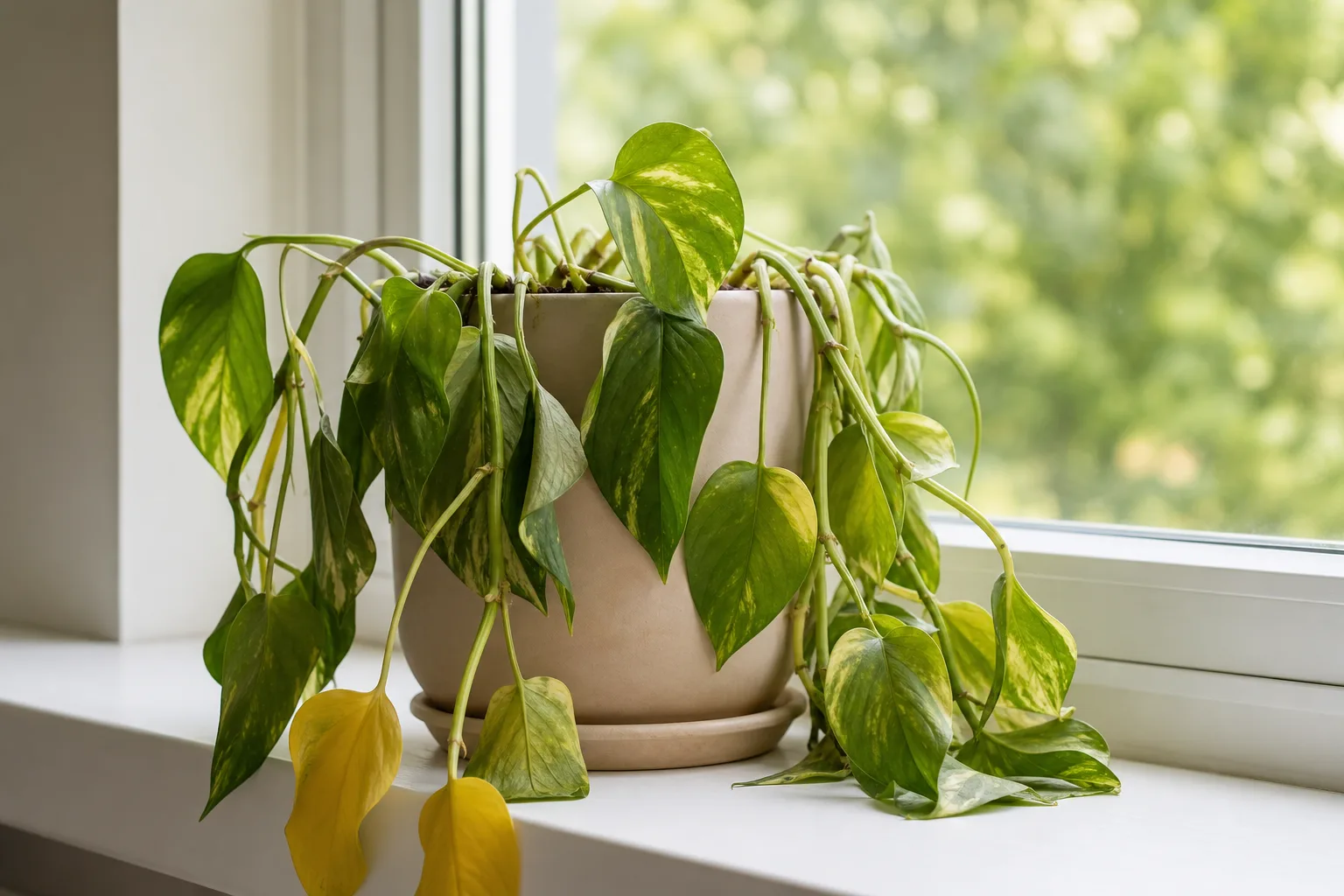
Wilting on Pothos: Causes, Checks & Fixes
This guide covers wilting on Pothos. See also the general Wilting guide, watering, and light pages for this plant.
Wilting on Pothos: Causes, Checks & Fixes
Quick answer
Wilting pothos (Epipremnum aureum) means the plant cannot hold normal leaf turgor-stems and leaves hang limp instead of firm. The same droop can come from opposite problems: bone-dry mix, waterlogged rotting roots, heat overload, or a pot too full of roots to drink evenly.
First step: stick your finger 2 inches into the mix before you add water. Dry at that depth → underwatering is likely; water thoroughly until drainage runs free. Wet at that depth with limp vines → stop watering and inspect roots-damaged roots cannot move water upward, so more water worsens collapse.
Pothos is famously tough, but too much water leads to root rot while too little may leave leaves temporarily drooping. The moisture check separates those paths in under a minute. For species baseline, see the pothos overview.
| Pattern | Soil at 2 inches | Pot weight | Leaf feel | Likely cause | First action |
|---|---|---|---|---|---|
| Dry-soil wilt | Bone dry | Light | Thin, papery, may curl | Underwatering | One deep soak; drain saucer |
| Wet-soil wilt | Damp or soggy days | Heavy | Limp, yellow lower leaves | Overwatering / root rot | Stop watering; inspect roots |
| Heat-stress wilt | Moist but not soggy | Normal | Droops afternoon only | Hot window or vent blast | Move plant; even moisture |
| Root-bound wilt | Dry soon after watering | Normal–light | Chronic limp between drinks | Pot too small | Repot one size up |
When to use this page vs. other pothos guides
Use this wilting page as the umbrella diagnostic when vines collapse or hang limp across multiple stems-you need to separate drought, rot, heat, and root-bound causes before acting.
| Your symptom | Start here | Or use instead |
|---|---|---|
| Whole vines limp; unsure if dry or wet | This page | - |
| Individual leaves droop but vines feel attached | Drooping leaves | This page if collapse spreads |
| You already know soil stays wet too long | Overwatering | This page for wet-soil wilt paradox |
| Confirmed mushy roots or sour smell | Root rot | This page for initial triage only |
| Pot is light and mix is fully dry | Underwatering | This page if multiple wilt types confuse you |
| Afternoon droop on moist soil near a window | Heat stress | This page for full four-cause comparison |
What wilting looks like on Pothos
Healthy pothos vines feel springy. Leaves are firm, slightly glossy, and hold their angle off the stem. Wilting removes that stiffness.
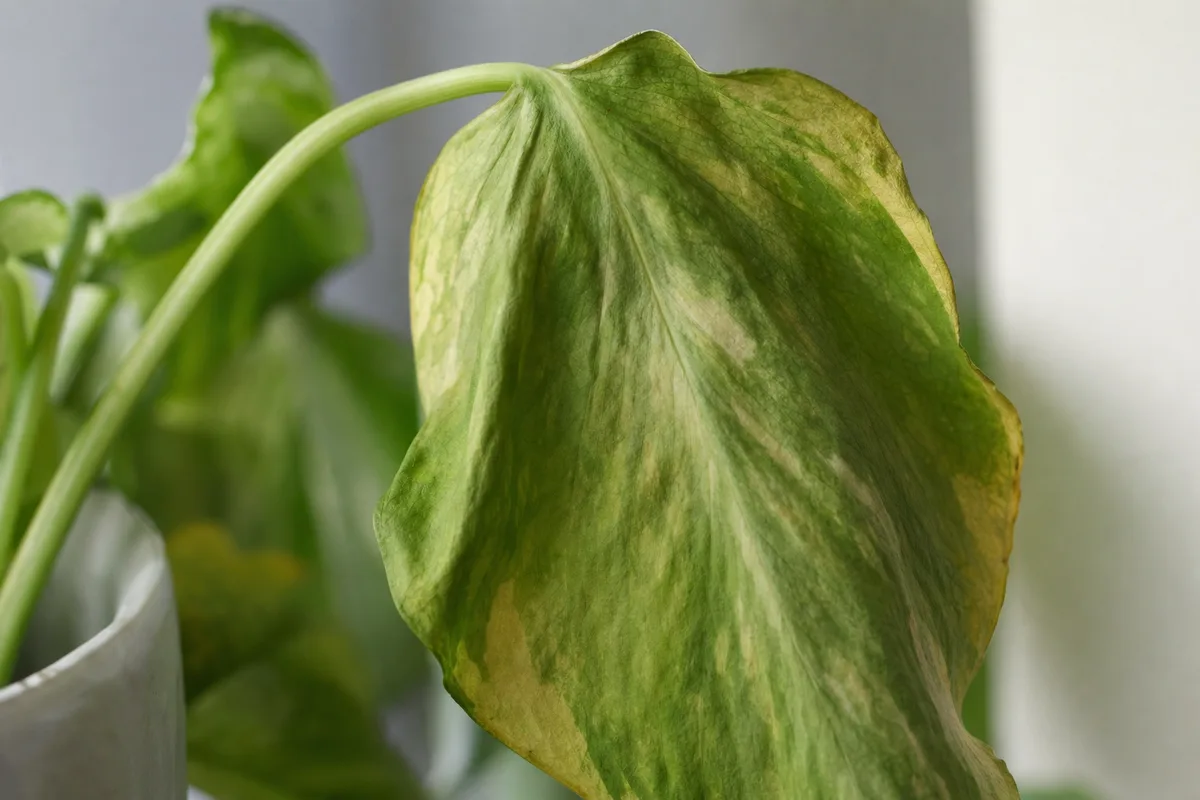
Wilting symptoms on Pothos - compare with healthy tissue on the same plant.
Dry-soil wilt (underwatering):
- Leaves feel thin or papery, sometimes curled inward at the edges
- Mix is dry 2 inches down; pot feels light when lifted
- Older leaves may brown at tips before the whole vine collapses
- Vines often perk noticeably within a few hours after a deep drink if roots are still healthy
Wet-soil wilt (overwatering / root rot):
- Leaves limp and may yellow, often starting on lower foliage
- Mix stays moist or soggy at depth; pot feels heavy
- Sour or musty smell when you disturb the surface or unpot
- Stems may soften at the soil line on advanced cases
- The paradox: plant looks thirsty while soil is wet-overlap with fungus gnats on chronic wet mix
Heat-stress wilt:
- Drooping during the warmest part of the day on otherwise moist soil
- Vines often recover overnight or by morning
- Leaves near hot windows or heating vents dry at edges faster than roots can supply water
Root-bound wilt:
- Chronic limpness even after normal watering
- Roots circling the pot or visible through drainage holes
- Water runs through quickly without fully rewetting the center of the root ball
Pothos stores some moisture in stems, so mild wilt from a missed watering is common and usually reversible. Marble Queen, Neon, and Pearls and Jade variegates may perk more slowly in dim rooms because thinner white or cream tissue has less reserve than solid-green golden pothos. Persistent wilt across multiple vines without a clear moisture match needs a deeper look at roots, pot size, and placement.
Why Pothos wilts
Pothos evolved as a tropical understory vine. Indoors it tolerates neglect better than many houseplants-Penn State notes it is better kept too dry than too wet-but that tolerance hides problems until vines suddenly hang limp.
Underwatering dries fine roots and deflates leaf cells. Prolonged drought on a fast-growing summer vine can wilt the whole trailing length in a day. Hanging baskets and small pots dry fastest because exposed mix and limited soil volume lose water quickly in bright light.
Overwatering and root rot produce the same visible wilt through a different mechanism. Saturated mix drives out oxygen; roots decline and cannot transport water. Clemson Extension links root rot to overwatering or poorly draining soil on pothos. Owners see limp leaves and water again-accelerating rot. Catch chronic wet feet early on the overwatering guide before roots turn mushy.
Heat and draft stress increase water loss from leaves faster than roots can replace it. Clemson recommends keeping pothos away from air conditioning vents in summer and from windowsills and heating vents in winter because hot and cold air blasts dry leaves and damage cells. A plant on a sunny sill with wet roots may wilt from heat while soil stays damp.
Repotting shock temporarily reduces root function. Excess water right after repotting adds stress on pothos already struggling to re-establish contact with fresh mix. See repotting stress if wilt started within two weeks of a pot change.
Pot-bound roots leave too little soil to hold water for the whole root mass. Wilting from pot-bound plants is a documented pattern-there is not enough moist soil for all those roots, so vines collapse between waterings even when you think you watered enough.
Hydrophobic dry pockets in old peat can leave the center of the root ball dry while the surface looks acceptable. Water runs down the sides; roots in the middle stay thirsty and vines wilt on a “watered” schedule. Refresh mix or repot using guidance from pothos soil when channeling persists.
How to confirm the cause
Work through these checks in order-do not skip the moisture test:
- Soil moisture at 2 inches - Stick your finger to the first joint or use a moisture meter at root depth. Clemson Extension recommends watering when the mix feels dry at your fingertip. Dry = suspect drought; wet = suspect root failure or heat on saturated mix.
- Pot weight - Lift the container. Light with limp leaves fits underwatering. Heavy with limp leaves fits waterlogging or root rot.
- Stem firmness - Press vines at the soil line. Firm stems with dry soil point to thirst. Soft, darkening bases on wet soil point to rot.
- Smell and surface - Sour odor, algae, or white mold on wet mix supports chronic saturation.
- Time pattern - Afternoon-only droop on moist soil suggests heat stress. All-day wilt on dry soil suggests drought. All-day wilt on wet soil suggests roots.
- Recent events - Repotting within two weeks, a heat wave, or a missed watering week narrows the cause quickly.
- Root spot-check if mismatch persists - Slide the plant out. Healthy pothos roots are firm, white or tan. Brown mush that collapses between fingers confirms rot-escalate to root rot rescue. Dry, brittle roots in dusty mix confirm drought damage.
Wilting is not always a call for water. Root injury from too much water decreases uptake; watering wet, wilted pothos can make the problem worse.
First fix for Pothos
Check soil moisture at 2 inches depth-then act on what you find.
- If dry: Water thoroughly until water runs from drainage holes. Empty the saucer within 30 minutes. Do not give repeated shallow sprinkles; one deep drink rewets the root ball per the pothos watering rhythm.
- If wet: Do not water. Move to bright indirect light to speed drying, empty saucer water, and unpot if stems are soft or smell is sour.
That single diagnostic step prevents the most common mistake: watering a rotting pothos because it looks thirsty.
Do not fertilize, mist heavily, or repot on day one unless you have confirmed mushy roots or a clearly hydrophobic dry core. Stacking fixes on a stressed vine adds salt and disturbance without solving the water pathway.
Step-by-step recovery
If underwatering is confirmed
- Water deeply once; for very dry mix, use the double-watering method-water, wait half an hour, water again-or bottom-soak until the surface moistens, then drain fully.
- Trim only leaves that stay crispy and brown after 48 hours; green limp tissue often recovers turgor.
- Adjust schedule: water when the top 2 inches are dry, not on a calendar.
- If the plant was in harsh sun, move to bright indirect light per pothos light guidance-recovery is faster without extra heat load.
Named recovery scenario: A 12-inch hanging golden pothos in a bright kitchen showed limp vines at 4 p.m. with mix dry 2 inches down and a noticeably light pot. One thorough soak at 6 p.m. with saucer emptied by 6:30 p.m. produced visible lift by 9 p.m.; one lower leaf yellowed from an earlier wet spell but did not spread.
If overwatering or root rot is confirmed
- Stop watering immediately.
- Unpot, rinse roots, and trim all brown mushy tissue back to firm white or tan roots.
- Repot into airy, well-draining mix with perlite in a pot with drainage holes.
- Withhold water for about a week unless the remaining root mass is very small-then give one light drink.
- Remove yellow leaves that continue to soften; they will not re-firm.
- If most roots are gone, propagate healthy vine tips above firm nodes as backup-see pothos propagation.
See the root rot on pothos guide for full trimming and repotting detail if rot is advanced. Do not bottom-water a rotting pothos without inspecting roots first-standing water at the base keeps tissue anaerobic.
If heat stress is confirmed
- Move the plant away from hot windows, radiators, and heating vents.
- Ensure soil moisture is even-not bone dry, not soggy.
- Filter intense afternoon sun with a sheer curtain.
- Expect recovery within 24–48 hours once heat load drops. Cross-check heat stress on pothos if afternoon-only droop persists.
If root-bound
- Repot into a container only one size larger with fresh well-draining soilless mix following pothos repotting steps.
- Tease or trim circling roots lightly so they contact new mix.
- Water once after repotting, then return to the dry-top-2-inches rule-do not soak repeatedly.
Recovery timeline
Underwatering: Noticeable perk within 2–6 hours after a thorough drink on healthy roots; severely dehydrated plants may need 24 hours for full turgor.
Overwatering / early rot: Days to weeks. Judge by firm stems and new node activity, not old yellow leaves.
Heat stress: Often overnight to 48 hours once placement stabilizes.
Repotting wilt: One to three weeks for vines to feel firm again; hold fertilizer until new growth looks normal.
Collapsed leaves rarely become glossy again-they drop or stay limp while new leaves tell you recovery is real.
Lookalike symptoms to rule out
Yellow leaves without wilt often mean chronic overwatering or low fertility on pothos-not always acute collapse. Check moisture before treating wilt; see yellow leaves on pothos if color change dominates.
Curling leaves can follow drought or pest stress. Curl with dry soil fits thirst; curl with sticky residue or webbing points to pests, not water alone-see curling leaves.
Leggy bare vines mean low light over time, not necessarily wilt. Stems may be firm while spacing between leaves is wide-cross-check not enough light.
Cold damage blackens leaf patches after exposure below comfortable room range. Clemson lists preferred nights at 60°F to 70°F and days at 70°F to 85°F for pothos-chilled wet roots wilt and blacken faster than drought alone.
Drooping without whole-vine collapse - individual heart-shaped blades losing lift while vines stay structurally attached often fits drooping leaves first; escalate here if collapse spreads across stems.
Mistakes to avoid
Do not water every wilt without checking soil-wet-soil wilt needs drying and root inspection, not another drink.
Do not leave saucers full. Standing water keeps the bottom anaerobic and mimics overwatering wilt.
Do not move a wilted plant into direct sun hoping to “dry it out.” Scorched leaves add stress on already failing roots.
Do not fertilize collapsed vines. Salt stress on damaged roots slows recovery.
Do not repot healthy dry wilt on day one-a deep watering usually fixes simple thirst.
Do not assume hanging baskets need the same volume as floor pots. Elevated pots dry faster; wilt there often means underwatering.
Do not bottom-water without confirming roots are healthy-on wet-soil wilt, that method can worsen saturation at the base.
Pothos care cross-check
Wilting often exposes a mismatch between your routine and the plant’s current environment:
- Light - Bright indirect light uses more water than a dim corner. Dim rooms need less frequent watering, not the same summer schedule-see pothos light.
- Mix - Use airy, well-draining potting mix; dense old peat holds water and invites rot wilt.
- Pot size - Oversized pots stay wet at the center; undersized root-bound pots wilt between drinks.
- Season - Short winter days slow growth and water use; calendar watering in January causes wet-soil wilt.
- Placement - Drafts and vents dry leaves while soil stays wet-a dual stress pattern on many office pothos.
How to prevent wilting on pothos
Water when the top 2 inches of mix are dry, using finger, weight, or a meter at root depth-not the day of the week. Full rhythm detail lives on the pothos watering guide.
Use pots with drainage holes and empty saucers after every watering.
Repot when roots circle the pot or emerge from holes-Clemson notes repot when roots are visible through drainage holes or the plant is overcrowded.
Keep vines away from AC vents, radiators, and hot glass.
In bright rooms, check hanging baskets every few days in summer; in low light, stretch intervals and verify depth moisture before assuming thirst.
Refresh hydrophobic mix or repot when water channels down the sides without wetting the root core.
When to worry
Treat as urgent when:
- Vines wilt on soggy soil with sour smell or soft stems at the base
- Blackening climbs from soil line up the vine
- The plant does not perk within 24 hours after confirmed dry-soil watering
- More than half the roots are mushy on inspection
Less urgent but worth fixing soon: mild afternoon droop on moist soil, single-vine wilt on a dry basket, or wilt right after repotting with firm stems and no rot smell.
When to seek expert help: If the plant stays wilted on corrected dry-down, improved drainage, and root trim for three weeks or more, contact your county cooperative extension office or a local master gardener clinic. Persistent wet-soil wilt after you have followed the root rot workflow may need professional diagnosis beyond home rescue.
Related pothos guides
Use this page for whole-vine collapse and multi-cause wilt triage; follow the link that matches what you found:
- Pothos overview - species care baseline
- Pothos watering - prevention rhythm and season shifts
- Pothos soil - mix that drains without hydrophobic pockets
- Pothos repotting - root-bound and shock recovery
- Pothos propagation - backup vines when roots fail
- Overwatering on pothos - early wet-soil triage
- Underwatering on pothos - dry pot rescue
- Root rot on pothos - mushy roots and sour smell
- Drooping leaves on pothos - limp leaves still attached
- Heat stress on pothos - afternoon droop on moist soil
- Yellow leaves on pothos - color change before collapse
- Not enough light on pothos - dim-room watering mismatch
- Fungus gnats on pothos - co-signal on chronic wet mix
- Repotting stress on pothos - wilt after pot change
Conclusion
Wilting pothos is a diagnostic signal, not an automatic command to water. Moisture at 2 inches depth, pot weight, and stem firmness tell you whether to drink, dry, or repot. Acting on that check first saves plants from rot and rescues thirsty vines before crispy damage spreads. Match watering to how fast your mix actually dries in your light-not to how limp the leaves look at first glance.
How we wrote and verified this guide: Recommendations were checked against Clemson Cooperative Extension, Penn State Extension, and Missouri Botanical Garden references cited inline. Author: sai-ananth. Reviewer: LeafyPixels Review Board. Methodology: plant problem guidance is reviewed against botanical references, extension resources, and LeafyPixels plant-care data before publication. Claims validation: claims-validator-v1 pass with inline external links documented below. Last reviewed: 2026-06-17.