Yellow Leaves on Pothos: Causes, Checks & Fixes
Quick answer
Yellow leaves on pothos usually mean the roots are too wet or the plant has been in weak light too long. First step: check soil moisture 2 inches (5 cm) deep-if wet, stop watering until that layer dries; if bone dry, see the underwatering branch.
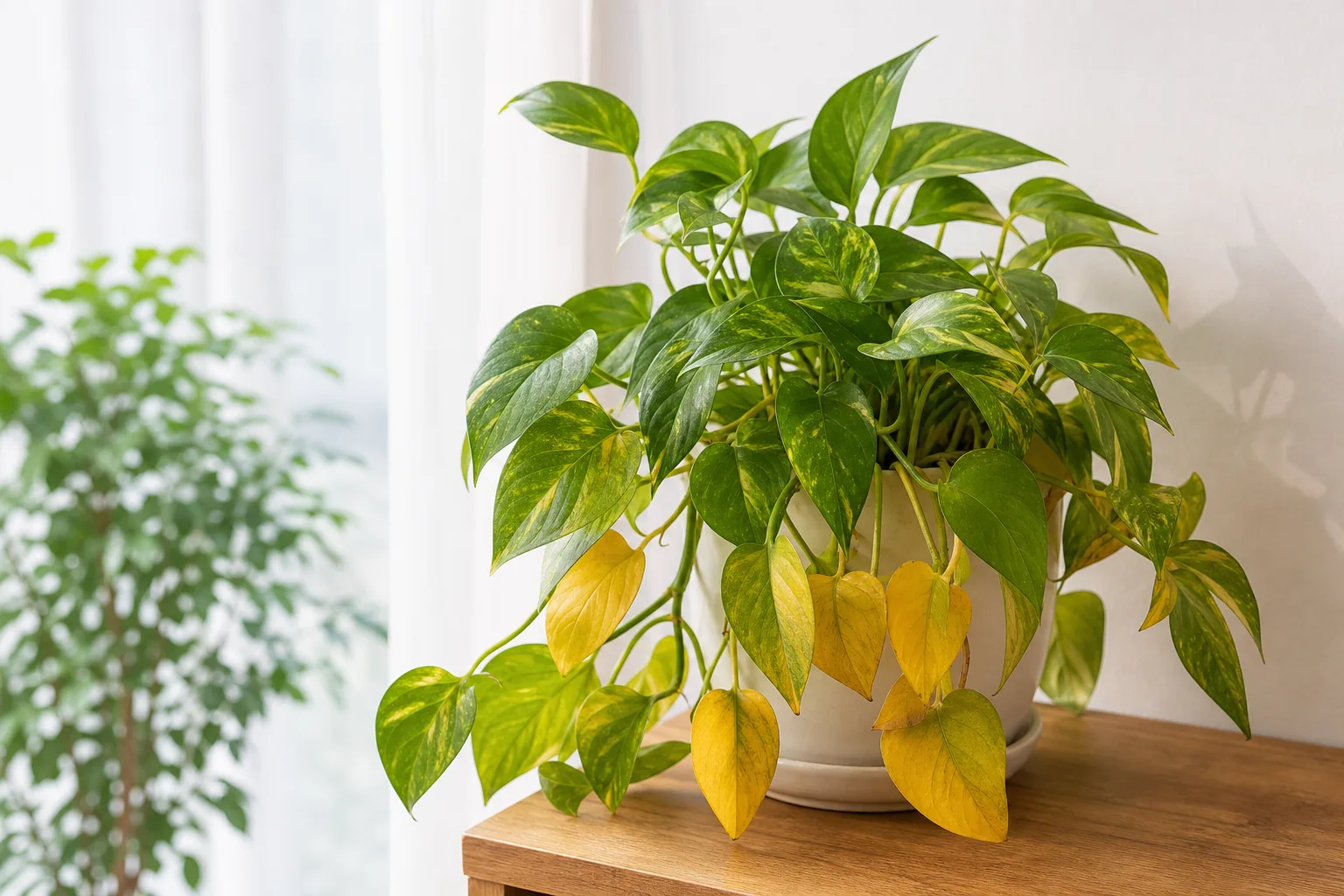
Yellow Leaves on Pothos: Causes, Checks & Fixes
This guide covers yellow leaves on Pothos. See also the general Yellow Leaves guide, watering, and light pages for this plant.
Yellow Leaves on Pothos: Causes, Checks & Fixes
Quick answer
Yellow leaves on golden pothos (Epipremnum aureum) usually mean the roots are too wet, the plant has been in weak light too long, or-less often-the mix has dried out completely. Because pothos stores moisture in its stems, leaves can stay firm briefly while roots suffocate in soggy mix.
First step: check soil moisture 2 inches (5 cm) deep before you change anything. If the mix is wet at that depth, stop watering until it dries. If it is bone dry throughout and the pot feels light, follow the dry-soil branch below. For species care baseline, see the pothos overview.
Pothos is famously forgiving, but yellow leaves are often caused by overwatering-the most common indoor trigger. Judge progress by new growth at vine tips, not by hoping old yellow leaves green up again.
What yellow leaves look like on Pothos
Yellowing on pothos follows recognizable patterns once you know what healthy foliage looks like. The tissue texture-soft versus crisp-matters as much as the color.
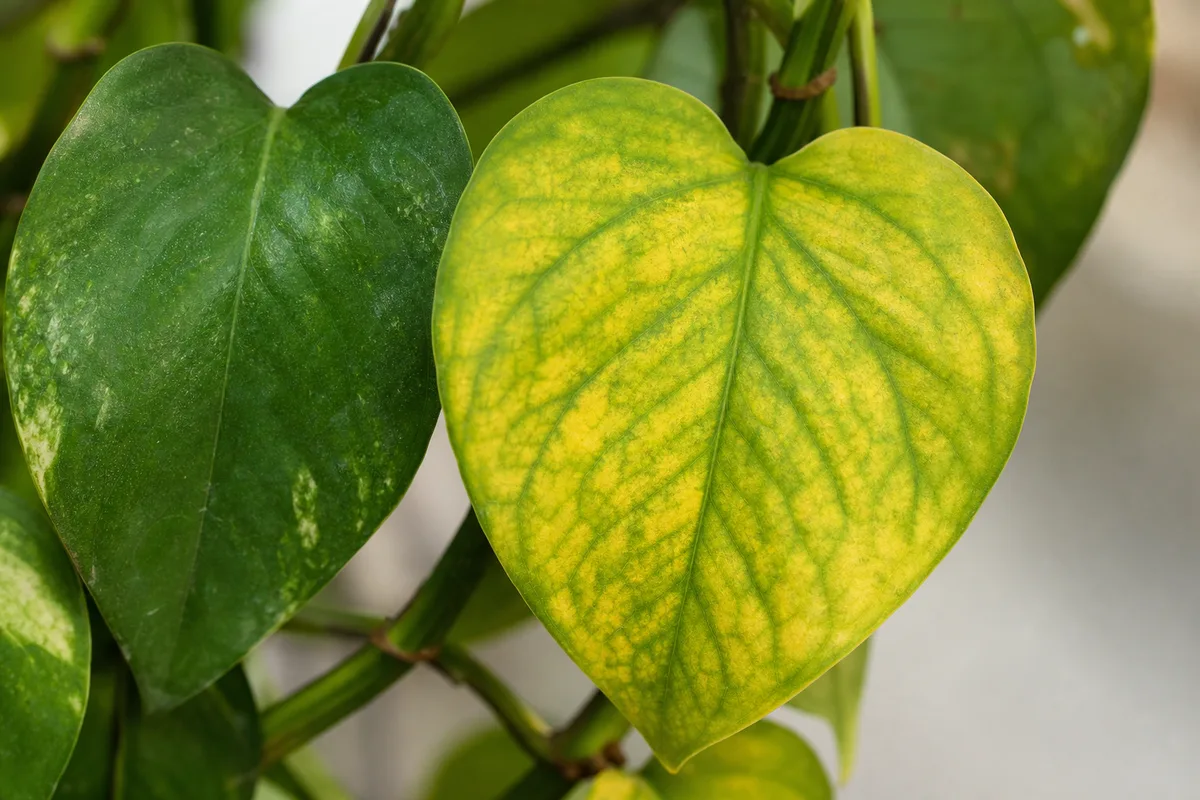
Yellow Leaves symptoms on Pothos - compare with healthy tissue on the same plant.
Overwatering pattern (bottom-up, soft yellow)
- Lower, older leaves turn chartreuse or soft yellow first, sometimes spreading upward when saturation is chronic
- Mix stays wet 2 inches (5 cm) down for many days after one watering
- Limp vines even though soil feels damp-the wilt-on-wet-soil paradox
- Fungus gnats hovering near the pot when soil never dries
- Sour or musty smell when you lift the plant or disturb the surface
- Faded variegation and stalled new leaves as growth slows
Overwatered tissue is soft yellow, not the crisp, papery yellow with brown edges you see with severe underwatering. Full wet-soil workflow: overwatering on pothos.
Underwatering pattern (scattered, dry mix, crisp edges)
- Very light pot and bone-dry mix throughout-not just the surface
- Limp, thin leaves that may perk within hours after a thorough soak
- Crisp brown edges on older foliage before full yellowing in prolonged drought
- Mix pulled away from the pot wall on severe cases
Drought yellowing is less common than wet-root yellowing on pothos, but it happens when owners assume toughness means the plant needs no water for weeks. Details: underwatering on pothos.
Low light alone (stretching, slow dry-down)
- Long internodes and small, pale new leaves before older foliage fades
- Mix may stay damp longer than expected because the plant uses little water in dim corners
- Variegation thins on Golden Pothos and Marble Queen cultivars in low light
This is the compound trap: calendar watering in a dim hall keeps roots wet while growth stalls. See not enough light on pothos for the full dim-room workflow.
Normal aging on trailing vines
- One or two yellow leaves at the oldest node on an otherwise vigorous vine
- Firm stems, appropriate dry cycles, and healthy new tips at the growing end
- No sour smell, no fungus gnats, no rapid multi-leaf spread
Why Pothos gets yellow leaves
Overwatering and poor drainage top the list indoors. Pothos prefers soil allowed to dry between waterings and bright, indirect light. When a pot stays wet in dim corners, lower leaves yellow first while the root zone loses oxygen. Excess water leads to root rot-one of the few problems that can undo an otherwise tough plant quickly.
Stem moisture buffer explains the lag between root damage and visible wilt. Pothos stores water in stems, so leaves stay firm briefly while roots suffocate. By the time vines droop on wet soil, saturation has often been building for weeks.
Low light slows water use. A weekly summer schedule in a dark office keeps mix damp through winter when transpiration drops. That dim-light slow dry-down is a common path to chronic wet feet without adding extra water.
Underwatering yellows older leaves after prolonged drought-usually with dry soil and a light pot, not damp mix.
Normal senescence sheds the oldest leaf as a trailing vine extends. One bottom yellow leaf on a long runner is expected.
Nutrient shortage can cause general pale yellowing on an otherwise healthy watering schedule-but confirm moisture first. Pale leaves with dry, appropriate mix and steady watering may warrant a dilute feed only after you rule out overwatering. Do not fertilize a waterlogged plant.
How to confirm the cause (7-step checklist)
Work through these checks before Pothos repotting guide, trimming roots, or fertilizing:
- Soil moisture at depth - Stick your finger 2 inches (5 cm) into the mix. Wet at that depth days after watering confirms saturation. Bone dry throughout points to drought.
- Pot weight - Lift the container. Heavy with limp foliage fits overwatering; feather-light with limp leaves fits underwatering.
- Leaf texture and pattern - Soft yellow on multiple lower leaves plus wet soil fits overwatering. Crisp edges with dry soil fits drought. One bottom leaf on a long vine with firm stems fits aging.
- Newest growth - Pale, small, or stalled tips in a dim room support low-light stress layered on moisture problems.
- Stem base - Press tissue at the soil line. Firm is reassuring; soft or mushy means escalate toward root rot.
- Smell and pests - Sour odor or fungus gnats on constantly moist surface soil support wet-root diagnosis.
- Light and season - Note room brightness and recent repotting. Dim, cool conditions extend drying time; fresh repot plus immediate soak can keep a disturbed root zone wet too long.
Confirmed overwatering: wet mix at depth, soft yellow lower leaves, heavy pot, possibly sour smell or gnats.
Confirmed underwatering: dry mix throughout, light pot, limp leaves that perk after one thorough soak.
Suspected but not confirmed: wilt on moist soil after 24 hours-inspect roots before watering again.
First fix for Pothos - pick one branch
Apply one correction first. Do not water, repot, fertilize, and move the plant all on the same day.
Wet soil branch
Stop watering until the top 2 inches (5 cm) of mix are dry throughout the pot.
Move the plant to brighter indirect light if it has been in a dark hall or far from windows-faster photosynthesis helps the mix dry evenly. Empty saucer water and confirm drainage holes are open.
Do not fertilize or repot on day one unless stems are already soft or roots are clearly mushy on inspection. Most mild cases stabilize with dry-down plus better light alone. Escalation: overwatering on pothos and root rot on pothos.
Dry soil branch
Give one slow, thorough watering until water runs from drainage holes-or bottom-water 20–30 minutes if water races straight through shrunken, hydrophobic mix.
Empty the saucer within 30 minutes. Leaves often perk within hours when thirst was the cause. Full drought workflow: underwatering on pothos.
Light-only branch
When mix dries on a normal schedule but vines are leggy with small pale leaves, move closer to a bright indirect window rather than watering more. Cross-check placement on the pothos light guide and not enough light on pothos.
Recovery timeline
Stabilization after corrected watering often takes one to two weeks-wilting should ease before new leaves appear.
New leaf buds are the best success signal. Expect them in two to four weeks during spring or summer active growth; winter recovery may take longer in cool, dim rooms.
Old yellow leaves will not turn green again. They may drop on their own or stay until you trim them.
Severe root loss from advanced rot can take several weeks and may require cutting vines back to sound nodes or propagating backup cuttings.
Worsening signs: stems soften further after dry-down, yellowing spreads to every vine, or new leaves emerge small and pale then collapse-those point toward active rot, not simple overwatering.
Lookalike quick-reference
| Pattern | Key signs | Soil / pot | First action |
|---|---|---|---|
| Overwatering | Soft yellow lower leaves, limp vines on wet mix | Heavy pot; damp 2 inches down for days | Stop watering until top 2 inches dry → overwatering |
| Underwatering | Limp wilt, crisp edges, thin leaves | Light pot; bone dry throughout | One thorough soak → underwatering |
| Low light | Leggy stretch, small pale new leaves | Mix dries slowly; may feel damp in dim corners | Brighter indirect light → not enough light |
| Normal aging | One or two bottom yellow leaves on long vine | Appropriate dry cycles; firm stems | Remove spent leaf; no schedule change |
| Root rot (advanced) | Soft stems, sour smell, mushy roots | Chronic wet mix | Trim and repot → root rot |
| Pests | Stippling, webbing, sticky residue | Variable | Inspect undersides; treat pests before blaming water |
What not to do
Do not pour more water because a leaf looks limp when soil is already wet-that feeds the failure loop. Overwatering drives root rot on pothos faster than brief dryness. Pothos survives better kept slightly too dry than too wet.
Do not fertilize a stressed or waterlogged plant before fixing moisture and light.
Do not judge recovery by old leaves re-greening-watch apical nodes for firm new growth.
When pruning yellow foliage, wear gloves if sap irritates your skin. Golden pothos contains calcium oxalate crystals toxic to cats and dogs if chewed-bag and discard fallen yellow leaves so pets cannot reach them on the floor or in open trash.
How to prevent yellow leaves on Pothos
Match water to soil dryness, not the calendar. Use well-draining potting mix and a pot with open drainage. Water when the top 2 inches (5 cm) dry, not on a fixed weekday. Give bright indirect light so the plant uses water predictably. Empty saucers after watering.
Reduce frequency in winter or dim rooms-many homes need half the summer rate when growth slows. Full rhythm: pothos watering guide.
Lift before you pour-a noticeably lighter pot means the top layer has dried and it is safe to water again.
Practical checks
Urgency check
Treat as urgent if stems soften at the soil line, soil smells sour, fungus gnats swarm the surface, or multiple leaves yellow within days on wet mix. Unpot and inspect roots before repotting or fertilizing-see root rot on pothos.
Slow yellowing on one or two lower leaves with firm stems and mix that dries normally within a week can wait for a schedule adjustment.
Best inspection order
Newest growth → lower leaf pattern → pot weight → soil moisture at 2 inches (5 cm) → stem base firmness → roots only if smell, gnats, or wilt on wet soil appears.
When to worry / escalate
Escalate immediately if stems dent at the soil line, soil smells rotten, or more than a third of roots are mushy on inspection. Dry-down alone is unlikely to save active rot-shift to the root rot protocol.
If every vine yellows while mix stays wet for ten or more days, treat as urgent even before repotting-propagation cuttings from healthy nodes may be the only salvage path.
Related Pothos problems
Use this page as the yellow-leaf triage hub; follow the link that matches what you confirmed:
- Pothos overview - species care baseline
- Overwatering on pothos - wet-soil yellowing deep dive
- Underwatering on pothos - dry pot and crisp edges
- Root rot on pothos - mushy roots and stem softening
- Not enough light on pothos - dim-room slow dry-down
- Pothos watering - prevention rhythm and season shifts
- Pothos light - placement bands and grow lights
Conclusion
Yellow leaves on pothos are a moisture-and-light timing problem more often than a mystery disease. Run the seven-step checklist, pick the wet, dry, or light branch that fits, and judge recovery by firm new tips-not old foliage re-greening. Pothos rewards dry cycles and bright indirect light with glossy new leaves; it rarely forgives roots that never get oxygen.
How we wrote and verified this guide: Recommendations were checked against Clemson Cooperative Extension, Missouri Botanical Garden, Penn State Extension, Royal Horticultural Society, and ASPCA references cited inline. Author: sai-ananth. Reviewer: LeafyPixels Review Board. Methodology: plant problem guidance is reviewed against botanical references, extension resources, and LeafyPixels plant-care data before publication. Claims validation: claims-validator-v1 pass with inline external links documented below. Last reviewed: 2026-06-16.
When to use this page vs other Pothos guides
- Pothos watering guide - Use for routine moisture checks before assuming yellow leaves is the main issue.
- Pothos problems hub - Browse all 39 common issues on this species.
- Root Rot on Pothos - Different entry point when symptoms overlap with yellow leaves.