Marble Queen Pothos Repotting: When, How, and Mistakes
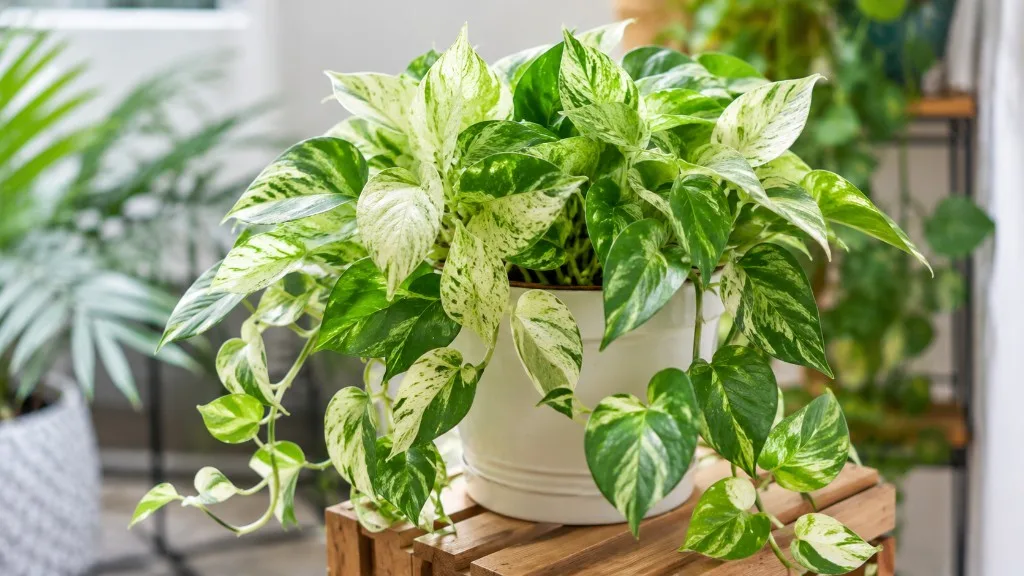
Marble Queen Pothos Repotting: When, How, and Mistakes to Avoid
Marble Queen Pothos Repotting: When, How, and Mistakes to Avoid
Marble Queen Pothos (Epipremnum aureum ‘Marble Queen’) earns its reputation as an easy houseplant - until you slide it out of a nursery pot and realize the white-marbled vines above ground are supported by a root mass that has been circling the container for months. Variegated pothos looks delicate, but the biology underneath is the same tough aroid as golden pothos. Roots still need oxygen, fresh mix still breaks down, and an oversized decorative pot still holds water the plant cannot use. The difference is pace: less chlorophyll in each leaf means slower top growth and slower root colonization after every pot upgrade, so Marble Queen punishes the same repotting mistakes as golden pothos - just on a longer timeline that is easier to misread as patience.
Done well, repotting Marble Queen is an hour of careful work, a week of slight adjustment, and then new marbled leaves along the vines. Done poorly - too large a pot, bare-root washing, or a winter repot in a dim corner - you can watch white sectors brown on stressed foliage while roots sit in wet mix with nothing to pull. This guide walks through when to repot, how to do it step by step, and the cultivar-specific recovery signals that tell you the plant is back on track.
Reviewed by the LeafyPixels Review Board against NC State Extension, Clemson HGIC, Penn State Extension, Missouri Botanical Garden, and RHS pothos guidance before publication. Recovery timelines below are home-climate heuristics, not lab measurements.
Quick Decision: Repot Now, Emergency Only, or Wait Until Spring
| Situation | What you are seeing | Action |
|---|---|---|
| Routine upsize | Roots from drainage holes, circling root ball, water runs through without wetting mix, growth stalled in spring light | Repot in spring or early summer - one pot size up, fresh aroid mix |
| Emergency | Mushy brown roots, sour soil smell, severe root-binding with repeated wilting, cracked pot | Repot now regardless of season - trim rot, modest pot matched to remaining roots |
| Defer | Slightly tight pot but still growing, only one yellow lower leaf, plant arrived last week, winter dormancy with stable watering | Wait until spring; top-dress only if surface mix is crusted |
If you are unsure whether yellow leaves mean roots or water, read the watering guide before you unpot. Repotting a Marble Queen that is yellow from chronic overwatering on Marble Queen Pothos adds stress without fixing the trigger.
Why Repotting Matters for Marble Queen Pothos
Repotting solves three problems that eventually show up as leaf symptoms on variegated pothos. First, roots circle the pot wall and compress into a dense mat that absorbs water unevenly - the classic root-bound pattern where the plant wilts hours after a thorough drink because water channels down the sides without rewetting the center. Second, peat and coir break down over 12–24 months; perlite floats, pore spaces collapse, and the mix stays wet longer at the bottom even when the surface looks dry. Third, salts from tap water and fertilizer accumulate at the root zone, which can burn fine hairs and appear as brown tips on white leaf sectors before green tissue shows damage.
Marble Queen belongs to Araceae, the arum family shared with philodendrons and monsteras. Aroids tolerate brief moisture but not stagnant, airless wet soil. The most common repot failure - jumping to a pot much too large - creates exactly that environment. Below ground, Marble Queen behaves like a tropical understory climber that wants evenly moist, well-aerated mix. Above ground, the marbled foliage masks how fast roots are actually working.
What fresh soil and extra root room fix for variegated pothos
Fresh mix restores structure: air pockets, organic matter, and drainage speed compacted soil lost months ago. Extra diameter lets white root tips spread outward instead of spiraling, which improves uptake after each watering cycle. You will notice the pot’s behavior change. A root-bound Marble Queen often dries out unevenly - fast on the edges, soggy in the core - and white sectors may crisp while green tissue still looks fine because the root mat cannot distribute moisture evenly through variegated leaves.
A repot is also the easiest moment to inspect root rot on Marble Queen Pothos - brown, mushy, sour-smelling tissue that needs trimming before it spreads. Catching rot during repotting is simpler than diagnosing it from yellow lower leaves alone, especially on a long trailing vine that naturally drops old foliage. Firm white roots mean you are upgrading space and mix. Mushy roots mean rescue mode: trim aggressively, size the pot to what remains, and expect a longer recovery before new marbled leaves appear.
How Marble Queen’s slower growth affects repot timing
Most indoor Marble Queen reaches roughly 2–3 m of trailing vine at maturity, but individual stems grow more slowly than solid-green golden pothos because white and cream sectors contain less chlorophyll. That slower photosynthesis means roots colonize fresh mix gradually after a repot - often taking an extra week or two before the plant resumes regular dry-down rhythm compared to a golden pothos moved at the same time.
As a working baseline, plan a full repot every 1–2 years for an actively growing indoor Marble Queen, or sooner if multiple root-bound signals appear together. Penn State Extension notes pothos generally benefit from repotting when roots emerge from drainage holes or growth slows. The calendar is a reminder to lift the pot and look, not a command to repot on schedule regardless of root condition.
Why Marble Queen Needs a Different Rhythm Than Golden Pothos
Golden pothos and Marble Queen share Epipremnum aureum biology - same family, same basic watering intolerance for wet feet, same one-size-up pot rule. The cultivar difference is energy budget. Golden pothos pushes new all-green leaves quickly in bright indirect light and fills a modest pot increase within weeks. Marble Queen allocates less photosynthetic tissue per leaf, so after the same repot it may sit visually quiet longer while roots explore fresh mix.
Practical consequences: expect longer dry-down in the weeks after repotting even if you only moved up one size; hold off on fertilizer longer before judging failure; and read recovery on new leaf marbling, not on whether older damaged white sectors heal - they will not. If you also grow golden pothos, resist copying its post-repot watering calendar onto Marble Queen. For shared E. aureum basics, the golden pothos repotting guide covers genus-level mechanics; this page focuses on variegated timing and recovery signals.
Worked example: A Marble Queen in a 12 cm nursery pot after 18 months in a north-facing window showed roots circling the bottom and water running straight through. In early April it moved to a 15 cm pot with fresh 60/20/20 aroid mix (details below). Mild wilt appeared on days 3–5, then cleared. The first new leaf with crisp green-and-white marbling opened around week 3 - a reasonable home-climate outcome, not a guarantee.
Signs Your Marble Queen Pothos Needs Repotting
Repot when two or more of these appear during active growth season:
- Roots emerging from drainage holes or circling the soil surface
- Water runs through without the mix absorbing - hydrophobic channeling
- Wilting hours after watering despite moist-looking surface mix
- Growth stalled for several weeks while light and care are unchanged
- Top-heavy wobble - foliage outweighs the root anchor
- Sour smell or permanently damp lower half of the pot
Do not repot solely because one lower leaf yellowed. Yellowing can mean overwatering, cold drafts, low light, or normal aging on a long vine. Confirm the root zone is the bottleneck first. If tips keep growing while bases drop leaves, that may be vine aging - not a pot crisis.
Root-bound and drainage signals
Slide the plant partway out and inspect the bottom first. A root ball that holds a perfect pot-shaped mold with little visible mix on the sides is root-bound. Circling roots at the bottom are not always an emergency, but they mean the plant has been tight for a while. On Marble Queen, the root mass can look dense relative to thin stems - checking the bottom matters more than judging by vine length alone.
Fast drainage after watering sounds healthy until you realize water is bypassing a hydrophobic core. If the pot feels light again within an hour of a thorough drink, the mix may be spent. Slow drainage plus sour smell or mushy stems points to rot requiring immediate attention - see the root rot problem guide if trimming is extensive.
Growth and variegation symptoms tied to root stress
Stunted new growth is a late root-bound signal. Marble Queen in adequate light normally opens new leaves regularly, though less frequently than golden pothos. When new nodes stop appearing, or new leaves arrive smaller with faded marbling, depleted or compacted soil is a prime suspect. Pale lower leaves can reflect nutrient exhaustion in old mix even when you fertilize faithfully - but check moisture first, because overwatering produces similar yellowing.
White-sector browning on several leaves at once, combined with tight roots and fast dry-down, often improves after repotting with fresh mix - provided light is bright enough to support variegation. If marbling fades on new growth after repot, the issue is usually low light or shock in a dim corner, not the repot itself. Move to brighter indirect light and wait for the next leaf cycle before repotting again.
Best Time of Year to Repot Marble Queen Pothos
Marble Queen recovers fastest when already geared for growth. Spring through early summer is the safest window for most indoor growers. Rising temperatures and lengthening days support root and shoot development, so the plant colonizes fresh mix more quickly than in winter. Clemson HGIC recommends repotting during active growth when temperatures are warm and days are longer. Keep indoor temperatures in the 18–29°C (65–85°F) range the plant already prefers.
Spring and early summer windows
During active growth, Marble Queen may show new turgid leaves within two to four weeks after a well-executed repot - a home-climate heuristic, not a fixed promise. Roots begin exploring fresh mix when soil stays evenly moist but not soggy. Spring is also the best time to combine repotting with propagation if you want to trim long vines - see the propagation guide for water-rooted cuttings that need extra patience after soil transplant.
If you missed spring, early summer still works. Avoid repotting during the hottest week if your home lacks air conditioning; shade slightly for the first week after a summer repot, then return to bright indirect light.
When winter repotting is still justified
Winter repotting is a backup, not a default. Growth slows, days are short, and disturbed roots sit in wet mix longer because the plant pulls water less actively - increasing rot risk for any aroid. Skip winter repotting if the plant is only slightly tight but still growing a little.
Repot in winter only when delay would clearly harm the plant: severe root-binding with repeated wilting, active root rot requiring trim and fresh mix, or a broken pot. Use a modest size increase, keep temperatures above roughly 18°C, provide bright indirect light, and water more cautiously - let the top of the mix dry slightly further between drinks until new growth appears. Late winter as days lengthen can work if indoor conditions are stable and you disturb roots minimally.
Choosing the Right Pot Size and Material
The most important decision is diameter, not aesthetics. Marble Queen wants one step up, not a mansion. Jumping from a 12 cm pot to a 20 cm decorative container keeps unused soil wet for days while roots catch up - the wet zone where aroid roots fail and yellow lower leaves follow.
Measure current inner diameter and choose a pot 2–5 cm (about 1–2 inches) wider, with the same depth profile or slightly deeper for top-heavy hanging baskets. From 10 cm nursery size, move to 12–13 cm. From 15 cm, move to 17–18 cm. Repeat one-size-up each repot across the plant’s life.
The one-size-up rule for variegated pothos
The principle matches root biology: roots grow into soil progressively, and until they do, excess mix is a water reservoir without uptake. Clemson HGIC recommends a pot only 1–2 inches wider than the current container with drainage holes. For Marble Queen, oversizing is especially risky because slower root fill leaves wet bottom soil longer than golden pothos would in the same pot.
After repotting, if you wait ten days before the top dries, the pot is probably too large or the mix too heavy. Variegated pothos in oversized pots often show white-sector stress before obvious wilt.
Terracotta, plastic, and hanging baskets compared
Every long-term pot needs drainage holes. Cache pots without holes work only if the plant stays in a draining nursery liner you empty after every watering.
| Material | Post-repot dry-down | Best for Marble Queen when… |
|---|---|---|
| Terracotta | Fastest | You tend to overwater or run cool, bright rooms |
| Plastic | Slower | Air is dry and you underwater slightly |
| Glazed ceramic | Medium | You want weight for top-heavy trailing vines |
| Hanging basket | Fast at edges, slower in core | Vines are long - repot at a table, reroute stems gently |
Clemson HGIC notes plastic holds moisture longer than terracotta - factor that into your first-month watering checks after repotting.
Soil Mix for Repotting Marble Queen Pothos
Marble Queen wants well-draining indoor mix that stays airy after repeated watering. The Missouri Botanical Garden describes Epipremnum as preferring moist, well-drained soils. Target pH 6.0–6.5; standard peat- or coir-based mixes land close enough for most tap water.
A reliable blend for repotting - consistent with the Marble Queen soil guide:
- 60% quality peat- or coir-based potting mix
- 20% perlite or pumice
- 20% orchid bark or coarse coco chips
That ratio drains within seconds while holding enough moisture that Marble Queen does not wilt hourly. Clemson HGIC recommends fresh airy mix with perlite or orchid bark for pothos roots. Add extra perlite if your home is cool or you water heavily.
Full repot - removing the plant, teasing circling roots, replacing essentially all old mix - suits root-binding, compaction, sour smell, or rot rescue. Top-dressing - scraping the top 3–5 cm and replacing with fresh blend without disturbing roots - is a gentler early-spring option when drainage is still acceptable but salts crust the surface. Top-dressing will not fix circling roots at the bottom. Never reuse mix from a rot case without sterilizing; fresh mix is simpler.
Avoid garden soil, pure cactus mix without amendment, and gravel drainage layers at the pot bottom - they do not improve drainage and can create a perched water table.
Step-by-Step: How to Repot Marble Queen Pothos Without Shock
Gather the new pot, pre-mixed soil, clean scissors, a chopstick, and a watering can. Work on a wipeable surface. For hanging baskets, unhook the planter to a table, coil vines loosely, and repot without yanking stems - broken nodes set back variegated recovery.
Step 1: Water 24 hours before repotting so the root ball holds together.
Step 2: Add a small mound of fresh mix to the new pot bottom - no thick gravel layer.
Step 3: Turn the plant on its side and slide it out, supporting stems at the base. Squeeze flexible nursery pots or run a knife around rigid pots if stuck.
Step 4: Inspect roots. Trim brown, mushy tissue with clean scissors. Tease circling bottom and side roots outward gently with fingers - do not bare-root wash unless rot forces it.
Step 5: Set the plant so the previous soil line sits about 1–2 cm below the rim. Do not bury stems deeper than before; buried nodes invite rot on pothos.
Step 6: Backfill with fresh mix, working soil between roots with a chopstick while centering the plant. Firm lightly - remove large air gaps without compressing mix.
Step 7: Water thoroughly until excess drains; empty the saucer. Place in bright, indirect light, out of direct sun, for 7–10 days.
Step 8: Hold fertilizer for at least four to six weeks while roots settle. Water when the top half of the mix feels dry - expect slightly longer intervals than before because soil volume increased and Marble Queen fills it slowly.
For the first week, Clemson HGIC suggests letting the top 1–2 inches dry before watering again. Mild wilt in the first 48 hours is common; recoverable wilt improves after a careful drink. Worsening wilt despite moisture usually means rot, oversize pot, or buried stems.
Common Repotting Mistakes and Recovery
Oversized pots top the list. More soil without more roots means chronic bottom wetness. Stick to one size up even if you imagine the vine will grow into it soon - Marble Queen fills volume over weeks, not days.
Bare-rooting or over-washing strips fine root hairs that absorb water. Tease, do not scrub. Aroids recover from gentle disturbance; they struggle after aggressive stripping - and variegated cultivars show stress on white sectors first.
Immediate fertilizing burns tender new root tips in fresh, already nutrient-containing mix. Clemson HGIC recommends skipping fertilizer while roots re-establish. Resume diluted feeding only after new growth matches normal leaf size and marbling.
Repotting for the wrong reason - yellow leaves from cold drafts, direct sun scorch, or recent overwatering - adds stress without fixing the trigger. Diagnose first.
No drainage holes turns repotting into a long-term rot trap. Decorative outer pots are covers only.
Stacking stress - repotting right after shipment, pest treatment, or a major move - compounds shock. Stabilize one to two weeks unless rot forces your hand.
Repotting in dim light after shock can push Marble Queen toward reversion - new leaves opening with more green and less white. Bright indirect light during recovery protects marbling on the next leaf cycle.
Ignoring pet safety during the messy phase: the ASPCA lists golden pothos (Epipremnum aureum, including variegated cultivars) as toxic to cats and dogs because of insoluble calcium oxalate crystals, which cause oral irritation, drooling, vomiting, and difficulty swallowing if chewed. Bag trimmings and keep pets away from spilled mix; contact your veterinarian if a pet eats plant tissue.
Recovery Timeline and Variegation Signals on New Leaves
Mild transplant shock usually shows as slight wilting, a pause in new leaves, or one to two dropped lower leaves for one to two weeks - a practical home-climate range, not a clinical measurement. The plant should perk after watering and should not smell sour at soil level.
Full root re-establishment typically takes four to six weeks in warm, bright conditions. Marble Queen may sit visually quiet longer than golden pothos in the same window - that is normal if soil is not staying soggy.
The clearest success signal is new marbled foliage: firm stems, leaf size matching older growth, and crisp green-and-white pattern on the newest leaf. Older leaves with damaged white sectors will not revert to perfect marbling; judge recovery on fresh growth only. If new leaves open mostly green with little white, increase bright indirect light before considering another repot.
Wilting beyond three weeks, sour soil, or spreading yellowing warrants unpotting to check for rot, buried stems, or a pot that is too large.
Conclusion
Marble Queen pothos repotting comes down to reading the roots, choosing spring or early summer when you can, moving one pot size up with fresh, well-draining aroid mix, and giving the plant a quiet week in bright indirect light while roots settle slowly. Check every twelve to eighteen months, but never repot on autopilot when the real problem is water, light, or temperature.
Get pot size and soil right and Marble Queen rewards you with new marbled leaves along the vines. Oversize the container, fertilize too soon, bare-root without cause, or recover in a dim corner and the same plant will look punished for weeks despite its tough reputation. Watch roots first, leaves second - and treat repotting as a targeted fix, not a reflex whenever a white sector browns. After repotting, pair this guide with the overview, soil, watering, light, and propagation pages when the same issue keeps returning.
When to use this page vs other Marble Queen Pothos guides
- Marble Queen Pothos overview - Start here for whole-plant context before deep-diving this topic.
- Marble Queen Pothos problems hub - Jump to symptom-specific fix guides when this care topic does not resolve the issue.
- Root Rot on Marble Queen Pothos - Escalate here when repotting adjustments are not enough.