Overwatering on Marble Queen Pothos: Causes, Checks & Fixes
Quick answer
Overwatering on Marble Queen Pothos means the root zone stays wet too long for this slow variegated grower-stop watering until the top 3–5 cm (1–2 in.) dries, then inspect roots if yellowing continues on a heavy pot.
Overwatering on Marble Queen Pothos: Causes, Checks & Fixes
This guide covers overwatering on Marble Queen Pothos. See also the general Overwatering guide, watering, and light pages for this plant.
Overwatering on Marble Queen Pothos: Causes, Checks & Fixes
Quick answer
Overwatering on Marble Queen Pothos (Epipremnum aureum ‘Marble Queen’) means the root zone stays wet too long-not a single heavy drink, but repeated watering before the mix dries. This variegated cultivar grows more slowly than Golden Pothos because its white-marbled leaves carry less chlorophyll, so it uses less water on the same schedule. First step: stop watering until the top 3–5 cm (about 1–2 in.) of soil is dry, then inspect roots if leaves keep yellowing while the pot stays heavy. For dry-down rhythm detail once the plant stabilizes, see the Marble Queen watering guide; for cultivar baseline, see the overview.
Reviewed by the LeafyPixels Review Board against Clemson HGIC, NC State Extension, Missouri Botanical Garden, Penn State Extension, and ASPCA pothos guidance before publication.
What overwatering looks like on Marble Queen Pothos
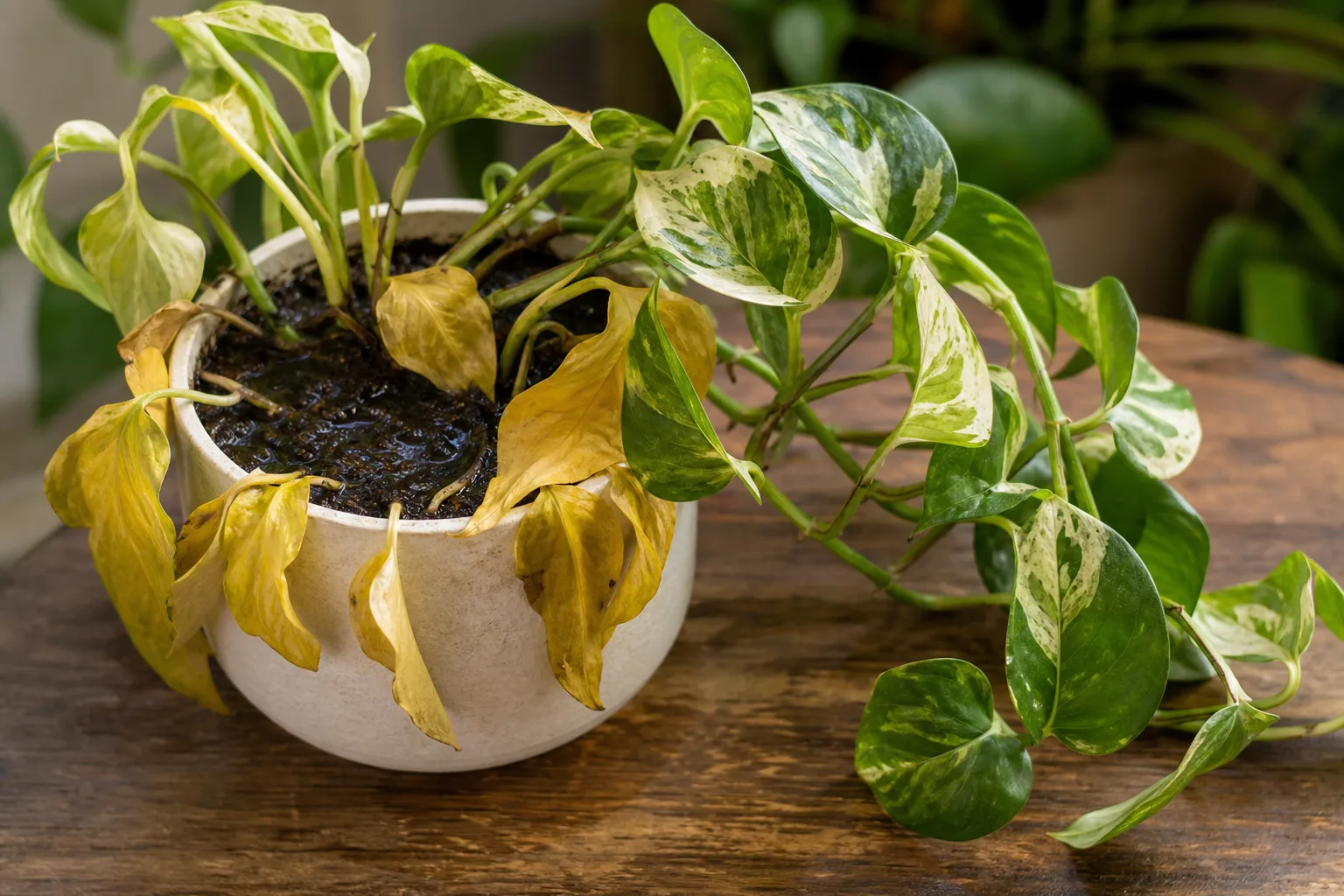
The classic pattern is limp trailing vines with wet soil. Lower leaves yellow first, often along long bare stems, while the pot feels heavy days after you last watered. Because damaged roots cannot move water, the plant can show wilted foliage even when mix is saturated-a confusing sign that points to roots, not thirst.
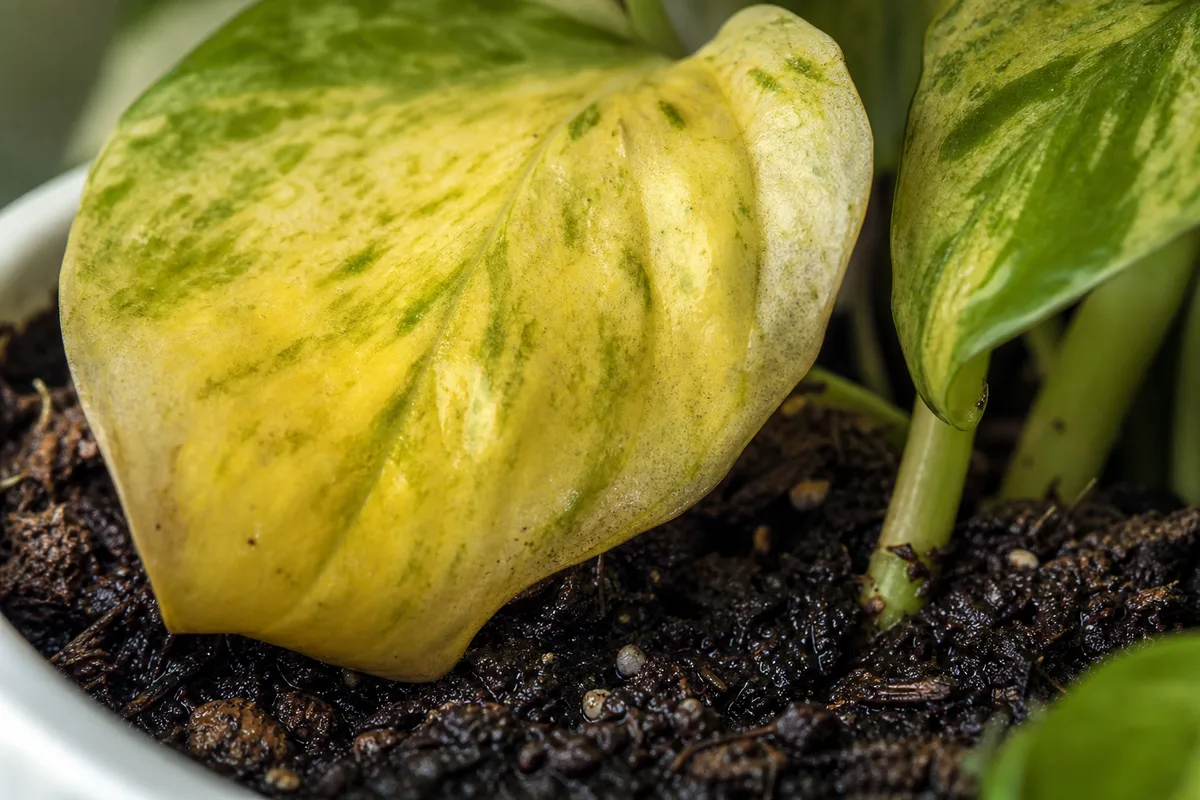
Overwatering symptoms on Marble Queen Pothos - compare with healthy tissue on the same plant.
Pothos vines store modest moisture in their fleshy stems, which can mask early stress-but once roots rot, that reserve cannot compensate. Clemson HGIC notes that plants with fleshy stems store water while still needing oxygen at the roots; chronic saturation kills roots even on drought-tolerant species like pothos.
On variegated pothos, white marbling may dull on new growth, and tips may stall while older leaves drop with a gentle tug. Advanced overwatering brings a sour smell from drain holes, white mold on the soil surface, and fungus gnats hovering near the pot. Soft stems at nodes mean rot is advancing-treat that as root rot, not a mild watering slip. When yellowing is your main symptom, cross-check the yellow leaves guide.
Healthy Marble Queen vines feel firm. Leaves hold their green-white pattern in adequate light. A single yellow leaf at the base of a long vine can be normal aging if everything else is firm.
A real recovery pattern to expect
A common indoor scenario: Marble Queen on a dim shelf, watered every Sunday like a faster Golden Pothos. By midweek the pot still feels cool and heavy; lower leaves yellow while vines droop. After stopping water, moving to bright filtered light per the light guide, and emptying a full saucer, the mix often dries within ten days. New marbled tips may appear two to three weeks later-recovery shows in fresh variegated growth, not old yellow blades turning green again.
Why Marble Queen Pothos gets overwatered
Gardeners often treat all pothos the same. Marble Queen is a moderate grower-slower than solid-green Golden Pothos-so a weekly soak that suits one pothos can keep this cultivar’s mix saturated for a week or more. Clemson HGIC notes that Marble Queen requires more light than other pothos varieties and carries striking white or cream variegation on pointed leaves.
Dim corners compound the mismatch. In shade the plant drinks less while soil stays damp, and low light can cause loss of variegation as the plant reverts toward solid green. See the not enough light guide when green reversion appears alongside a heavy pot. Cool winter rooms below about 18°C (65°F) or cold drafts from windows slow growth further, yet many owners keep summer watering frequency through dormancy.
Setup mistakes compound the problem: oversized pots holding excess wet mix, peaty soil without perlite, pots sitting in full saucers, and decorative cache pots with no drainage. Fresh Marble Queen Pothos repotting guide into heavy wet mix plus an immediate deep soak is a common trigger-pothos recovers from many stresses, but excess water right after repotting adds unnecessary strain.
How to confirm the cause
Work through these checks before changing several variables at once:
- Moisture at depth - Probe 3–5 cm (1–2 in.) into the mix. If it is wet while leaves yellow, overwatering is likely.
- Pot weight - Compare to a properly watered plant. A chronically heavy pot supports wet roots.
- Wilting vs. moisture - Limp vines with wet soil point to root stress, not drought.
- Light level - Fading variegation plus wet soil suggests low light is slowing water use.
- Drainage - Standing water in saucers or sealed outer pots keeps roots anaerobic.
- Root inspection - Unpot if smell or stem softness appears. Firm pale roots with dry soil mean underwatering instead.
Underwatering shows the opposite: light pot, soil pulled from edges, crispy leaf margins, and firm roots that perk up after one thorough soak.
Lookalike symptoms
| Pattern | Leaf / vine look | Soil / pot | Stem / smell | Likely cause | Next step |
|---|---|---|---|---|---|
| Limp vines, bottom yellowing | Soft yellow lower leaves | Heavy, wet at 3–5 cm | Firm or softening at nodes | Overwatering (this page) | Stop watering; dry-down |
| Dramatic droop, perks after soak | Crisp or wrinkled margins | Light, dry at depth | Firm stems | Underwatering | One deep soak → underwatering |
| Wet-soil wilt, sour smell, gnats | Yellow spreads fast | Wet days after watering | Soft blackening at base | Advanced root rot | Unpot now → root rot |
| Leggy spacing, green new leaves | Older leaves may yellow slowly | Can stay wet longer in shade | Long internodes | Low light (+/- overwater) | Brighten → not enough light |
| One yellow leaf at vine base | Single old blade | Appropriate moisture | Firm vine, clean marbling | Normal node senescence | No action if isolated |
First fix for Marble Queen Pothos
Stop watering and let the top 3–5 cm (1–2 in.) of soil dry completely before the next drink.
Move the plant to brighter indirect light so it uses moisture steadily and holds white marbling-do not jump to direct sun, which scorches pale variegated tissue. Empty any saucer water immediately. If soil has smelled sour for days or stems feel soft at nodes, unpot, trim mushy roots, and repot into fresh airy mix sized to the remaining root mass per the root rot guide.
Do not fertilize, mist heavily, or repot into a larger container on day one unless roots are clearly rotting.
Step-by-step recovery
- Pause watering - Wait until the top 3–5 cm (1–2 in.) is dry. For badly saturated mix, tip the pot on its side briefly to let excess drain, then wait.
- Improve light - Shift to bright filtered light so the plant metabolizes water at a realistic pace.
- Inspect roots if symptoms persist - After a week of dry-down with continued yellowing, unpot and rinse away old mix. Trim brown or mushy roots with sterilized scissors. Wear gloves when handling cut tissue-all Epipremnum aureum cultivars are toxic to cats and dogs via insoluble calcium oxalate crystals that irritate the mouth if chewed. Call ASPCA Animal Poison Control at (888) 426-4435 if you suspect pet ingestion.
- Repot only if needed - Use a clean pot matched to root size with fresh well-draining mix. Water once lightly to settle, then wait for partial dryness again.
- Remove dead foliage - Pull fully yellow leaves to redirect energy. They will not re-green.
- Save backup cuttings - If stem bases soften, take firm nodes with visible variegation and root in water as insurance. Keep cuttings away from pets for the same calcium oxalate reason.
Hold fertilizer until new marbled leaves appear for two weeks without further decline.
Recovery timeline
Mild overwatering caught early-wet soil but firm roots-often stabilizes within two to three weeks once dry-down rhythm and light improve. Judge success by new growth with clean marbling, not old leaves turning green again.
If more than half the root mass was mushy, recovery may take a full growing season, and severe node rot may require restarting from cuttings. Cool dim rooms extend timelines; warm bright indirect light speeds dry-down and new tip growth.
Mistakes to avoid
Do not water because leaves look sad when soil is already wet-that deepens root stress. Do not move the plant into harsh direct sun to “dry it out” faster. Do not repot into a much larger pot to “give roots room”; extra wet mix worsens the cycle. Do not leave runoff sitting in saucers. Do not stack repotting, pruning, and fertilizing the same week on a stressed vine.
Marble Queen care cross-check
Pair dry-down watering with the basics this cultivar needs: bright indirect light strong enough to maintain variegation, standard potting mix with 20–30% perlite, pots with open drain holes, and reduced winter watering when growth slows. A trailing Marble Queen in a hanging basket dries faster than one in a deep cachepot on a dim shelf-adjust checks to your setup, not a generic calendar. Full rhythm detail lives in the watering guide.
How to prevent overwatering next time
Water when the soil is dry at the top 3–5 cm (1–2 in.), not on a fixed weekly schedule. In summer that may mean every 7–10 days; in winter every 10–14 days-or longer in cool dim rooms. Always empty saucers within 30 minutes of watering.
Refresh compacted mix every one to two years before it holds water like a sponge. Size pots to root mass, not vine length. If fungus gnats or surface mold appear, treat them as a moisture warning and lengthen the dry-down interval before reaching for pesticides-see fungus gnats on Marble Queen.
When to worry
Unpot immediately-do not rely on dry-down alone-if stems soften at nodes, several leaves yellow within a week, new growth turns solid green while the plant declines, or soil smells rotten. At that stage, mild dry-down alone is not enough; follow the root rot guide.
If the entire root ball is mushy and vines collapse from the base, salvage variegated node cuttings rather than expecting the original pot to rebound.
Related Marble Queen problems
Use this page when wet soil and root stress are your main concern. Follow the link that matches what you confirmed:
- Marble Queen overview - cultivar baseline and Golden Pothos comparison
- Root rot on Marble Queen - mushy roots, trim, and salvage cuttings
- Underwatering on Marble Queen - dry wilt vs. rot confusion
- Yellow leaves on Marble Queen - symptom deep-dive and lookalike table
- Marble Queen watering - prevention rhythm once rescue is complete
- Marble Queen light - variegation maintenance and scorch avoidance
- Not enough light - green reversion and dim-corner slow dry-down
- Fungus gnats on Marble Queen - flies and larvae when soil stays wet
- Wilting on Marble Queen - limp vines on wet vs. dry mix
Conclusion
On Marble Queen Pothos, overwatering is a volume-and-timing error on a slow variegated vine-not a death sentence if caught while roots are still firm. Confirm moisture at depth, stop watering until the top 3–5 cm (1–2 in.) dries, and pair drainage with enough light that the plant actually uses water. Recovery shows up in new marbled leaves. When the plant is stable, shift to the watering guide for long-term rhythm.
How we wrote and verified this guide: Recommendations were checked against Clemson Cooperative Extension, NC State Extension, Missouri Botanical Garden, Penn State Extension, and ASPCA references cited inline. Author: sai-ananth. Reviewer: LeafyPixels Review Board. Methodology: plant problem guidance is reviewed against botanical references, extension resources, and LeafyPixels Marble Queen care data before publication. Claims validation: claims-validator-v1 pass with inline external links documented below. Last reviewed: 2026-06-17.
When to use this page vs other Marble Queen Pothos guides
- Marble Queen Pothos watering guide - Use for routine moisture checks before assuming overwatering is the main issue.
- Marble Queen Pothos problems hub - Browse all 16 common issues on this species.
- Root Rot on Marble Queen Pothos - Different entry point when symptoms overlap with overwatering.
- Yellow Leaves on Marble Queen Pothos - Different entry point when symptoms overlap with overwatering.
- Wilting on Marble Queen Pothos - Different entry point when symptoms overlap with overwatering.
Related Marble Queen Pothos guides
- Marble Queen Pothos overview
- Marble Queen Pothos watering
- Marble Queen Pothos light
- Marble Queen Pothos soil
- Root Rot on Marble Queen Pothos
- Yellow Leaves on Marble Queen Pothos
- Wilting on Marble Queen Pothos
- Fungus Gnats on Marble Queen Pothos
- Mold on Soil on Marble Queen Pothos
- Drooping Leaves on Marble Queen Pothos
- Marble Queen Pothos problems