Root Rot on Marble Queen Pothos: Causes, Checks & Fixes
Quick answer
Marble Queen Pothos root rot follows persistently wet soil-this slow variegated grower uses less water than Golden Pothos. Unpot, trim mushy roots, repot in fresh draining mix, and let the top 3–5 cm dry before the next drink.
Root Rot on Marble Queen Pothos: Causes, Checks & Fixes
This guide covers root rot on Marble Queen Pothos. See also the general Root Rot guide, watering, and light pages for this plant.
Root Rot on Marble Queen Pothos: Causes, Checks & Fixes
Quick answer
Root rot on Marble Queen Pothos almost always starts with soil that stays wet too long. This cultivar grows more slowly than solid-green pothos because its white marbled leaves carry less chlorophyll, so it drinks less on the same schedule. First step: unpot, trim mushy roots, repot in fresh standard potting mix with 20–30 % perlite, and water only after the top 3–5 cm of soil is dry.
What root rot looks like on Marble Queen Pothos
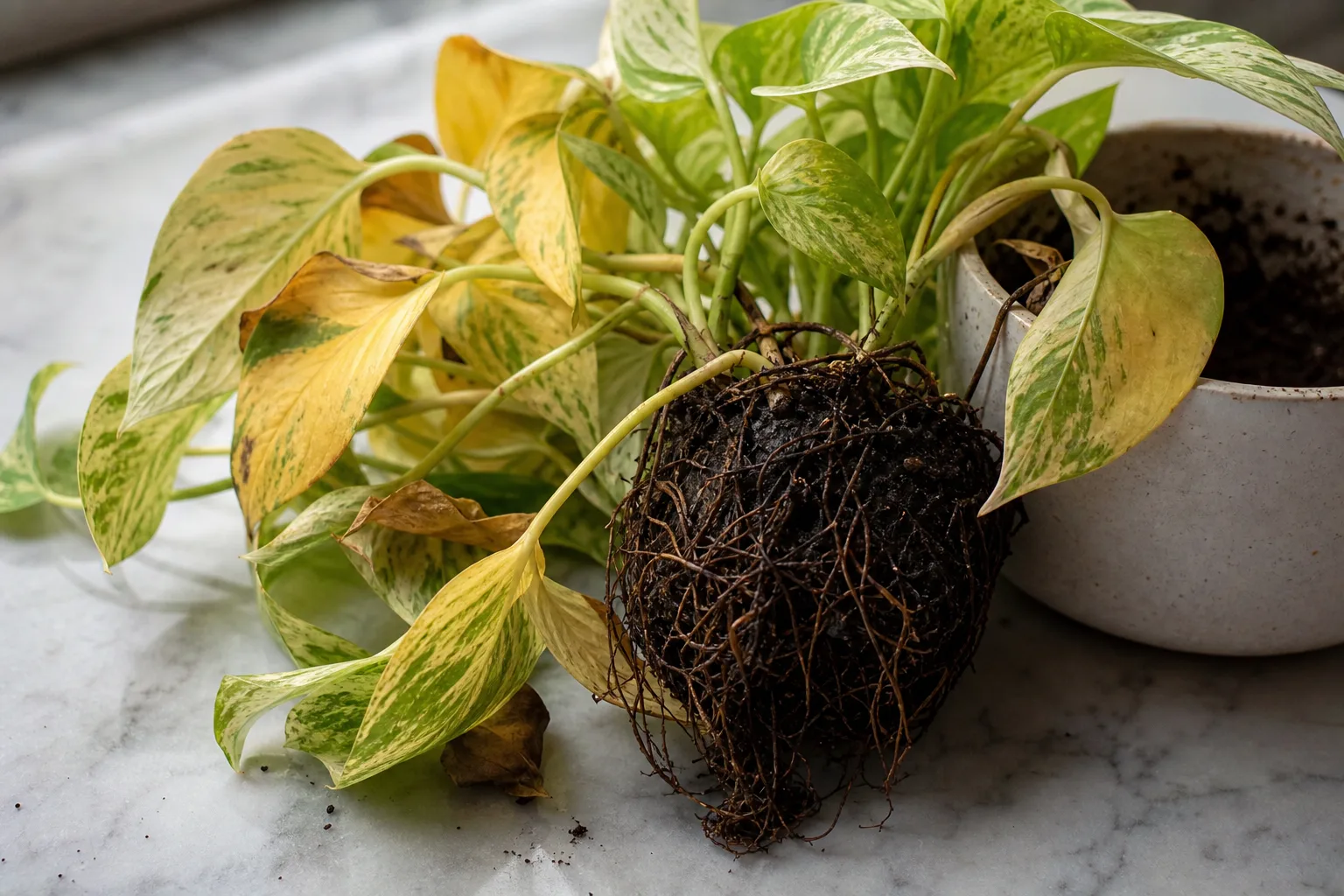
Above ground, rot masquerades as thirst. Vines wilt, lower leaves yellow, and white-marbled foliage may dull-even though the pot feels heavy. That mismatch is the clue: damaged roots cannot move water. Advanced cases show soft stems at nodes, blackened vine bases, and a [sour or rotten smell from the soil](https://www.missouribotanicalgarden.org/gardens-gardening/your-garden/help-for-the-home-gardener/advice-tips-resources/insects-pests-and-problems/environmental/[overwatering on Marble Queen Pothos](/plants/marble-queen-pothos/overwatering/)). On variegated pothos, yellowing often starts on older leaves while new growth stalls or reverts to solid green in dim wet corners.
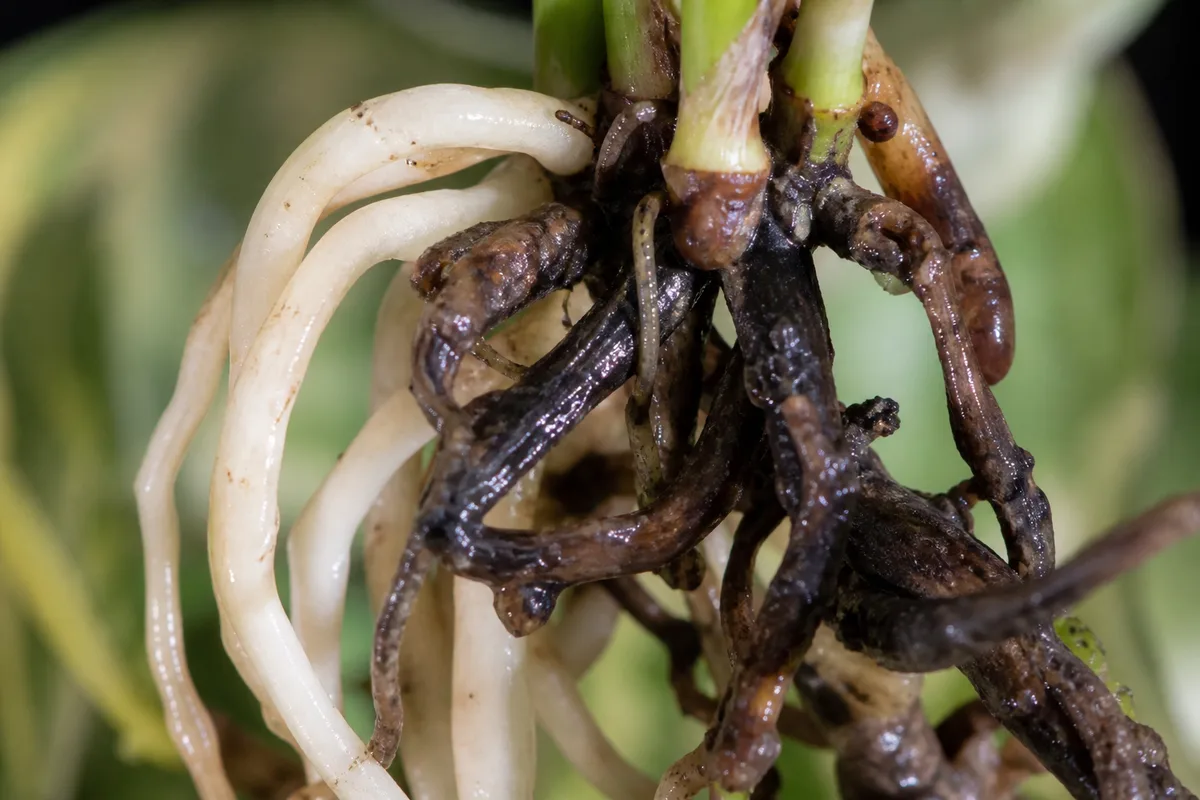
Root Rot symptoms on Marble Queen Pothos - compare with healthy tissue on the same plant.
Below ground, healthy pothos roots are firm and pale. Rotting roots are slimy, brown, or translucent and pull away when rinsed. Root rot and blackening of leaf margins can occur with overwatering on Epipremnum aureum.
Why Marble Queen Pothos gets root rot
Marble Queen is an aroid vine that prefers bright indirect light and soil that dries between drinks. In low light the plant uses even less water while mix stays damp-exactly the setup for anaerobic roots. Oversized pots, peaty mix without perlite, and watering on a calendar (especially every 7–10 days in winter when growth slows) keep the root zone saturated.
Too much water will lead to root rot on pothos. Because Marble Queen is a slow grower, the same Marble Queen Pothos watering guide that suits Golden Pothos can be excessive. Cool rooms below about 18°C (65°F) further reduce water uptake while saucers hold runoff.
How to confirm the cause
- Moisture history - Has the top 3–5 cm stayed wet for five or more days?
- Light level - Is the plant in dim light where variegation is fading? Low light plus wet soil is a common Marble Queen pairing.
- Wilting vs. moisture - Wilting with wet soil strongly suggests root dysfunction, not drought.
- Root inspection - Unpot carefully. Compare firm roots with mushy tissue at nodes.
- Smell - Sour odor from mix supports rot over simple underwatering on Marble Queen Pothos.
Underwatering shows a light pot, crispy leaf edges, and firm white roots-the opposite pattern.
First fix for Marble Queen Pothos
Unpot, trim rotted roots, and repot in fresh draining mix - then water less often.
Slide the plant out and rinse away old wet mix. Cut brown or mushy roots with sterilized scissors until only firm tissue remains. If more than half the root mass is gone, propagate firm nodes with white-green variegation as backup-Marble Queen roots easily from stem cuttings.
Repot into a clean pot sized to the remaining roots using standard potting mix with 20–30 % perlite. Most container plants prefer moist, not soggy, soil; let the top 3–5 cm dry before watering again. Place in bright indirect light-not a dark corner while recovering.
Step-by-step recovery
- Remove the plant from wet mix; discard saturated soil.
- Trim all soft roots; optionally rinse in clean water only.
- Choose a pot sized to root mass, not the full trailing vine length.
- Repot at the same depth; water once lightly, then wait for partial dryness.
- Hold fertilizer until new marbled leaves appear-over-fertilizing can burn pale white sections.
- Save healthy cuttings if stem bases soften.
Recovery timeline
Mild rot with firm nodes may show new tips within two to three weeks in warm bright light. Judge success by fresh variegated leaves, not immediate vine length. Severe node rot often means restarting from cuttings.
Causes to rule out
- Underwatering - Dry pot, limp leaves that perk after one deep soak; roots firm.
- Low light alone - Leggy green reversion without sour soil or mushy roots.
- Normal aging - One or two old yellow leaves at the base on an otherwise firm vine.
What not to do
Do not water wilting vines automatically-check roots first. Do not repot into oversized pots or heavy garden soil. Do not leave the plant in standing saucer water. Avoid fertilizing stressed roots. Keep out of pet reach-golden pothos is toxic to cats and dogs, and Marble Queen shares the same calcium oxalate crystals.
How to prevent root rot next time
Match watering to how fast your pot dries in your light. Marble Queen needs brighter indirect light than Golden Pothos to hold white marbling-and that same light helps the mix dry on schedule. Use perlite-enhanced mix, empty saucers after every drink, and reduce frequency in winter. Inspect nodes when you water.
Marble Queen Pothos care cross-check
Root rot prevention aligns with bright indirect light, airy mix, and dry-down watering. A variegated pothos in weak light with a summer daily watering habit will stay wet and rot even in “good” mix. Move the plant closer to an east- or west-facing window (with sheer curtain if needed) before increasing water frequency.
When to worry
Escalate immediately if nodes soften, stems blacken from soil upward, or the plant collapses within days of wilting. Early root browning with firm green-white stems still allows Marble Queen Pothos repotting guide rescue-take cuttings early if base tissue fails.
Conclusion
Marble Queen Pothos root rot begins with waterlogged mix, not mysterious wilt. Confirm by inspecting roots, trim decay, repot into fresh draining substrate, and water only after the top 3–5 cm dries. Prevent recurrence with drainage, brighter light for variegation, and a lighter watering hand than you would use on faster-growing Golden Pothos.
When to use this page vs other Marble Queen Pothos guides
- Marble Queen Pothos watering guide - Use for routine moisture checks before assuming root rot is the main issue.
- Marble Queen Pothos problems hub - Browse all 16 common issues on this species.
- Overwatering on Marble Queen Pothos - Different entry point when symptoms overlap with root rot.
- Yellow Leaves on Marble Queen Pothos - Different entry point when symptoms overlap with root rot.
- Wilting on Marble Queen Pothos - Different entry point when symptoms overlap with root rot.