Marble Queen Pothos Light Needs: Best Window & Sun
Marble Queen Pothos Light Needs: Best Window & Sun
Marble Queen Pothos Light Needs: Best Window & Sun
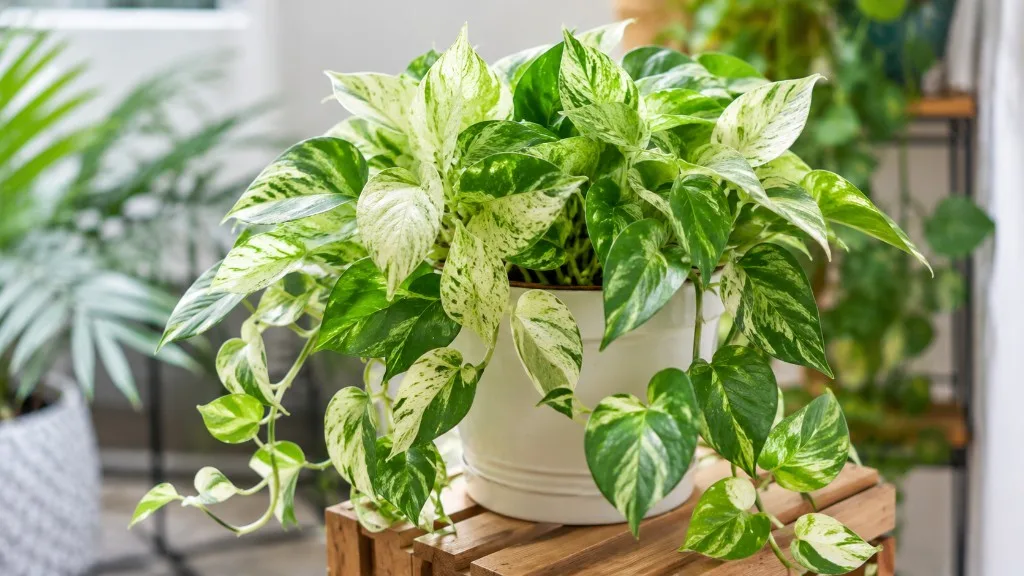
Marble Queen Pothos looks effortless in nursery photos - creamy white marbling over heart-shaped green, trailing from a bright shelf like it chose the spot itself. Then you bring one home, place it where the pot looks good instead of where the leaves receive real brightness, and within a few weeks the newest leaves arrive greener, smaller, and farther apart on the stem. That pattern is almost always light, not a mysterious deficiency. Epipremnum aureum ‘Marble Queen’ shares Golden Pothos’ shade tolerance at the survival floor, but it sits higher on the light ladder because white variegated sectors contain far less chlorophyll than green tissue - and far less than the yellow-gold sectors on Golden Pothos.
Clemson Cooperative Extension recommends bright, indirect light for pothos indoors and notes that variegated cultivars lose coloring in lower light. (Clemson HGIC) Penn State Extension advises moderate to bright light while avoiding direct sun, with gradual acclimation when exposure increases. (Penn State Extension) For Marble Queen specifically, the practical target is bright indirect light most of the day - strong enough that new leaves keep visible white marbling - not merely dim survival light that keeps the vine alive while editing away the cultivar you paid for.
This guide covers how much light Marble Queen Pothos actually needs, why it demands more brightness than Golden Pothos, where to place pots by window direction, direct sun limits and safe acclimation, honest low-light expectations, grow-light setup when windows fall short, and the warning signs that tell you to move the plant before variegation fade or scorch becomes permanent habit. For species context and toxicity notes, see the Marble Queen Pothos overview. When light changes, adjust watering - see Marble Queen Pothos watering - because metabolism and dry-down speed shift together.
Quick Reference: Marble Queen Light Bands
Use this table as a placement compass, not a laboratory requirement. Foot-candle ranges are approximate indoor benchmarks synthesized from extension shade guidance and common horticulture references; your window, latitude, and obstructions matter more than a single number.
| Light band | Approx. foot-candles | What Marble Queen does | Action |
|---|---|---|---|
| Deep low light | 50–100 | Survives; new leaves trend green; internodes stretch | Move closer to glass, add grow light, or accept solid-green new growth |
| Moderate indirect | 100–250 | Maintains some pattern on new leaves; slow, leggy growth | Acceptable short term; upgrade for display-quality marbling |
| Bright indirect (target) | 250–1,000 | Firm new leaves, visible white sectors, moderate trailing growth | Default goal for heavily variegated Marble Queen |
| Direct hot sun | 1,000+ sustained | White sectors brown or bleach; scorch on sun-facing tissue | Filter, pull back, or acclimate only to gentle morning rays |
University of Florida IFAS Extension notes commercial pothos production under 63 to 80 percent shade, roughly 320 to 2,500 foot-candles, with reduced growth and variegation color when shade exceeds 80 percent. (UF IFAS Extension) Home growers rarely hit commercial greenhouse intensity, but the lesson holds: Marble Queen wants filtered brightness, not deep shade and not unfiltered midday beams on the sill.
Why Marble Queen Pothos Needs More Light Than Golden Pothos
All variegated pothos cultivars are light-sensitive, but Marble Queen is not Golden Pothos with a different paint job. Golden Pothos carries yellow-gold sectors that still photosynthesize moderately well; Marble Queen carries large white sectors with minimal chlorophyll. Every white patch is beautiful display tissue the plant must subsidize with green tissue elsewhere on the same leaf - and with total photons arriving across the day. When light drops, Marble Queen edits new leaves toward green first because chlorophyll pays rent and white marble does not.
NC State Extension lists low light as a cause of variegation loss on Epipremnum aureum - language that applies sharply to white-variegated types. (NC State Extension) Golden Pothos may dull slowly over months in a dim office; Marble Queen often shows green-dominated new foliage within weeks in the same spot because its margin for decorative pigment is thinner. If you already grow Golden Pothos successfully in moderate indirect light, treat Marble Queen as needing one brightness step higher - closer to glass, fewer hours of obstruction, or supplemental LED - to hold the white pattern.
White-Sector Variegation and Chlorophyll Economics
Variegation on Marble Queen is stable in the genetic sense but flexible in expression. Under strong bright indirect light, new leaves show bold white marbling or sectoring with firm green islands. Under chronic deficit, the plant produces smaller leaves with shrinking white zones until fresh growth looks like plain green pothos with a memory of marble. This is phenotypic adjustment, not necessarily permanent genetic revert - subsequent leaves often regain pattern after you improve light, though recovery speed depends on season and overall health.
Critical limitation growers miss: older leaves do not re-variegate after you move the pot. Only new leaves show recovery. If you improve light today, judge success on the next two unfurling leaves, not on last month’s faded foliage. White sectors on older leaves may also brown at the margins when direct sun hits tissue that formed in softer light - a sun-stress pattern more visible on white than on green.
Cultivar light-demand ladder for pothos indoors, from most shade-forgiving to most light-hungry for pattern retention: Jade Pothos (solid green) → Golden Pothos (moderate yellow variegation) → Marble Queen (heavy white marbling) → Snow Queen and heavily white cultivars. Place Marble Queen using Golden Pothos’ bright-indirect target, then bias brighter if white sectors fade.
Aroid Understory Biology Indoors
Marble Queen Pothos is an understory trailing aroid - a cultivar of Epipremnum aureum native to the Society Islands (Mo’orea, French Polynesia) and widely naturalized in tropical regions, where wild plants climb tree trunks toward dappled, broken canopy light rather than all-day direct sun. (NC State Extension) Indoors, the closest analog is filtered window light or strong ambient room brightness where leaves see sky brightness from a short distance without sitting in a hot sunbeam on the glass.
The Royal Horticultural Society describes Epipremnum as preferring bright filtered light and warns that scorching can occur in too much direct sun - guidance that fits Marble Queen’s white sectors especially. (RHS Epipremnum growing guide) Aroid roots also need airflow at the root zone; a dim, constantly wet pot in a dark corner fails from rot even when the plant “should” tolerate low light. Light sets the pace for the whole care system - including how fast soil dries - which is why chronic low light pairs with root rot risk when watering schedules do not adjust.
How Much Light Marble Queen Pothos Actually Needs
The operational target for Marble Queen Pothos indoors is bright indirect light: strong enough that you could read comfortably in the room without a lamp, with leaves receiving that brightness directly rather than only the floor nearby. In approximate terms, 250 to 1,000 foot-candles at the leaf surface supports the firm new growth and visible white marbling most growers want. 100 to 250 foot-candles keeps the plant alive with gradual quality decline. Below 100 foot-candles, survival is possible but variegation maintenance is unrealistic without supplemental light.
Light quality beats a compass direction alone. A plant receiving ten to fourteen hours of moderate brightness outperforms one that gets three hours of strong sun followed by interior gloom, because photosynthesis totals across the day drive growth more reliably than brief peaks. If you can improve only one variable, extend daily light total before chasing fertilizer or Marble Queen Pothos repotting guide.
Four Bands from Survival to Bright Indirect
Deep low light (roughly 50–100 foot-candles) - far from windows, obstructed corners, some windowless bathrooms with only door spill - supports survival at the cost of cultivar character. Growth slows, internodes lengthen, new leaves shrink, and white marbling fades toward green. Marble Queen tolerates this band less gracefully than Golden Pothos in the same spot.
Moderate indirect light (100–250 foot-candles) - several feet from an east or west window, a bright north room in high-latitude summer - produces steady but unremarkable growth. Some white pattern may persist on new leaves, but leggy stems and smaller foliage are common. Acceptable for short-term quarantine or seasonal moves; weak for long-term display.
Bright indirect light (250–1,000 foot-candles) - within one to four feet of an east or filtered south or west window, or under a well-placed grow light - is where Marble Queen develops firm leaves, visible white sectors on fresh foliage, and moderate trailing growth without constant fade anxiety. This is the band to aim for.
Direct hot sun (especially sustained afternoon exposure through south or west glass) exceeds what indoor Marble Queen leaves handle without acclimation. White sectors brown or bleach faster than green tissue. Gentle morning direct sun through an east window is often fine for acclimated plants; midday and afternoon beams are the primary scorch risk.
The New-Leaf Test
Judge placement by the newest leaf or shoot, not by how the oldest vines look. Old damage and faded marbling will not repair; new growth should be firmer, adequately sized, and still show white patterning on fresh leaves within two to three weeks of stable placement. If the youngest leaf is the problem, light is the first dial - not water, not repotting, not fertilizer.
Make one light change, then wait 10 to 14 days before also changing water, fertilizer, or pot size. Overlapping edits make diagnosis guesswork because wilt, fade, and edge crisping overlap across stress types. Rotate the pot a quarter turn weekly so the vine does not lean permanently toward one window, as Penn State Extension recommends for balanced pothos foliage. (Penn State Extension)
Best Window Placement for Marble Queen Pothos
Window direction is a starting guess, not a verdict. A “south window” blocked by a porch roof may deliver less usable light than an open east window. What matters is how many hours of useful brightness hit the leaf surface and whether any hours are hot direct rays that scorch white tissue.
Place Marble Queen within 12 inches (30 cm) of the glass on the brightest suitable exposure when you want vigorous, patterned growth - not across the room where human eyes see daylight but leaves receive little flux. Hanging baskets are often hung too high or too far from windows; the wall above a window can still be a dark zone. Use the new-leaf test after any move.
East, North, West, and South Exposures
An east-facing window is the most reliable default for Marble Queen in most homes. Morning sun is bright but cooler than afternoon exposure, delivering one to three hours of gentle direct light many acclimated pothos handle well, followed by bright indirect light the rest of the day. East windows support compact growth and stable white marbling without the scorch risk that west and unfiltered south windows carry in summer.
A south-facing window provides the strongest winter sun in the northern hemisphere and can be excellent for Marble Queen pulled back slightly from the pane or behind a sheer curtain. In summer, south glass can intensify heat and UV enough to bleach white sectors on leaves touching hot glass. Watch for one-sided brown patches on sun-facing white zones; add diffusion or move the pot a foot farther into the room when outdoor angles sharpen.
A west-facing window delivers strong afternoon rays - the highest scorch risk for unacclimated Marble Queen, especially on white variegation. West can work with sheer curtains, outdoor tree filtration, or a pot position that receives direct light only after the sun lowers. If west is your only bright option, treat afternoon diffusion as mandatory.
A north-facing window rarely supplies enough brightness for vivid white marbling long-term, though high-latitude summer north light can maintain slow growth. Expect stretching and green-dominated new leaves unless you add a grow light. North is workable for survival; it is weak for display-quality Marble Queen patterning.
Hanging Baskets and Shelf Distance
In hanging baskets, the top of the cascade receives more light than shaded inner vines. Marble Queen often looks healthy at the growing tips while lower leaves yellow from age and shade - normal to a point, but bare naked stems with leaves only at the ends usually mean insufficient light at the nodes where new growth forms. Trim leggy sections after light improves, or hang the basket lower and closer to the glass so growing tips stay in the brightest zone without hot direct beams.
Shelf placement more than six to eight feet (1.8–2.4 m) from the nearest window usually lands in the 100 foot-candle or lower zone in typical homes. Marble Queen may survive there with careful underwatering on Marble Queen Pothos discipline, but expect leggy growth you prune regularly or accept as sparse display. If the vine reaches toward a distant window with long bare internodes, that is phototropism confirming insufficient light.
Can Marble Queen Pothos Take Direct Sun?
Marble Queen Pothos is not a full-sun indoor plant. Penn State Extension warns that direct sun leads to leaf yellowing on pothos, and Clemson lists leaf scorch and tip dieback among problems tied to intense light combined with low humidity. (Penn State Extension; Clemson HGIC) White variegated sectors burn faster and show damage more visibly than green tissue - a sun-facing white patch can turn crisp brown within hours on a plant moved without acclimation from a dim shelf to an unfiltered west sill.
Short periods of gentle morning direct sun through an east window often cause no damage and may support steady growth on acclimated plants. Problems cluster around midday and afternoon direct exposure, especially through south and west glass, where leaf temperature spikes and photobleaching outrun repair capacity.
Acclimation Protocol Over 7 to 14 Days
Increasing sun exposure safely means stepwise brightness, not one jump from a dim interior corner to full afternoon rays:
- Move the plant one step brighter - farther from a sheer curtain, one hour earlier into direct east rays, or six inches closer to filtered south light - not from survival shade to harsh west window in one day
- Wait 7 to 14 days at each step while watching new leaves only
- Increase watering slightly as brightness rises because transpiration increases - but verify dry-down with your finger, not a fixed calendar from a dimmer past location
- If bleaching, white-sector browning, or crisping appears, step back to the last safe position and hold until clean new growth resumes
Outdoor summer moves follow the same logic: start in open shade or dappled morning light for a week before any exposure to bright patio sun. Marble Queen can summer outdoors in many climates, but patio tables in direct midday sun are a scorch trap for white-variegated leaves.
Low-Light Limits for Marble Queen Pothos
Marble Queen Pothos will live in low light longer than many houseplants - which is why it appears in offices and back bedrooms - but living is not maintaining cultivar character. NC State Extension notes survival in low light as a pothos strength while linking low light to variegation loss - the trade Marble Queen keepers feel first. (NC State Extension)
Set expectations when you choose low light deliberately: slower growth, smaller leaves, greener new foliage, higher overwatering on Marble Queen Pothos risk, and slower recovery from stress. Marble Queen in low light can still soften a corner aesthetically; it simply will not produce the crisp white-marbled trails shown on social media unless light improves or you add a grow light.
Office fluorescent lighting often delivers roughly 50 to 75 foot-candles at desk height - enough for Marble Queen to persist briefly, especially near overhead tubes rather than on the floor in a cubicle canyon. Variegation will dull over weeks to months. Bathrooms without windows work only if meaningful spill light enters for enough hours daily, or if you run a grow light on a timer - humidity from showers helps leaf tips but does not replace photons. For chronic not enough light situations, upgrade brightness rather than stacking fertilizer.
Variegation Fade and Green Reversion on New Leaves
Low-light fade on Marble Queen is gradual but faster than on Golden Pothos. Over four to eight weeks in a dim spot, you may notice internode length doubling, new leaves half the size of older ones, and white sectors shrinking until fresh growth looks like plain green pothos. Move the plant to brighter conditions and subsequent leaves usually regain marbling, though heavily green new growth may need two to three leaf cycles to show strong white pattern again.
Do not confuse natural aging with light fade. Older leaves yellow and drop from the base over time regardless of light; light problems show on new growth first. Check the top of the vine and the newest unfurling leaf before diagnosing the whole plant. If new leaves are solid green while older leaves still show marble, insufficient light is the leading explanation - see also yellow leaves when low light pairs with wet soil.
The Low-Light Watering Trap
A dim Marble Queen uses water slowly because photosynthesis and transpiration both drop. Growers who keep the same weekly watering schedule that worked near a bright window often end with yellow leaves and sour soil - symptoms that look like overwatering but start with insufficient light slowing dry-down. When you accept low light, water less often, skip heavy fertilizer, and consider a grow light if you cannot adjust the schedule safely. Brighter light and adjusted watering belong together; details live on the watering guide.
Using Grow Lights for Marble Queen Pothos
When windows cannot deliver enough brightness for compact growth and sustained white marbling, a full-spectrum LED grow light is the most reliable upgrade. Marble Queen responds well to artificial light in offices, winter rooms, and interior shelves - the same flexibility that made pothos a commercial interiorscape staple, with the caveat that variegated types need slightly higher intensity or longer photoperiod than solid-green Jade Pothos to hold pattern.
Choose a horticultural full-spectrum white LED rated for plant growth, not a standard room bulb optimized for human lumens. Pothos uses photosynthetically active radiation in the same general bands as most foliage plants; expensive purple panels are optional for basic health.
Hours, Distance, and Timer Setup
A workable starting setup for Marble Queen Pothos:
- Position the fixture 10 to 18 inches (25 to 45 cm) above the top of the canopy - close enough for intensity, far enough to avoid leaf heat spots on small setups
- Run the light 12 to 14 hours daily on a timer to approximate long-day brightness; consistent photoperiod beats irregular manual switching
- Choose 5000–6500 K white full-spectrum LEDs for general foliage growth
- Combine overhead LED with a nearby window when possible so growth stays balanced rather than leaning hard toward a single side source
Adjust using new-growth signals after two weeks. If stems still stretch and new leaves pale, shrink, or lose white sectors, lower the fixture 2 inches or add one hour to the timer - not both at once. If white patches bleach or leaf edges curl only under the lamp, raise the fixture 2 to 3 inches or reduce hours slightly. Winter supplementation maintains steady photosynthesis through short days; pair added light with reduced watering if temperatures and growth slow seasonally.
Warning Signs: Too Much Sun on Marble Queen Pothos
Marble Queen reports excess light on new tissue first, with white sectors showing damage before green zones. Old bleached or browned leaves will not revert; watch the youngest leaf after any move toward brighter exposure.
White or tan bleached patches on sun-facing zones indicate photobleaching - tissue damage from excess light flux, not nutrient deficiency. Crisp, dry brown areas on white sectors appearing suddenly after a move closer to glass suggest scorch, especially on leaves that formed in softer light. Yellowing of multiple leaves after direct sun exposure aligns with Penn State Extension’s direct-sun warning. (Penn State Extension) Curling or folding during peak hours can be a protective response to excess light or leaf heat. Sudden leaf drop after relocation to harsh exposure without acclimation is a common acclimation failure. Brown tips on white margins may overlap with low humidity, but check light first if damage appeared right after a bright move - brown tips have multiple causes.
Fixes: pull back from glass, add sheer diffusion, shift to east or filtered exposure, shorten direct sun hours, acclimate gradually over 7 to 14 days, and avoid leaving leaves pressed against hot window panes. Old damaged foliage can be trimmed once new growth under safer light looks clean.
Warning Signs: Too Little Light on Marble Queen Pothos
Long internodes and visible stretching toward the window or bulb mean the plant is escaping shade. On a trailing Marble Queen, bare stems with leaves clustered only at the ends look stringy within weeks in dim rooms. Smaller new leaves than older ones confirm chronic deficit. Loss of white marbling on fresh foliage, with new leaves approaching solid green, indicates insufficient photon flux for the variegated pattern - the signature Marble Queen low-light signal Golden Pothos shows more slowly. Hard lean to one side shows directional starvation common on single-window placements without rotation. Slow or absent new growth through spring and summer, despite adequate water and temperature, often traces to light before disease. Yellow lower leaves on soil that stays moist in dim cool rooms frequently couples low light to overwatering; fix light and dry-down together.
Fixes: move closer to glass, remove obstructions, shift to a brighter exposure, add or lower a grow light, extend photoperiod on the timer, rotate the pot weekly, and pinch vine tips after light improves so side shoots emerge compact. Accept softer growth in truly dim spots or upgrade light rather than chasing fertilizer on the fertilizer guide alone. Propagation from green reverted stems may yield less variegated offspring - see Marble Queen Pothos propagation if you are rooting cuttings after a fade episode.
Conclusion
Marble Queen Pothos light needs sit one band brighter than Golden Pothos for the same white-marbled display: bright indirect light as the daily target, with honest acceptance that deep low light preserves life while editing away the cultivar’s signature pattern. Epipremnum aureum ‘Marble Queen’ evolved as an understory climber toward filtered canopy brightness, and extension guidance consistently points to bright, indirect light as the indoor preference - with variegated types losing coloring when shade persists. (Clemson HGIC; NC State Extension)
Place Marble Queen close enough to the window that leaves receive real flux, default to east or filtered south and west exposures, treat hot afternoon direct sun as a high risk for white sectors, and use 12 to 14 hours of full-spectrum LED when natural light cannot carry the plant through winter or back-room placements. Read new leaves, not nostalgia for old ones; move exposure in steps; pair brighter light with adjusted watering on the watering page. Get the band right and Marble Queen becomes a striking trailing display - forgiving when you miss, but unmistakably clearer when you give it the brightness its white marbling has been reaching for all along.
When to use this page vs other Marble Queen Pothos guides
- Marble Queen Pothos overview - Start here for whole-plant context before deep-diving this topic.
- Marble Queen Pothos problems hub - Jump to symptom-specific fix guides when this care topic does not resolve the issue.
- Not Enough Light on Marble Queen Pothos - Escalate here when light adjustments are not enough.
- Leggy Growth on Marble Queen Pothos - Escalate here when light adjustments are not enough.