Not Enough Light on Marble Queen Pothos: Causes, Checks &
Quick answer
Not enough light on Marble Queen Pothos shows up as green reversion, stretched vines, and soil that stays wet too long. Move the plant within 1–2 m of an east- or west-facing window for bright indirect light, then rotate weekly.
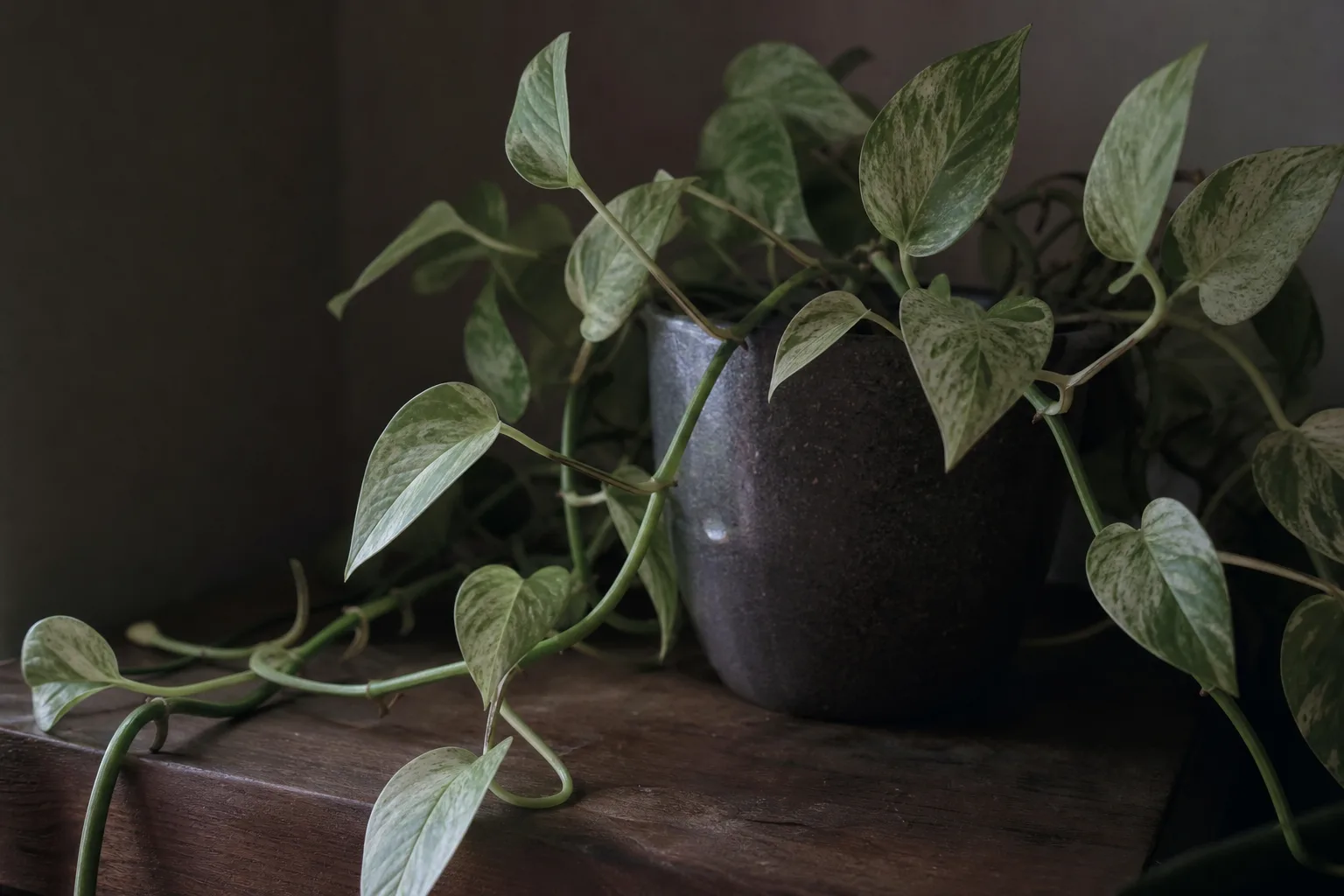
Not Enough Light on Marble Queen Pothos: Causes, Checks & Fixes
This guide covers not enough light on Marble Queen Pothos. See also the general Not Enough Light guide, watering, and light pages for this plant.
Not Enough Light on Marble Queen Pothos: Causes, Checks & Fixes
Quick answer
Marble Queen Pothos is not a low-light plant. It is a variegated cultivar of Epipremnum aureum whose white leaf sections contain little chlorophyll, so it needs bright indirect light to hold marbling and grow at a healthy pace. In dim rooms it may survive for months, but new leaves revert to solid green, vines stretch toward windows, and the pot dries slowly because the plant uses less water.
First step: move the plant to brighter filtered light-typically within 1–2 m of an east- or west-facing window, or add a full-spectrum grow lamp 10–12 hours daily if natural light is weak. Do not jump from deep shade to harsh afternoon sun; pale marbled tissue scorches easily.
What insufficient light looks like on Marble Queen Pothos
Light stress on this cultivar has a recognizable pattern. Watch for these signs together, not in isolation:
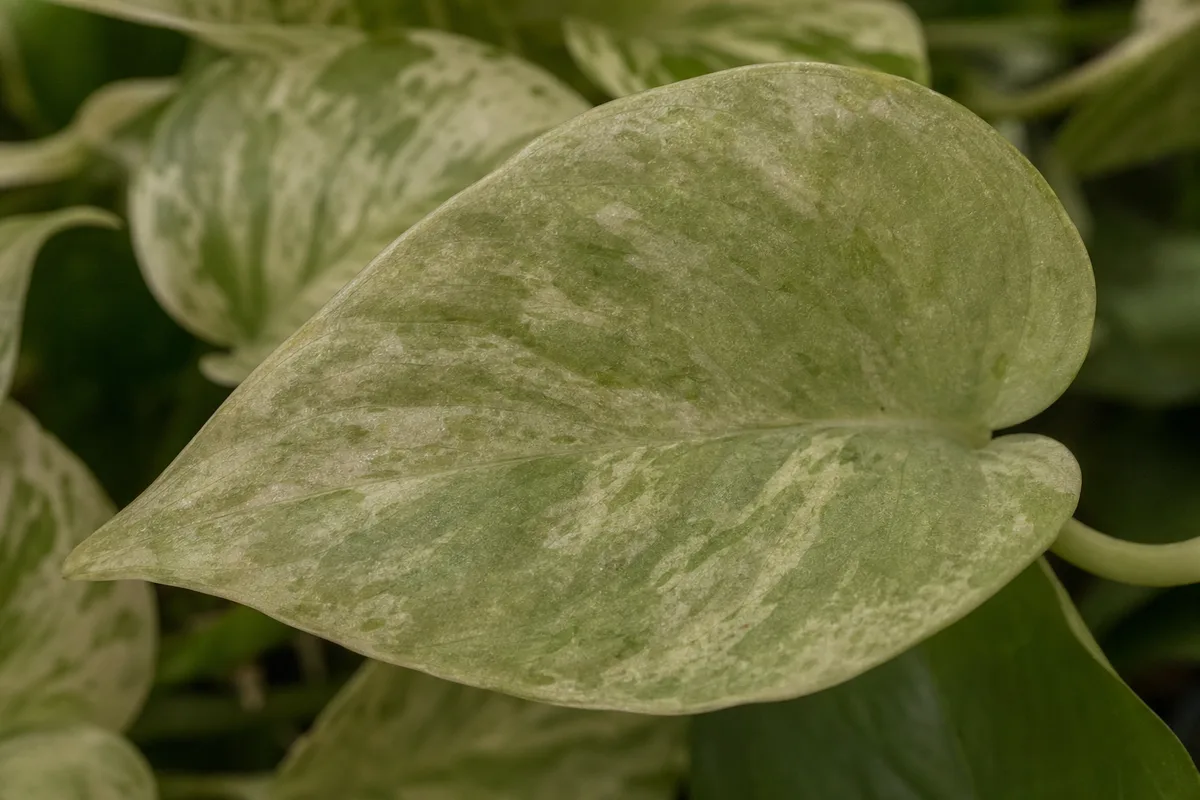
Not Enough Light symptoms on Marble Queen Pothos - compare with healthy tissue on the same plant.
- Green reversion on new growth - fresh leaves emerge mostly solid green where older ones showed white marbling.
- Leggy, bare vines - internodes lengthen and lower leaves drop, leaving long naked stem sections between sparse foliage.
- Smaller, paler leaves - new foliage is dull rather than glossy, with less contrast between green and white zones.
- Strong lean toward one window - the whole pot or hanging basket angles toward the brightest source.
- Slow or stalled growth - Marble Queen already grows slower than Golden Pothos; in low light it may produce almost no new leaves for weeks.
- Soil that stays wet - when photosynthesis drops, water uptake slows. Mix that once dried in a week may now take two weeks, raising overwatering on Marble Queen Pothos risk.
A single yellow leaf is not enough to diagnose light stress. The pattern that matters is repeated green reversion plus stretch on a plant whose watering routine has not changed.
Why Marble Queen needs more light than Golden Pothos
All pothos prefer bright, indirect light, but variegated forms are less forgiving in shade. The white and cream patches on Marble Queen leaves lack the chlorophyll that powers photosynthesis. In low light the plant cannot produce enough energy to support highly variegated tissue, so it prioritizes survival by pushing out greener leaves with more photosynthetic surface-low light can cause loss of variegation on cultivars like Marble Queen.
Marble Queen also grows at a moderate pace even in good conditions-slower than solid-green pothos because pale sections contribute less to food production. That slower metabolism means dim placement hits this cultivar harder: less new growth, faster reversion, and longer recovery once light improves.
Common placement mistakes that trigger insufficient light:
- Treating Marble Queen like a snake plant or ZZ plant in a hallway or bathroom with no window.
- Hanging a basket high in a bright room but far from the glass-the ceiling may be dim even when the floor feels sunny.
- Keeping the plant on a north-facing windowsill in a deep room where daylight never reaches leaf level.
- Letting a bookshelf, sheer tint, or dirty window cut intensity more than expected.
- Ignoring winter daylight drop while leaving the pot in the same spot year-round.
How to confirm the cause
Work through these checks before changing fertilizer, Marble Queen Pothos repotting guide, or spraying for pests:
- Window distance and direction - Is the pot more than 1.5–2 m from the brightest window? Light intensity decreases rapidly with distance from the glass. North rooms and interior corners often read as “fine” to human eyes but deliver low light to foliage.
- New growth vs. old growth - Compare the newest leaf on each runner to leaves produced when you first got the plant. Fading marbling on fresh growth confirms current light is too low.
- Lean and stretch - Does the vine reach toward one side? Long bare stem sections between leaves point to etiolation, not normal trailing.
- Soil dry-down speed - Stick a finger 4–5 cm into the mix. If it stays damp far longer than before and the plant is not actively growing, low light may be slowing water use.
- Pest and disease screen - Check leaf undersides for spider mites, mealybugs, and sticky residue. Spotting, mushy stems, or sour soil smell suggest overlapping problems-especially root rot on Marble Queen Pothos from wet mix in dim conditions.
- Seasonal context - Short winter days can push a marginally lit plant into reversion even if placement did not change.
If the caudex is firm, pests are absent, and yellowing appears only on lower leaves while new growth is solid green and stretched, insufficient light is the most likely primary cause.
First fix for Marble Queen Pothos
Move the plant to bright indirect light.
Relocate it within 1–2 m of an east- or west-facing window, or place it a few feet back from a south window behind a sheer curtain. The goal is strong ambient light on the leaves without direct hot afternoon sun hitting pale marbled zones.
If the only bright spot is across the room, move the pot there before buying grow lights or fertilizer. Light is the engine; nothing else compensates for chronic shade on a variegated pothos.
Increase exposure gradually if the plant has lived in deep shade for months-shift it closer over several days rather than placing it in unfiltered west sun in one move.
Step-by-step recovery
Once brighter placement is set, follow this order:
- Relocate and observe - Move to filtered bright light. Wait one week before judging results; leaves do not change overnight.
- Rotate weekly - Turn the pot or hanger so both sides of a trailing vine receive light. One-sided density often means only the window-facing runner was getting enough energy.
- Adjust watering - When growth speeds up in better light, the mix will dry faster. Check moisture every few days instead of following an old calendar schedule.
- Prune reverted runners - After two to three new marbled leaves appear at stem tips, cut back long solid-green sections to just above a node that still shows variegation. This redirects energy into compact, patterned growth.
- Supplement in dark months - If winter daylight is weak, run a full-spectrum LED grow lamp 10–12 hours daily, positioned roughly 30–45 cm above the canopy.
- Hold fertilizer - Skip feed until new growth looks stable for two weeks. A stressed plant in recovering light does not need extra salts.
Recovery timeline
| Timeframe | What to expect |
|---|---|
| Week 1 | Lean may lessen; no visible change on old leaves yet |
| Weeks 2–3 | New leaves should show tighter spacing; marbling may return on fresh growth |
| Weeks 4–6 | Several marbled leaves confirm the fix; prune bare green runners if shape is still sparse |
| Beyond 6 weeks | If new foliage stays solid green, light is still too low-move closer or add a lamp |
Old reverted leaves do not regain white patterning. Judge success by new growth only: internode length, leaf size, and marbling on the freshest leaves.
Lookalike symptoms
Overwatering - Yellow leaves and soft stems can mimic decline from low light, especially when dim placement keeps soil wet. Key difference: overwatering often smells sour and shows mushy roots on inspection, while light-stressed plants have firm stems and dry-to-touch surface soil between delayed waterings.
Nutrient deficiency - Pale leaves across the whole plant, including older growth, may suggest feed issues. Light stress usually shows patterned change: new leaves revert while older marbled leaves remain until they age out.
Spider mites - Fine webbing, stippled yellow patches, and dusty leaf undersides indicate pests, not shade alone. Mites thrive in dry, stagnant air but can appear on any stressed pothos-inspect before assuming light is the only problem.
Normal slow growth - Marble Queen is inherently slower than Golden Pothos. Slow growth plus green reversion and stretch still means light is limiting; slow growth with stable marbling on new leaves does not.
Mistakes to avoid
- Fertilizing heavily to “replace” light - Nitrogen pushes green vegetative growth and can burn low-chlorophyll white sections. Fix photons first.
- Moving instantly into direct south or west sun - Acclimate over days. Unfiltered hot sun scorches white leaf zones that lack chlorophyll protection.
- Assuming survival equals health - Pothos tolerates lower lighting conditions longer than many houseplants, but Marble Queen will lose the variegation that defines the cultivar.
- Watering on the old schedule - Dim light slows uptake. Continuing summer-frequency watering in a dark corner invites root rot.
- Ignoring green runners - Solid-green stems grow faster than variegated ones and can take over the pot if not pruned after light improves.
How to prevent insufficient light next time
Place Marble Queen where bright indirect light is realistic most of the day, not only where the pot looks decorative. East windows and filtered west or south exposures work well in most homes. Keep windows clean and unobstructed; grime and heavy tint cut intensity sharply with distance.
Rotate the pot weekly. Prune routinely so branching stays full rather than one long etiolated vine. In rooms with weak natural light, plan a grow lamp before buying the plant-not after six months of green reversion.
Match watering to how fast the pot dries in its actual light level. A brighter plant drinks more; a dim plant needs longer dry intervals.
When to worry
Insufficient light is usually gradual, but act promptly if:
- Stems soften at nodes while soil stays damp-possible early root rot layered on light stress.
- Multiple leaves yellow and drop within a week without pest signs.
- The pot smells sour or roots feel mushy on a gentle tug-unpot and address rot before chasing more light alone.
- New growth stays solid green after four to six weeks in a spot you believed was bright-your placement is still too dim.
Marble Queen rarely dies from shade alone, but chronic low light plus overwatering can kill roots. Light correction and watering adjustment together prevent that slide.
Conclusion
Not enough light on Marble Queen Pothos shows up as green reversion, stretched bare vines, and a pot that dries too slowly-not as a mysterious nutrient problem. Move the plant to bright indirect light first, adjust watering to match faster growth, and prune solid-green runners once marbled new leaves return. Old reverted foliage will not change; recovery lives in the next leaves the vine produces.
When to use this page vs other Marble Queen Pothos guides
- Marble Queen Pothos watering guide - Use for routine moisture checks before assuming not enough light is the main issue.
- Marble Queen Pothos problems hub - Browse all 16 common issues on this species.
- Leggy Growth on Marble Queen Pothos - Different entry point when symptoms overlap with not enough light.
- Slow Growth on Marble Queen Pothos - Different entry point when symptoms overlap with not enough light.
- Yellow Leaves on Marble Queen Pothos - Different entry point when symptoms overlap with not enough light.