Yellow Leaves on Marble Queen Pothos: Causes, Checks & Fixes
Quick answer
Yellow leaves on Marble Queen Pothos usually mean overwatering-soil stays wet too long for this slow variegated grower. Allow the top 3–5 cm (1–2 in.) to dry before watering and check roots if yellowing spreads up the vine.
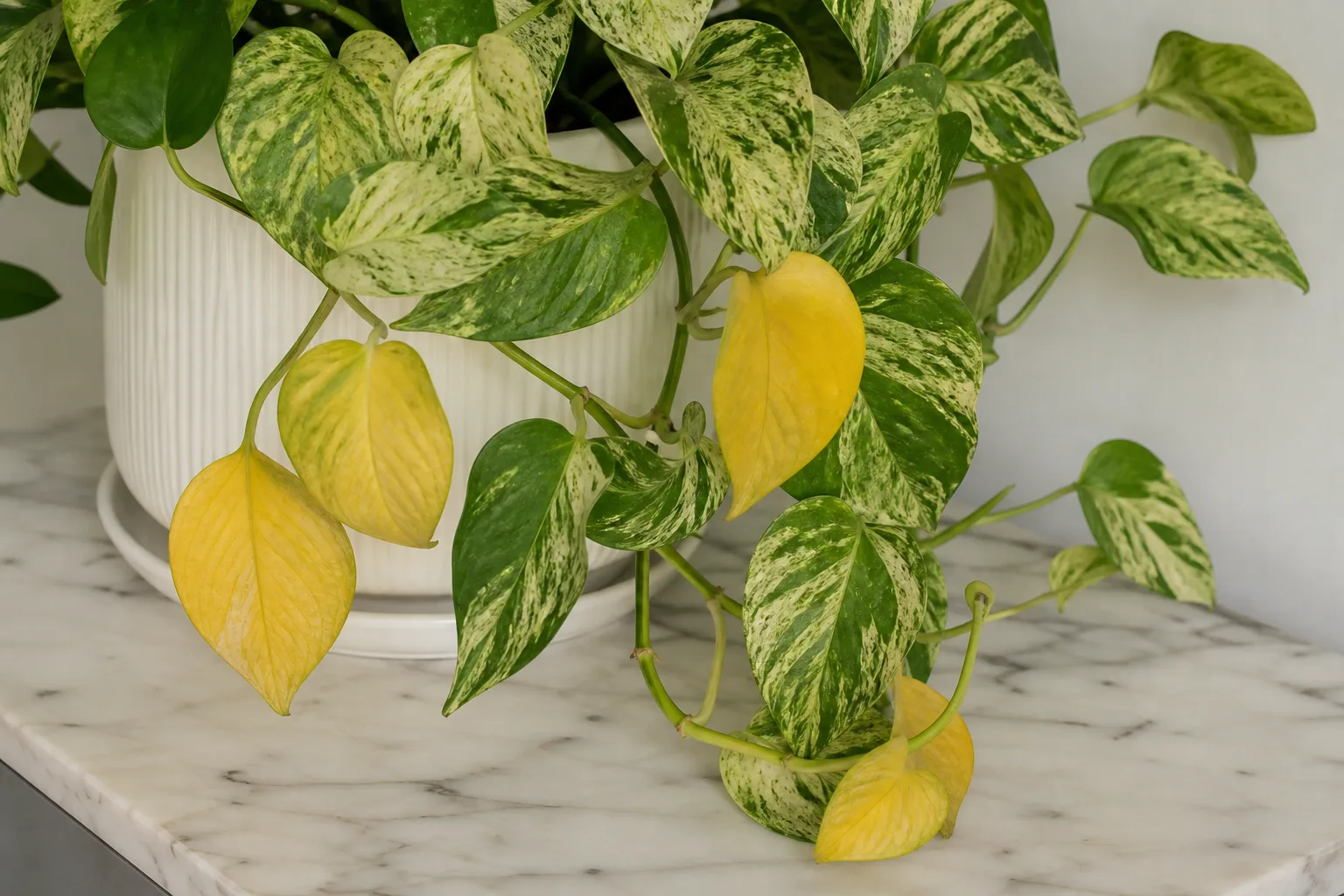
Yellow Leaves on Marble Queen Pothos: Causes, Checks & Fixes
This guide covers yellow leaves on Marble Queen Pothos. See also the general Yellow Leaves guide, watering, and light pages for this plant.
Yellow Leaves on Marble Queen Pothos: Causes, Checks & Fixes
Quick answer
Yellow leaves on Marble Queen Pothos (Epipremnum aureum ‘Marble Queen’) almost always trace to wet roots-not a fertilizer shortage. The white sections of each leaf carry less chlorophyll than solid-green pothos tissue, so this cultivar grows more slowly and uses water more slowly on the same schedule. First step: stop watering until the top 3–5 cm (about 1–2 in.) of mix is dry, then inspect roots if multiple leaves yellow while the pot stays heavy. For the full cultivar baseline, see the Marble Queen overview; for dry-down rhythm detail, see the watering guide.
What yellow leaves look like on Marble Queen Pothos
Yellowing often starts on older lower leaves along trailing vines while newer growth at the tips still looks marbled-until the problem advances. Leaves may go fully yellow from the tip or base; badly affected leaves drop with a gentle tug. In overwatered plants, yellow leaves appear alongside limp vines despite moist mix because wilted leaves may indicate soil that is too wet when roots are rotting.
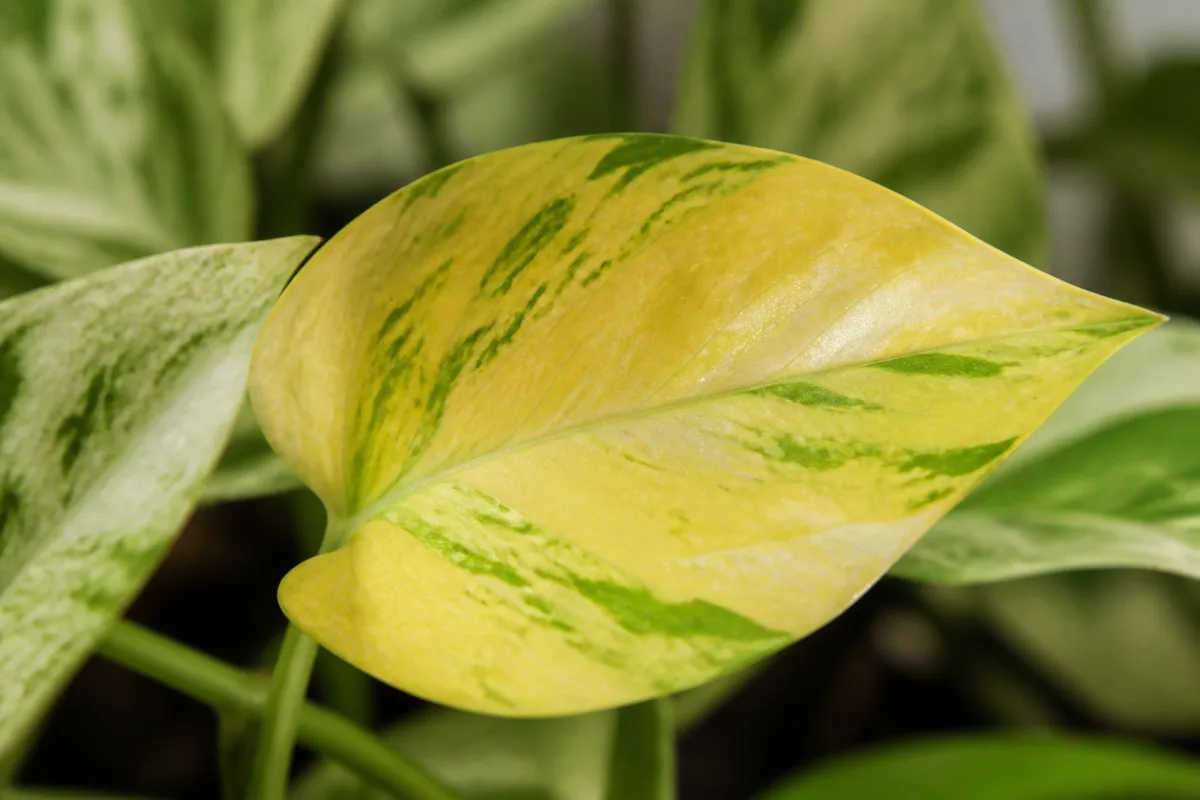
Yellow Leaves symptoms on Marble Queen Pothos - compare with healthy tissue on the same plant.
On variegated pothos, watch for two early warnings before full yellowing: dull marbling on weakening leaves, and mostly green new leaves with long gaps between nodes-that is light stress, not thirst alone. A single yellow leaf at the oldest node on an otherwise firm long vine can be normal senescence. Multiple soft yellow leaves on heavy wet soil point to overwatering on Marble Queen.
Why Marble Queen Pothos gets yellow leaves
The top cause on this cultivar is chronic wet soil. Constantly saturated mix deprives roots of oxygen; stressed roots cannot deliver nutrients, so foliage yellows. Clemson HGIC notes that Marble Queen requires more light than other pothos varieties and that root rot follows overwatering-this cultivar’s slower metabolism makes the same calendar watering feel safe while mix stays soggy.
Dim corners compound the problem. Low light can cause loss of variegation and slows photosynthesis, so the plant uses even less water. Soil that would dry in a week beside a bright window can stay damp for ten days or more in a north-facing room-triggering yellow leaves that look like overwatering even when you water “correctly.” Cross-check the not enough light guide when new growth reverts before widespread yellowing.
Natural aging also yellows one or two bottom leaves on long vines-that is normal if stems are firm and new marbled leaves keep appearing at the tips.
Lookalike symptoms to rule out
| Pattern | Leaf look | Soil / pot | Stem / new growth | Likely cause | Next step |
|---|---|---|---|---|---|
| Bottom-up yellowing, limp vines | Soft yellow, may drop easily | Heavy, wet at 3–5 cm | Firm or softening at nodes | Overwatering / root stress | Stop watering → overwatering |
| Crisp yellow, wrinkled leaves | Dry-feeling blades | Light pot, pulled from edges | Firm stems | Underwatering | Deep soak once → underwatering |
| Pale all-green new leaves, long internodes | Older leaves may yellow slowly | Can be wet or dry | Leggy stretch toward window | Low light (+/- wet soil) | Brighten placement → not enough light |
| One yellow leaf at vine base | Single old blade | Appropriate moisture | Firm vine, clean new marbling | Normal node senescence | No action if pattern isolated |
| Stippling, webbing, sticky residue | Patchy yellow, not whole-leaf | Any moisture | Dull gray-green tone | Pests (mites, etc.) | Inspect undersides → spider mites |
| Sour smell, gnats, white mold on surface | Yellow spreads fast | Wet days after watering | Soft blackening at base | Advanced root rot | Unpot immediately → root rot |
How to confirm the cause
- Pattern - Bottom-up yellowing with wet soil suggests overwatering. All-over crisp yellow with dry soil suggests underwatering. Green reversion on new growth points to light stress even when water looks fine.
- Pot weight - Heavy pot plus yellow leaves supports wet roots; a very light pot after a missed week supports thirst.
- Moisture at depth - Stick your finger 3–5 cm (1–2 in.) into the mix-not just the surface. Soggy at depth on a heavy pot confirms chronic wet feet.
- New growth - Pale all-green new leaves with long internodes mean insufficient light, not nitrogen alone. Stable green-white marbling on the newest leaf is a good sign.
- Root check - Mushy brown roots confirm rot; firm white roots with dry soil mean thirst. Unpot only if wet soil and decline continue after one full dry-down cycle, or if you smell sour mix.
- Smell and gnats - Sour odor and fungus gnats hovering near the pot support rot over simple aging. See fungus gnats on Marble Queen if insects appear before you fix drainage.
- Light exposure - A dim shelf that also keeps soil wet is the most common Marble Queen yellow-leaf trap. Compare placement against the light guide.
First fix for Marble Queen Pothos (by confirmed cause)
Pick one path based on what you confirmed-do not repot, fertilize, and move to sun on the same day.
If overwatering or wet soil is confirmed
Stop watering until the top 3–5 cm is dry. Move to bright indirect light so the pot dries predictably. If soil has been wet for a week or more, unpot and inspect roots. Trim mushy tissue and repot into fresh standard potting mix with 20–30% perlite if needed. Full workflow: overwatering on Marble Queen and root rot if stems soften.
If underwatering is confirmed
Water thoroughly until excess drains, empty the saucer within 30 minutes, and resume the normal dry-down rhythm. Do not mist instead of watering. Details: underwatering on Marble Queen.
If low light is the main driver
Move the pot to brighter filtered indirect light-within a few feet of an east window or behind a sheer curtain at south or west glass. Do not jump to direct midday sun; pale marbled tissue scorches quickly. Hold watering until the top layer dries unless soil is already bone dry. Deep dive: not enough light on Marble Queen.
If normal aging is confirmed
Remove the single yellow leaf if you prefer a tidy vine. Keep your existing watering rhythm and light placement. No repot or feed needed.
For all paths: Remove fully yellow leaves to redirect energy. Do not fertilize until new growth is clean for two weeks-over-fertilizing can burn the low-chlorophyll white sections on variegated cultivars.
Recovery timeline
| Phase | What to expect | Success signal |
|---|---|---|
| Days 1–3 | Stop worsening-no new yellow leaves after dry-down or corrected watering | Pot weight dropping; soil drying at 3–5 cm |
| Week 1–2 | Mild overwatering cases stabilize; limpness eases on firm roots | Yellowing stops spreading up the vine |
| Weeks 2–4 | New small heart-shaped leaves with green-white marbling at growing tips | Marbling stable or improving on newest leaf |
| Weeks 3–6+ | Severe root trim and repot-slower rebound in winter or dim rooms | Firm stems; consistent new marbled growth |
| Permanent | Old fully yellow blades do not re-green | Focus on apical nodes, not salvaging every old leaf |
Worsening signs: yellowing climbs to new growth while soil stays wet, stems blacken at nodes, white marbling disappears on every new leaf, or several leaves fail within a week-escalate to root rot diagnosis.
What not to do
Do not water more because leaves look “thirsty” when soil is wet at depth-that deepens root failure. Do not move directly into harsh sun to “fix” yellowing; scorches pale marbled tissue faster than it helps. Do not repot and fertilize the same day on a stressed vine.
When removing fallen or trimmed yellow leaves, keep debris away from cats and dogs. All Epipremnum aureum cultivars, including Marble Queen, are toxic to cats and dogs via insoluble calcium oxalate crystals that irritate the mouth if chewed. Call ASPCA Animal Poison Control at (888) 426-4435 if you suspect ingestion.
How to prevent yellow leaves next time
Water when the soil is dry-for Marble Queen, that means the top 3–5 cm (1–2 in.), not a fixed calendar. Pair with bright indirect light strong enough to maintain variegation and cycle moisture predictably-see the light guide. Use perlite-rich mix so roots breathe; refresh compacted soil every one to two years. Empty saucers after every soak. In dim rooms, either add a grow light or water less often than you would for Golden Pothos-the overview watering FAQ explains why this cultivar dries slower in shade.
When to worry
Act quickly when:
- Stems soften at nodes while soil is wet
- White marbling disappears on new growth while the whole plant declines
- Sour soil smell appears from drain holes
- Several leaves yellow and drop within a week
- Yellowing spreads to new tips after you already dried the pot down once
Yellow leaves alone on one old node with firm stems and clean new marbling are usually not urgent.
Related Marble Queen problems
Use this page as the yellow-leaf differential hub; follow the link that matches what you confirmed:
- Marble Queen overview - cultivar care baseline and Golden Pothos comparison
- Overwatering on Marble Queen - wet soil, gnats, and root inspection
- Root rot on Marble Queen - mushy roots and salvage cuts
- Underwatering on Marble Queen - dry wilt vs. rot confusion
- Not enough light - green reversion and dim-corner dry-down
- Marble Queen watering - dry-down rhythm and seasonal adjustments
- Marble Queen light - variegation maintenance and scorch avoidance
- Fungus gnats on Marble Queen - secondary signal when soil stays wet
- Wilting on Marble Queen - limp vines on wet vs. dry mix
Conclusion
Yellow leaves on Marble Queen Pothos usually trace to wet roots in a slow-growing variegated plant-often worsened when dim light slows dry-down past what Golden Pothos owners expect. Run the lookalike table, apply one cause-matched first fix, and judge recovery by new marbled growth at the vine tips-not old leaves turning green again. If wet soil and sour smell align, move to the overwatering and root rot guides before changing fertilizer or sun exposure.
How we wrote and verified this guide: Recommendations were checked against Clemson Cooperative Extension, NC State Extension, Missouri Botanical Garden, Penn State Extension, and ASPCA references cited inline. Author: sai-ananth. Reviewer: LeafyPixels Review Board. Methodology: plant problem guidance is reviewed against botanical references, extension resources, and LeafyPixels plant-care data before publication. Claims validation: claims-validator-v1 pass with inline external links documented below. Last reviewed: 2026-06-16.
When to use this page vs other Marble Queen Pothos guides
- Marble Queen Pothos watering guide - Use for routine moisture checks before assuming yellow leaves is the main issue.
- Marble Queen Pothos problems hub - Browse all 16 common issues on this species.
- Overwatering on Marble Queen Pothos - Different entry point when symptoms overlap with yellow leaves.
- Underwatering on Marble Queen Pothos - Different entry point when symptoms overlap with yellow leaves.
- Not Enough Light on Marble Queen Pothos - Different entry point when symptoms overlap with yellow leaves.