Spider Mites on Marble Queen Pothos: Causes, Checks & Fixes
Quick answer
Spider mites on Marble Queen Pothos cause fine stippling and webbing on leaf undersides, often after hot dry indoor air. First step: isolate the plant and rinse every leaf underside with lukewarm water before applying any spray.
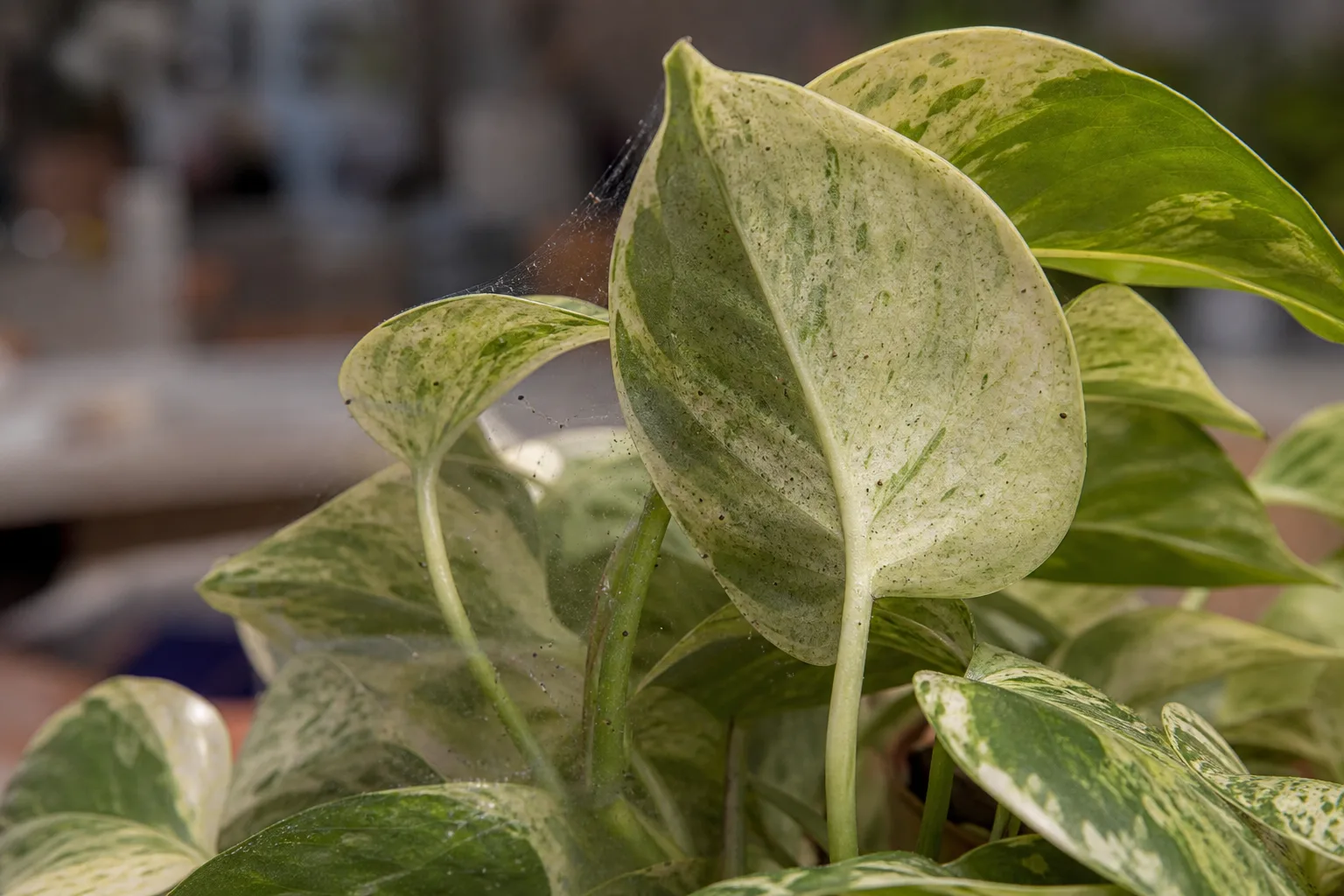
Spider Mites on Marble Queen Pothos: Causes, Checks & Fixes
This guide covers spider mites on Marble Queen Pothos. See also the general Spider Mites guide, watering, and light pages for this plant.
Spider Mites on Marble Queen Pothos: Causes, Checks & Fixes
Quick answer
Spider mites are microscopic sap-feeders that multiply fast in hot, dry indoor air. On Marble Queen Pothos they leave tiny yellow or bronze dots on marbled leaves, dull the glossy surface, and eventually spin fine silk webbing between nodes on trailing stems. The white sections of each leaf show damage first because they carry less chlorophyll than the green patches.
First step: isolate the plant and rinse every leaf underside with lukewarm water. Hold the pot in a sink or shower, spray from below, and let foliage drain before you decide on sprays. That physical wash removes adults, eggs, and webbing-and confirms active mites when specks move on wet paper.
What spider mites look like on Marble Queen Pothos
Early damage is easy to miss on a busy trailing vine. Look for these patterns before webbing becomes obvious:
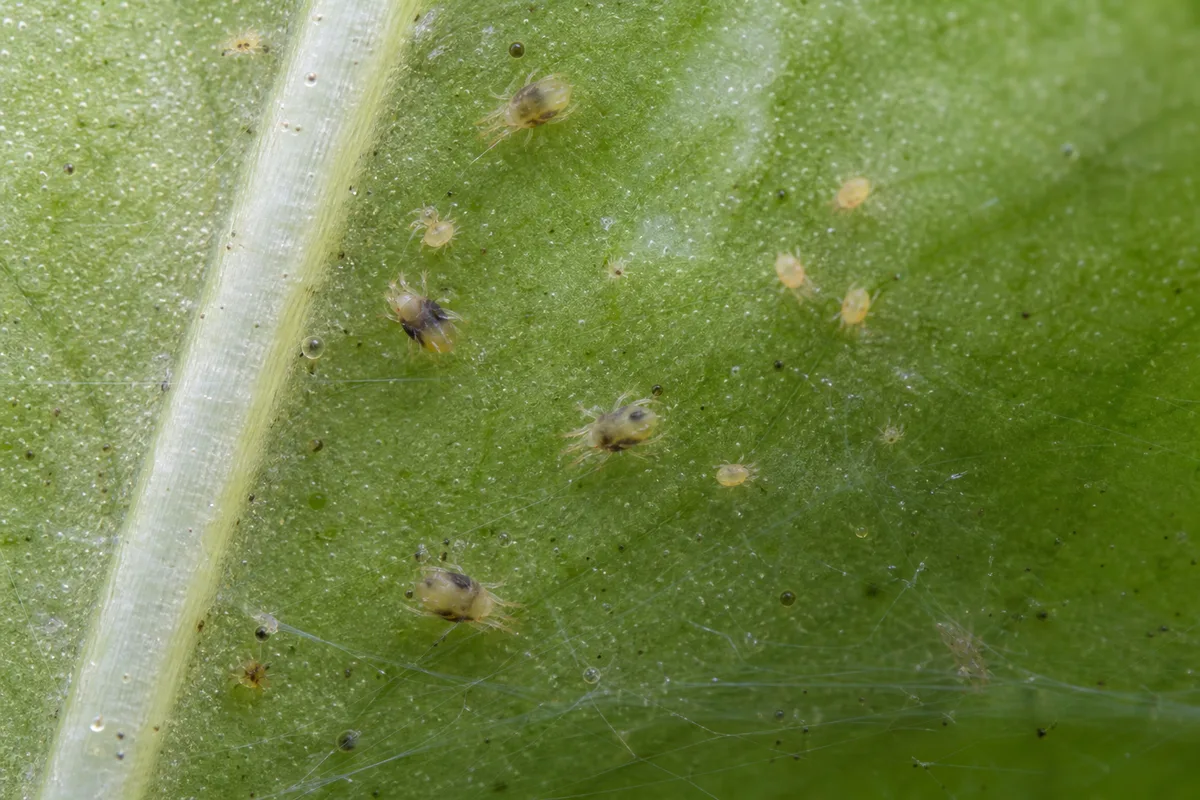
Spider Mites symptoms on Marble Queen Pothos - compare with healthy tissue on the same plant.
Stippling on marbled tissue:
- Pinhead-sized yellow, tan, or bronze dots scattered across the leaf surface
- Pale white or cream marbling turning dull or gray before solid-green areas fade
- Leaves that lose their crisp gloss and look dusty or washed out
Underside signs:
- Tiny moving specks-barely visible without magnification
- Fine silk threads at petiole joints, leaf tips, or where a vine bends
- Webbing that catches dust and makes the underside look fuzzy
Vine-level clues:
- Damage concentrated on the longest trailing stems farthest from the soil
- Newest leaves at growing tips stippled while older inner leaves still look normal
- Several leaves yellowing and dropping in a short window despite normal watering
Marble Queen is a slow grower compared with Golden Pothos because its variegated leaves photosynthesize less. That slower pace does not protect it from mites-if anything, a stressed vine in dry air sits vulnerable longer while populations build along meters of stem.
Why Marble Queen Pothos gets spider mites
Spider mites are arachnids, not insects. They pierce individual leaf cells and suck contents, which creates the stippled pattern. Warm, dry conditions shorten their life cycle and let populations explode within days.
Marble Queen setups often create exactly that environment:
Heat and dry air. Pots on sunny window sills, above radiators, or in the path of HVAC vents lose humidity fast. Winter heating is a classic trigger-mite outbreaks on houseplants frequently spike when furnaces switch on and indoor air dries.
Dusty foliage. Trailing pothos collect household dust on broad heart-shaped leaves. Wipe down the leaves occasionally to remove collected dust-dust interferes with natural mite predators and gives mites protected crevices along grooved petioles.
Crowded collections. Long vines touch neighboring plants on shelves and plant stands. Mites walk stem to stem; one infested Marble Queen can seed mites across a whole display before stippling is obvious on lower leaves.
Plant stress. underwatering on Marble Queen Pothos, dim light that fades variegation, or inconsistent care weakens tissue. Stressed hosts show damage faster, though stress alone does not create mites-you still need the pest present.
How to confirm the cause
Work through these checks in order before you spray anything:
- Paper tap test - Hold a stippled leaf over white paper and tap the underside sharply. Moving specks confirm live mites. Static dots may be dirt or pollen.
- Webbing search - Pull back trailing stems and inspect node sheaths with a hand lens. Fine silk at one node means more colonies are likely elsewhere on the vine.
- Pattern vs. watering - Yellow leaves from overwatering on Marble Queen Pothos usually start at the soil line with wet mix and soft stems. Mite stippling appears as dots across the leaf blade with firm stems and normal soil moisture.
- Location audit - Note whether the pot sits near heat sources or in a south-facing window. Mites plus hot dry placement fit together.
- Neighbor scan - Check philodendrons, monsteras, and other pothos on the same shelf. Shared symptoms suggest contagious mites rather than a one-off cultural issue.
If you find moving specks or webbing, the diagnosis is confirmed. If leaves are uniformly yellow with wet soil and no speckling, look at root health or watering instead.
First fix for Marble Queen Pothos
Isolate the plant and rinse all foliage-especially undersides-with a steady stream of lukewarm water.
Move the Marble Queen away from other plants immediately. Mites walk between touching leaves and can ride on tools or hands. Place the pot in a sink, shower, or outdoors on a mild day. Spray each leaf from below so water hits the grooved petioles and node crevices where webbing hides. Let the vine drip dry in bright indirect light the same day.
This single rinse knocks down adults, disrupts egg-laying webs, and gives you a clean baseline to see whether mites return. Do not jump to oils or miticides before this step-you need to confirm the population dropped and avoid stacking treatments on wet foliage.
Step-by-step recovery
After the initial rinse, follow this sequence based on severity:
Days 1–7: Physical control
- Rinse undersides again every two to three days while populations are active
- Wipe accessible leaves with a soft damp cloth if the vine is too large for repeated showering
- Move the pot away from heat vents; aim for moderate humidity without soaking the room
Days 7–21: Contact treatment if mites persist
- Apply insecticidal soap or horticultural oil labeled for spider mites on houseplants, covering undersides until runoff
- Repeat every five to seven days for at least three cycles-eggs hatch after the first spray and a single application rarely clears a trailing pothos
- Avoid general-purpose insecticides that do not list mites; they may kill predators and worsen outbreaks
Throughout recovery:
- Prune only heavily webbed leaves you cannot reach with spray; do not strip the whole vine at once on a slow-growing Marble Queen
- Hold fertilizer until new growth looks clean-feeding stressed plants does not help mite recovery
- Keep the plant in bright indirect light so new marbled leaves emerge with enough energy to outgrow old damage
Recovery timeline
Spider mite recovery on Marble Queen Pothos is measured in weeks, not days. Expect this rough timeline:
- 3–5 days after first rinse: Active specks decrease; fresh webbing stops appearing at tips
- 2 weeks: No new stippling on emerging leaves; old damaged tissue remains speckled but stable
- 4–6 weeks: Several clean new leaves along vines confirm the population is broken; continue spot checks
Damaged chlorophyll does not regenerate-marbled sections stay mottled on old leaves. Success means unstippled new growth and no returning webbing, not a full cosmetic reset of every existing leaf.
Lookalike symptoms
Several Marble Queen problems mimic mite damage:
Low humidity browning - Dry air browns leaf edges and tips on pale sections without stippling dots or webbing. Increase humidity and the pattern stops spreading uniformly rather than as pinhead specks.
Thrips scarring - Thrips leave silvery streaks and distorted new leaves, not fine webbing. Shake a stem-thrips are slender and jump; mites are rounder and crawl.
Nutrient or light stress - Overall yellowing or green reversion in dim corners lacks moving specks and silk. Brighten light first; mite stippling is localized dotting on otherwise firm leaves.
Overwatering yellow leaves - Soft stems, sour soil smell, and yellowing from the base up point to roots, not mites. Unpot only if those signs appear alongside stippling-you rarely need Marble Queen Pothos repotting guide for mites alone.
Mistakes to avoid
- Stopping after one rinse or one spray. Mite eggs survive single treatments; trailing pothos need repeated coverage on long stems.
- Spraying only the tops of leaves. Mites live and lay eggs on undersides and at nodes.
- Using horticultural oil on sun-stressed foliage in direct window light. Oils plus hot sun can burn pale marbled tissue. Treat in indirect light and let leaves dry before strong sun returns.
- Ignoring nearby plants. Treat or inspect every pothos and aroid on the same shelf, not just the most damaged vine.
- Overwatering while treating. Wet soil plus pest stress compounds yellowing on a slow-drinking variegated cultivar. Keep the usual dry-down rhythm-top 3–5 cm dry before watering.
Marble Queen care cross-check
While fighting mites, keep baseline care stable:
- Light: Bright indirect light supports recovery and keeps variegation crisp on new leaves
- Water: Allow the top 3–5 cm of mix to dry; Marble Queen uses less water than solid-green pothos
- Humidity: Target 40–60%-enough to discourage mites without keeping foliage constantly wet overnight
- Dust: Wipe leaves monthly during recovery so you can spot new stippling early
Do not repot, fertilize, and prune heavily in the same week as chemical treatment. Change one variable at a time on a stressed vine.
How to prevent spider mites next time
- Quarantine new plants six weeks before mixing them with trailing Marble Queen vines
- Rinse or wipe foliage monthly, working from the soil line to the longest stems
- Keep pots out of hot dry drafts; a pebble tray or humidifier near the collection helps in heated rooms
- Inspect leaf undersides during weekly care-catch stippling before webbing spans nodes
- Maintain even watering so drought stress does not compound dry-air mite pressure
When to worry
Escalate treatment or consider discarding a severely infested plant if:
- Webbing covers most of the vine and repeats within days after thorough rinsing
- New leaves emerge small, curled, or distorted despite three spray cycles
- Mites spread to multiple plants in a shared space faster than you can isolate and treat
- The plant loses more than a third of its foliage in two weeks with no clean new growth
Marble Queen Pothos roots easily from node cuttings. If the main vine is too far gone but nodes remain firm, salvage uninfected sections after treatment rather than risking your whole collection.
Conclusion
Spider mites on Marble Queen Pothos are an environmental pest problem, not a watering disease. Hot dry air, dusty trailing stems, and missed early stippling let colonies build along long vines before webbing shows. Isolate, rinse undersides thoroughly, repeat physical control, then use labeled soaps or oils on a weekly schedule until new marbled leaves emerge clean. Old speckled foliage may stay marked, but a stable vine with fresh unstippled growth means you have won.
When to use this page vs other Marble Queen Pothos guides
- Marble Queen Pothos watering guide - Use for routine moisture checks before assuming spider mites is the main issue.
- Marble Queen Pothos problems hub - Browse all 16 common issues on this species.
- Low Humidity on Marble Queen Pothos - Different entry point when symptoms overlap with spider mites.
- Slow Growth on Marble Queen Pothos - Different entry point when symptoms overlap with spider mites.