Marble Queen Pothos Problems: Causes & Quick Fixes
Quick answer
Marble Queen Pothos is prone to 41 common issues - each link below is a plant-specific fix guide.
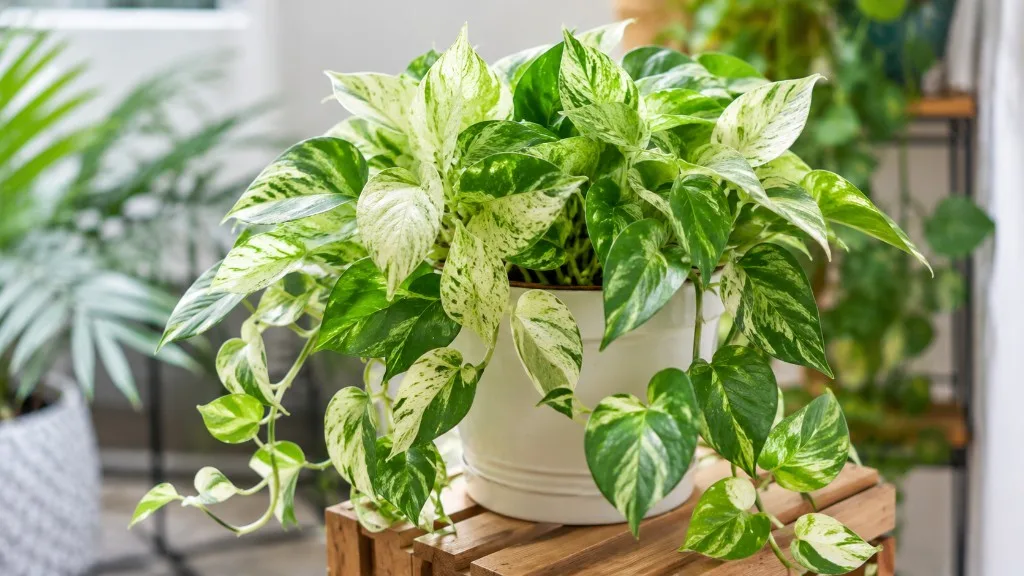
Marble Queen Pothos problems
Use the guides below to diagnose and fix common issues on Marble Queen Pothos. Each problem page explains why it happens on this species and what to do first.
Or use our problem diagnosis tool to narrow down symptoms.
Common problems on Marble Queen Pothos
Black Spots
MediumLikely cause: Nov 23, 2025 · Dealing with black spots on your Marble Queen Pothos can be frustrating, but with careful observation and prompt action, you can often restore the plant to its vibrant self.
Quick fix: Confirm diagnosis on your Marble Queen Pothos, then address the most likely care or pest factor described in current extension guidance.
Full fix guide →Brown Leaves
MediumLikely cause: May 24, 2026 · Why Are Marble Queen Pothos Leaves Turning Brown? Brown leaves on Marble Queen Pothos are usually a sign that the plant’s water balance, light exposure, or root health is off . Because this variety has pale marbled sections,
Quick fix: Confirm diagnosis on your Marble Queen Pothos, then address the most likely care or pest factor described in current extension guidance.
Full fix guide →Likely cause: Nov 27, 2025 · In this guide, you’ll learn how to make Marble Queen pothos plant care truly super simple—no stress, no guesswork, and no complicated routines. You’ll discover the best lighting for strong variegation, how to water it without
Quick fix: Confirm diagnosis on your Marble Queen Pothos, then address the most likely care or pest factor described in current extension guidance.
Full fix guide →Brown Tips
LowLikely cause: Low humidity or hard tap water
Quick fix: Increase humidity; use filtered water
Full fix guide →Compacted Soil
MediumLikely cause: Jan 20, 2024 · In this post, we're going to chat about the best soil for Marble Queen Pothos . We'll look into what makes a good soil mix, how to create or find one, and why it matters.
Quick fix: Confirm diagnosis on your Marble Queen Pothos, then address the most likely care or pest factor described in current extension guidance.
Full fix guide →Distorted Leaves
MediumLikely cause: If your Marble Queen Pothos is producing mostly green leaves or its white variegation is fading, it's almost certainly due to insufficient light. The white parts of the leaves lack chlorophyll, and in low light conditions, the plant priorit
Quick fix: Confirm diagnosis on your Marble Queen Pothos, then address the most likely care or pest factor described in current extension guidance.
Full fix guide →Curling Leaves
MediumLikely cause: Dec 1, 2025 · This guide will navigate the intricate world of Marble Queen Pothos leaf curling , empowering you with the knowledge to diagnose the problem and provide the necessary care.
Quick fix: Confirm diagnosis on your Marble Queen Pothos, then address the most likely care or pest factor described in current extension guidance.
Full fix guide →Faded Leaves
MediumLikely cause: If your Marble Queen Pothos is producing mostly green leaves or its white variegation is fading , it's almost certainly due to insufficient light. The white parts of the leaves lack chlorophyll, and in low light conditions, the plant priori
Quick fix: Confirm diagnosis on your Marble Queen Pothos, then address the most likely care or pest factor described in current extension guidance.
Full fix guide →Flowers Turning Brown
MediumLikely cause: May 24, 2026 · What Does the Browning Pattern Tell You? The fastest way to diagnose the problem is to look at the shape, texture, and location of the brown areas. Do this before changing your watering routine.
Quick fix: Confirm diagnosis on your Marble Queen Pothos, then address the most likely care or pest factor described in current extension guidance.
Full fix guide →Heat Stress
MediumLikely cause: Oct 9, 2023 · This post will guide you through understanding how heat affects your Marble Queen Pothos , the ideal temperature range, and practical tips to help your plant thrive even in warmer conditions.
Quick fix: Confirm diagnosis on your Marble Queen Pothos, then address the most likely care or pest factor described in current extension guidance.
Full fix guide →Iron Deficiency
MediumLikely cause: Jan 20, 2024 · Avoid fertilizing during winter unless your plant shows signs of nutrient deficiency , such as yellowing leaves or stunted growth. Even then, use a diluted solution to prevent overfeeding. Now that you know what type of ferti
Quick fix: Confirm diagnosis on your Marble Queen Pothos, then address the most likely care or pest factor described in current extension guidance.
Full fix guide →Fertilizer Burn
MediumLikely cause: Jan 20, 2024 · Marble Queen Pothos , with its striking, marbled leaves, is a delightful addition to any home. But if you want to keep those leaves vibrant and healthy, understanding the right way to fertilize this plant is essential.
Quick fix: Confirm diagnosis on your Marble Queen Pothos, then address the most likely care or pest factor described in current extension guidance.
Full fix guide →Leggy Growth
MediumLikely cause: Insufficient light causing stretched growth with green reversion
Quick fix: Move to brighter indirect light; pinch back stems
Full fix guide →Low Humidity
LowLikely cause: Feb 7, 2026 · While not required, providing your marble queen pothos with some extra humidity will help encourage strong, vigorous growth. They grow well in humid rooms such as kitchens or bathrooms.
Quick fix: Follow extension or botanical guidance for Marble Queen Pothos low humidity; adjust care before applying broad treatments.
Full fix guide →Mold on Soil
LowLikely cause: Scientific research confirms Pothos (Epipremnum aureum) is adaptable to both soil -based and hydroponic cultivation, but variegated cultivars like Marble Queen perform best in well-aerated soil mixes that prevent root oxygen deprivation.
Quick fix: Confirm diagnosis on your Marble Queen Pothos, then address the most likely care or pest factor described in current extension guidance.
Full fix guide →No New Growth
MediumLikely cause: May 24, 2026 · Marble Queen Pothos losing variegation usually means low light, unstable growth, or green vines taking over. The plant is not necessarily sick, but new leaves need better conditions to keep their marbled pattern.
Quick fix: Confirm diagnosis on your Marble Queen Pothos, then address the most likely care or pest factor described in current extension guidance.
Full fix guide →Nutrient Lockout
MediumLikely cause: Feb 22, 2026 · Because marble queen grows more slowly, it also needs fewer nutrients overall — over-fertilization shows up as brown, crispy leaf margins and a salt crust on the soil surface.
Quick fix: Confirm diagnosis on your Marble Queen Pothos, then address the most likely care or pest factor described in current extension guidance.
Full fix guide →Mealybugs
MediumLikely cause: Mar 14, 2026 · The most common marble queen pothos pests include spider mites, mealybugs , and scale insects. Prevention is simple: inspect leaves regularly, wipe foliage occasionally, and maintain stable watering habits to keep the plant h
Quick fix: Confirm diagnosis on your Marble Queen Pothos, then address the most likely care or pest factor described in current extension guidance.
Full fix guide →Plant Leaning
MediumLikely cause: For buyers who want a trailing or climbing plant that looks intentional with minimal drama, Marble Queen fits neatly into that role, as long as light and water are handled with basic competence. The variegation on Marble Queen looks like a
Quick fix: Confirm diagnosis on your Marble Queen Pothos, then address the most likely care or pest factor described in current extension guidance.
Full fix guide →Poor Root Growth
MediumLikely cause: May 24, 2026 · Marble Queen Pothos (Epipremnum aureum ‘ Marble Queen’) root rot usually starts when wet soil, poor drainage, or an oversized pot keeps roots damp too long. Yellowing, wilting, and soft stems are the warning signs to check be
Quick fix: Confirm diagnosis on your Marble Queen Pothos, then address the most likely care or pest factor described in current extension guidance.
Full fix guide →Poor Potting Setup
MediumLikely cause: Dec 26, 2025 · This guide highlights soil options and care strategies to help you grow lush, variegated vines in indoor spaces. The selections below feature plant soils and mixes that work well with Marble Queen Pothos , plus compatible pot
Quick fix: Confirm diagnosis on your Marble Queen Pothos, then address the most likely care or pest factor described in current extension guidance.
Full fix guide →Pot Too Large
MediumLikely cause: Choose the right pot : Select a new pot that is only one size larger (e.g., from a 6-inch to an 8-inch pot ). Too large a pot can hold too much moisture, leading to root rot. Jan 1, 2026 · Unlike the nearly indestructible Golden Pothos ( Ep
Quick fix: Confirm diagnosis on your Marble Queen Pothos, then address the most likely care or pest factor described in current extension guidance.
Full fix guide →Pot Too Small
MediumLikely cause: Jan 20, 2024 · A pot that's too small will restrict root growth, while one that's too large can retain too much moisture, leading to root rot. A good rule of thumb is to choose a pot that is 1-2 inches larger in diameter than the current po
Quick fix: Confirm diagnosis on your Marble Queen Pothos, then address the most likely care or pest factor described in current extension guidance.
Full fix guide →Purple Leaves
MediumLikely cause: Jul 5, 2022 · Looking for an interesting and unique houseplant? Look no further than the Marble Queen pothos ! This could very well be the perfect houseplant to add to your collection. Not only is it easy to care for, but its beautifully ma
Quick fix: Confirm diagnosis on your Marble Queen Pothos, then address the most likely care or pest factor described in current extension guidance.
Full fix guide →Potassium Deficiency
MediumLikely cause: Jan 20, 2024 · Because Marble Queen Pothos prefers a steady supply of nutrients without the risk of overfeeding. Balanced fertilizers typically have equal parts of nitrogen, phosphorus, and potassium (NPK), like a 10-10-10 or 20-20-20 blend
Quick fix: Confirm diagnosis on your Marble Queen Pothos, then address the most likely care or pest factor described in current extension guidance.
Full fix guide →Root Rot
MediumLikely cause: Persistently wet soil
Quick fix: Repot in fresh draining mix; reduce watering
Full fix guide →Rust Disease
MediumLikely cause: Apr 29, 2026 · These cuttings frequently arrive infected with diseases . This publication addresses identification and treatment of common bacterial and fungal diseases encountered during commercial greenhouse production of pothos. Crop dam
Quick fix: Follow extension or botanical guidance for Marble Queen Pothos rust disease; adjust care before applying broad treatments.
Full fix guide →Red Leaves
MediumLikely cause: Jul 5, 2022 · Looking for an interesting and unique houseplant? Look no further than the Marble Queen pothos ! This could very well be the perfect houseplant to add to your collection. Not only is it easy to care for, but its beautifully ma
Quick fix: Confirm diagnosis on your Marble Queen Pothos, then address the most likely care or pest factor described in current extension guidance.
Full fix guide →Slugs and Snails
MediumLikely cause: A Marble Queen pothosplant is a beautiful variegated form of the regular pothos plant. It has heart-shaped leaves that are variegated with yellow, white, and green colors. The Marble Queen is a trailing plant, meaning it will grow down or a
Quick fix: Confirm diagnosis on your Marble Queen Pothos, then address the most likely care or pest factor described in current extension guidance.
Full fix guide →Repotting Stress
MediumLikely cause: Aug 29, 2022 · However, like all plants, the Marble Queen Pothos occasionally needs a little extra care, including repotting . In this blog post, we'll walk you through the process of repotting your Marble Queen Pothos in five straightforwa
Quick fix: Confirm diagnosis on your Marble Queen Pothos, then address the most likely care or pest factor described in current extension guidance.
Full fix guide →Soil Too Alkaline
MediumLikely cause: Jan 9, 2026 · pH and nutrients should support pothos without high salinity. Many ready-to-use potting mixes are formulated for tropical houseplants and provide a balanced nutrient profile.
Quick fix: Confirm diagnosis on your Marble Queen Pothos, then address the most likely care or pest factor described in current extension guidance.
Full fix guide →Spider Mites
MediumLikely cause: Jan 20, 2025 · In this blog post, we’ll cover everything you need to know about identifying and treating spider mites on your Marble Queen Pothos . From understanding what spider mites are to exploring practical treatment options, we’ll mak
Quick fix: Confirm diagnosis on your Marble Queen Pothos, then address the most likely care or pest factor described in current extension guidance.
Full fix guide →Sticky Leaves
MediumLikely cause: Discover complete Marble Queen Pothos care. Learn about watering, light, soil, propagation & common issues for this stunning variegated Epipremnum aureum ' Marble Queen '. The scientific name for Marble Queen Pothos is Epipremnum aureum ‘Ma
Quick fix: Confirm diagnosis on your Marble Queen Pothos, then address the most likely care or pest factor described in current extension guidance.
Full fix guide →Thin Stems
MediumLikely cause: Jan 1, 2026 · In this guide, I am breaking down the exact science and schedule I use to keep my Marble Queens thriving. From the specific soil chemistry required to prevent root rot to the secret of maintaining high variegation, this is eve
Quick fix: Confirm diagnosis on your Marble Queen Pothos, then address the most likely care or pest factor described in current extension guidance.
Full fix guide →Likely cause: Dec 10, 2023 · Sunburnt leaves on your plant can be a disheartening sight, but don't worry—your Marble Queen can make a comeback with a little care and attention. This article will guide you through the process of reviving your sunburnt Mar
Quick fix: Confirm diagnosis on your Marble Queen Pothos, then address the most likely care or pest factor described in current extension guidance.
Full fix guide →Weak Stems
MediumLikely cause: Feb 7, 2026 · Marble queen pothos (Epipremnum aureum ' Marble Queen ') is a low-maintenance pothos characterized by marbled white and green variegation. View all Mar 21, 2025 · Marble Queen Pothos is a stunning, low-maintenance houseplant w
Quick fix: Follow extension or botanical guidance for Marble Queen Pothos weak stems; adjust care before applying broad treatments.
Full fix guide →White Spots
MediumLikely cause: Feb 22, 2026 · The white and cream sections of a marble queen leaf contain little to no chlorophyll. Chlorophyll is what the plant uses to convert light into energy, so the more white on a leaf, the less photosynthesis is happening.
Quick fix: Confirm diagnosis on your Marble Queen Pothos, then address the most likely care or pest factor described in current extension guidance.
Full fix guide →Wrong Soil Mix
MediumLikely cause: Marble Queen Pothos, like other Epipremnum species, thrives in a well-draining Aroid Mix. This type of soil provides excellent aeration, prevents compaction, and allows for proper drainage while retaining just enough moisture. Jul 18, 2023
Quick fix: Confirm diagnosis on your Marble Queen Pothos, then address the most likely care or pest factor described in current extension guidance.
Full fix guide →Yellow Leaves
MediumLikely cause: Overwatering - soil stays wet too long for this slow grower
Quick fix: Allow soil to dry at 3–5 cm before watering
Full fix guide →Yellow Seedlings
MediumLikely cause: Jul 5, 2022 · A Marble Queen pothos plant is a beautiful variegated form of the regular pothos plant. It has heart-shaped leaves that are variegated with yellow , white, and green colors.
Quick fix: Confirm diagnosis on your Marble Queen Pothos, then address the most likely care or pest factor described in current extension guidance.
Full fix guide →Wind Damage
MediumLikely cause: A Marble Queen pothosplant is a beautiful variegated form of the regular pothos plant. It has heart-shaped leaves that are variegated with yellow, white, and green colors. The Marble Queen is a trailing plant, meaning it will grow down or a
Quick fix: Confirm diagnosis on your Marble Queen Pothos, then address the most likely care or pest factor described in current extension guidance.
Full fix guide →