Mold on Soil on Marble Queen Pothos: Causes, Checks & Fixes
Quick answer
White fuzz on the potting mix-not on leaves-is usually harmless surface fungus on chronically damp soil. White patches on marbled foliage are variegation or powdery mildew, not soil mold. First step: scrape the surface, let the top 3–5 cm dry, and stop watering on your Golden Pothos schedule.
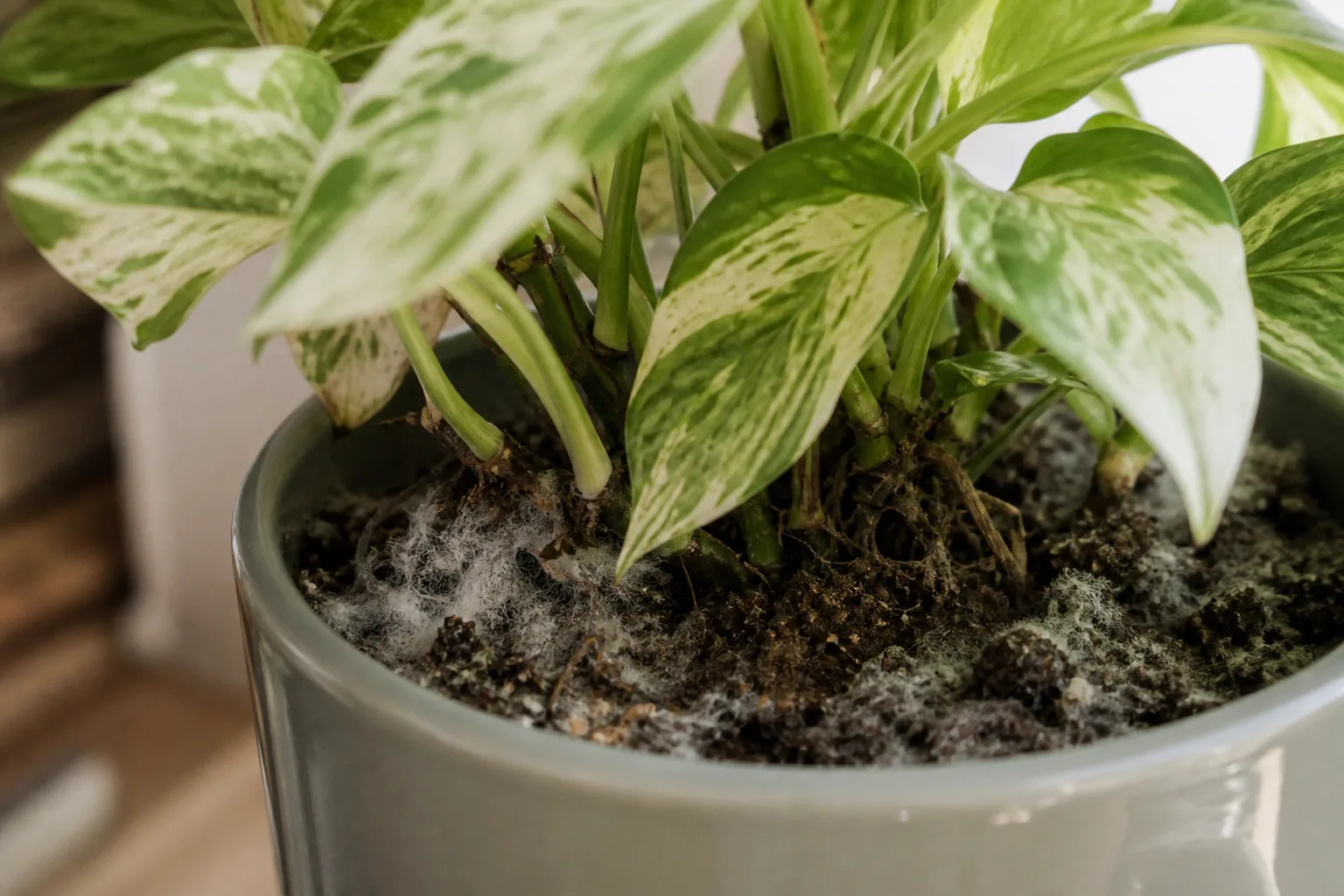
Mold on Soil on Marble Queen Pothos: Causes, Checks & Fixes
This guide covers mold on soil on Marble Queen Pothos. See also the general Mold on Soil guide, watering, and light pages for this plant.
Mold on Soil on Marble Queen Pothos: Causes, Checks & Fixes
Quick answer
If you spotted white fuzz and panicked about your Marble Queen’s pale leaves-check location first. Fuzzy white or gray growth on damp potting mix is usually harmless saprophytic fungus feeding on wet organic matter-not a disease attacking marbled foliage. Smooth white or cream sectors on heart-shaped leaves are normal variegation. Dry white dust coating leaf surfaces is powdery mildew-a different problem entirely. Mold stays on soil; variegation and mildew stay on leaves.
First step: scrape off the visible mold and the top 1 cm of wet soil, then pause watering until the top 3–5 cm of mix is completely dry.
Marble Queen (Epipremnum aureum ‘Marble Queen’) is a slow variegated pothos cultivar-not a fast drinker like Golden Pothos. Surface mold is a moisture alarm: the top layer stays damp too long for how little water Marble Queen Pothos overview actually uses. For genus-wide biology and shared tools, see the pothos mold on soil guide-this page focuses on cultivar-specific dry-down, variegation lookalikes, and the Golden Pothos watering trap.
What mold on soil looks like on Marble Queen Pothos
The growth appears on the potting surface, not on the marbled heart-shaped leaves. You may see a white, gray, or occasionally greenish fuzzy film, sometimes with fine webbing, spread across the top inch of mix. The surface often looks dark and wet even days after the last drink. A faint musty smell near the pot is common when mold and algae share the same damp layer.
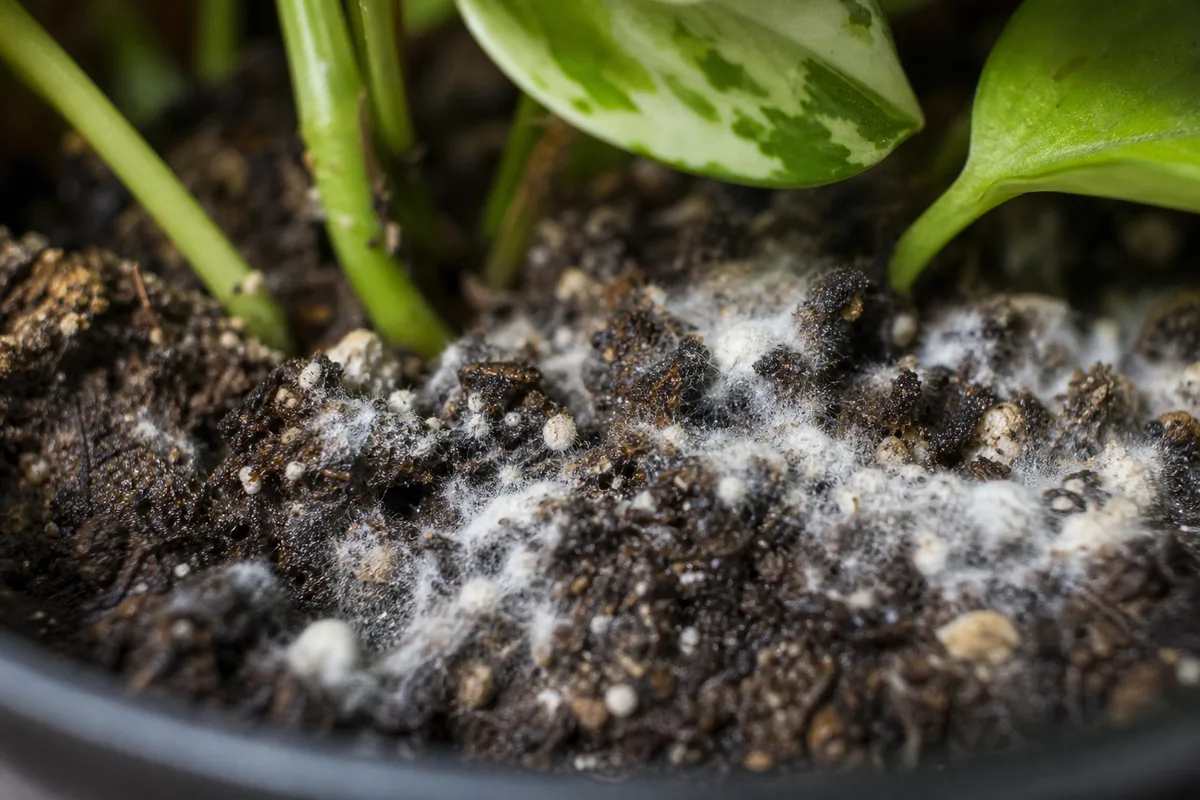
Mold on Soil symptoms on Marble Queen Pothos - compare with healthy tissue on the same plant.
Your vines may still look fine at first-firm stems, white-green marbling intact, no leaf spots. That is typical of early surface mold. Yellow leaves, wilting, or soft nodes alongside mold mean the wet conditions that fed the fungus may already be stressing roots. Treat mold as an early warning, not a cosmetic nuisance you can ignore.
Large white sectors on Marble Queen make vigor checks easier-yellowing stands out against pale marbling-but do not mistake those smooth white leaf patches for fungus. Only fuzzy growth on soil fits this diagnosis.
Why Marble Queen Pothos gets mold on soil
Marble Queen grows more slowly than Golden Pothos because its white marbled sections carry less chlorophyll. Less photosynthesis means less water use per week-yet many owners water both cultivars on the same schedule. The top layer of mix stays wet while the plant barely pulls moisture from below, creating ideal conditions for fungi that colonize moist potting media.
Several Marble Queen-specific habits make surface mold more likely:
Overwatering relative to growth rate. The Marble Queen watering guide calls for the top 3–5 cm to dry before each drink. Marble Queen often needs the full dry zone, especially in winter when growth slows to every 10–14 days between drinks. Watering every 7–10 days because “pothos like moisture” keeps the surface chronically damp.
Low light in hanging baskets. Variegated pothos needs bright indirect light to hold white marbling. In dim corners the plant uses even less water while evaporation from the soil surface also drops-double reason the top stays wet. See the not enough light guide if pale sectors are reverting to green.
Dense or peaty mix without perlite. Marble Queen performs best in standard potting mix with 20–30% perlite. Plain peat-heavy bags hold surface moisture and decomposing organic matter that saprophytic fungi feed on.
Oversized pots and decorative toppers. A pot much larger than the root ball holds excess wet mix around a slow root system. Sphagnum moss or pebble top dressings-common on variegated pothos displays-trap humidity at the surface exactly where mold colonizes.
Poor airflow between grouped plants. Trailing pothos crowded on a shelf share stagnant air; surface fungi and algae attract fungus gnats whose larvae feed on roots in the same wet upper mix.
How this differs from Pearls and Jade and generic pothos. Pearls and Jade is another slow variegated E. aureum cultivar with similar dry-down needs-but its smaller speckled variegation can hide early yellowing that Marble Queen’s large white sectors reveal sooner. Solid-green Golden Pothos in the same window drinks faster and tolerates wetter surface rhythm. This page is for Marble Queen owners who share a watering calendar with faster cultivars or who confuse soil mold with leaf variegation.
How to confirm the cause
Work through these checks before changing everything at once:
- Surface-only growth - Mold confined to the top 1–2 cm with firm vines below strongly suggests saprophytic fungus, not root disease.
- Moisture finger test - Insert a finger to the second knuckle (about 3–5 cm). If it feels wet several days after watering, the dry-down rhythm is off for this plant.
- Pot weight - A heavy pot days after watering confirms slow uptake; Marble Queen in low light will feel heavy longer than Golden Pothos in the same spot.
- Leaf and stem health - Firm green-white stems and no yellowing pattern point to surface mold alone. Wilting with wet soil suggests overwatering or root trouble brewing under the same wetness.
- Smell - Musty surface odor fits mold. A sour or rotten smell from deeper in the pot means escalate to the root rot guide.
- Gnats - Small flies hovering at soil level share the same wet habitat; mold and fungus gnats often appear together on overwatered pothos.
Confirmed surface mold with healthy roots: scrape, dry, adjust care. Sour smell or mushy roots: unpot and inspect immediately.
The first fix to try
Scrape off the visible mold and the top 1 cm of wet soil, then pause watering until the top 3–5 cm is completely dry.
Use a spoon or fork to remove the fuzzy layer and discard it in the trash-not the compost pile. Do not water to “wash it away.” That adds moisture and spreads spores. After scraping, let the pot sit in bright indirect light with good airflow until a finger inserted to 3–5 cm comes out dry. Only then resume watering-and pour less than before.
Wear gloves if you prefer-pothos sap contains calcium oxalate crystals that irritate skin, and discarded moldy soil should stay away from pets that dig in pots.
This single action addresses the immediate fungus and starts correcting the moisture imbalance. Secondary steps come after the dry-down test passes.
Step-by-step recovery
Once the surface is clean and dry:
- Resume dry-down watering - Water pothos when the soil dries, not on a calendar. For Marble Queen, wait for the full 3–5 cm dry zone per the watering guide, especially in cooler months.
- Brighten light slightly - Move the pot closer to an east- or west-facing window (with sheer curtain if sun is direct). Better light speeds water use and supports variegation without the bleach risk that hot direct sun poses on pale sectors.
- Improve airflow - Space hanging baskets away from walls and other pots so air reaches the soil surface.
- Remove debris - Pick off fallen marbled leaves from the pot surface during active trailing growth; decaying organic matter feeds mold.
- Refresh the top layer - If mold left a crusty mat, replace the top 2 cm with dry perlite-enhanced mix from the soil guide.
- Address gnats if present - Yellow sticky traps catch adults while the dry surface starves larvae; see the fungus gnat guide for potato-slice confirmation and BTI options.
Repot only if mold returns within a week of scraping, mix smells sour throughout, or roots feel soft when you peek beneath the surface. Mild cases resolve with scraping and watering correction alone.
Recovery timeline
Surface mold often disappears within days once the top layer dries and stays dry between drinks. You should see no new fuzzy growth after one to two weeks of corrected watering. Judge success by a dry surface at check-in time, not by vine length-Marble Queen grows slowly even when healthy.
New marbled leaves emerging without yellowing confirm roots are stable. If mold recurs on still-wet soil, the watering rhythm or light level has not actually changed-revisit the finger test before reaching for fungicides. Saprophytic fungi break down dead organic matter and do not attack living pothos tissue-but they return whenever the surface stays wet.
Lookalike symptoms to rule out
| What you see | Where it appears | Likely cause | First check |
|---|---|---|---|
| Fuzzy white/gray film | Soil surface only | Saprophytic mold on wet peat | Scrape + dry top 3–5 cm |
| Smooth white/cream sectors | Leaf tissue from unfurling | Normal Marble Queen variegation | No treatment-adjust light if reverting |
| Dry white dust on leaves | Leaf surfaces, not soil | Powdery mildew | Airflow + leaf treatment; different problem |
| White crystalline crust | Dry soil surface | Mineral/fertilizer salts | Flush sparingly; hold fertilizer on stressed plant |
| Slimy green film | Wet soil in low light | Algae | Same dry-down + brighten light as mold |
| Yellow leaves + sour smell + soft stems | Whole plant on wet mix | Root rot / overwatering | Root rot guide |
Guttation droplets on pothos leaf tips after a heavy drink are not a moisture-alarm signal-clear sap beads from hydathodes. Persistent wet soil with mold is.
What not to do
Do not mist the soil surface or pour hydrogen peroxide on wet mix while keeping the same watering schedule-the fungus returns when conditions stay damp. Do not assume mold means the plant needs water because the surface “looks dry” while deeper mix is saturated. Do not blanket-spray fungicides as a first response; saprophytic surface fungi are usually not pathogenic to living plants and chemical control is unnecessary when moisture is corrected.
Avoid leaving decorative moss wet on top of the pot. Do not repot into an oversized container on day one unless roots are already failing-extra wet mix around slow Marble Queen roots prolongs the problem. Do not confuse guttation beads on leaf tips with excess soil moisture.
How to prevent mold next time
Match watering to your pot in your light, not a generic pothos calendar or your Golden Pothos schedule. Marble Queen in bright indirect light may need water every 7–10 days in summer; the same plant in a dim hall may need 10–14 days or longer. Always check the top 3–5 cm first per the watering guide.
Use airy mix with perlite, pots with drainage holes, and empty saucers after every drink. Let the top of the soil dry between waterings to prevent both mold mats and the root rot that wet culture can trigger on Epipremnum. Keep the surface free of fallen leaves. In winter, stretch intervals further when growth slows.
Bottom-watering can help hanging baskets keep the surface drier once mold is scraped-but only if the top 3–5 cm still dries fully between sessions and drainage holes stay open.
When to worry
Escalate beyond scraping if mold returns within three to five days despite a dry surface, fungus gnats persist for weeks, stems soften at nodes, multiple leaves yellow while soil stays wet, or the mix smells sour. Those signs mean wet conditions may already be damaging roots-switch to the root rot inspection path before the vine collapses.
When unpotting to inspect roots, wear gloves-pothos contains calcium oxalate crystals that irritate skin and are toxic to cats and dogs if chewed.
Surface mold alone on firm vines is low urgency. Chronic wet surface with declining variegation on new growth is not.
Related Marble Queen problems
Use this page for surface mold and moisture alarms; follow the link that matches what you confirmed:
- Marble Queen overview - cultivar baseline and Golden Pothos comparison
- Marble Queen watering - dry-down rhythm and seasonal adjustments
- Marble Queen soil - perlite-enhanced mix for faster surface drying
- Overwatering on Marble Queen - wet soil stress beneath surface mold
- Root rot on Marble Queen - mushy roots when stems soften at nodes
- Fungus gnats on Marble Queen - companion pest from the same wet habitat
- Not enough light - dim corners that slow dry-down and fade variegation
- Pothos mold on soil - genus-wide biology when cultivar specifics are not the issue
How we wrote and verified this guide: Recommendations were checked against Clemson Cooperative Extension, University of Maryland Extension, Colorado State Extension, Iowa State Extension, Missouri Botanical Garden, Penn State Extension, NC State Extension, and ASPCA references cited inline. Author: sai-ananth. Reviewer: LeafyPixels Review Board. Methodology: plant problem guidance is reviewed against botanical references, extension resources, and LeafyPixels Marble Queen care data before publication. Claims validation: claims-validator-v1 pass with inline external links documented below. Last reviewed: 2026-06-17.
When to use this page vs other Marble Queen Pothos guides
- Marble Queen Pothos watering guide - Use for routine moisture checks before assuming mold on soil is the main issue.
- Marble Queen Pothos problems hub - Browse all 16 common issues on this species.
- Fungus Gnats on Marble Queen Pothos - Different entry point when symptoms overlap with mold on soil.
- Overwatering on Marble Queen Pothos - Different entry point when symptoms overlap with mold on soil.
- Root Rot on Marble Queen Pothos - Different entry point when symptoms overlap with mold on soil.