Slow Growth on Marble Queen Pothos: Causes, Checks & Fixes
Quick answer
Some slow pace is normal on Marble Queen Pothos-variegated leaves photosynthesize less than solid-green pothos. Worry when no new marbled leaves appear for eight or more weeks in spring or summer. First step: move to brighter indirect light and confirm the top 3–5 cm of soil dries between waterings.
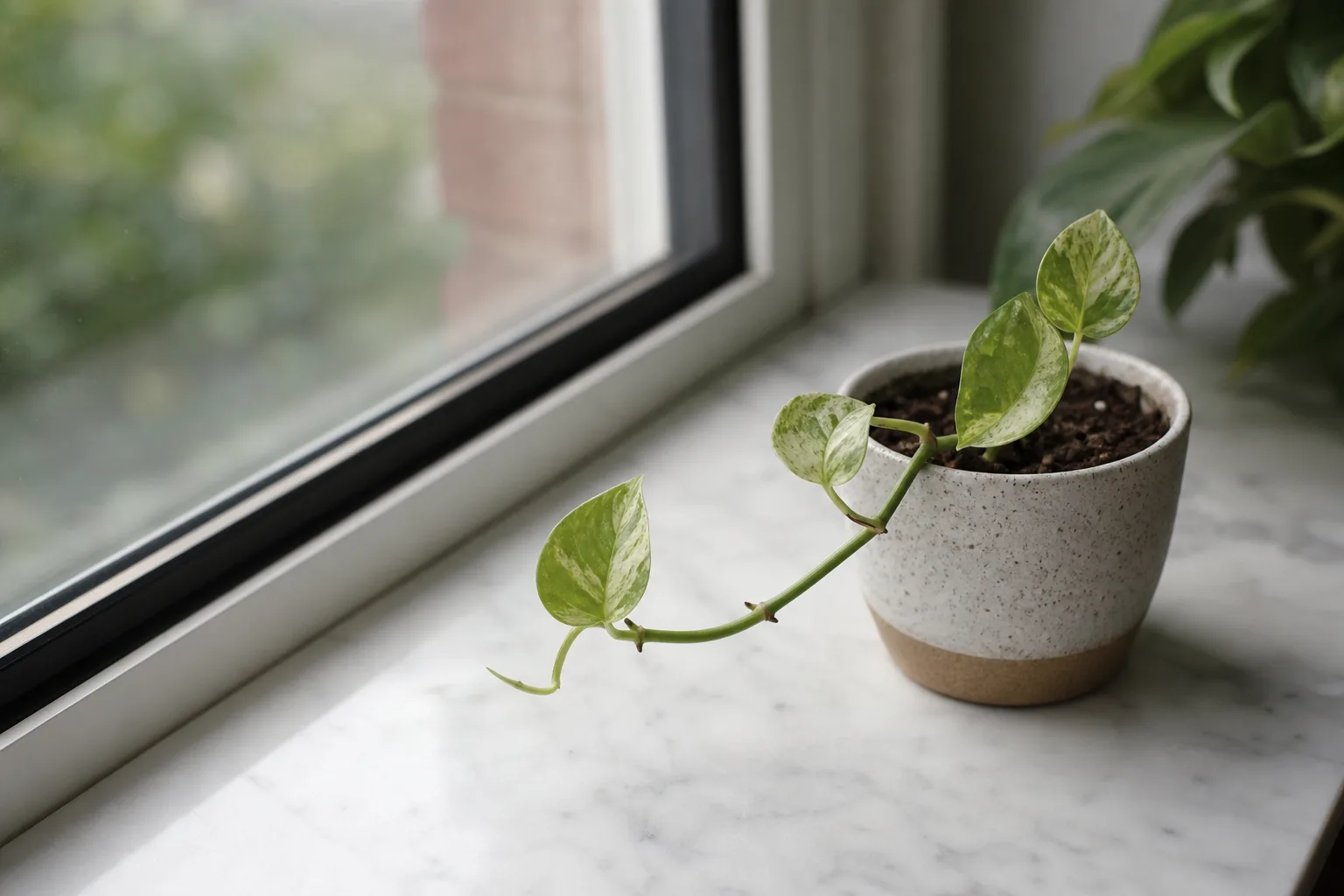
Slow Growth on Marble Queen Pothos: Causes, Checks & Fixes
This guide covers slow growth on Marble Queen Pothos. See also the general Slow Growth guide, watering, and light pages for this plant.
Slow Growth on Marble Queen Pothos: Causes, Checks & Fixes
Quick answer
Marble Queen Pothos is a moderate grower that will never match Golden Pothos speed. White and cream leaf sections carry less chlorophyll, so the plant builds new tissue more slowly even when care is correct. That baseline pace is not a problem.
Concern starts when no new marbled leaves appear for months during spring and summer, or when new growth comes in solid green while vines stay thin. On this cultivar, that pattern usually traces to insufficient light, roots sitting wet too long, or both-not a missing fertilizer dose.
First step: move the plant to brighter indirect light and confirm the top 3–5 cm of soil dries before the next drink. Do not repot, fertilize, or prune heavily until you see whether new marbled nodes form within a few weeks.
What slow growth looks like on Marble Queen Pothos
Slow growth here means the vine stays alive but barely extends-not the healthy trailing length you see on a well-lit Golden Pothos in the same room.
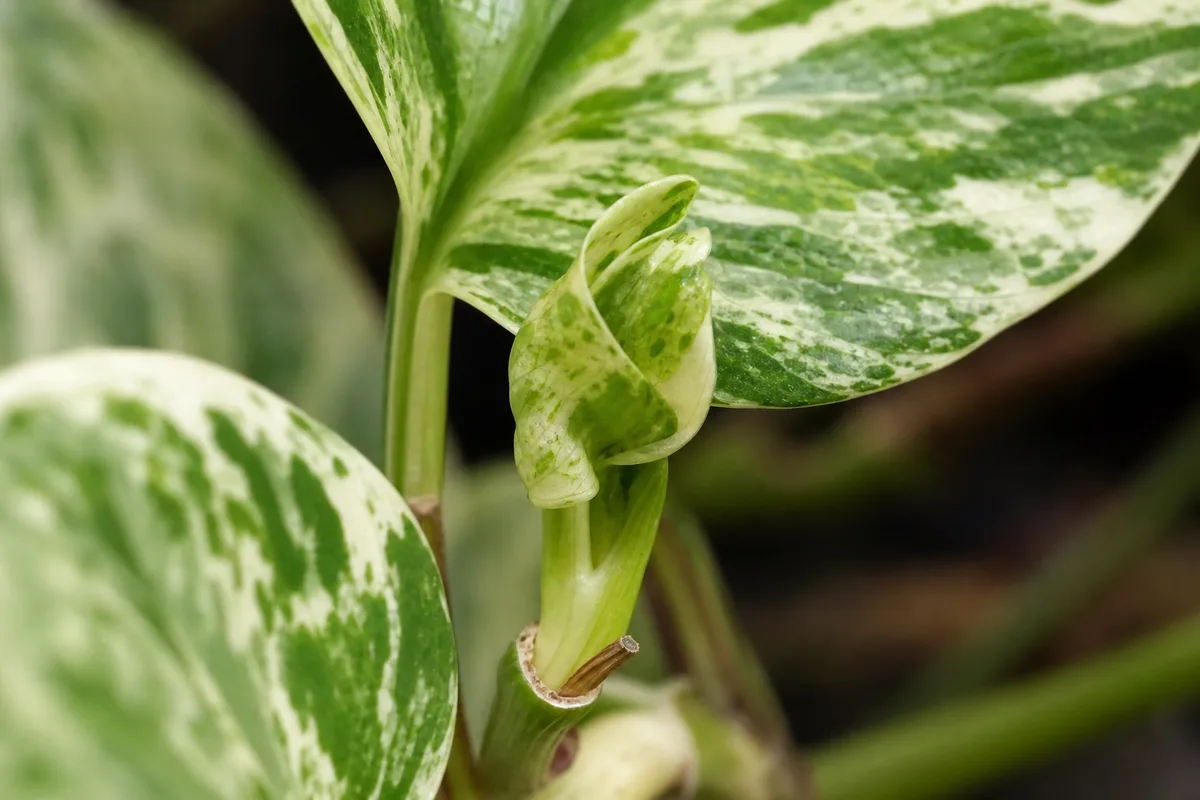
Slow Growth symptoms on Marble Queen Pothos - compare with healthy tissue on the same plant.
Typical signs:
- No new leaves at the tip for eight or more weeks during warm, bright months.
- Tiny or mostly green new leaves where marbled white-and-green foliage used to dominate.
- Long gaps between nodes on the same vine compared with growth from when you first got the plant.
- Soil that stays damp for a week or more after watering because the plant is using little water in dim light.
- Pot weight unchanged for weeks-the mix neither dries quickly nor shows active uptake.
This differs from winter pause, when shorter days naturally slow pothos. It also differs from leggy growth, where stems stretch toward windows but still produce leaves-slow growth often means nodes stay idle entirely.
A healthy Marble Queen in good light still grows slower than solid-green pothos, but you should see pin-sized leaves forming at the tip every few weeks in spring and summer, with marbling visible as each leaf unfurls.
Why Marble Queen Pothos grows slowly
Normal cultivar pace
Variegated pothos cultivars photosynthesize less per leaf than all-green forms. Marble Queen’s white sectors lack the chlorophyll that powers growth, so the plant needs more light energy to produce the same amount of new tissue as a Jade or Golden Pothos. Marble Queen requires more light than other pothos varieties to maintain its variegation. Expect a moderate-not fast-growth rate even in ideal conditions.
Insufficient light (most common fixable cause)
Pothos tolerates low light but growth slows sharply and variegation fades as the plant pushes out greener leaves. Marble Queen needs more light than solid-green pothos to hold its marbled pattern. Low light can cause loss of variegation on pothos generally. In dim hallways, interior rooms far from windows, or shaded corners of a shelf, nodes may sit dormant for months while the plant looks stable but static.
Chronic wet roots
overwatering on Marble Queen Pothos or an oversized pot keeps roots oxygen-starved. Marble Queen in low light already drinks slowly; wet soil that never dries compounds the stall. Root rot is a common houseplant issue caused by overwatering or poorly draining soil, but even mild chronic moisture limits the energy available for new leaves.
Rootbound or exhausted soil
Crowded roots in old, compacted mix reduce uptake efficiency. Growth slows even when light and watering look fine. Signs include roots circling the pot wall, water running straight through, or the plant drying out within a day or two of every drink.
Seasonal and environmental slowdown
Cool rooms below about 18°C (65°F), short winter days, and recent Marble Queen Pothos repotting guide can all pause growth temporarily. These are normal if the plant resumes pushing marbled tips when warmth and daylight return.
Pests and hidden stress
Spider mites, mealybugs, and scale drain vigor before obvious leaf damage appears. Inspect undersides if growth stalls despite good light and dry-down watering.
How to confirm the cause
Work through these checks in order-each narrows the diagnosis before you change multiple variables at once.
- Season check - Is it mid-winter with short days? Wait until late spring before calling it a chronic stall. If it is April through September and nothing is forming, keep investigating.
- Newest node - Look at the very tip of the longest vine. A pin-sized leaf bud or unfurling leaf means the plant is growing, just slowly. A bare node with no bud for two months in summer confirms a stall.
- Marbling on new leaves - Compare the last three leaves to older ones. Solid green new foliage in low light confirms the plant is starving for photons, not nutrients.
- Light distance - Is the pot more than 1.5 m from the nearest window with no grow lamp? Marble Queen rarely pushes steady marbled growth that far from glass.
- Soil moisture pattern - Stick a finger 3–5 cm deep. If the mix stays wet for seven or more days after one watering, root stress is likely. If it is bone dry for two weeks and leaves look limp, underwatering on Marble Queen Pothos may be limiting growth.
- Root firmness - Gently tug a stem near the soil line. Firm resistance suggests roots are intact. A stem that pulls out easily or feels mushy at the base points to rot-treat that before chasing light alone.
- Pot size vs plant - A huge pot with a small vine holds excess moisture. Roots circling tightly against the pot wall suggest binding.
First fix for Marble Queen Pothos
Move the plant to bright indirect light-within about 1–2 m of an east- or west-facing window, or behind a sheer curtain on a south exposure. Avoid jumping from deep shade to hot afternoon sun; pale marbled leaves scorch easily.
Leave everything else unchanged for two weeks. Watch the tip of the longest vine. Brighter light is the single highest-leverage fix for a stalled Marble Queen because variegated tissue cannot compensate with fertilizer or repotting alone.
If the pot has stayed wet for weeks, skip the next scheduled watering until the top 3–5 cm is dry before resuming a dry-down rhythm. Do not repot on day one unless roots are clearly rotting.
Step-by-step recovery
Once light is improved and watering matches dry-down:
- Rotate the pot weekly so hanging baskets do not leave one side in permanent shade.
- Resume watering only when the top 3–5 cm is dry-allow the soil to dry between each watering-typically every 7–10 days in summer and every 10–14 days in winter for this slow drinker, adjusted to your room.
- After two to three new marbled leaves appear, pinch or cut back any long bare runners just above a node to encourage branching.
- Feed at half strength with a balanced liquid fertilizer once monthly during spring and summer only-never on dry, stressed, or dormant roots.
- Repot in spring if roots circle heavily or water runs through instantly; choose a pot only one size larger with fresh airy mix (potting soil plus 20–30% perlite).
- Add a grow lamp for 10–12 hours daily if natural light is insufficient in winter-variegation and growth both benefit.
Recovery timeline
In spring or summer with corrected light and watering, expect the first visible new leaf bud within two to four weeks. A full recovery rhythm-regular marbled leaves every few weeks-often takes six to eight weeks.
Winter improvements may show little until daylight lengthens. Old stretched stem sections do not shorten; recovery appears as denser new growth at the tips.
Signs the fix is working:
- Pin-sized leaves forming at nodes.
- New leaves opening with visible white marbling.
- Shorter gaps between new leaves than during the stall.
- Pot drying on a predictable schedule in brighter light.
Signs the problem is worsening:
- Yellowing leaves spreading up the vine.
- Soft, brown stems at soil level.
- New leaves shrinking or staying solid green after light increase.
- Sour soil smell or fungus gnats in large numbers.
Lookalike symptoms
| What you see | Likely cause | What to do first |
|---|---|---|
| No growth Nov–Feb only | Winter slowdown | Reduce water; wait for spring |
| Long bare stems but some leaves | Leggy growth from low light | Brighten light; prune after new compact growth |
| Yellow leaves + wet soil | Overwatering / root stress | Dry down; inspect roots if yellowing spreads |
| Crispy brown leaf edges | Low humidity or fertilizer burn | Rule out overfeeding before misting |
| Uniform stickiness + webbing | Spider mites | Rinse and treat pests-not a light fix |
Mistakes to avoid
Do not repot into a huge pot hoping for faster growth-excess soil stays wet and slows roots further. Do not fertilize heavily in dim light; white leaf sections burn easily and salts accumulate when the plant is not actively growing. Do not confuse winter rest with a year-round stall. Do not compare growth rate to Golden Pothos in the same home-Marble Queen will always lag behind. Do not stack repotting, pruning, and feeding in the same week; change light and water first, then adjust one variable at a time.
How to prevent slow growth next time
Treat Marble Queen as a display cultivar that earns its spot in bright indirect light, not a low-light filler plant. Match watering to how fast the pot dries in that light-brighter placement usually means more frequent but still dry-down drinks. Refresh soil and pot size before roots become a dense mat. Scout leaf undersides monthly. Skip fertilizer when the plant is dormant in winter unless it is clearly pushing new marbled growth.
When to worry
Escalate beyond basic light and water fixes if multiple leaves yellow within a week, stems soften at nodes, the soil smells sour, or new growth stays solid green and smaller after four weeks in brighter indirect light. Those patterns suggest root rot, severe binding, or pest drain-and may need repotting with trimmed roots, not another window move alone.
Conclusion
Slow Marble Queen Pothos growth is often normal cultivar pace or fixable light and water mismatch. Brighter indirect exposure plus consistent dry-down watering restores steady marbled nodes within weeks in the growing season. Judge success by new tip growth, not by how fast an old bare vine lengthens-and keep expectations below Golden Pothos speed even when care is excellent.
When to use this page vs other Marble Queen Pothos guides
- Marble Queen Pothos watering guide - Use for routine moisture checks before assuming slow growth is the main issue.
- Marble Queen Pothos problems hub - Browse all 16 common issues on this species.
- Not Enough Light on Marble Queen Pothos - Different entry point when symptoms overlap with slow growth.
- Leggy Growth on Marble Queen Pothos - Different entry point when symptoms overlap with slow growth.
- Yellow Leaves on Marble Queen Pothos - Different entry point when symptoms overlap with slow growth.