Underwatering on Marble Queen Pothos: Causes, Checks & Fixes
Quick answer
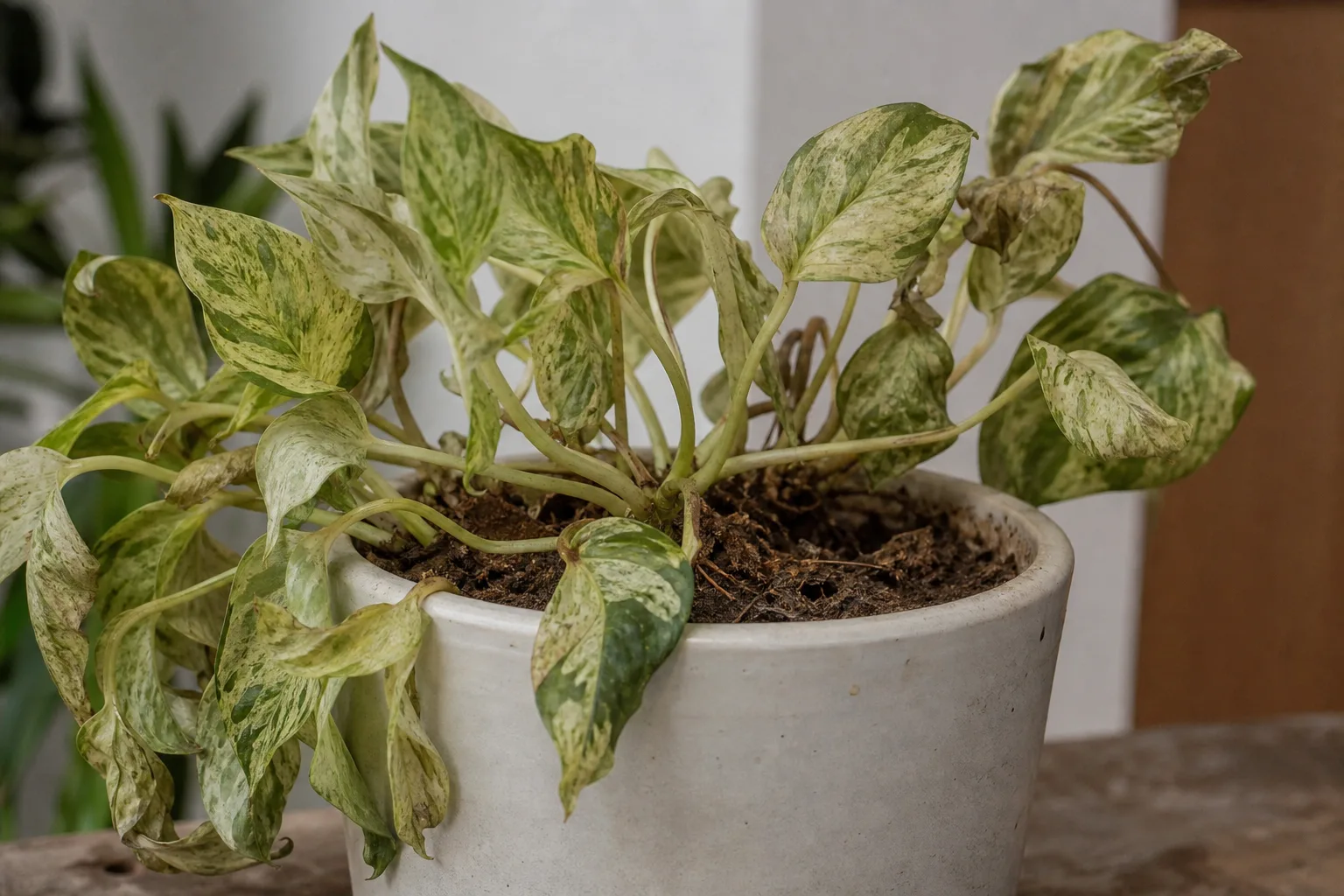
Underwatering on Marble Queen Pothos shows as limp, slightly curled leaves and a light dry pot-often after fear of overwatering this slow grower. Water thoroughly once when the top 3–5 cm is dry and leaves do not perk overnight.
Underwatering on Marble Queen Pothos: Causes, Checks & Fixes
This guide covers underwatering on Marble Queen Pothos. See also the general Underwatering guide, watering, and light pages for this plant.
Underwatering on Marble Queen Pothos: Causes, Checks & Fixes
Quick answer
Underwatering on Marble Queen Pothos usually starts as an overcorrection. Because this variegated cultivar is prone to root rot on Marble Queen Pothos when kept too wet, many owners stretch dry spells too long-and too little water may lead to leaves temporarily drooping on an otherwise healthy vine. The tell is a light, dry pot with limp trailing stems, not yellow mushy foliage on saturated soil.
First step: water thoroughly once when the top 3–5 cm of mix is dry. Pour until a little drains from the bottom, then empty the saucer. If water runs straight through and the root ball stays dry inside, bottom-water for 20–30 minutes instead of adding another surface splash.
Why Marble Queen Pothos gets underwatered
Marble Queen is a slower grower than Golden Pothos because its marbled white sections carry less chlorophyll. That lower photosynthetic capacity means it uses less water per week than solid-green pothos-but it still needs regular drinks when the mix dries. Owners who recently dealt with yellow leaves from overwatering on Marble Queen Pothos often swing too far the other way.
Clemson Extension notes that Marble Queen requires more light than other pothos varieties. In brighter spots the plant transpires faster and the pot dries sooner. A Marble Queen moved from a dim corner to a sunny shelf can go from “barely needs water” to visibly thirsty within days if the Marble Queen Pothos watering guide does not adjust.
Several home conditions accelerate dry-down on this trailing vine:
- Hanging baskets lose moisture from all sides and often sit in warmer air near ceilings
- Heat vents and AC drafts - hot and cold air from vents can dry pothos leaves and pull water from foliage faster
- Small or root-bound pots where the crowded root ball drinks the available moisture in one or two days
- Summer growth spurts when new marbled leaves expand and increase total leaf surface area
- Hydrophobic old mix that repels water after long drought, so surface watering never reaches roots
Penn State Extension notes pothos is better kept too dry than too wet-a useful tolerance trait that also makes underwatering easy to miss until vines are fully limp.
What underwatering looks like on Marble Queen Pothos
Drought stress on this cultivar has a distinct pattern separate from rot or pest damage.
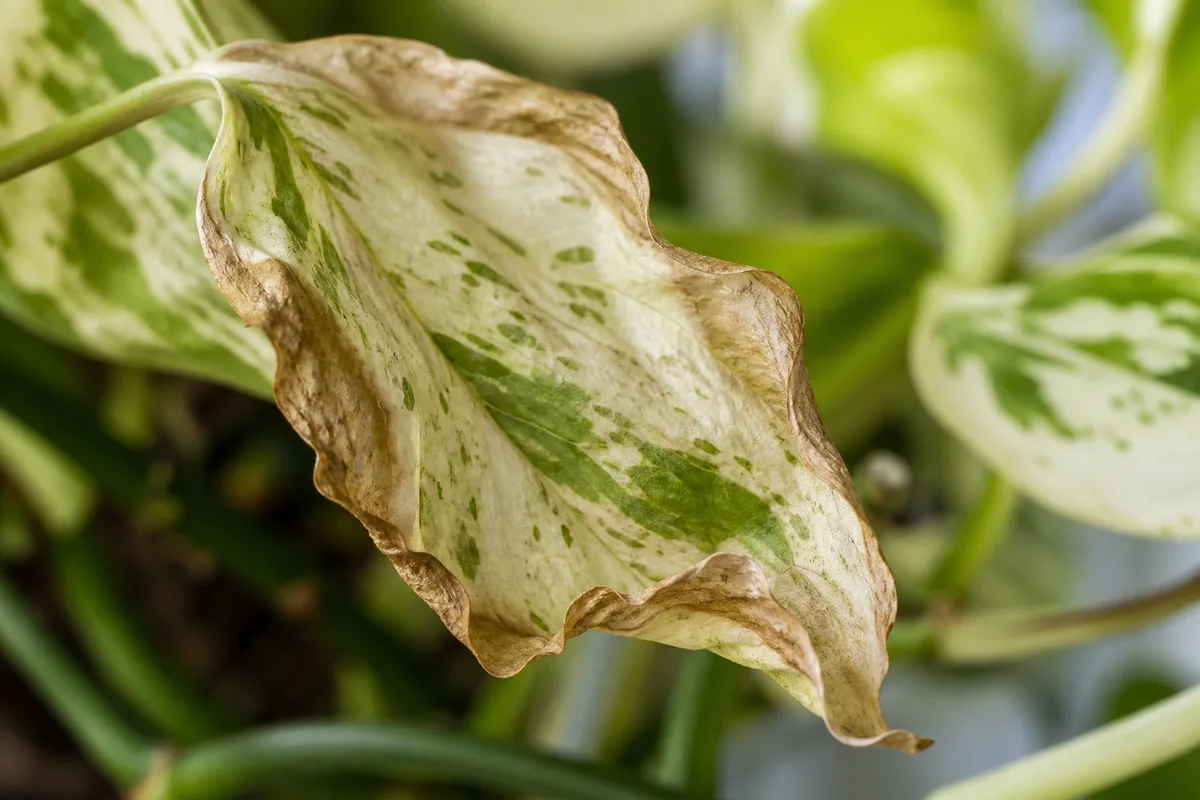
Underwatering symptoms on Marble Queen Pothos - compare with healthy tissue on the same plant.
Early underwatering:
- Trailing vines feel soft and limp, with leaves hanging flat instead of angled toward the light
- Leaves may curl slightly inward along the midrib, especially on the oldest sections of each vine
- Pot feels noticeably light compared with a properly watered plant of the same size
- Soil surface looks pale and dusty; a finger probe at 3–5 cm finds no moisture
Moderate or repeated drought:
- Lower leaves turn yellow and drop after several dry cycles-the plant sheds older tissue to conserve water
- Brown crispy edges appear on leaf tips, often on the pale marbled sections first because those areas have less reserve tissue
- Soil pulls away from the inside edge of the pot, leaving a visible gap
- Water poured on top runs down the gap and out the drain hole without wetting the root ball
What underwatering does not look like:
- Uniform yellowing on wet, heavy soil with a sour smell - that is overwatering or root rot
- Brown patches with yellow halos scattered across leaves - often disease or cold damage
- Sticky residue with insects on undersides - pest honeydew, not drought
Crispy brown tissue on old leaves will not revert to green. New marbled leaves that open firm and hold their pattern after rehydration are the real recovery signal.
How to confirm underwatering
Work through these checks before you change anything else:
- Pot weight - Lift the container. A thirsty Marble Queen feels light and hollow. A waterlogged plant feels heavy even days after the last drink.
- Depth moisture test - Push a finger or wooden skewer 3–5 cm into the mix. Bone dry at that depth plus limp foliage strongly suggests underwatering. NC State Extension recommends letting the well-drained potting medium dry out between watering-but not so long that soil contracts away from the pot wall.
- Perk test - Water thoroughly once, then check the same evening or next morning. Leaves temporarily drooping from too little water usually regain turgor within hours when roots are still healthy.
- Drainage run-through check - If water exits immediately and the surface still looks dry minutes later, the mix may be hydrophobic. Soil pulling away from the edge of the pot is a classic underwatering sign.
- Stem firmness - Nodes and stems should stay firm. Soft, mushy stem bases on wet soil mean rot, not thirst.
- Recent care history - Note whether you skipped waterings after a root-rot scare, moved the plant to a brighter or hotter spot, or left it dry through a vacation week.
If the pot is wet and heavy while vines stay limp, stop and investigate overwatering or root damage instead.
First fix for Marble Queen Pothos
Water thoroughly once until a small amount drains from the bottom, then empty the saucer within 30 minutes.
Use room-temperature water and wet the entire soil surface slowly so the mix absorbs rather than sheds moisture. For a standard tabletop pot, that usually means pouring in stages until drainage appears. Do not mist leaves as a substitute-roots need soil moisture.
If the mix is hydrophobic and water runs off the surface:
- Set the pot in a basin with 2–3 cm of water for 20–30 minutes so the root ball rehydrates from below
- Remove the pot once the surface darkens, let it drain fully, then return it to its normal spot
Do not fertilize a drought-stressed plant on day one. Do not repot unless the mix is years old and consistently hydrophobic-rehydration comes first.
Step-by-step recovery
After the initial thorough soak:
- Wait 24 hours and check turgor. Most mild cases perk up overnight. If vines stay limp on still-dry soil, repeat a slow deep watering or bottom-water session.
- Trim only fully crispy leaves that are brown and papery-they will not recover and can harbor stress signals for the plant. Leave yellowing leaves until you see whether new growth is firm.
- Move to stable Marble Queen Pothos light guide if the plant has been in a dim corner. Low light can cause loss of variegation and slows the water-use rhythm you need to track.
- Refresh hydrophobic mix if two thorough soaks in a week still leave the center dry. Repot into standard potting mix with 20–30% perlite-only after the plant has had one good drink and stems feel firm.
- Establish a dry-down rhythm - probe the top 3–5 cm before every watering. In summer that may mean every 7–10 days; in winter every 10–14 days, adjusted for your room.
- Check hanging baskets twice weekly in warm months. Trailing pots near windows and vents dry faster than floor pots.
Hold fertilizer until new growth looks normal for at least two weeks.
Recovery timeline
Mild dehydration often shows improvement within 4–12 hours after a proper soak-leaves lift and stems stiffen. Moderate cases with some yellowed lower leaves may take one to two weeks before new marbled foliage opens cleanly.
Brown crispy tips on old leaves remain permanent. Judge success by firm new leaves at vine tips and stable variegation on fresh growth, not by old damaged tissue greening up.
If the plant stays limp on wet soil after rehydration, roots may have been damaged by the drought cycle or a concurrent rot issue-inspect roots before watering again.
Lookalike symptoms to rule out
Overwatering and root rot produce yellow leaves on wet, heavy soil, often with soft stems and sour smell. Wilting on saturated mix is rot, not thirst.
Low light stress causes pale, stretched growth and fading variegation without the light dry pot of true underwatering. Moving to brighter indirect light fixes the pattern over weeks, not hours.
Heat or AC vent damage can crisp leaf edges while soil moisture is adequate. Check whether leaves face a blowing vent; relocate the pot rather than adding more water.
Spider mites cause stippling and fine webbing, usually in hot dry air. Mite damage does not lighten the whole pot or make vines uniformly limp across the plant.
Normal leaf drop - Marble Queen sheds older leaves over time even in good care. Single yellow leaves at the base of a long vine on otherwise healthy growth are not automatically drought.
Mistakes to avoid
Do not assume every drooping pothos needs water without checking soil first-limp leaves on wet mix mean rot.
Do not swing from weeks of drought to daily small sips. That keeps surface soil damp while the root core stays stressed. Water when the soil is dry, then give a full drink.
Do not mist instead of soaking dry roots. Foliar misting does not replace root-zone moisture.
Do not increase fertilizer hoping to push recovery. Stressed roots cannot use nutrients safely.
Do not ignore hydrophobic soil. Repeated surface watering on repelling mix wastes water and prolongs drought.
Do not compare Marble Queen to Golden Pothos on the same schedule. The variegated cultivar grows slower and drinks on a different rhythm even in the same room.
Marble Queen care cross-check
Underwatering rarely exists in isolation. After rehydration, confirm these baseline conditions:
- Light - Bright indirect light supports steady growth and predictable dry-down. Dim corners slow water use but also weaken variegation.
- Soil - Standard potting mix with 20–30% perlite drains well without drying in hours. Heavy compacted mix alternates between hydrophobic drought and stagnant wet pockets.
- Pot size - A pot only one size larger than the root ball dries at a readable pace. Oversized pots stay wet too long; undersized pots go dry in days.
- Season - Reduce watering frequency in winter when growth slows, but still check dryness-heated winter air can desiccate hanging baskets quickly.
How to prevent underwatering next time
Build a habit around soil checks, not calendar dates. Probe the top 3–5 cm before every watering and adjust for season, light, and pot placement.
Check hanging Marble Queens more often than shelf pots-they lose moisture from all sides and warm air rises.
Keep the plant in bright, indirect light so growth and water use stay consistent. A stable rhythm is easier to learn than guessing on a stressed, limp vine.
Refresh potting mix every one to two years so peat does not become hydrophobic. When Marble Queen Pothos repotting guide, choose a container only slightly larger than the current root ball.
After a root-rot scare, do not skip waterings entirely-reduce volume and frequency while still allowing the top 3–5 cm to dry, then watering thoroughly.
When to worry
Treat as urgent when soil has fully contracted from the pot sides, multiple thorough soaks in a week fail to perk the plant, or pale marbled sections on new growth shrivel while the whole vine declines. Chronic drought kills fine roots; a plant that stays limp on wet soil after rehydration may need root inspection.
Replace hope with cuttings if stems are firm at nodes but roots are mostly dead-Marble Queen propagates easily from healthy nodes once basic care is stable.
A single limp vine on an otherwise firm plant after one missed watering is not urgent. One thorough soak and a schedule adjustment usually resolve it.
Conclusion
Underwatering on Marble Queen Pothos is usually a timing mistake, not a mystery disease. Confirm a light dry pot, soak once, and watch for turgor recovery within hours. Then return to consistent dry-down checks at the top 3–5 cm-matched to your light, season, and pot placement-so fear of overwatering does not leave this slow variegated vine chronically thirsty.
When to use this page vs other Marble Queen Pothos guides
- Marble Queen Pothos watering guide - Use for routine moisture checks before assuming underwatering is the main issue.
- Marble Queen Pothos problems hub - Browse all 16 common issues on this species.
- Wilting on Marble Queen Pothos - Different entry point when symptoms overlap with underwatering.
- Brown Tips on Marble Queen Pothos - Different entry point when symptoms overlap with underwatering.
- Yellow Leaves on Marble Queen Pothos - Different entry point when symptoms overlap with underwatering.
Related Marble Queen Pothos guides
- Marble Queen Pothos overview
- Marble Queen Pothos watering
- Marble Queen Pothos light
- Marble Queen Pothos soil
- Wilting on Marble Queen Pothos
- Brown Tips on Marble Queen Pothos
- Yellow Leaves on Marble Queen Pothos
- Overwatering on Marble Queen Pothos
- Drooping Leaves on Marble Queen Pothos
- Marble Queen Pothos problems