Drooping Leaves on Marble Queen Pothos: Causes, Checks &
Quick answer
Drooping leaves on Marble Queen Pothos mean lost leaf turgor-usually from dry soil or failing roots in wet soil. Lift the pot and probe moisture at 3–5 cm before you pour water.
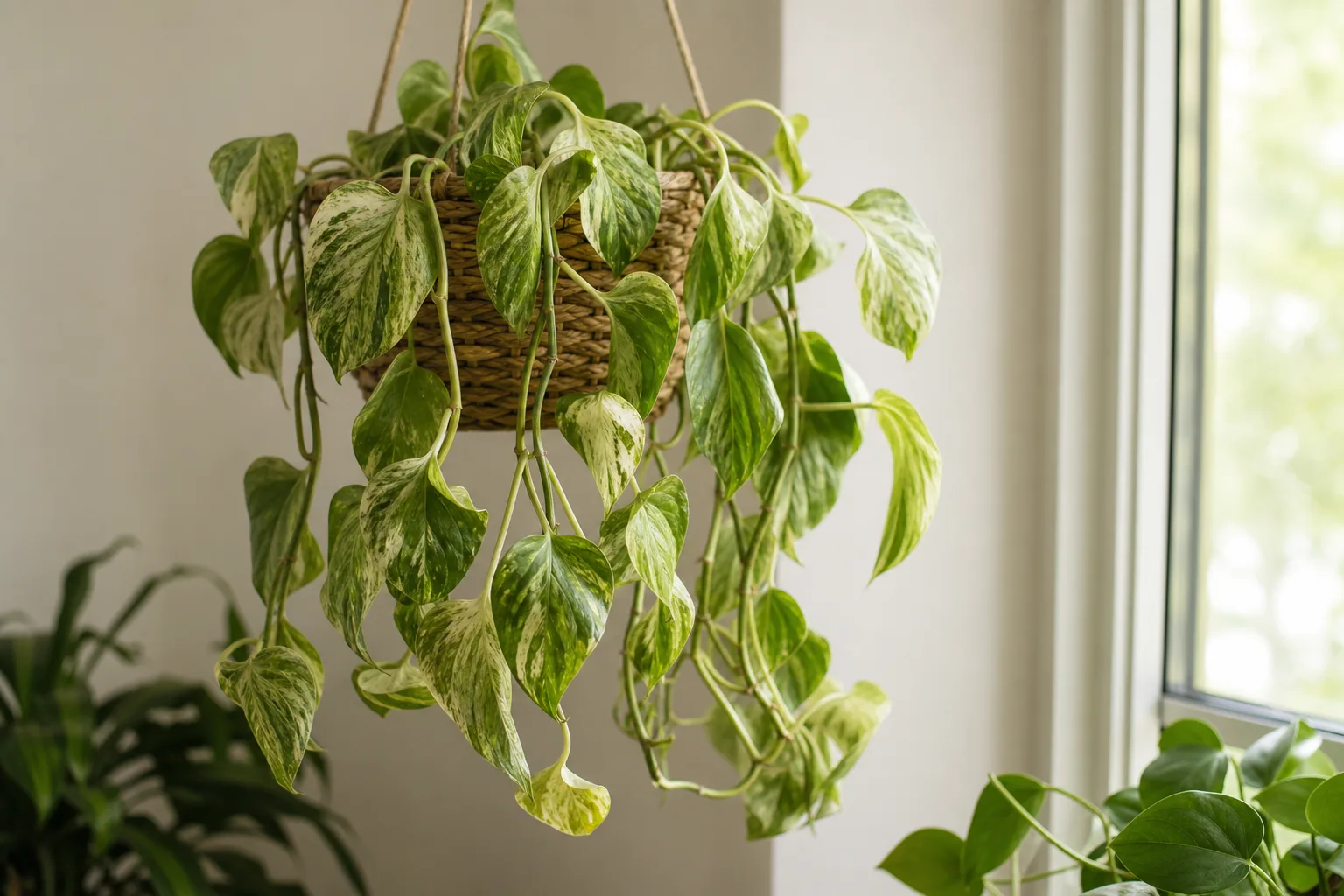
Drooping Leaves on Marble Queen Pothos: Causes, Checks & Fixes
This guide covers drooping leaves on Marble Queen Pothos. See also the general Drooping Leaves guide, watering, and light pages for this plant.
Drooping Leaves on Marble Queen Pothos: Causes, Checks & Fixes
Quick answer
Drooping leaves on Marble Queen Pothos are a turgor problem-the vine cannot keep heart-shaped foliage stiff when roots are too dry or too damaged to move water. Pothos leaves may temporarily droop from too little water, and they can also hang limp when [overwatered plants show wilted leaves even though soil is wet](https://www.missouribotanicalgarden.org/gardens-gardening/your-garden/help-for-the-home-gardener/advice-tips-resources/insects-pests-and-problems/environmental/[overwatering on Marble Queen Pothos](/plants/marble-queen-pothos/overwatering/)) because rotting roots cannot absorb moisture. First step: lift the pot. Light and dry means thirst; heavy and wet means inspect roots before watering again.
What drooping leaves look like on Marble Queen Pothos
On this trailing cultivar, droop shows up as limp, downward-hanging leaf blades along the vine-not stiff stems reaching toward a window. The marbled green-and-white leaves lose their usual glossy lift and may feel soft rather than leathery. Often the whole hanging strand droops together, especially on upper sections of a basket where soil dries first.
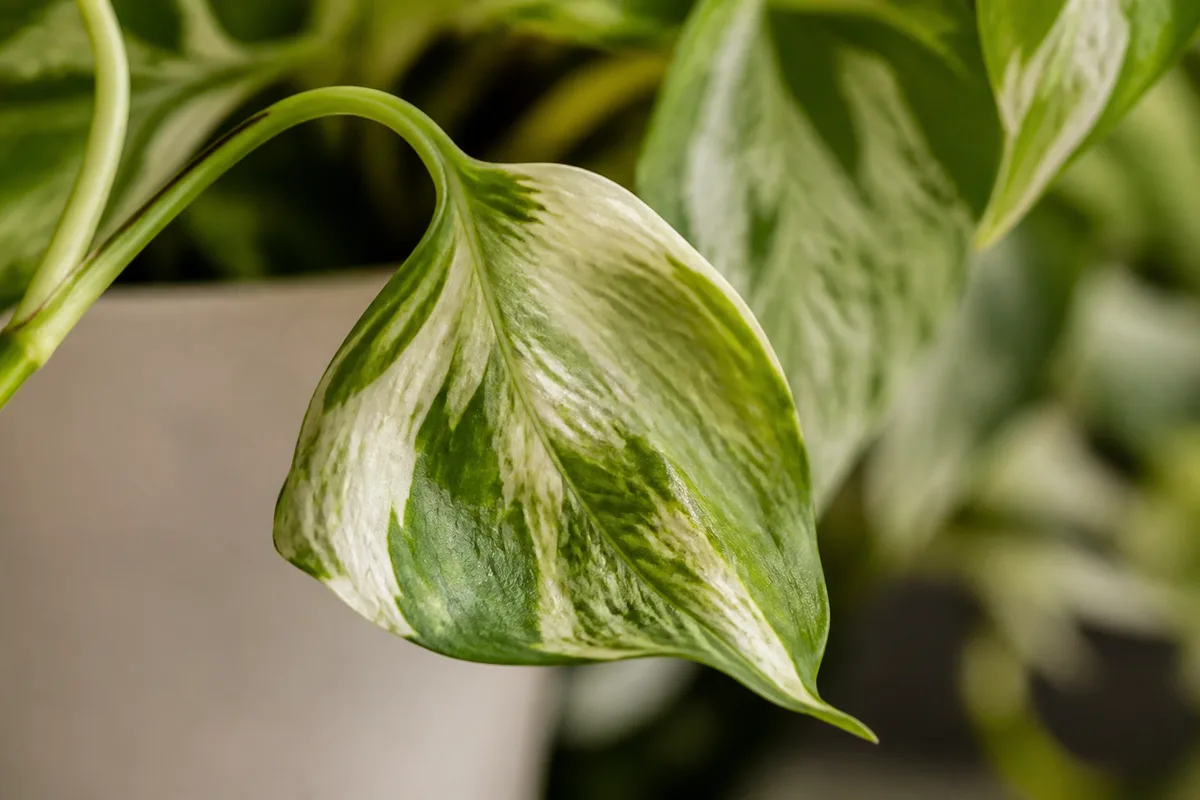
Drooping Leaves symptoms on Marble Queen Pothos - compare with healthy tissue on the same plant.
Early droop may leave leaf color mostly intact. Repeated cycles bring brown crispy edges on older leaves or yellow lower leaves if roots stay wet. Unlike leggy growth, drooping vines have soft foliage on stems that may still look normal length-leggy Marble Queen stems stay firm while leaves are small and far apart.
Why Marble Queen Pothos gets drooping leaves
underwatering on Marble Queen Pothos is the fastest reversible cause. Owners sometimes underwater this cultivar out of fear of root rot on Marble Queen Pothos. Because Marble Queen grows more slowly than Golden Pothos and its white-marbled sections carry less chlorophyll, it uses water at a moderate pace-but it still needs consistent drinks. Long dry spells, heat near a window, or a lightweight hanging pot that dries in days all collapse turgor.
Overwatering and root stress produce the confusing opposite: limp leaves on wet soil. Saturated mix blocks oxygen, fungal pathogens damage roots, and uptake fails even though you watered recently. This pattern is common on Marble Queen kept in dim corners where the plant drinks slowly while soil stays damp.
Environmental shock can droop a healthy vine temporarily. A recent repot, move beside a hot south window, AC blast, or cold draft slows root function until the plant adjusts. Pothos prefers bright indirect light and average room temperatures between 60° and 80° F; sudden extremes increase water loss faster than roots can replace it.
Poor potting setup extends either problem. Dense mix without perlite, oversized pots that hold moisture too long, or saucers left full keep roots stressed. Marble Queen does best in well-drained potting medium that dries between watering.
How to confirm the cause
Work through these checks in order-do not water on autopilot when leaves hang.
- Lift the pot. A noticeably light container points to dry droop; a heavy pot after days without watering suggests wet-root failure.
- Probe 3–5 cm deep with a finger or dry skewer. Bone-dry confirms thirst. Clinging wet mix with limp leaves points to root stress.
- Review recent care. Did you skip two or more watering cycles, or water three times while soil was still damp? Marble Queen’s slower metabolism makes both errors common.
- Inspect stems at nodes. Firm green nodes with limp leaves favor a moisture mismatch. Soft, darkening nodes plus sour smell from drain holes favor rot.
- Note placement. Hanging baskets and high shelves dry faster than floor pots. Low light plus wet soil is a classic wet-drooping combo on variegated pothos.
Dry droop that perks within hours after one thorough watering confirms simple underwatering. Wet droop that persists after you stop watering needs an unpot and root inspection.
The first fix to try
Check moisture at 3–5 cm depth before any water hits the soil. That single check separates the two main fixes:
- If dry: Water thoroughly until a little drains, then empty the saucer. Recheck in a few hours-leaves should regain firmness by morning if roots are healthy.
- If wet with limp leaves: Do not water. Move the plant to brighter indirect light to help the pot dry, and unpot if mix smells sour or stems soften. Trim mushy roots and repot into fresh standard potting mix with 20–30 % perlite only if you find decay.
Do not fertilize, mist heavily, or repot on day one unless roots are clearly rotting. Fix the water balance first.
Step-by-step recovery
For dry droop: After the initial soak, resume watering when the top of the soil is dry at 3–5 cm-not on a fixed rare calendar. If mix repels water and drains straight through, bottom-water for 20 minutes or refresh the top layer of soil.
For wet droop: Let the root zone dry partway if roots are still mostly white and firm. If more than a third of roots are brown and mushy, trim decay, rinse the root ball, and repot into a pot only one size larger with drainage. Hold water for a week, then restart dry-down checks.
For shock droop: Keep light, temperature, and watering steady for seven to ten days. Avoid moving the plant again until new growth looks firm.
Judge recovery by new leaves and node firmness, not by old leaves that already collapsed. Trim only tissue that stays limp or yellow after the vine perks up.
Lookalike symptoms
Leggy growth - Stems stretch with small firm leaves spaced far apart, often with greener new foliage in low light. Fix with brighter placement and pruning, not more water.
Wilting - Closely related; wilting emphasizes root failure to deliver water, while drooping describes the hanging leaf posture. The diagnostic path is the same: pot weight and moisture at depth.
Curling leaves - Often an earlier thirst signal on pothos. Curling with dry soil precedes full droop; address before leaves go completely limp.
Recovery timeline
Simple dry droop usually improves within 6–24 hours after one proper watering. Shock droop from Marble Queen Pothos repotting guide or relocation may take several days to a week once conditions stabilize.
Wet-root droop tied to early rot can take two to four weeks after trim and repot before new growth looks normal. Vines with mushy stem bases may not recover fully-take healthy cuttings above firm nodes if decline continues.
Mistakes to avoid
- Pouring water the moment leaves hang, without checking whether soil is already wet.
- Assuming droop always means underwatering-wet-root droop worsens with more water.
- Moving the plant repeatedly between rooms while it is stressed.
- Fertilizing a drooping vine to ” perk it up.”
- Letting saucers hold standing water after every drink.
- Treating Marble Queen like fast-growing Golden Pothos on the same watering calendar.
How to prevent drooping next time
Match watering to how fast your pot dries in its actual spot, not to a generic schedule. Let well-drained potting medium dry out between watering at the top 3–5 cm. Give bright indirect light so this variegated vine uses moisture steadily and keeps white marbling strong. Check hanging pots weekly-they dry faster than floor containers. Empty saucers after every watering.
When to worry
Escalate if drooping lasts more than 48 hours after you corrected moisture, if multiple leaves yellow and fall within a week, if stems soften at the base, or if soil smells sour. At that stage, root rot or advanced root damage is likely-unpot, trim, and consider propagating from firm sections above the damage.
Conclusion
Drooping Marble Queen leaves are the plant telling you its root zone is out of balance. Read the pot, probe the soil at 3–5 cm, then choose drink or dry-out-not both. Once turgor returns and new growth stays firm, keep a steady dry-down rhythm in bright indirect light and the vines should hold their characteristic marbled lift.
When to use this page vs other Marble Queen Pothos guides
- Marble Queen Pothos watering guide - Use for routine moisture checks before assuming drooping leaves is the main issue.
- Marble Queen Pothos problems hub - Browse all 16 common issues on this species.
- Underwatering on Marble Queen Pothos - Different entry point when symptoms overlap with drooping leaves.
- Overwatering on Marble Queen Pothos - Different entry point when symptoms overlap with drooping leaves.
- Root Rot on Marble Queen Pothos - Different entry point when symptoms overlap with drooping leaves.