Mold on Soil on Pothos: Causes, Checks & Fixes
Quick answer
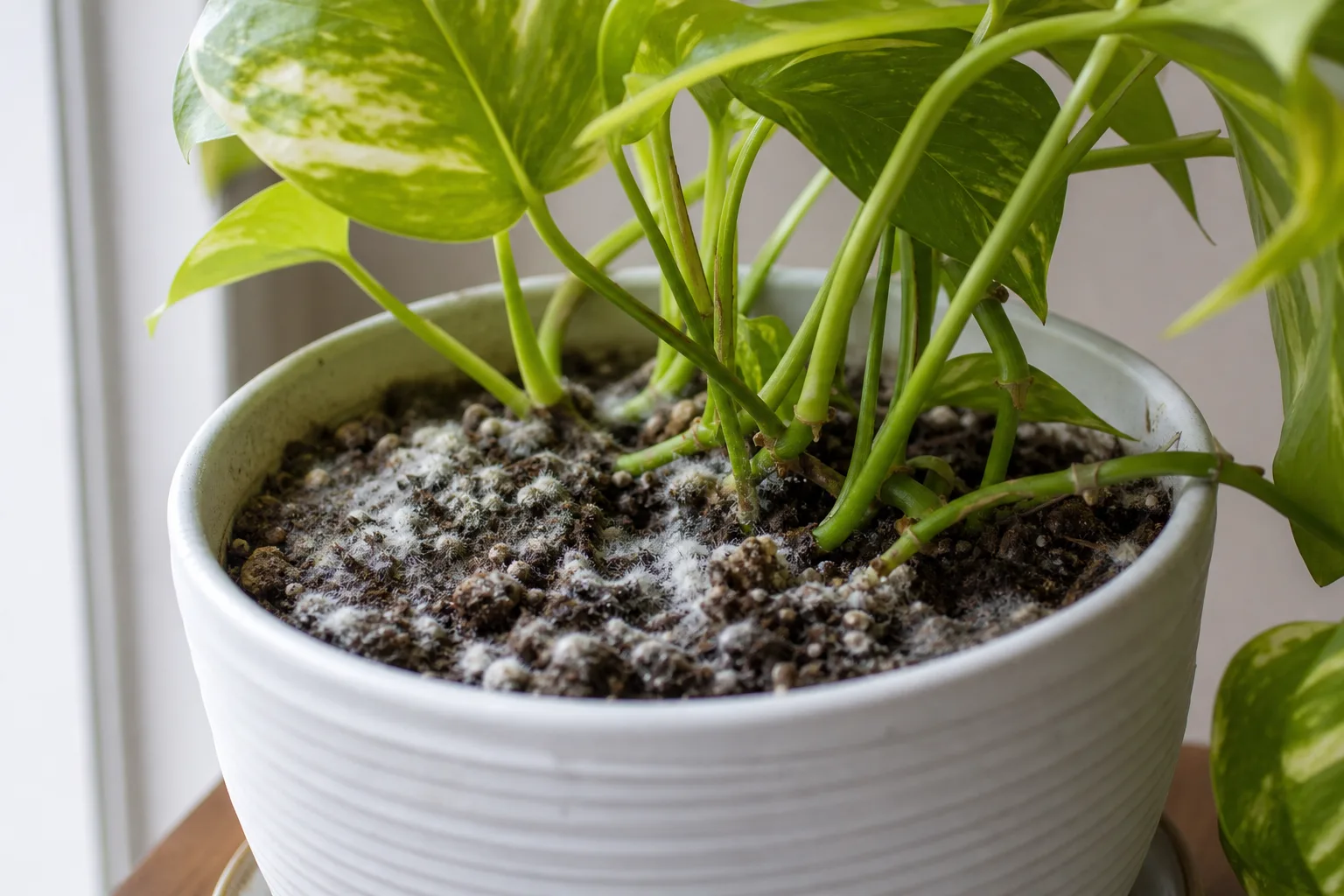
White or gray fuzzy mold on pothos soil is usually harmless saprophytic fungus feeding on organic potting mix-not a leaf infection. First step: scrape off the surface mold, then let the top 2 inches of mix dry before watering again.
Mold on Soil on Pothos: Causes, Checks & Fixes
This guide covers mold on soil on Pothos. See also the general Mold on Soil guide, watering, and light pages for this plant.
Mold on Soil on Pothos: Causes, Checks & Fixes
Quick answer
White or gray fuzzy mold on pothos (Epipremnum aureum) soil is usually harmless saprophytic fungus feeding on organic potting mix-not a leaf infection. Green film on the surface is often algae from the same chronically moist conditions. Vines and heart-shaped leaves often look fine while the top layer of mix stays damp for days.
First step: scrape off the visible mold with a spoon, discard that soil in the trash, and let the top 2 inches of mix dry before you water again. Do not mist the soil or spray leaves on day one. This is a substrate moisture problem, not a foliage disease.
Why pothos gets mold on soil
Pothos is forgiving of occasional overwatering, but the soil surface can still support mold when evaporation lags behind how often you water. Common pothos setups make that easy:
- Surface stays wet - Watering on a calendar instead of checking soil moisture keeps peat and bark near the top damp. Soil should be allowed to dry between waterings, especially the top layer where mold colonies form.
- Low light and stagnant air - Pothos tolerates dim offices, but slow evaporation in dark corners lets spores persist on moist substrate. Bright, indirect light speeds balanced drying without scorching leaves.
- Decorative covers - Moss caps, glued stones, and cache pots without drainage trap humidity on the soil line where pothos stems meet the mix.
- Rich organic mix breaking down - Standard peat-based potting soil feeds saprophytic fungi as bark and peat decompose. Fallen pothos leaves on the surface add more organic food.
- Oversized pots - A small root ball in a large pot holds moisture at the center while the surface looks merely damp-enough for mold and fungus gnats to establish.
Mold on soil does not mean pothos is diseased. It means the local environment around the pot is too wet and still for too long.
What mold on soil looks like on pothos
Typical saprophytic mold:
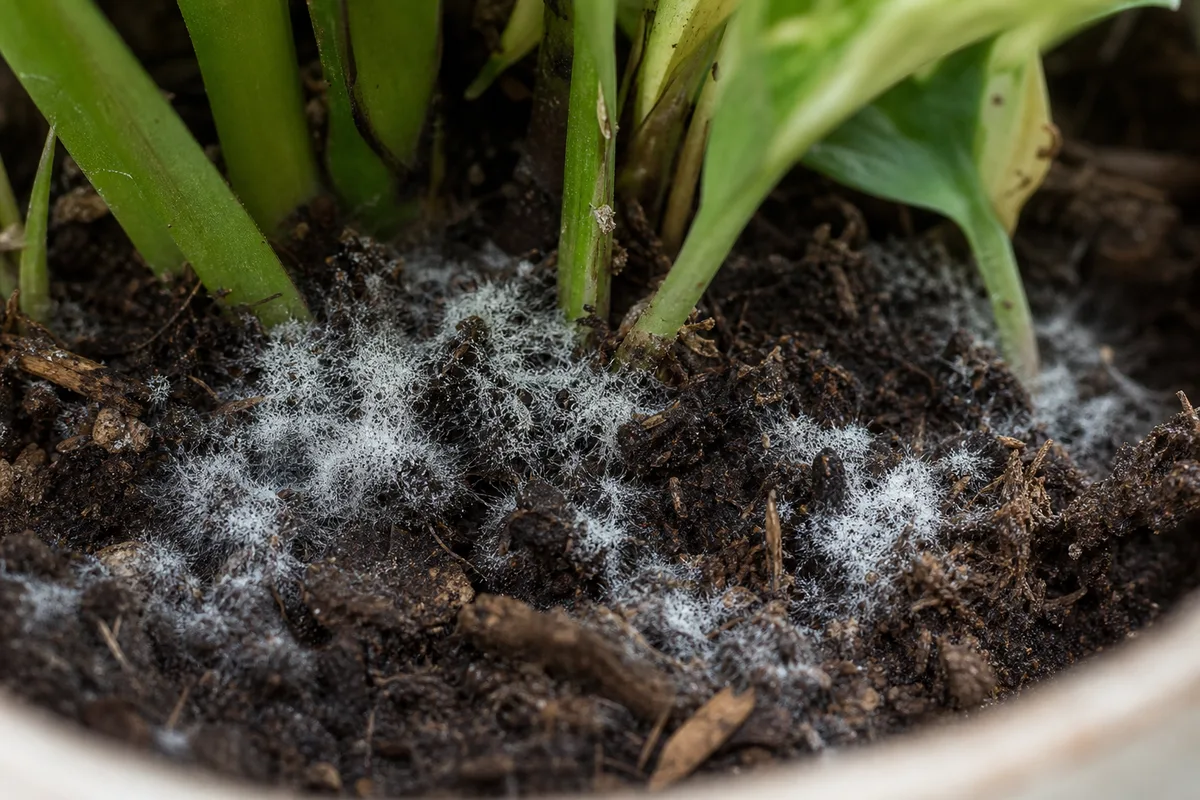
Mold on Soil symptoms on Pothos - compare with healthy tissue on the same plant.
- White, gray, or tan fuzzy patches on the soil surface
- Growth may spread in threads across damp topsoil
- Musty smell near the pot when mold is heavy
- Pothos vines, petioles, and leaves look normal unless roots are already struggling
Green surface film (often algae, not mold):
- Smooth green layer on soil and sometimes the pot rim
- Appears in low light with constant surface moisture
- Still points to wet surface conditions, not leaf pathogens
Companion signs:
- Fungus gnats running across the soil or flying when you disturb the pot
- Surface mix that feels cool and wet days after watering
- Saucer water left standing under the drainage holes
Pothos leaves do not develop mold patches themselves when this is a soil-surface issue. Yellowing, wilting on wet soil, or blackening at the stem base mean the wet conditions have moved past cosmetic mold into root stress.
How to confirm the cause
Work through these checks in order:
- Location of growth - Fuzzy or green film on soil only confirms surface mold or algae. Spots, holes, or patches on living pothos leaves point to different problems (leaf spots, scorch, pests).
- Surface moisture - Press a finger into the top inch. If it clings and feels wet several days after watering, moisture is the driver-not random spore luck.
- Return test - Scrape mold away. If fuzzy growth returns within three to five days on still-wet soil, you have not fixed the environment yet.
- Drainage check - Water should exit drainage holes within minutes. A clogged hole or pot without holes keeps the whole column wet.
- Decorative layer check - Lift moss, stones, or cache-pot rims. Mold often hides under covers that slow drying.
- Stem and root spot-check - If leaves yellow or stems soften at soil level, unpot one side of the root ball. Firm white or tan roots support a dry-down fix. Mushy brown roots mean escalate to root-rot care.
- Gnat check - Small dark flies on the soil surface or yellow sticky traps catching adults confirm the same wet habitat mold prefers.
If vines are firm, leaves are green, roots feel solid, and mold sits only on damp surface mix, you are dealing with saprophytic surface growth-not an emergency leaf infection.
First fix for pothos
Scrape off the top half-inch to one inch of moldy soil with a clean spoon, bag it, and discard it in the trash-not the compost pile.
That single action removes active mold and spores on the surface. Then stop watering until the top 2 inches of remaining mix feel dry to your finger. Move the pot to brighter indirect light with space around it so air can move. Empty any saucer water the same day.
Do not fungicide pothos leaves for soil mold. Do not repot on day one unless the mix is compacted, smells sour, or mold returns immediately after scraping on still-soggy soil.
Wear gloves if you prefer-pothos sap contains calcium oxalate crystals that irritate skin, and discarded moldy soil should stay away from pets that dig in pots.
Step-by-step recovery
After the initial scrape and dry-down:
- Replace the scraped layer - Add a thin cover of dry, fresh potting mix on the surface so spores are not sitting on exposed wet peat.
- Fix the Pothos watering guide - Water thoroughly only when the top 2 inches are dry. Clemson Extension recommends allowing soil to dry between each watering so roots get oxygen as well as moisture.
- Empty saucers - Never let the pot sit in drained water. Standing water wicks back into the root zone and keeps the surface humid.
- Remove debris - Pick off fallen pothos leaves and old vine segments on the soil. They feed saprophytic fungi.
- Improve airflow - Leave space between grouped plants. A gentle fan in stagnant rooms helps the surface dry without blasting leaves.
- Brighten placement slightly - Move toward a brighter indirect window or add supplemental light if the pot lives in a dim office corner. Avoid jumping straight to hot direct sun, which can scorch variegated cultivars.
- Address fungus gnats together - Let the top 1 to 2 inches dry between waterings; Colorado State Extension notes this kills gnat larvae and makes mix less attractive for egg laying. Yellow sticky traps catch adults but do not replace drying the soil.
- Repot if mold keeps returning - Switch to well-draining mix amended with perlite, size the pot to the root mass, and confirm drainage holes are open. Chronic recurrence on compacted, years-old peat usually needs fresh substrate-not more scraping alone.
Bottom-watering can help some growers keep the surface drier while still hydrating roots, but only after you scrape existing mold and confirm water still drains freely.
Recovery timeline
Surface mold should not return within a week once the top layer dries and airflow improves. Fungus gnat adults may take two to three weeks to taper as you dry the upper mix consistently. Judge success by a clean soil surface, no musty smell, and stable green pothos leaves-not by whether old scraped areas look pristine on day two.
If yellow leaves appear after you correct watering, older damaged foliage may drop while new nodes push fresh growth. That lag is normal when roots were briefly stressed but remain mostly firm.
Lookalike symptoms to rule out
Leaf spot diseases - Dark brown or tan spots with defined margins on pothos leaves are not soil-surface mold. They sit on living tissue and spread on foliage, not as fuzz on mix.
Powdery mildew - Dry white powder on leaf surfaces, not a wet fuzzy layer on soil. Uncommon on pothos indoors but distinct in placement.
Mealybugs or scale - White cottony clumps on stems and leaf axils, not uniform film across soil. Pests move with the plant; soil mold stays on the substrate.
root rot on Pothos - Sour smell, wilting on wet soil, and mushy stems at the base. Mold may be present, but the urgent problem is failed roots in anaerobic mix-not surface fungus alone.
Green algae on soil - Smooth green film in low light with wet surfaces. Treat with the same dry-down and light/airflow fixes as white mold.
Mistakes to avoid
Do not scrape mold repeatedly without changing moisture habits-the spores are always present; visible growth returns when the surface stays wet.
Do not mist pothos soil or leaves to “wash mold away.” Extra surface moisture feeds the problem.
Do not pile decorative stones on wet soil without fixing watering. Stones slow evaporation unless the mix underneath already dries properly.
Do not reach for broad fungicides on healthy pothos foliage. Chemical sprays on leaves do not fix a wet substrate and can stress the plant.
Do not assume mold is harmless when saucers stay full, gnats swarm, and leaves yellow on damp soil-that combination points to chronic overwatering heading toward root damage.
Do not compost scraped moldy soil or fallen diseased leaves if you also compost outdoor beds-bag and trash them instead.
How to prevent mold on pothos soil
Match watering to how fast your pot dries in your room, not a fixed weekly schedule. For most indoor pothos, that means watering when the top 2 inches of mix are dry-roughly every 7 to 10 days in active growth, slower in winter.
Use light, well-draining potting mix with added perlite. Repot when peat breaks down and holds water like a sponge, usually every year or two for fast-growing vines.
Size pots to the root ball. Oversized containers stay wet at the center and surface.
Remove decorative moss caps or glued top dressings that trap humidity on the soil line.
Keep fallen leaves off the surface. Pothos sheds older foliage; that debris is mold food.
Maintain gentle airflow in plant groupings and office cubicles where air stagnates.
Follow indoor watering practices that prioritize checking soil moisture over calendar watering.
When to worry
Treat as urgent when mold returns within days after scraping, the mix smells sour, stems soften at the soil line, or leaves yellow and wilt while soil feels wet. Unpot, trim mushy roots, and repot in fresh airy mix-the same escalation path as root rot on pothos.
Heavy fungus gnat clouds with stunted new growth on a young pothos also warrant faster dry-down and larval control, not only scraping.
A one-time fuzzy patch on otherwise healthy vines in a well-drained pot is not urgent. Scrape, dry, and adjust care-no panic repot required.
Conclusion
Mold on pothos soil is an environmental signal: the top of your mix has stayed wet, organic, and still long enough for harmless saprophytic fungi to become visible. Scraping removes the growth you see; drying the surface, improving light and airflow, and fixing drainage prevent it from coming back. Confirm leaves and roots stay healthy, treat wet-soil emergencies early, and leave the fungicide on the shelf unless a different diagnosis appears on the foliage itself.
Practical checks
Urgency check
Mold plus sour smell, yellow leaves on wet soil, soft stems at the base, or heavy fungus gnats-all urgent. A single fuzzy patch on firm vines with dry-able mix is routine.
Best inspection order
Surface moisture and decorative covers, watering log and saucer water, light and airflow around the pot, return of mold after scraping, root firmness if leaves yellow.
When to use this page vs other Pothos guides
- Pothos watering guide - Use for routine moisture checks before assuming mold on soil is the main issue.
- Pothos problems hub - Browse all 39 common issues on this species.
- Fungus Gnats on Pothos - Different entry point when symptoms overlap with mold on soil.
- Root Rot on Pothos - Different entry point when symptoms overlap with mold on soil.
- Slow Growth on Pothos - Different entry point when symptoms overlap with mold on soil.