Aphids on Marble Queen Pothos: Causes, Checks & Fixes
Quick answer
Aphids on Marble Queen Pothos colonize tender vine tips and unfurling marbled leaves, leaving sticky honeydew and curled new growth. First step: isolate the plant and rinse all foliage-especially undersides-before applying insecticidal soap.
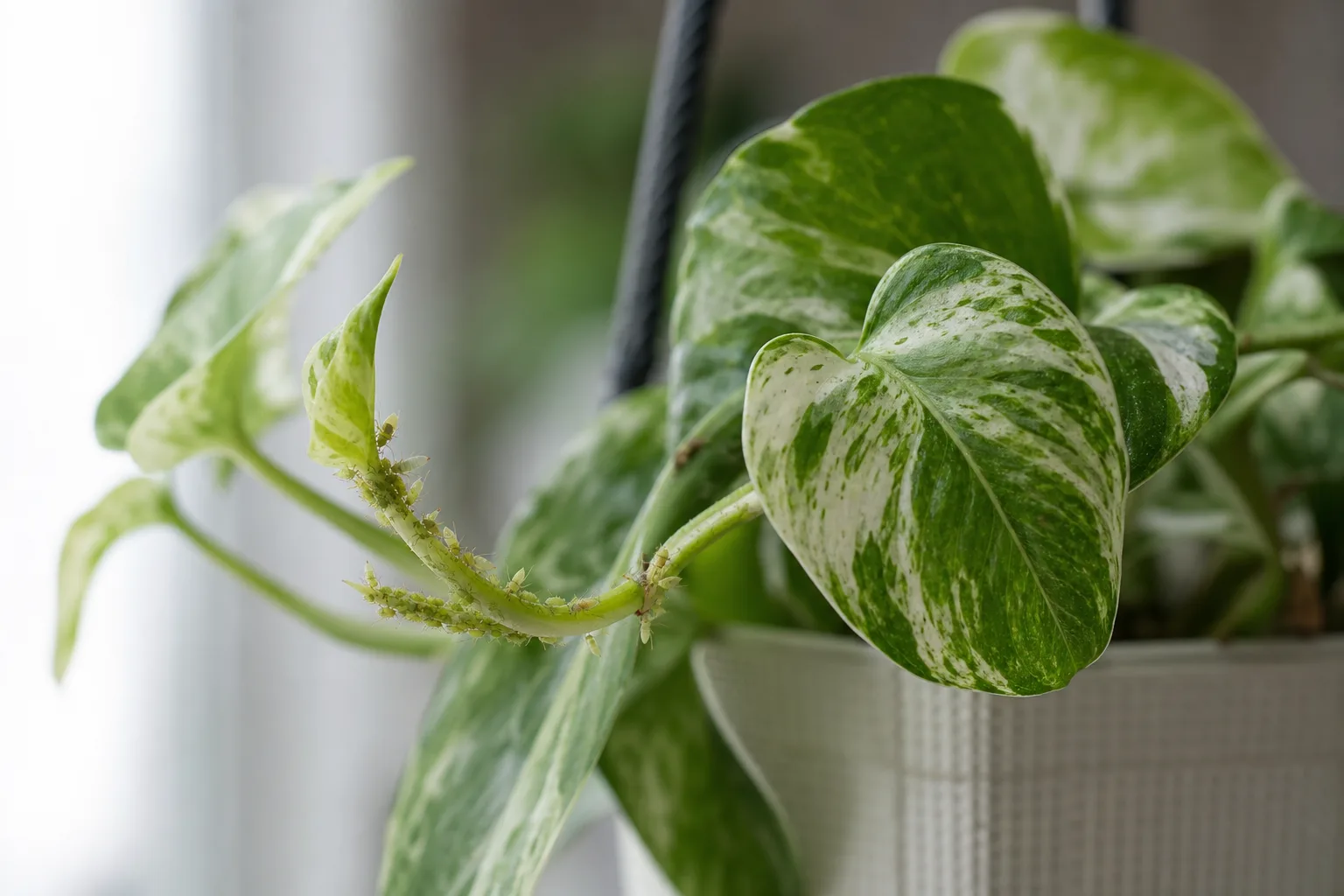
Aphids on Marble Queen Pothos: Causes, Checks & Fixes
This guide covers aphids on Marble Queen Pothos. See also the general Aphids guide, watering, and light pages for this plant.
Aphids on Marble Queen Pothos: Causes, Checks & Fixes
Quick answer
Aphids are soft-bodied sap feeders that cluster on tender new growth-exactly where Marble Queen Pothos pushes its slowest, palest leaves. On this variegated vine you will usually see tiny green, black, or peach insects packed along stem tips, sticky honeydew on fresh marbled foliage, and sometimes ants farming the residue below.
First step: isolate the plant and rinse the entire vine in lukewarm water, targeting leaf undersides and stem joints. Hold trailing stems so spray reaches the backs of upper leaves. Only after you confirm live aphids should you move to insecticidal soap on a repeat schedule.
Marble Queen is not more aphid-prone than other pothos cultivars, but its trailing habit and constant soft tip growth give aphids plenty of feeding sites before you notice stickiness on pale leaf sections.
What aphids look like on Marble Queen Pothos
Aphids on Marble Queen Pothos overview follow a predictable pattern tied to how pothos grows.
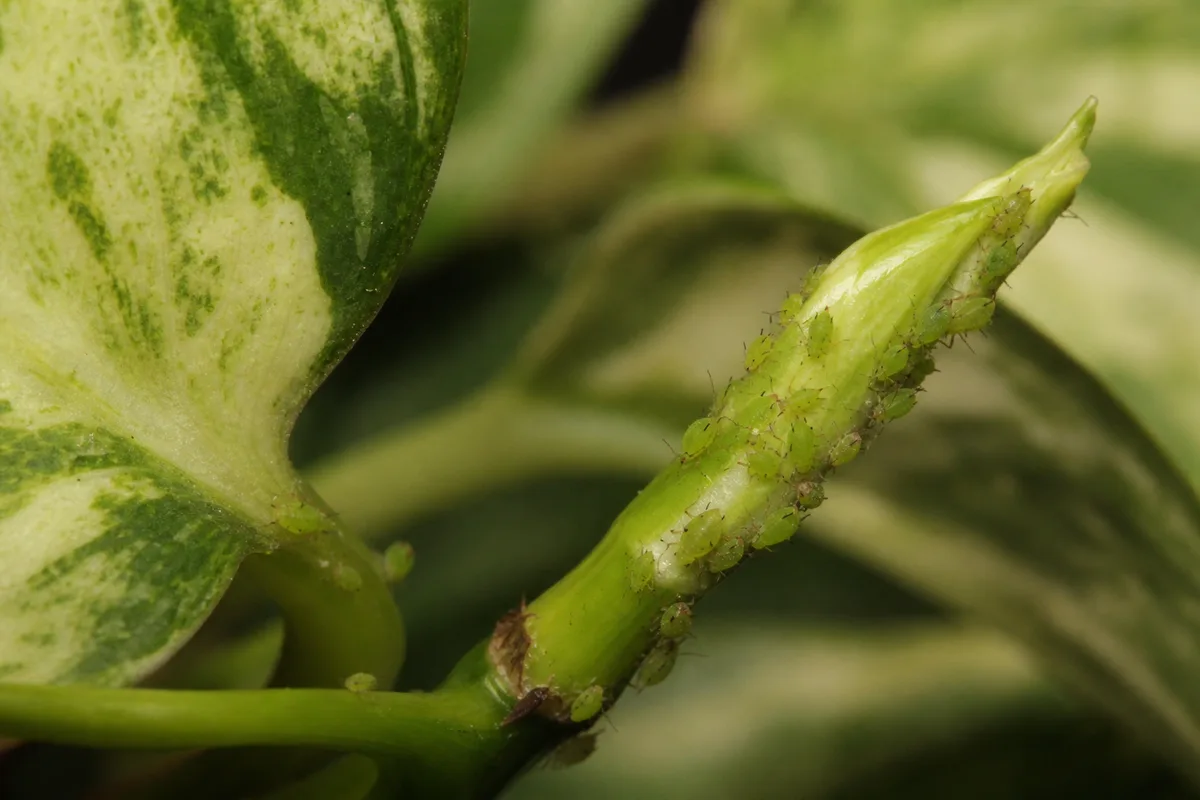
Aphids symptoms on Marble Queen Pothos - compare with healthy tissue on the same plant.
Typical aphid signs:
- Clusters of small pear-shaped insects (roughly 1/16–1/8 inch) on newest stem tips and just below unfurling leaves
- Shiny, sticky honeydew on upper leaf surfaces where drips land-often visible first on white or cream marbled sections because they contrast with the tacky film
- New leaves curling, puckering, or opening smaller than usual while aphids feed on the soft tissue
- Yellowing or dulling of the youngest leaves when colonies are heavy
- Black sooty mold growing on honeydew deposits
- Ant trails on the pot rim, shelf, or nearby plants
Marble Queen’s white-marbled leaf sections contain less chlorophyll than solid green tissue. That does not attract aphids directly, but it does make feeding damage and honeydew easier to spot on expanding pale leaves. Damage often appears on the vine tips you are already watching for variegation quality-so pest colonies can hide in plain sight until stickiness spreads down the trailer.
Aphids move slowly and stay clustered unless disturbed. They do not jump like thrips or fly off in clouds like whiteflies. That behavior helps confirm the diagnosis once you find them.
Why Marble Queen Pothos gets aphids
Aphids rarely mean your pothos care is fundamentally wrong. They mean soft, sugar-rich tissue was available and no predators were nearby-typical indoors.
Most common causes on Marble Queen:
-
Hitchhiking on new plants - Nursery pothos often look clean at purchase. Quarantine failures are the top way aphids enter a collection. Aphids can hide under leaves or in soil-line crevices on long trailing stems.
-
Summer outdoors - Pothos tolerate sheltered outdoor time in warm weather, but outdoor aphids move inside easily when plants return before frost. Marble Queen listed in Clemson Extension guidance as a cultivar suited to indoor culture is often moved seasonally without a pre-entry rinse.
-
Soft new growth from nitrogen - Aphids prefer lush new shoots. Marble Queen already grows more slowly than Golden Pothos; heavy fertilizing pushes tender tip growth that aphids colonize quickly while the rest of the vine looks fine.
-
Stress without direct causation - Low light, irregular watering, or heat near a vent weakens vines and can coincide with pest buildup, but aphids are insects you can see-not a mystery disease. Confirm colonies before blaming culture alone.
-
Spread from neighbors - Winged adult aphids can appear seasonally and move between houseplants. Trailing Marble Queen vines touching a nearby infested pot share the problem fast.
How to confirm the cause
Work through these checks before spraying anything:
-
Tip inspection - Follow each trailing stem to its growing point. Aphids pack tightly on the softest inch of new growth and on the underside of the top one or two leaves.
-
Underside check with a hand lens - Lift vines and look at leaf backs. Pear-shaped bodies with visible legs and antennae confirm aphids. Flat oval scales glued to stems are scale insects, not aphids.
-
Disturbance test - Touch a cluster gently. Aphids shift slowly. Thrips scatter or jump. Whiteflies burst into flight.
-
Honeydew and mold - Rub a sticky pale leaf section. Honeydew feels tacky; sooty mold smears dark and wipes off with water. Neither pattern appears from normal pothos sap.
-
Ant activity - Ants protect aphid colonies in exchange for honeydew. Ants on the saucer with sticky leaves above strongly point to sap feeders, not overwatering on Marble Queen Pothos.
-
Recent history - Note new purchases, open windows, or outdoor summer placement within the past month. Timing supports introduction rather than spontaneous infection.
-
Collection scan - Check other pothos and leafy neighbors. Aphids on one Marble Queen often mean early colonies elsewhere.
If you find sticky residue but no insects after two careful inspections, reconsider mealybugs in axils, scale on older stems, or the separate sticky-leaves diagnosis path before repeating chemical treatments.
First fix for Marble Queen Pothos
Isolate the plant and rinse the entire vine under lukewarm running water, thoroughly wetting leaf undersides and stem tips.
This single step dislodges aphids and washes fresh honeydew before ants or sooty mold entrench. For a large trailing plant, the shower works well-support the pot, tilt vines, and spray from below so marbled leaf backs get direct contact. Wrap the pot in plastic if you need to keep soil contained.
Move the plant away from other houseplants immediately. Aphids reproduce quickly in warm indoor air, and long Marble Queen runners can touch neighboring pots on a shelf.
Do not apply insecticidal soap on day one if you have not confirmed live insects. Do not fertilize a pest-hit vine hoping to push replacement growth-that produces more soft tissue aphids prefer.
Step-by-step recovery
After the initial rinse:
-
Repeat water rinses every two to three days until live colonies are gone on inspection. Aphids knocked off can climb back; persistence matters more than one heroic shower.
-
Apply insecticidal soap if aphids remain after several rinses. Coat undersides and stem joints thoroughly. Repeat every four to seven days through at least three applications to catch newly hatched nymphs-soap has no residual effect and only kills on contact.
-
Spot-treat dense clusters with a cotton swab dipped in rubbing alcohol if a few aphids persist in tight tip clusters. Test one leaf first on variegated pothos; pale sections can be slightly more sensitive than solid green tissue.
-
Wash sooty mold off marbled leaves with plain water once honeydew production stops. Trim only leaves that stay heavily coated and no longer photosynthesize well.
-
Manage ants if they are farming colonies. Sticky barriers on shelf legs or ant bait away from the plant help natural control work; killing aphids alone is harder while ants protect them.
-
Hold fertilizer until new growth emerges clean for two weeks. Resume dilute houseplant feeding in spring and summer only when the vine is actively growing and pest-free.
Keep the plant isolated until two weekly inspections show zero live aphids.
Recovery timeline
Water knockdown reduces visible colonies within two to three days on moderate infestations. A full soap course typically takes two to three weeks with label-interval repeats because aphid nymphs hatch on a rolling schedule.
Distorted young leaves that curled during feeding will not flatten back-judge recovery by clean new marbled tips, not old damaged tissue. Honeydew and light sooty mold clear within one to two weeks after insects stay gone. Expect slower overall vine rebound than Golden Pothos would show; Marble Queen’s reduced chlorophyll means new growth takes longer but should return with normal variegation once pests are eliminated.
Lookalike symptoms to rule out
Mealybugs form white cottony wax in leaf axils and node crevices rather than tight pear-shaped clusters on tips. They move slowly like aphids but look fuzzy, not smooth-bodied.
Scale insects attach as immobile brown or tan bumps on older stems. Aphids stay soft and clustered on young tissue.
Spider mites cause fine stippling and silk webbing under leaves in hot dry air-not typical heavy honeydew. Mites are a separate treatment path; soap helps but repeat schedules differ.
Thrips leave silvery scars and cause leaves to curl; adults jump when disturbed. Honeydew is less common than with aphids.
Excess nitrogen or moisture stress can yellow Marble Queen leaves, but neither produces visible insect colonies or ant-trail honeydew. Always confirm pests before treating.
Mistakes to avoid
Do not use homemade dish-soap sprays on variegated pothos-detergents strip leaf cuticles and burn pale tissue. Use products labeled insecticidal soap.
Do not stop after one treatment. Eggs and hidden nymphs survive single passes.
Do not ignore ants. Honeydew farming makes reinfestation likely until ant traffic drops.
Do not return an isolated plant to the collection after a single clean look. Two weekly inspections with zero live aphids is a safer standard.
Do not overwater while treating. Marble Queen already needs the potting medium to dry out between waterings; soggy soil adds root stress on top of sap loss from aphids.
Wear gloves when handling heavily infested vines if pets share the space-pothos is toxic to cats and dogs and sap contact is worth avoiding during cleanup.
How to prevent aphids next time
Quarantine every new pothos two to four weeks before placing it near existing trailers. Inspect stem tips and undersides at each watering during quarantine.
Rinse or wipe new growth on outdoor summer vines before bringing them inside in fall. Treat any soft-bodied insects found during that transition before the plant re-enters your main room.
Scout trailing stems weekly during warm months when Marble Queen pushes soft shoots. Long vines hide tips behind furniture; follow each runner to its end.
Avoid heavy nitrogen fertilizer that produces lush aphid-friendly growth. Marble Queen needs less feeding than faster cultivars-a balanced houseplant fertilizer every other month in active season is usually enough.
Keep vines in bright indirect light with good airflow between pots. Crowded shelves slow drying on leaf undersides and make early colonies harder to spot.
When to worry
Treat as urgent when honeydew and sooty mold coat most of the visible vine within days, new growth stops entirely while colonies expand, or aphids jump to multiple plants in the same room. Heavy sap loss on a slow-growing variegated cultivar can leave the whole basket looking limp within a week in warm indoor conditions.
Replace or heavily cut back a vine only if stems turn mushy at nodes, roots smell sour, or the plant declines after thorough pest control-those signs point to compounded stress or rot, not aphids alone.
A handful of aphids on one tip during active growth is not an emergency if you isolate and rinse promptly. Marble Queen is resilient once insects are cleared and care stays steady.
Conclusion
Aphids on Marble Queen Pothos target the same soft tip growth you watch for variegation-making early detection both easier and easier to miss. Confirm pear-shaped clusters and honeydew, isolate, rinse undersides before you spray, and repeat until new marbled leaves emerge clean. That path protects pale foliage without unnecessary chemicals and stops a tip infestation from spreading down the whole trailer.
When to use this page vs other Marble Queen Pothos guides
- Marble Queen Pothos watering guide - Use for routine moisture checks before assuming aphids is the main issue.
- Marble Queen Pothos problems hub - Browse all 16 common issues on this species.
- Mealybugs on Marble Queen Pothos - Different entry point when symptoms overlap with aphids.
- Spider Mites on Marble Queen Pothos - Different entry point when symptoms overlap with aphids.
- Yellow Leaves on Marble Queen Pothos - Different entry point when symptoms overlap with aphids.