Mealybugs on Marble Queen Pothos: Causes, Checks & Fixes
Quick answer
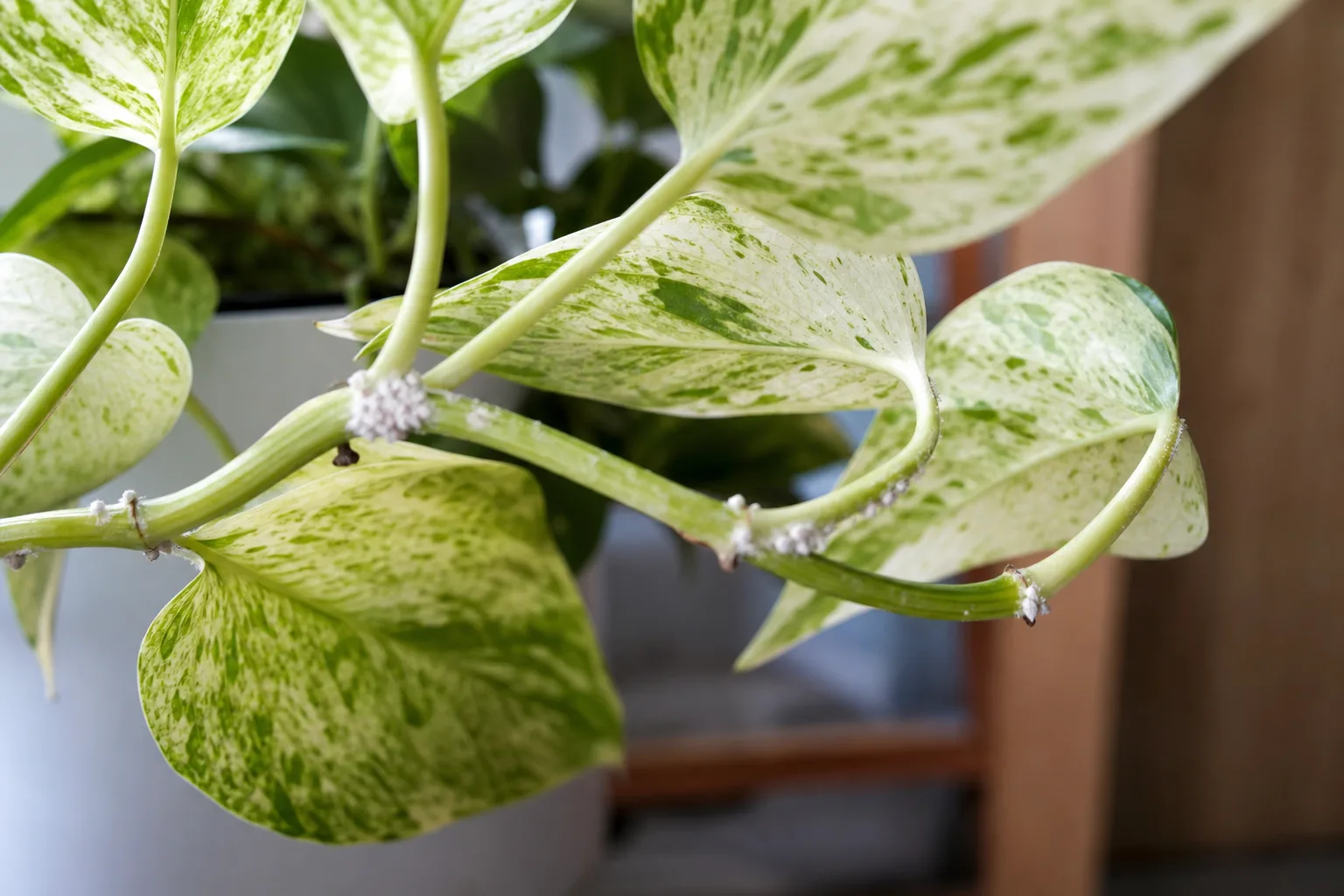
Mealybugs on Marble Queen Pothos show up as white cottony wax in leaf axils and along trailing stems, often with sticky honeydew on marbled leaves. First step: isolate the plant and dab every visible bug with a cotton swab dipped in 70% isopropyl alcohol.
Mealybugs on Marble Queen Pothos: Causes, Checks & Fixes
This guide covers mealybugs on Marble Queen Pothos. See also the general Mealybugs guide, watering, and light pages for this plant.
Mealybugs on Marble Queen Pothos: Causes, Checks & Fixes
Quick answer
Mealybugs are soft-bodied sap feeders that hide in the protected crevices of trailing houseplants. On Marble Queen Pothos (Epipremnum aureum ‘Marble Queen’), they look like white cottony wax clusters tucked into leaf axils, node sheaths, and along stems near damp soil. Their feeding leaves sticky honeydew on marbled foliage and can attract ants or sooty mold.
First step: isolate the plant and dab every visible mealybug with a cotton swab dipped in 70% isopropyl alcohol. Do not spray insecticide on day one before you have confirmed pests and removed what you can reach by hand. Alcohol kills adults on contact and is the safest starting point for light infestations on a slow-growing variegated vine.
What mealybugs look like on Marble Queen Pothos
Marble Queen has heart-shaped leaves marbled with white and green on long trailing stems. Mealybugs exploit exactly the spots you skim past during casual watering:
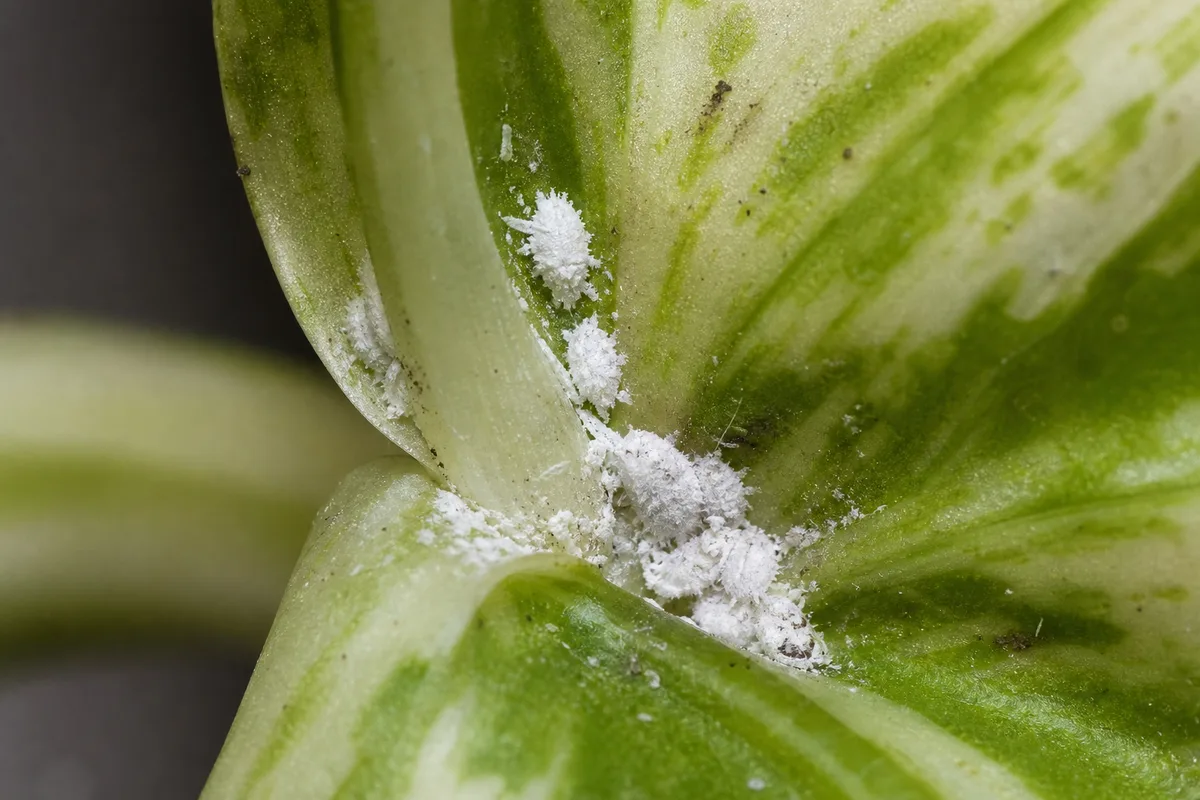
Mealybugs symptoms on Marble Queen Pothos - compare with healthy tissue on the same plant.
- White, cottony wax masses at leaf axils where the petiole meets the stem
- Clusters along vine nodes and under overlapping leaves on dense trailers
- Sticky, shiny honeydew on upper leaf surfaces-especially visible on pale marbled sections
- Black sooty mold growing on dried honeydew (wipes off; it is not a leaf disease)
- Ant trails on pot rims, saucers, or nearby surfaces farming honeydew
- Yellowing or stunted new leaves when feeding is heavy on a slow-growing cultivar
Adult female mealybugs are wingless, oval, and wax-covered. Newly hatched crawlers are tiny, lack wax at first, and can walk short distances before settling. That is why a clean vine today can show fresh cottony patches a week later if eggs were left behind.
Unlike armored scale, which forms hard brown or tan bumps, mealybugs look fluffy. Unlike powdery mildew, the white material sits in discrete clumps at joints rather than as a dry film across leaf faces.
Why Marble Queen Pothos gets mealybugs
Pothos is generally tough indoors, but Marble Queen grows more slowly than solid-green Golden Pothos because its white sections carry less chlorophyll. That slower growth means pest damage shows up faster on new marbled tips and the plant recovers more gradually after sap loss.
Mealybugs favor warm, sheltered conditions without cold winters-exactly what indoor collections provide year-round. They often arrive on new nursery plants, shared cuttings, or tools that touched an infested pot. Because Marble Queen vines trail for feet, a single infected stem can touch neighboring pots on a shelf or windowsill and spread crawlers before you notice white wax.
Several Marble Queen care patterns increase risk:
- overwatering on Marble Queen Pothos keeps mix damp near stem bases where mealybugs hide; wet, soft tissue is easier to colonize than firm, evenly hydrated vines.
- Low light weakens variegated growth. Marble Queen needs brighter indirect light than darker cultivars to maintain marbling; stressed vines in dim corners attract pests more readily.
- Dense, dusty foliage on long unpruned trailers gives mealybugs protected hiding spots between overlapping leaves.
- Skipped quarantine on new purchases is the most common introduction route for indoor collections.
NC State Extension notes that pothos should be monitored for mealybugs and scale indoors. Clemson HGIC lists mealybugs among common pothos pests when plants are kept inside.
How to confirm the cause
Work through these checks before treating:
- Axil inspection - Lift each trailing stem and look where leaves join the vine. Mealybugs cluster in these pockets; a hand lens helps spot early crawlers.
- Disturbance test - Touch a white clump with a dry swab. Mealybugs are soft underneath wax; mineral deposits or dried water spots wipe away without a pale insect body.
- Honeydew check - Rub a sticky upper leaf. Fresh honeydew feels tacky and may have a faint sweet smell. Sooty mold smears dark on your finger.
- Ant activity - Ants on the saucer or pot exterior strongly suggest sap feeders above, even when mealybugs are hidden on the back side of stems.
- Neighbor scan - Check plants within reach of trailing vines, shared watering trays, or recent cuttings from the same pot.
- Soil-line look - Some species feed near the soil surface or on roots. White wax at drainage holes or on stems just above mix warrants closer inspection.
- Care cross-check - Confirm the pot is not staying wet for days. Chronic overwatering alone does not create cottony wax, but it weakens Marble Queen while you fight pests.
If you find cottony clusters plus honeydew or live insects, mealybugs are confirmed. Proceed with isolation and treatment-not fertilizer, Marble Queen Pothos repotting guide, or light changes as the first response.
First fix for Marble Queen Pothos
Move the plant away from all other houseplants, then dab every visible mealybug with a cotton swab dipped in 70% isopropyl alcohol.
Isolation stops crawlers from walking to neighbors on touching leaves. Alcohol dissolves the waxy coating and kills mealybugs on contact for light infestations. Test alcohol on one leaf first and wait a day to check for leaf burn before treating the whole vine.
Work systematically:
- Start at the soil line and follow each vine to the tip
- Open every leaf axil and node sheath
- Crush or remove cottony egg sacs, not just loose adults
- Rinse sticky honeydew off marbled leaves with lukewarm water after dabbing so sooty mold does not spread
Do not return the plant to its display spot until you have seen no new cottony patches for at least two weeks. Do not overwater during treatment; wet stress plus sap loss hits variegated pothos harder than solid-green forms.
Step-by-step recovery
After the initial alcohol pass:
- Repeat alcohol dabs every five to seven days for at least three cycles to catch newly hatched crawlers that emerge from wax-protected egg sacs.
- Apply insecticidal soap or horticultural oil if colonies persist after several alcohol rounds. Cover all stem surfaces and leaf axils thoroughly; repeat at label intervals through one full pest generation.
- Shower the vine in lukewarm water between chemical treatments to wash off honeydew and dislodge crawlers. Let foliage dry in Marble Queen Pothos light guide the same day.
- Trim badly coated leaves only after pests are controlled. Severely yellowed or honeydew-stiffened leaves will not regain full variegation.
- Manage ants if they protect colonies. Remove ant access to the pot saucer so natural predators and your treatments can reach mealybugs.
- Inspect quarantined neighbors weekly even if they look clean. Crawlers hitchhike on hands, tools, and trailing stems.
For heavy root-zone infestations where stems look clean but white wax reappears after watering, consider repotting into fresh mix after rinsing roots-only once aboveground pests are under control.
Recovery timeline
Alcohol dabs show visible results within a day when populations are small: cottony masses brown and wipe away. A full soap or oil course with weekly repeats typically takes two to four weeks before crawlers stop appearing.
Marble Queen puts out new marbled leaves more slowly than Golden Pothos, so expect one to three weeks after the last live mealybug before you can judge clean new growth at vine tips. Old honeydew-coated leaves may stay dull; recovery means unsticky new foliage and firm stems, not perfect older leaves.
Lookalike symptoms to rule out
Powdery mildew forms a dry white powder on leaf surfaces, not cottony clumps at stem joints. It spreads in patches without honeydew or insects.
Mineral or hard-water deposits leave crusty white spots on leaf faces where water dried. They do not cluster in axils and do not move when scraped.
Scale insects form hard, immobile bumps glued to stems. Mealybugs look fluffy and can be crushed with a swab.
Spider mites cause stippling and fine webbing, not cottony wax. They favor hot, dry air-different stress pattern than mealybugs.
Normal variegation on Marble Queen includes white marbling in leaf tissue. Variegation follows leaf veins and is flat within the leaf; mealybugs sit on top of stems as three-dimensional cottony masses.
Mistakes to avoid
Do not stop after one alcohol dab. Egg sacs hide in crevices and hatch over several weeks.
Do not spray oil or soap on wilted, sun-stressed leaves in direct sun without a phytotoxicity test. Marble Queen scorches more easily than darker pothos cultivars.
Do not overwater while treating. Damp mix plus pest stress encourages yellowing on an already slow-growing vine.
Do not place the plant back near neighbors because “only a few bugs” were visible. Trailing vines touch other pots easily.
Do not compost infested clippings. Bag and discard pruned material.
Do not fertilize a pest-hit plant hoping to push new growth. Tender new tissue is what mealybugs prefer to colonize.
Wear gloves when handling treated plants if pets share the room. Pothos contains calcium oxalate crystals toxic to cats and dogs; keep treated vines out of reach until sprays dry.
Marble Queen care cross-check
While fighting mealybugs, keep baseline care steady-not stacked with extra changes:
- Light: Bright indirect light supports recovery and keeps marbling strong. Dim corners slow new growth and extend recovery time.
- Water: Allow the top 3–5 cm of mix to dry before watering. Saucers should not hold standing water.
- Humidity: 40–60% is adequate. Mealybugs are not cured by humidity changes alone.
- Airflow: Gentle circulation helps foliage dry after rinses; avoid blasting heat vents directly on wet leaves.
Fix pest pressure first. Repotting, moving to a new window, and fertilizing can wait until crawlers are gone and new growth looks clean.
How to prevent mealybugs next time
Quarantine every new pothos or cutting for at least two weeks before placing it near existing vines. Inspect axils, not just upper leaf surfaces, during weekly care.
Wipe dust from Marble Queen leaves a few times a year so white wax stands out against glossy green and cream tissue. Long trailers benefit from a monthly axil check-you cannot see every node from across the room.
Keep the vine in appropriate light with sharp drainage so growth stays firm, not soft from chronic wet mix. Avoid excess nitrogen fertilizer that pushes tender shoots mealybugs favor for egg laying.
Separate trailing pots on shelves so vines do not rest on neighbor foliage. Disinfect scissors between plants when pruning multiple pothos.
When to worry
Treat as urgent when cottony clusters cover most nodes on multiple vines, stems soften or blacken at the base, or new marbled leaves stay tiny and pale while the plant sheds older foliage faster than it replaces it.
Consider discarding rather than endlessly retreating when mealybugs persist after four to six weeks of consistent weekly treatment, the root zone is infested, and the vine has lost most of its healthy tissue-heavily infested houseplants are often best discarded. Starting fresh with a clean cutting from an uninfected section is sometimes less costly than repeated chemical cycles- but only if you can isolate and treat the cutting properly.
A handful of isolated cottony spots on one stem, caught early, is not a death sentence. Isolate, dab, repeat, and watch new tips.
Conclusion
Mealybugs on Marble Queen Pothos are a contact-and-persistence pest, not a mystery disease. The white wax in leaf axils tells you where to look; honeydew and ants confirm sap feeding is active. Isolate first, dab with alcohol, repeat until crawlers stop appearing, and judge success by clean new marbled growth at the vine tips-not by perfect older leaves. That path fits a slow-growing variegated trailer better than a single spray and hope.
When to use this page vs other Marble Queen Pothos guides
- Marble Queen Pothos watering guide - Use for routine moisture checks before assuming mealybugs is the main issue.
- Marble Queen Pothos problems hub - Browse all 16 common issues on this species.
- Yellow Leaves on Marble Queen Pothos - Different entry point when symptoms overlap with mealybugs.
- Slow Growth on Marble Queen Pothos - Different entry point when symptoms overlap with mealybugs.
- Spider Mites on Marble Queen Pothos - Different entry point when symptoms overlap with mealybugs.