Marble Queen Pothos Fertilizer: When, How, and Mistakes
Marble Queen Pothos Fertilizer: When, How, and Mistakes to Avoid
Marble Queen Pothos Fertilizer: When, How, and Mistakes to Avoid
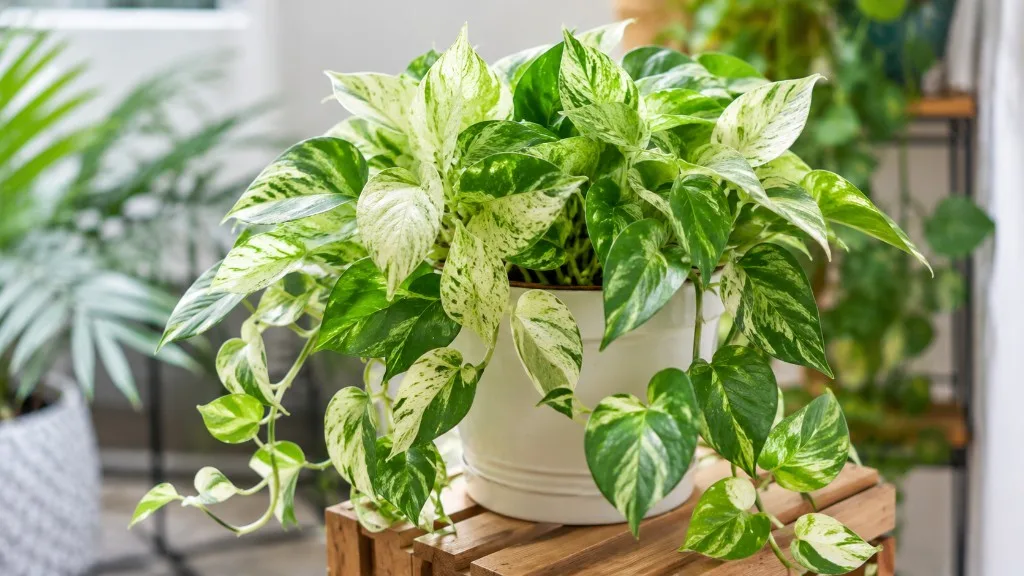
Marble Queen Pothos fertilizer is one of those topics where the species-wide advice is almost right - and almost enough to damage your plant. Epipremnum aureum ‘Marble Queen’ shares root biology with Golden Pothos and the rest of the pothos cultivar family, but the heavy white and cream marbling on each leaf changes how aggressively you should feed. White sectors contain far less chlorophyll than solid-green tissue, so Marble Queen grows more slowly, uses water and nutrients at a lower rate, and shows fertilizer burn on pale leaf patches before green sections when salts spike or doses run hot. The practical goal for most home growers is conservative: a balanced or foliage-weighted water-soluble fertilizer at half the label strength, applied every four to six weeks from mid-spring through early fall while the plant is actively unfurling marbled leaves, with a complete pause in late fall and winter for typical indoor setups. Water onto moist soil, never dry roots. Skip bloom boosters. Fix light and watering before you treat pale variegation as hunger.
This guide covers why variegation changes feeding risk, which N-P-K ratios match Epipremnum biology, a worked dilution example, seasonal timing, step-by-step application, deficiency versus burn diagnosis, and the mistakes that crisp white marbling faster than any pest. Pair it with the Marble Queen overview, watering, light, and soil guides when the same leaf problems keep returning. For shared E. aureum biology across cultivars, see the genus pothos fertilizer hub.
Reviewed by the LeafyPixels Review Board against UF/IFAS, Clemson HGIC, Penn State Extension, and NC State pothos guidance before publication.
Why Marble Queen Pothos Needs Light, Conservative Feeding
Marble Queen is not a separate species - it is a cultivar of Epipremnum aureum with leaves marbled in white variegation only, as UF/IFAS commercial production guidelines describe for ‘Marble Queen’ (UF/IFAS EP151 - Cultural Guidelines for Commercial Production of Interiorscape Epipremnum). That taxonomy matters because every pothos fertilizer page can repeat “half strength, spring and summer” and still miss the cultivar reality: Marble Queen is a light feeder with reduced photosynthetic capacity per leaf. Clemson University’s Home & Garden Information Center notes that Marble Queen requires more light than other pothos varieties to maintain its striking white or cream variegation (Clemson HGIC - Pothos Indoors). Lower light slows growth further; unused nutrients then accumulate as soluble salts while the plant cannot metabolize them - the same path that produces brown tips on variegated tissue.
Think of fertilizer as maintenance for a healthy, actively growing Marble Queen - not a rescue tool for a plant that is pale because it sits in a dim hallway, dries out repeatedly, or struggles in waterlogged mix. The Marble Queen watering guide explains why this cultivar uses water more slowly than Golden Pothos under identical conditions; the same reduced chlorophyll budget applies to nutrients. Half-strength liquid feeding and occasional salt flushing match how Marble Queen handles nutrition in small containers far better than full label rates applied on a rigid monthly calendar regardless of growth.
Variegation, Chlorophyll, and Nutrient Demand
Variegation is a photosynthetic budget, not decoration. Green tissue drives nitrogen uptake and leaf expansion; white and cream sectors add surface area without adding production capacity. Marble Queen therefore metabolizes fertilizer more slowly than all-green Golden Pothos in the same pot, light, and season - which is why extension sources describe pothos generally as a very light feeder while still recommending periodic balanced feeding during active growth (NC State - Epipremnum aureum).
That slower pace has a second consequence for feeding: thin variegated tissue desiccates and burns faster than thick green pothos blades when salt stress hits. UF/IFAS notes that physiological problems on variegated Epipremnum include burned, necrotic patches confined to variegated areas under high light or heat stress (UF/IFAS EP151) - and excess soluble salts create a similar marginal necrosis pattern even at moderate light. White patches brown at tips and edges first; green sections may look fine for another week. That asymmetry is your clearest Marble Queen-specific diagnostic: variegation-sector burn before whole-leaf collapse.
Chronic overfeeding combined with insufficient light can also push variegation reversion toward solid green as the plant prioritizes chlorophyll production. If newest leaves arrive with less white marbling after a heavy feed season, pull back on fertilizer and improve light before increasing doses.
How Marble Queen Differs from Golden Pothos for Feeding
Golden Pothos is the site’s anchor guide for shared E. aureum biology - faster growth, more chlorophyll per leaf, and a default every four to six weeks half-strength schedule in bright indirect light. Marble Queen sits on the conservative end of that range:
| Factor | Marble Queen Pothos | Golden Pothos |
|---|---|---|
| Chlorophyll per leaf | Lower (heavy white/cream marbling) | Higher (green with yellow streaks) |
| Typical growth rate | Moderate to slow | Fast in good light |
| Default feed interval (active season) | Every 5–6 weeks; monthly max | Every 4–6 weeks |
| First burn location | White/cream leaf sectors | Leaf tips and margins generally |
| Light demand for variegation | Higher - needs bright indirect | More tolerant of moderate light |
Both cultivars share the same safe defaults: half-strength balanced liquid, moist-soil application, winter pause indoors, and salt flush when crust appears. Marble Queen owners should default to the longer interval within the 4–6 week window unless the plant is actively climbing a moss pole under strong indirect light and producing firm new marbled leaves every few weeks. When in doubt, use the Golden Pothos fertilizer guide for genus-wide flush protocols and return here for variegation-specific tuning.
Best Fertilizer Type and N-P-K for Marble Queen Pothos
The best Marble Queen Pothos fertilizer for most homes is a complete, water-soluble, balanced or foliage-weighted houseplant formula with nitrogen adequate for leafy growth and phosphorus kept moderate. You want nitrogen for green tissue and stable marbling, phosphorus for root function at modest levels, and potassium for overall vigor. Micronutrients on the label - iron, magnesium, manganese - matter because pale new growth on otherwise well-watered plants sometimes traces to trace-element gaps rather than macronutrient hunger.
Avoid shopping by the word “pothos” on the bottle unless you trust the brand’s dosing guidance. A standard balanced indoor formula used conservatively outperforms specialty products applied at label strength.
Balanced Liquid Formulas and Commercial Ratios
UF/IFAS commercial production guidelines recommend an N:P:K ratio of 3:1:2 or 3:1:3 for Epipremnum (UF/IFAS EP151). That ratio mirrors how foliage plants metabolize the big three nutrients - roughly three parts nitrogen to one part phosphorus to two parts potassium. For home use, that translates to products labeled 9-3-6, 24-8-16, or similar foliage-focused formulas, or the simpler 10-10-10 and 20-20-20 balanced options most growers already own.
What is not reasonable for Marble Queen is a high-phosphorus “bloom booster” - formulations heavy in the middle number. Pothos rarely flowers indoors, and excess phosphorus adds soluble salts without matching what the plant metabolizes. Liquid formulas win for control: you mix, dilute, and apply a known dose to moist soil. That precision matters in small pots where concentrated salts create localized hot spots - especially dangerous on variegated leaves with less buffer tissue.
NC State Extension advises fertilizing pothos every other month except when the plant is dormant in winter (NC State - Epipremnum aureum). Penn State Extension recommends a balanced houseplant food monthly through winter and every two weeks throughout the rest of the year for vigorous pothos in ideal conditions (Penn State Extension - Pothos as a Houseplant). Those schedules target fast-growing, well-lit specimens. For Marble Queen in average home conditions, half-strength every four to six weeks during active spring and summer growth is the safer synthesis - closer to NC State’s conservative end and the golden pothos anchor, with Penn State’s aggressive interval reserved for fast climbers under bright light that are visibly producing new marbled leaves.
Skip slow-release granules in small indoor pots unless you also skip liquid feeds for two to three months - stacking both causes tip burn. Skip foliar feeding as a routine; residue on glossy variegated foliage creates more problems than benefits. Skip fertilizer-pesticide combo products unless you have a diagnosed pest issue.
Worked Half-Strength Dilution Example
If you remember one number, make it half strength - never full label strength on a container-grown Marble Queen unless you have experience leaching salts regularly.
Example: Your bottle label says 1 teaspoon per gallon of water for houseplants.
- Full strength: 1 teaspoon per gallon
- Half strength for Marble Queen: ½ teaspoon per gallon
For a 6-inch pot, apply until a little water drains from the bottom - typically ⅓ to ½ cup of solution depending on pot depth - then discard saucer water within 30 minutes. Measure with a spoon or syringe; “eyeballing” concentrates errors because different products use different scoops.
If the label says 1 tablespoon per gallon for outdoor annuals, use 1½ teaspoons per gallon (half strength). Quarter strength is reasonable for a Marble Queen in low light with a history of white-sector tip burn, or for monthly feeding when you also flush salts monthly.
When to Fertilize Marble Queen: Seasonal Schedule
Timing follows the plant’s metabolism more than the calendar on your wall. Feed when Marble Queen is actively producing new marbled leaves and extending stems, and stop when growth slows sharply. Indoors in temperate climates, most plants slow noticeably in late fall and winter even when old foliage stays upright.
| Month (temperate climate) | Growth phase | Marble Queen feeding guidance |
|---|---|---|
| March–April | Waking up, new shoots | Start half-strength liquid if active marbled growth visible |
| May–August | Peak leaf production | Every 4–6 weeks; bright light on shorter end |
| September | Slowing slightly | Reduce to every 6–8 weeks or taper off |
| October | Wind-down | Final light feed if still growing, then pause |
| November–February | Low growth indoors | No fertilizer for typical setups |
The table is a framework, not a law. A Marble Queen on a bright east window in July may use nutrients slightly faster than one in a north-facing office. Watch the plant: if it is building new leaves with crisp white marbling, the timing is right. If it is static, solve light and watering before adding food.
Spring and Summer Active Growth
Start feeding when you see fresh growth at stem nodes - new leaves unfurling with firm texture and balanced green-and-white marbling, not washed-out cream on thin blades. In temperate climates, that usually means mid-spring through late summer, roughly April through September depending on latitude, room temperature, and whether the plant sits in bright indirect light or moderate shade.
During this active window, half-strength balanced or foliage-weighted liquid feed every four to six weeks works for most container plants. Fast growers on moss poles in bright light may sit at the four-week end; established plants in large pots with rich mix may stretch to six weeks or longer. Both are reasonable if newest leaves show stable marbling, internodes stay reasonably short, and the soil surface stays free of heavy salt crust.
Fall Taper and Winter Pause
Taper feeding in early to mid-fall as day length drops. One practical approach: give a final half-strength feed in early fall if you still see new growth, then stop entirely from late fall through winter. Most indoor Marble Queen plants do fine with no fertilizer from November through February, especially in cooler rooms or north-facing windows.
University of Maryland Extension notes that excessive or frequent fertilizer use is a primary cause of high soluble salts in indoor plants, with symptoms including brown leaf tips and marginal necrosis (University of Maryland Extension - Fertilizer Toxicity). Winter feeding on a plant that is not using nutrients is an easy way to create exactly that problem - and variegated tissue shows it first.
Exception: if you grow under strong supplemental grow lights and the plant keeps producing new marbled shoots all winter, you can feed lightly - still at half strength - but extend the interval to six to eight weeks and watch closely for salt crust on the soil surface. Even then, skipping winter feeds is safer than forcing growth with nutrients the roots cannot process. Clemson HGIC recommends pausing fertilizer in fall and winter when growth slows, resuming only when active new growth returns in spring.
Step-by-Step: Fertilize on Moist Soil Without Burning Variegated Leaves
Safe feeding is mostly about order of operations. The fertilizer brand matters less than whether the soil was moist first, whether the plant was stressed, and whether salts were already accumulating.
- Check the calendar and the plant. Confirm you are inside the active growth window and see new marbled leaves forming. If it is winter and nothing is growing, stop here.
- Inspect for salt crust or white-sector tip burn. White residue on the soil or pot rim means skip feeding and flush instead. If newest leaves show brown crisping on cream sections only, pause food.
- Water with plain water if the top layer feels dry. Bring the root zone to evenly moist before any fertilizer touches it. Penn State Extension emphasizes watering when soil is dry and avoiding excess water that leads to root rot on Marble Queen Pothos (Penn State Extension - Pothos as a Houseplant) - the same moisture discipline applies before feeding. Never pour fertilizer onto dry soil; salts concentrate at the root surface and burn tissue.
- Mix fertilizer at half strength in room-temperature water in a watering can with a narrow spout.
- Apply slowly and evenly across the soil surface, directing solution away from the leaf crown and variegated blades. Stop when a little water drains from the bottom.
- Discard drainage from the saucer within 30 minutes.
- Mark the date on a calendar or plant note so you do not double-feed in an enthusiastic week.
Morning feeding after the plant has hydrated is a common practice because roots are active and foliage has the day to dry if a few drops splash - though the moist-soil rule matters more than the clock.
Matching Feed to Light, Water, Soil, and Container Size
Fertilizer only works when light, water, and soil are already in range. Marble Queen in bright indirect light uses nutrients faster than one in deep shade, where leggy growth and faded marbling are usually light problems, not hunger. The Marble Queen light guide covers how insufficient light thins variegation; feeding more fertilizer in a dim corner rarely restores white marbling and often adds salt stress.
After repotting into fresh potting mix that already contains fertilizer or compost, wait four to six weeks before the first liquid feed. UF/IFAS advises not re-potting or fertilizing for about four weeks after plants are placed indoors because plants do not need additional stresses (UF/IFAS EP151). Fresh soil also disturbs roots - they need time to re-establish before processing nutrients.
After stress - drought wilt, cold draft damage, pest infestation, or mechanical injury - hold food until the plant shows stable new growth. Fertilizer on damaged roots adds salt stress when the tissue cannot absorb water normally.
Container size: a Marble Queen in a 4-inch nursery pot has a tiny root zone that concentrates salts quickly. A mature plant in a 10-inch hanging basket has more buffer but also more biomass to feed. Larger pots generally tolerate slightly less frequent feeding if the mix is fresh, but never assume size alone prevents burn on white leaf sectors.
Hard tap water carries a double mineral load. If you see tip burn on variegated margins while feeding modestly, test your water or switch to filtered or rainwater before increasing fertilizer. See brown tips if crisping persists after you adjust feeding.
Propagation cuttings need no fertilizer until roots are several centimeters long and new leaves appear; then use quarter to half strength at wide intervals. The propagation guide covers timing.
Signs Your Feeding Routine Is Working
Success on Marble Queen is measured on newest leaves, not old vines that have not changed in months. A working routine produces:
- Crisp green-and-white marbling on unfurling leaves - balanced sectors, not washed-out cream or solid green reversion
- Firm leaf texture without brown crisping on white patches
- Steady but moderate stem extension with reasonably short internodes in good light
- Clean soil surface without white or yellowish salt crust
- No sudden leaf drop after feed days
Older leaves naturally yellow and drop as the vine extends; that is not automatically a nutrient call. Judge feeding by the last two or three generations of new growth. If marbling stays stable through a full growing season at half strength every four to six weeks, your rhythm is right.
Over-Fertilizing, Salt Buildup, and White-Patch Burn Recovery
Over-fertilizing is the dominant fertilizer problem on Marble Queen. Symptoms often appear one to two weeks after a too-strong or too-frequent feed, or gradually when salts accumulate from winter feeding, hard water, and never flushing.
Watch for these signals:
- Brown, crispy patches on white or cream leaf sectors before green areas show damage
- Brown leaf tips and margins spreading from newest leaves after a recent feed
- White or yellowish crust on the soil surface, pot rim, or drainage holes
- Sudden leaf curl, wilt, or drop despite moist soil - roots are damaged and cannot take up water effectively
- Stunted new growth with burnt edges on the smallest unfurling leaves
- Variegation fade or reversion on new leaves when salt stress and low light combine
University of Maryland Extension explains that high soluble salts reduce a plant’s ability to absorb water - osmotic stress - which is why burn looks like drought even when the soil is wet (University of Maryland Extension - Fertilizer Toxicity). That mismatch confuses many growers into watering more, compounding root stress.
Flush protocol:
- Move the pot to a sink, tub, or outdoor spot where copious drainage is acceptable.
- Water slowly with plain room-temperature water until water runs freely from the drainage holes. Let it drain completely.
- Repeat two to three times over 30–60 minutes, allowing full drainage between passes. Maryland Extension recommends irrigating with clear water at a volume at least that of the pot size (University of Maryland Extension - Fertilizer Toxicity).
- Pause all feeding for 4–6 weeks while you monitor new growth.
- Resume at half strength only when new leaves emerge without burnt white margins and salt crust is gone.
Badly burned leaves will not green up again - judge recovery by new marbled growth, not old damage. For severe cases, see the fertilizer burn problem guide. Severely damaged plants can often be saved from stem cuttings with nodes intact.
Under-Fertilizing vs Light, Water, and Root Problems
Under-fertilizing is real but less common than over-fertilizing on container Marble Queen, especially when plants start in nutrient-enriched potting mix. Most “hungry” diagnoses are actually low light, inconsistent watering, root rot from poor drainage, or natural senescence of older leaves.
When a plant truly needs more nutrients, signs are gradual and appear on new growth while older leaves still look reasonably healthy:
- Slower leaf production during peak spring and summer despite good light and moisture
- Uniformly paler new leaves across the whole blade, not isolated white-sector burn
- Smaller new leaves than the previous generation, with thinner stems and longer internodes
- Overall lack of vigor after more than a season in the same depleted mix with no feeding
Decision shortcut:
| Signal | Likely cause | First action |
|---|---|---|
| Brown crisping on white patches only | Salt burn / overfeed | Flush; pause 4–6 weeks |
| Uniform pale new leaves, leggy stems | Low light | Improve light; hold fertilizer |
| Yellow lower leaves, wet heavy soil | overwatering on Marble Queen Pothos / root issue | Fix drainage; inspect roots |
| Slow growth, good light, dry soil between checks | Possible underfeed | Increase frequency slightly at half strength |
| Marbling fading to green on new leaves | Low light ± overfeed | Brighten placement; reduce feed |
If only older lower leaves yellow while new growth looks fine, suspect natural senescence, overwatering, or underwatering on Marble Queen Pothos before fertilizer. When you do increase feeding, move from every six weeks to every four weeks at half strength for one season - not from monthly to double dose overnight.
Common Marble Queen Pothos Fertilizer Mistakes
The failures that show up most often are predictable:
- Full label strength in containers - burns variegated tissue first
- Bloom booster or high-phosphorus feeds that add salt without benefit
- Fertilizer at every watering that stacks salts faster than Marble Queen can use them
- Dry-soil application that concentrates salts at the root surface
- Winter feeding on a plant that only looks alive because old leaves remain
- Ignoring white salt crust until whole leaves collapse
- Feeding stressed or newly repotted plants before roots stabilize
- Adding more fertilizer when pale leaves actually mean too little light - pushing variegation reversion
- Using the Golden Pothos four-week schedule blindly on a slow Marble Queen in moderate light
- Stacking monthly flush with monthly feed without checking whether salt crust returns between cycles
A Marble Queen surviving in a dark corner and one climbing under a grow light are not the same plant nutritionally. Match the schedule to actual growth rate and marbling quality, not to generic houseplant advice written for faster feeders.
How Fertilizer Connects to Marble Queen Watering, Light, and Soil
Fertilizer is the last layer, not the first. Marble Queen in bright indirect light with airy, well-draining soil uses nutrients efficiently. The same plant in a dim corner with soggy mix will build up salts fast even at half strength. Clemson HGIC recommends allowing soil to dry between waterings and feeding during spring and summer when the plant looks pale or slow despite good light and watering.
After pruning long vines, stay on your half-strength schedule rather than doubling doses to “push” replacement growth. After repotting, wait four to six weeks before resuming liquid feeds if the mix includes starter charge. Track any slow-release already in the mix so liquid feeds do not stack on top.
Target soil pH 6.0 to 7.0; UF/IFAS production media targets pH 6.5 to 7.0 (UF/IFAS EP151). Most peat-based potting mixes land there without adjustment.
Pet and Child Safety Note
The ASPCA lists golden pothos (Epipremnum aureum) as toxic to cats and dogs, with ingestion causing oral irritation, excessive drooling, vomiting, and difficulty swallowing due to calcium oxalate crystals (ASPCA - Golden Pothos). Marble Queen carries the same toxicity - all E. aureum cultivars contain insoluble calcium oxalates. Concentrated fertilizer solution and crusty soil are not safe for pets or children to ingest either. Keep plants, runoff, and stored fertilizer out of reach. See the Marble Queen overview for full pet safety context.
Conclusion
Marble Queen Pothos fertilizer success comes down to matching a conservative, foliage-first feeding plan to real growth - not to a rigid calendar that ignores your light, variegation, and season. Use a balanced or 3:1:2 water-soluble formula at half strength, feed every four to six weeks during active spring and summer growth, and stop in late fall and winter unless you are running strong grow lights and seeing continuous new marbled leaves. Keep phosphorus moderate by avoiding bloom boosters. Water onto moist soil, flush salts when crust appears, and pause feeding after repotting or stress.
When in doubt, less is more. Marble Queen tolerates a skipped month far better than it tolerates a double dose after pale leaves - and white marbling on newest unfurling leaves is your clearest success metric. Crisp green-and-white sectors mean your rhythm is working. Brown crisping on cream patches, white crust on soil, and sudden leaf drop mean pull back, flush, and fix light and water before you reach for the bottle again. Get those pieces aligned and fertilizer becomes simple maintenance - the kind that keeps a trailing Marble Queen looking bright and marbled, not a tired vine with burnt white edges and fading variegation.
When to use this page vs other Marble Queen Pothos guides
- Marble Queen Pothos overview - Start here for whole-plant context before deep-diving this topic.
- Marble Queen Pothos problems hub - Jump to symptom-specific fix guides when this care topic does not resolve the issue.