Pearls and Jade Pothos Repotting: When and How
Pearls and Jade Pothos Repotting: When and How
Pearls and Jade Pothos Repotting: When and How
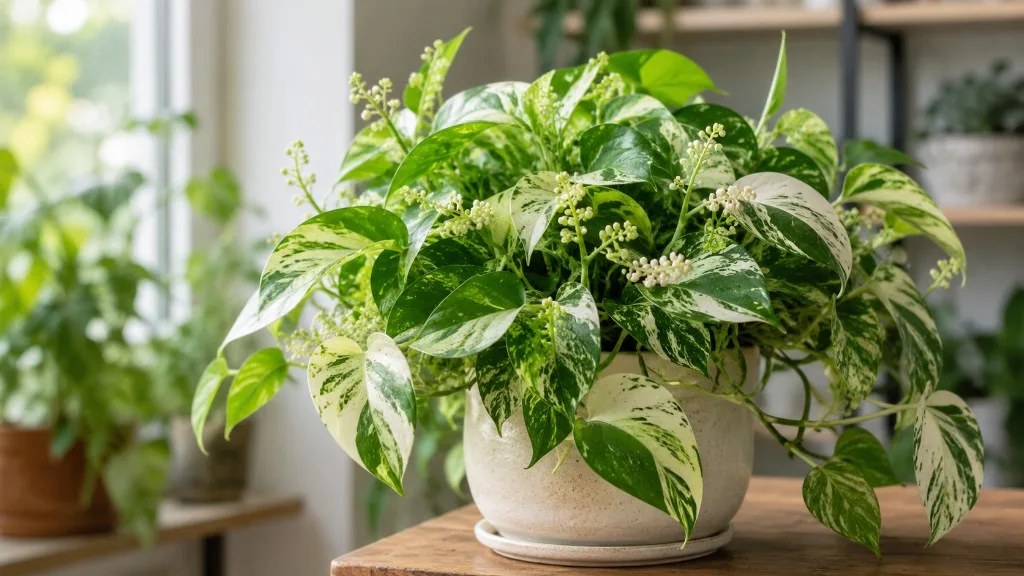
Pearls and Jade pothos (Epipremnum aureum ‘Pearls and Jade’) is one of the most distinctive variegated pothos cultivars on the houseplant market, and it repots differently than the fast-growing Golden or Jade types most beginners learn on first. Developed at the University of Florida’s Mid-Florida Research and Education Center in Apopka as a stable mutation selected from Marble Queen pothos, this cultivar carries smaller leaves, heavier white-and-gray variegation, and a slow to moderate indoor growth rate that directly changes your repotting calendar. Less green tissue on each leaf means less chlorophyll available for photosynthesis, so the plant builds root mass and top growth more gradually than a solid-green pothos. That slower pace is a feature, not a flaw - but it also means you cannot copy repotting advice written for vigorous growers and expect the same results. Pearls and Jade tolerates being slightly root-bound longer than many houseplants, yet it still needs fresh, airy soil and sensible pot sizing on a predictable schedule. This guide covers spring timing, the one-size-up rule, the root-bound signs worth acting on, and the full repotting workflow so your plant recovers cleanly and keeps producing those watercolor-patterned leaves.
Why Repotting Matters for Pearls and Jade Pothos
Repotting is not just about giving a trailing vine more legroom. For Pearls and Jade pothos, a well-timed repot refreshes a root zone that has usually been sitting in the same peat-heavy indoor mix for one to three years, restores the air pockets roots need to breathe, and resets the Pearls and Jade Pothos watering guide before slow compaction turns every drink into a swamp at the bottom of the pot. Clemson Extension notes that pothos can tolerate slight root-binding but should be moved once they have clearly outgrown their container, and that guidance applies here with one important adjustment: because Pearls and Jade grows slowly, the visual cue of “outgrowing” arrives later, which makes proactive soil inspection more valuable than waiting for obvious aerial roots.
A neglected root zone shows up above the soil long before you see roots at the drainage hole. Water runs straight through a dense root mat without wetting the mix evenly. Fertilizer salts crust on the surface because there is little fresh soil left to buffer them. New leaves emerge smaller, paler, or farther apart on the vine even though light and watering look unchanged. Each of those symptoms can have other causes, but when two or more appear together in a plant that has not been repotted in two or more years, the roots are usually the bottleneck. Fixing the container environment is often the highest-leverage move you can make for a variegated pothos that has gone quiet.
How This Slow-Growing Cultivar Fills a Container
UF/IFAS publication EP441 describes Pearls and Jade as a small plant with mature leaves averaging 7 to 8 cm long and 4 to 5 cm wide, noticeably smaller than the 12 cm by 8 cm leaves typical of its Marble Queen parent. That compact leaf size pairs with a trailing habit that can eventually reach around 2 meters indoors, but the journey takes years, not months. A slow to moderate grower fills a pot with roots on a longer timeline, which tempts owners to skip repotting entirely. The risk is subtle decline: not sudden collapse, but a gradual loss of vigor as old mix breaks down, roots circle tightly, and the plant spends more energy surviving a poor root environment than pushing variegated foliage.
Healthy Pearls and Jade roots are white to pale tan, firm, and evenly distributed through the pot. As the plant matures, those roots explore outward until they meet the pot wall, then circle. A mild circling pattern is normal for pothos and not an emergency by itself. Problems start when circling replaces most of the soil, when roots form a dense mat on the surface, or when the root ball lifts as a single stiff cylinder out of the pot. At that stage, even careful watering fails because there is almost no mix left to hold moisture in a useful rhythm. Repotting at that point is maintenance, not rescue - and maintenance is exactly what keeps a slow grower looking crisp year after year.
When to Repot Pearls and Jade Pothos
Timing matters as much as technique. Pearls and Jade pothos repotting should align with the plant’s active growth phase whenever possible, because new roots establish faster when the vine is already producing leaves and extending stems. Most indoor plants enter that phase in spring as daylight lengthens and room temperatures stabilize, then carry moderate momentum into early summer. Outside that window, the same repotting steps can still work, but recovery takes longer and the margin for watering error shrinks. Think of timing as risk management: spring repotting gives you the widest safety net.
You also do not need to repot on a fixed annual schedule. A better rule for this cultivar is to plan a full repot every two to three years in typical bright-indirect light, then move earlier if clear root-bound signs stack up. Fast-growing pothos cultivars often need attention every one to two years; Pearls and Jade usually sits at the longer end because it simply produces less new tissue per season. If your plant lives in a very small starter pot, receives strong light, and grows steadily through summer, a two-year interval is realistic. If it sits in a larger pot in moderate light and pushes only a few new leaves per season, three years may be fine - as long as you refresh or inspect the mix before compaction becomes severe.
Why Spring Is the Ideal Timing
Spring is the safest default for Pearls and Jade pothos repotting because the plant is entering its most productive months. Longer days and warmer ambient temperatures increase photosynthesis in the remaining green portions of each variegated leaf, and that extra energy funds root regeneration after the disturbance of transplanting. Early spring - roughly March through April in the Northern Hemisphere - is ideal in most homes. Early summer remains a solid backup if spring passed before you noticed binding symptoms, because the plant is still actively growing and nights are usually warm enough to support root activity.
Avoid routine winter repotting if you can. When temperatures drop and light weakens, Pearls and Jade slows dramatically, sometimes appearing almost static for weeks. Roots formed during that slowdown establish poorly, and wet cool mix around a reduced root system is a common path to rot. The exception is an emergency: active root rot on Pearls and Jade Pothos, a pot that dries in hours because the root ball has consumed the soil, or a plant that is physically unstable because it is so bound it cannot take up water. In those cases, repot immediately, then keep the plant warm and bright while you adjust watering with extra caution. For every other scenario, mark your calendar for the next spring window and use the interim to gather a pot, mix, and tools.
Frequency and Root-Bound Signs
Pearls and Jade pothos is more tolerant of light root-binding than many tropical foliage plants, which is helpful - but tolerance is not immunity. Watch for a cluster of reliable signs rather than any single symptom in isolation. Roots emerging from drainage holes are the most obvious flag. Water that races through the pot in seconds without moistening the center of the root ball usually means the interior is dense root mass with little soil left. Soil that dries unusually fast - sometimes within a day or two of a full watering - happens because a root-bound plant has too little mix to store moisture. Stalled or slowed growth despite good light and appropriate feeding is another clue, though you must separate normal slow-to-moderate growth from true stagnation; if you see no meaningful new leaves over an entire growing season, inspect the roots.
Lift the plant from its pot when you suspect binding. If you see more root than soil, with white roots circling the exterior in a tight weave, repotting is overdue. A sour or musty smell from the mix, a pot that feels unusually light right after watering, or a plant that wilts quickly between waterings also points to a root zone that needs attention. Use a practical decision rule: two or more signs together mean schedule a repot at the next spring opportunity, or sooner if watering has become unreliable. One sign alone may warrant a top-dress or a moisture check before you commit to a full move.
Choosing the Right Pot
Pot selection is where many Pearls and Jade repots succeed or fail before soil ever enters the container. This cultivar’s slow growth makes overpotting the single most common mistake, more dangerous here than on faster pothos types because the root system expands slowly into unused soil. A pot that is too large stays wet too long in the center, especially in peat-heavy mixes, and slow roots cannot colonize that volume quickly enough to dry it out. The result is often quiet root decline - yellowing leaves, soft stems at the soil line, and a plant that looks “fine” until it is not.
The One-Size-Up Rule
Go up one pot size only: about 1 to 2 inches (2 to 5 cm) wider in diameter than the current container. If your Pearls and Jade lives in a 4-inch (10 cm) nursery pot, move to a 6-inch (15 cm) pot, not an 8-inch. If it is in a 6-inch pot, step to 8 inches at most. Depth should increase only modestly as well; pothos roots spread outward more than they dive deep, so a pot that is slightly wider matters more than a dramatically deeper one. The goal is enough fresh mix to rebuild structure around the root ball without creating a large zone of wet soil the plant cannot use for months.
Measure the current pot across the inside rim, not the outside lip. Decorative pots often have thick walls that make eyeball estimates misleading. When in doubt, err on the smaller upgrade. Pearls and Jade will recover faster in a snug, well-drained pot than in an oversized one that forces you to water cautiously for half a year. If the plant is only mildly bound and you want to keep the same display size, you can repot into the same diameter after trimming circling roots and refreshing all the mix - a technique covered later - rather than sizing up at all.
Pot Material and Drainage Holes
Drainage holes are non-negotiable for Pearls and Jade pothos. No layer of gravel at the bottom compensates for a sealed container; excess water needs an exit, period. Terracotta breathes through its walls and dries the mix faster, which suits a slow grower that is sensitive to persistent moisture. Unglazed clay is an excellent default for beginners who tend to overwater. Glazed ceramic and plastic retain moisture longer, which can be useful in very dry homes or under strong grow lights, but they demand stricter moisture checks after repotting. A plastic nursery pot inside a decorative cachepot is a practical compromise: the inner pot drains freely, and you lift it out to water, wait for runoff to finish, then return it to the cover.
Cover drainage holes with a small piece of mesh, a coffee filter, or a shard of broken pot to keep mix from washing out on the first watering. Avoid sealing the hole. If you love a pot without drainage, drill one or use it only as an outer shell. For hanging baskets, confirm that the liner or built-in reservoir does not trap water against the root ball after each watering.
The Best Soil Mix for Repotting
Fresh soil is half the reason to repot. Old indoor mix compacts, loses pore space, and develops a hydrophobic crust that repels water even when you soak the pot. Pearls and Jade pothos needs a mix that drains quickly after a thorough watering, holds enough moisture for the roots to access over several days, and stays open enough for oxygen to reach fine root hairs. Because this cultivar is variegated and slow-growing, it is less forgiving of dense, water-retentive substrates than a solid-green pothos that can power through mediocre drainage with sheer growth rate.
What Pearls and Jade Roots Need
Aroid roots in containers - including pothos - perform best in a medium that mimics the airy, well-drained conditions of tree-climbing habitats in the Solomon Islands, where the species originates. Indoors, that translates to a peat- or coco-based potting base amended with coarse particles that resist compaction. Target a slightly acidic environment around pH 6.0 to 6.5, which most quality indoor mixes already approximate without adjustment. The mix should feel crumbly in your hand, not sticky, and water should penetrate evenly when you pour rather than pooling on top.
Avoid straight garden soil in pots. It compacts, carries pathogens, and holds water unpredictably. Avoid pure cactus mix as well; it drains too aggressively for a pothos that still wants some moisture retention in the root zone. The sweet spot is a standard indoor potting mix lightened with perlite or similar amendments so the finished blend breathes.
A Reliable Mix Recipe
A dependable recipe for Pearls and Jade pothos repotting is standard indoor potting mix plus 20 to 25 percent perlite by volume. For a single 6-inch repot, combine roughly three parts potting mix with one part perlite in a clean bucket and mix until uniform. If your home runs humid or you tend to water generously, push perlite toward 30 percent. If you live in a dry climate and the plant dries quickly, 20 percent is usually enough. Optional upgrades that improve longevity without hurting drainage include a small handful of orchid bark fines or coarse sand per quart of mix.
Moisten the blend slightly before use so it clumps when squeezed but does not drip. Dry dust pouring into a pot leaves air voids that collapse on first watering and can leave the root ball sitting unevenly. When buying pre-made mix, choose a labeled indoor or houseplant blend and still add perlite; many commercial products ship too dense for long-term pothos health. At repotting time, discard the old mix unless you are certain it was healthy; reusing degraded peat from a bound root ball imports compaction and salt buildup into the fresh environment.
How to Repot Pearls and Jade Pothos Step by Step
A calm, methodical repot reduces transplant shock on a slow-growing cultivar that cannot quickly replace lost leaves. Set aside twenty to thirty minutes, work over a table covered with newspaper or a tarp, and complete the process in one session once the plant is out of its old pot. Pearls and Jade is not fragile, but its variegated leaves tear easily if you yank stems instead of supporting the root ball.
Preparation, Removal, and Root Inspection
Gather your new pot with drainage, fresh mix, clean pruning shears, a hand trowel, a chopstick or pencil for settling soil, mesh for the drainage hole, and rubbing alcohol for sterilizing blades. Water the plant lightly one day before repotting so the root ball holds together, but avoid soaking a plant that may already be overwatered or rotting. If you suspect rot, skip pre-watering and work with a drier ball instead.
To remove the plant, tip the pot on its side, support the base of the stems with one hand, and slide the root ball out with gentle pressure on the pot walls. Squeeze flexible nursery pots; tap rigid pots against the table edge. If the plant resists, run a butter knife or trowel around the inside perimeter to break the seal. Never pull by the trailing vines alone; stems can snap and leave the plant unbalanced in its new pot.
Inspect the exposed roots in good light. Healthy tissue is white or cream-colored and firm. Trim dark, mushy, or foul-smelling roots back to solid material with sterilized shears. For mild binding, tease circling roots apart with your fingers at the bottom and sides. For moderate binding, make two or three shallow vertical scores through the outer root mat to encourage new outward growth. For severe binding, you may remove up to one-third of the outer root cylinder while keeping the interior core intact. Shake off loose old soil, but do not bare-root the plant completely; leaving some original mix around the core reduces shock.
Planting, Filling, and First Watering
Add enough fresh mix to the bottom of the new pot so that when the root ball sits on it, the top of the ball lands about 1 cm below the pot rim. Center the plant, hold it at the correct depth, and backfill around the sides with mix. Use a chopstick to settle soil gently and eliminate large air pockets without compacting the blend into concrete. The crown where stems meet roots should sit at the same depth it occupied before; burying stems deeper invites rot on a pothos.
Water thoroughly until excess runs from the drainage holes, then let the pot drain completely on a rack or in the sink. Empty any saucer so the plant is not standing in runoff. For the first week, keep the plant in bright, indirect light rather than direct sun, which accelerates moisture loss while roots are disturbed. Expect minor wilting or a brief pause in new growth; that is normal transplant shock on Pearls and Jade and usually clears within one to two weeks if watering is conservative.
Post-Repotting Care
The two weeks after repotting set the tone for the next growing season. Pearls and Jade pothos does not bounce back overnight; its slow to moderate growth means you should judge success by stable existing foliage and the first small new leaf, not by an immediate surge of vines. Patience plus restrained watering beats enthusiastic fussing every time.
Watering, Light, and Fertilizer After Repotting
After the initial thorough watering at repotting time, let the top 3 to 5 cm of mix dry before watering again. In many homes that means a 7 to 10 day interval for the first two weeks, though your exact timing depends on pot size, material, and light. Check moisture with a finger or dry chopstick rather than a calendar. Overwatering freshly disturbed roots in a slightly larger pot is the fastest way to turn a successful repot into a rot problem, especially in plastic or glazed containers. Keep the plant in bright, indirect light for recovery - an east-facing window, a few feet back from a south or west window, or a shelf under filtered skylight all work well. Avoid moving the plant through several locations during recovery; stability reduces stress. Humidity around 40 to 60 percent is comfortable; misting is optional and does little compared with consistent watering discipline.
Hold fertilizer for at least four weeks after repotting, and longer if the plant still looks subdued - fresh mix already supplies starter nutrition. Fresh mix contains enough starter nutrition for a slow-growing pothos to coast through the establishment phase, and new root tips are sensitive to salt burn from eager feeding. When you resume, use a balanced liquid fertilizer diluted to half the label strength during spring and summer active growth. Pearls and Jade is not a heavy feeder; monthly feeding at half strength is usually sufficient. Skip fertilizer entirely in late fall and winter unless the plant is under strong supplemental light and clearly producing new leaves.
Handling Root-Bound and Root Rot Situations
Most repots are routine. Two scenarios - severe binding and active rot - need extra intervention but follow the same core principles: clean roots, fresh airy mix, one-size-up or same-size pot, and conservative water afterward. When the root ball is a hard cylinder with almost no visible soil, a gentle tease is not enough. Trim the bottom quarter inch of the mat with sterilized shears, score the sides vertically in three or four places, and tease outward with your fingers. If you need to keep the same decorative pot size, prune circling exterior roots and repot into the same diameter with all-new mix. The plant may shed a few older leaves while it reallocates energy to root repair; that is normal if new growth resumes within two to four weeks. If binding is moderate rather than severe, sizing up one increment without aggressive pruning is often the better choice because it disturbs fewer roots.
Root rot shows up as mushy brown roots, a sour smell, and sometimes yellowing leaves on wet mix even when you have not watered recently. Unpot immediately, regardless of season. Cut away all soft tissue until only firm white or tan roots remain. Rinse the remaining roots gently in lukewarm water to remove contaminated mix. Optional steps include dusting cut surfaces with cinnamon powder or a brief soak in a 1:4 solution of 3% hydrogen peroxide and water. Repot into a clean pot - wash the old one with a 10% bleach solution or switch containers - using fresh dry-leaning mix. Wait two to three days before the first post-trim watering so cuts can callus. If more than two-thirds of the root system is gone, take healthy stem cuttings with nodes as insurance; pothos propagates readily in water or moist perlite while the parent plant recovers.
Common Repotting Mistakes to Avoid
The mistakes that haunt Pearls and Jade pothos repotting are predictable. Overpotting tops the list: a dramatic jump in container size creates a wet dead zone that slow roots cannot colonize in time. Winter repotting without cause adds cold, low-light stress on top of transplant shock. Fertilizing too soon burns tender new roots and salts fresh mix. Bare-rooting strips fine root hairs and extends recovery on a cultivar that already grows slowly. Using pots without drainage turns repotting into a short-term cosmetic fix with long-term rot risk. Disturbing the plant during peak stress - moving it daily, overwatering out of guilt, or placing it in direct afternoon sun - turns a one-week sulk into a month-long decline.
Smaller errors matter too. Do not pack mix down hard to stabilize a wobbly plant; add mix and tap the pot lightly instead. Do not leave old crusted salts on the root ball if you can rinse them away gently. Do not repot at the same time you overhaul light, humidity, and feeding; change one major variable at a time. And do not assume slow growth means the plant never needs repotting; it means the interval is longer, not infinite.
Conclusion
Pearls and Jade pothos repotting works best when you respect this cultivar’s slow to moderate growth and variegation-driven pace. Plan a full repot in spring or early summer every two to three years for most indoor plants, move one pot size up with reliable drainage, and act sooner if root-bound signs stack up - roots at the holes, water running straight through, mix drying abnormally fast, or a full season without meaningful new leaves. Use standard indoor potting mix amended with 20 to 25 percent perlite, inspect and trim roots while you work, water thoroughly once, then keep the plant in Pearls and Jade Pothos light guide while you hold fertilizer for at least a month. Severe binding calls for root scoring or same-size refresh; rot calls for immediate surgery and dry recovery. Done with restraint, a spring repot gives Pearls and Jade the airy root zone it needs to keep those small, marbled leaves coming for years - without the overpotting and overwatering traps that catch so many variegated pothos growers off guard.
When to use this page vs other Pearls and Jade Pothos guides
- Pearls and Jade Pothos overview - Start here for whole-plant context before deep-diving this topic.
- Pearls and Jade Pothos problems hub - Jump to symptom-specific fix guides when this care topic does not resolve the issue.
- Root Rot on Pearls and Jade Pothos - Escalate here when repotting adjustments are not enough.
Related Pearls and Jade Pothos guides
- Pearls and Jade Pothos overview
- Pearls and Jade Pothos watering
- Pearls and Jade Pothos light
- Pearls and Jade Pothos soil
- Pearls and Jade Pothos propagation
- Pearls and Jade Pothos fertilizer
- Root Rot on Pearls and Jade Pothos
- Pearls and Jade Pothos problems
Related tool
Try the Pot Size Calculator with pearls-and-jade-pothos pre-selected to estimate needs for your setup.