Best Soil for Pearls and Jade Pothos: Mix & Drainage
Best Soil for Pearls and Jade Pothos: Mix & Drainage
Best Soil for Pearls and Jade Pothos: Mix & Drainage
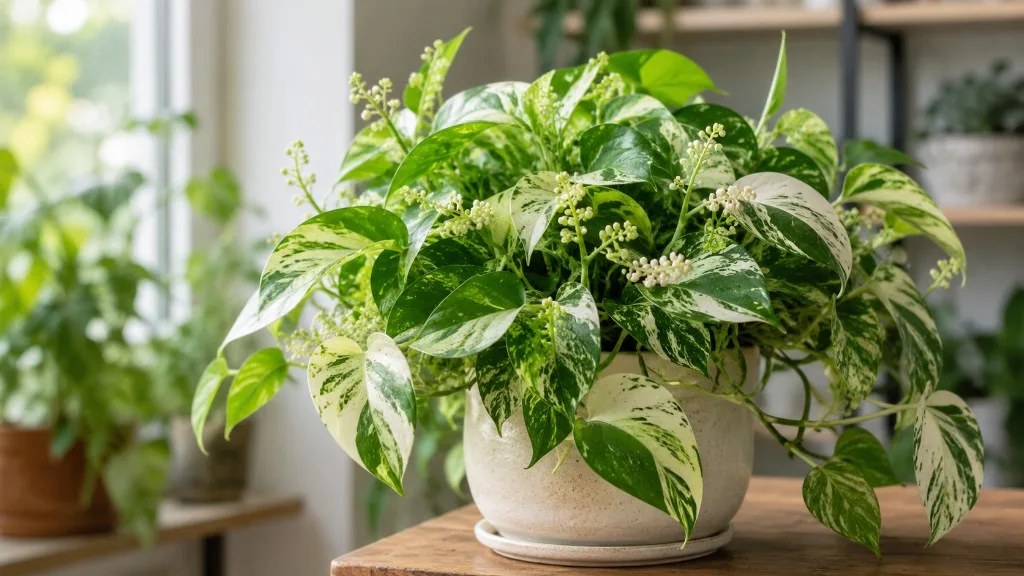
Pearls and Jade Pothos (Epipremnum aureum ‘Pearls and Jade’) is one of the most collected variegated pothos cultivars - green leaves splashed with white and silver-gray patches, smaller and thinner than marble queen or golden pothos, developed at the University of Florida as a compact trailing houseplant. That beauty comes with a practical constraint: the roots beneath those leaves cannot survive in heavy, soggy soil for long. Dense peat that compacts after a year of watering, unamended bagged mix with no perlite, and decorative pots with no drainage hole are the three fastest ways to turn a forgiving vine into a yellowing, stunted plant with mushy roots.
The right pearls and jade pothos soil is a well-draining peat-perlite aroid mix - enough organic peat or coco coir to hold moisture for several days, enough perlite (and ideally bark) to keep air pockets open so roots breathe, and a container with real drainage sized close to the root ball. Target pH 6.0–6.5, slightly acidic, which matches what this cultivar prefers according to UF/IFAS Pearls and Jade cultivar data. Avoid straight garden soil, moisture-retentive mixes with no amendments, and any setup where water sits in the bottom of the pot after you finish watering.
This guide covers what Pearls and Jade roots actually need, how to build or amend a peat-perlite aroid blend, how much perlite to use, how to test drainage before Pearls and Jade Pothos repotting guide, and the container mistakes that undo even a perfect soil recipe.
What Pearls and Jade Pothos Needs From Soil
Soil for Pearls and Jade pothos has one job: give semi-epiphytic aroid roots a stable, breathable environment that dries down predictably between waterings. That sounds simple until you open a bag of standard indoor potting mix and realize it was blended for dozens of unrelated houseplants, not for a tropical vine whose roots rot quietly when oxygen runs low in the lower root zone.
The three properties that matter most are drainage speed, aeration structure, and moderate moisture retention. Drainage speed determines how long the mix stays wet after you water. Aeration structure - the chunky gaps created by perlite, bark, and pumice - determines whether roots can breathe while the mix is still damp. Moisture retention keeps the plant from drying out so fast that you are watering every other day and stressing fine roots with constant wet-dry swings. Pearls and Jade is more forgiving than many fussy aroids, but it is less forgiving than solid-green pothos cultivars when the mix stays soggy, especially in lower light where the plant transpires less and the pot dries slower.
Variegated Foliage and Root Zone Sensitivity
Variegation changes the care equation in ways that do not show up on a generic pothos label. Pearls and Jade has smaller, thinner leaves than marble queen or golden pothos, and it does not tolerate low light as well as those greener varieties (Clemson HGIC - Pearls and Jade light needs). Less chlorophyll means less photosynthetic capacity per leaf, which means the plant pulls water from roots more slowly in dim corners. Slower transpiration keeps the same potting mix wet longer - and wet mix in low light is the combination that produces yellow leaves, fungal gnats, and root rot on Pearls and Jade Pothos on variegated pothos faster than on a golden pothos in the same spot.
That does not mean Pearls and Jade needs a radically different soil formula from other pothos - it means the same well-draining peat-perlite aroid mix matters more because you have less margin for error. In a north-facing room or on a shelf away from windows, lean toward more perlite and bark, not more peat.
Semi-Epiphytic Roots and Why Drainage Matters
Epipremnum aureum is native to the Solomon Islands, where it climbs trees and spreads across forest floors as a ground cover and epiphyte. According to the Missouri Botanical Garden, pothos thrives in Pearls and Jade Pothos light guide, average household humidity, and well-drained potting mix - conditions that mirror its ability to root into loose, organic debris rather than dense, waterlogged earth.
Those roots are adventitious and fibrous, spreading through loose organic debris in nature - not dense, waterlogged earth. Indoors, straight peat-heavy potting soil with no perlite loses oxygen within days of a thorough watering, and root rot follows before variegated leaves show more than slight dulling.
Best DIY Aroid Soil Mix for Pearls and Jade Pothos
A reliable DIY mix is almost always better than unamended bagged soil for Pearls and Jade because you control the drainage channels yourself. You do not need exotic ingredients or a specialty nursery order. You need the right ratios, a few minutes of thorough blending, and a pot with a drainage hole.
The Spruce recommends a mixture of equal parts potting soil, perlite, and orchid bark as ideal for Pearls and Jade pothos - a balanced aroid blend that splits the difference between moisture retention and airflow (UF/IFAS propagation mix guidance). The recipes below align with that principle while giving you simpler and more drainage-forward options depending on your home.
Core Recipe: Peat-Perlite Aroid Blend
Here is a tested percentage-by-volume recipe that works well for most indoor Pearls and Jade setups in plastic or glazed ceramic pots with drainage holes:
- 50–55% quality peat-based or coco-based potting soil - structural base and nutrient anchor
- 20–25% perlite - primary aeration and drainage channels
- 10–15% orchid bark or pine bark fines - long-term structure; prevents compaction
- 5–10% worm castings or finished compost - slow, gentle nutrition (optional but helpful)
For a single 15 cm (6-inch) pot refresh, that translates roughly to 2½ cups potting base + 1 cup perlite + ½ cup bark + ¼ cup worm castings. Scale up proportionally for larger batches and store the extra in a sealed tub labeled with the date.
Simpler two-part peat-perlite ratio if you want the minimum effective blend: mix 3 parts quality potting soil with 1 part perlite (75% potting soil, 25% perlite). That matches the baseline recommendation used across LeafyPixels Pearls and Jade care guides and works well for most beginners in moderate indoor conditions with bright indirect light. It is not as ideal as the fuller aroid blend above, but it is dramatically better than straight bagged mix and takes thirty seconds to combine.
Equal-parts aroid variant following published cultivar guidance: 1 part potting soil, 1 part perlite, 1 part orchid bark. This is the most balanced option for growers who want maximum airflow without switching to a cactus-style mix. You will check moisture slightly more often than with the 75/25 blend, but root-rot risk drops sharply in humid rooms or when the plant sits in lower light.
Chunkier “experienced grower” blend for homes that run humid, for plants in north-facing windows, or for growers who tend to overwater: use 40% potting soil, 30% perlite, 25% orchid bark, 5% worm castings. You will water slightly more often because the mix dries faster, but the root zone stays safer in conditions where soggy soil is the main risk.
Avoid using cactus or succulent mix as the sole substrate. It drains too aggressively for a tropical vine that evolved in moisture-rich forest debris. You can borrow perlite or pumice from a cactus blend as an amendment, but do not pot Pearls and Jade straight into it unless you are prepared to water every few days and monitor closely.
How to Adjust the Mix for Your Home
No single recipe works in every room. The right blend depends on how fast your environment pulls moisture out of the pot.
Increase perlite or bark (bump either component by 5–10%) if:
- the mix stays wet on top for more than 3–4 days after watering
- you see fungus gnats hovering around the soil surface
- new leaves yellow while older variegated leaves stay green
- the pot sits in a cool, low-light corner or a humid bathroom
- Pearls and Jade is losing white variegation and reverting to mostly green in dim conditions combined with wet mix
Increase peat or coco coir (add 5–10% more organic matter) if:
- the mix dries so fast you are watering every 3–4 days in a moderate indoor climate
- leaves droop between waterings even when your schedule is consistent
- the plant sits in bright, warm light near a south- or west-facing window with several hours of indirect sun daily
- you use a terracotta pot that wicks moisture aggressively
Keep the standard blend unchanged if:
- the top 3–5 cm dries in roughly 5–7 days during active growth
- new leaves emerge firm with clear white or silver-green variegation
- roots look white or pale tan - not brown and mushy - when you inspect at repotting
Mix dry ingredients in a large tub until uniform, wear a dust mask when handling dry peat and perlite, and moisten the blend slightly before repotting - damp and crumbly, like a wrung-out sponge. Store leftovers in a sealed container to keep fungus gnats out.
Perlite and Peat’s Role in the Mix
Peat moss (or coco coir as a more sustainable substitute) is the moisture-holding foundation of most aroid blends. Peat absorbs water evenly, buffers the root zone against rapid dry-out, and naturally lands in the slightly acidic pH range Pearls and Jade prefers. Used alone or in high proportions without coarse amendments, however, peat compacts under repeated watering. The particles settle, air spaces close, and the mix behaves more like dense mud with each passing season.
Perlite is expanded volcanic glass - lightweight, sterile, and pH-neutral. In a Pearls and Jade mix, it does three jobs that no other single amendment handles as well: it creates air pockets that persist even when peat compresses, it accelerates drainage so water moves through the pot rather than pooling around the lower roots, and it prevents compaction over months of watering and root growth. Together, peat and perlite form the classic peat-perlite aroid mix that balances tropical moisture needs with indoor drainage reality.
Without perlite, even “well-draining” on a bag label often means well-draining for a fern, not for a pothos. Pearls and Jade roots that were healthy in fresh mix begin struggling in collapsed peat long before the plant looks obviously unwell. Adding perlite is the lowest-effort, highest-return change you can make.
How Much Perlite to Add and When to Increase It
The practical minimum for Pearls and Jade pothos is 20–25% perlite by volume - roughly 1 part perlite to every 3–4 parts potting soil. That is enough to keep a typical indoor setup draining well through the first year. If you are mixing in a bucket, measure by scoops: three scoops of potting soil, one scoop of perlite.
Push perlite to 30–40% when:
- your home averages above 50% humidity
- the plant lives in a bathroom or kitchen with limited air movement
- Pearls and Jade sits in lower light where transpiration is slow
- you tend to water on a schedule rather than checking the soil first
- the pot is plastic with only one small drainage hole
- the mix has already caused one close call with yellow leaves and wet soil
At 40% perlite, the mix feels noticeably lighter and dries faster. That is intentional. You trade a slightly more frequent Pearls and Jade Pothos watering guide for a much lower root-rot risk.
Pumice substitutes for perlite at a 1:1 ratio if you prefer a heavier amendment that does not float to the top when you water aggressively. Horticultural charcoal appears in some specialty aroid blends; it adds structure and microbial surface area but is optional, not required, for a healthy Pearls and Jade.
Do not confuse perlite with vermiculite. Vermiculite holds water and is useful for seed-starting mixes. In a pothos blend, it increases moisture retention rather than drainage. A small amount will not ruin a mix, but vermiculite is not a perlite substitute when your goal is more airflow and less soggy soil.
Commercial Potting Mix Options That Work
Not everyone wants to batch-blend on a weekend. Store-bought options can work well if you treat them as a starting point, not a finished product - and if you refuse to leave Pearls and Jade in heavy, soggy soil straight from a generic bag.
Store-Bought Mixes Worth Amending
Standard indoor potting soil - including popular lines like Miracle-Gro Indoor Potting Mix or FoxFarm Ocean Forest - is usually too dense for Pearls and Jade straight from the bag. These mixes are formulated for general foliage plants and often contain a high proportion of fine peat fines that compact under repeated watering. The fix is straightforward: for every 4 parts commercial mix, stir in 1 part perlite and, if you have it, ½ part orchid bark. That single amendment dramatically improves both drainage speed and long-term structure.
Pre-mixed aroid or tropical blends from specialty sellers are often closer to ideal out of the bag. Still run the drainage test below before assuming any product suits your room.
Container Drainage: Holes, Size, and Material
Soil mix and container setup work as a system. The best peat-perlite aroid blend in the world will fail in a pot with no exit for water or a vessel three sizes too large for the root ball.
Drainage Holes and Cachepot Setup
Yes - Pearls and Jade pothos needs at least one drainage hole in the grow pot. No exceptions for long-term indoor care. A hole at the bottom lets excess water leave the root zone after a thorough watering and pulls fresh air in as the mix dries. Without it, water accumulates at the bottom of the pot even if the top looks dry, and roots suffocate in that hidden reservoir - the classic cause of heavy, soggy soil symptoms while the surface appears fine.
Decorative cachepots and cover pots without holes are fine visually if the plant sits in a separate nursery pot with drainage inside the sleeve. Water the inner pot, let it drain completely, then return it to the decorative outer container. Empty any collected runoff within 30 minutes. Never let the root ball sit in standing water in a ceramic cylinder or basket liner.
Pot material changes dry-down speed. Unglazed terracotta wicks moisture and dries faster; plastic and glazed ceramic retain moisture longer - both work if the mix has enough perlite and the drainage hole is clear. Self-watering pots are a poor match for beginners because a constantly wet wick mimics soggy soil.
Matching Pot Size to Root Ball
Choose a pot only one size larger than the current root ball when repotting - roughly 2–5 cm (1–2 inches) wider in diameter. Pearls and Jade is a slow to moderate grower with a mature trailing length around 2 m, but it is often kept in smaller pots for shelf display. An oversized pot surrounds roots with a large volume of mix that stays wet for days after each watering, especially in lower light. That unused wet zone is where root rot starts even when you water “correctly” by the calendar.
When in doubt, refresh the mix in the same pot rather than jumping two sizes up because the vine looks long.
Testing Soil Drainage Before You Repot
Do not repot Pearls and Jade into an untested blend. Two quick checks tell you whether your peat-perlite aroid mix will stay open and drain fast enough indoors.
Step 1: Fill a small cup or 10 cm (4-inch) nursery pot with your dry mix. Do not pack it down.
Step 2: Pour 120 ml (½ cup) of water onto the surface in one steady pour.
Step 3: Watch the bottom. In a pot with a drainage hole, water should begin exiting within 10–30 seconds and finish draining within 2–3 minutes. The surface should darken evenly, not pool for more than a few seconds.
Step 4: After 24 hours, poke a finger 3 cm deep. The mix should feel lightly cool and barely damp, not wet and not bone dry.
If water pools on top for more than 10 seconds, add more perlite. If the cup is dusty dry at 24 hours, add a bit more peat or coco coir. If the mix slumps into a solid wet block, your organic component is too fine or too high a proportion - rebuild with bark and perlite before repotting a live plant.
The squeeze test complements the percolation check. Grab a handful of moistened mix and squeeze firmly. It should hold together briefly then crumble apart when you prod it with a finger. A tight, shiny mud ball means too little perlite and bark - exactly the heavy, soggy soil profile Pearls and Jade cannot tolerate long term. A mix that will not hold together at all means too much drainage material for a moisture-loving tropical vine.
Run both tests whenever you switch brands of potting soil or move the plant to a noticeably different room. Humidity, temperature, and pot material all change how the same mix behaves in practice.
pH, Minerals, and Root Zone Health
Pearls and Jade pothos prefers a slightly acidic pH between 6.0 and 6.5. In that range, nitrogen, phosphorus, potassium, and trace elements remain chemically available for root uptake. Most quality peat-based and coco-based potting mixes land near 5.5–6.5 out of the bag, which is close enough that hobbyist growers rarely need to adjust pH chemically. Clemson Extension recommends well-draining soil for pothos - a setup that points to the same practical blend: peat-perlite aroid mix with gentle organic nutrition, not alkaline garden lime or unamended clay.
If you want confirmation, inexpensive pH test strips or a meter on a slurry of mix and distilled water will tell you whether you are in range. Soil consistently above 7.0 (alkaline) can cause interveinal yellowing even when you fertilize on schedule. Soil below 5.5 (very acidic) can slow growth and wash out variegation contrast over time.
Salt buildup appears as a white or tan crust on the soil surface and along the pot rim. It comes from fertilizer, hard tap water, and the natural mineral content of peat. A light crust after a year is normal. A heavy crust that returns within weeks of scraping means you should flush the pot - water slowly and deeply until twice the pot volume runs from the drainage hole - or refresh the mix entirely at the next repot.
Do not add lime or sulfur to adjust pH unless a test shows you are out of range.
When to Repot and Refresh the Mix
Pearls and Jade does not demand annual repotting, but it outgrows degraded mix faster than slow-growing succulents. Plan to refresh soil every 1–2 years, or sooner if you see clear signals that the root zone is failing.
Repot in spring or early summer when the plant is entering active growth. Roots repair faster, new shoots fill the pot quickly, and you are less likely to trigger prolonged transplant stress. Avoid repotting in late fall or winter unless the situation is urgent - visible root rot, a completely collapsed mix, or a plant that is root-bound to the point where water runs straight through without moistening anything.
Signs it is time to repot or refresh the mix:
- roots circling the bottom of the pot or emerging from drainage holes
- water runs down the sides without absorbing (hydrophobic, degraded peat)
- the mix smells sour, swampy, or stagnant
- the soil surface stays wet for a week despite conservative watering
- growth has stalled and new leaves are smaller or less variegated than last season
- the pot feels permanently heavy days after you thought you watered lightly
How to repot with fresh aroid mix:
- Water lightly the day before so roots are flexible, not brittle.
- Choose a pot 2–5 cm (1–2 inches) wider with a drainage hole.
- Gently slide the plant out. Tease circling roots apart with your fingers; trim only mushy brown rot, not healthy white roots.
- Add fresh mix to the bottom so the root ball sits at the same depth as before. Do not bury stems or nodes deeper than they were - that invites stem rot on trailing pothos.
- Fill around the sides with mix, tapping the pot to settle without compacting.
- Water thoroughly until runoff exits the hole. Empty the saucer.
Skip fertilizer for 4–6 weeks after repotting while roots establish.
Common Soil Mistakes and Quick Fixes
Even experienced growers slip on soil basics because Pearls and Jade looks fine until it suddenly is not. These are the failures that show up most often indoors.
Using straight bagged potting soil with no perlite. Fix: empty the pot, blend the existing mix with 25–30% perlite and 10% bark, or replace entirely with a fresh peat-perlite aroid recipe.
Leaving the plant in heavy, soggy soil because “pothos is easy.” Fix: repot into a well-draining blend even if leaves still look partially healthy. Check roots for brown mush and trim before rebuilding.
Oversized decorative pot with no drainage. Fix: move the plant to a nursery pot with a hole that fits inside the decorative sleeve, or drill a hole if the material allows. Empty standing water after every watering.
Bottom gravel layer instead of better mix. Fix: remove the gravel, rebuild with proper perlite content. Gravel does not create the air pockets roots need and can actually raise the wet zone closer to roots in some pot shapes.
Repotting into a pot three sizes too large. Fix: step up one size only.
Letting degraded mix ride for years because the vine still trails. Fix: refresh the mix even in the same pot.
Ignoring sour smell because leaves still look green. Fix: repot immediately, trim mushy roots, water sparingly for two weeks.
Pet exposure. The ASPCA lists pothos (Epipremnum aureum) as toxic to cats and dogs due to calcium oxalate crystals, causing oral irritation, drooling, vomiting, and difficulty swallowing if chewed (ASPCA - Golden Pothos). All E. aureum cultivars including Pearls and Jade carry the same toxin. Soil and fertilizer are not safe for pets to ingest either. Keep pots on high shelves or in hanging baskets out of reach.
How Soil Connects to Watering and Light
Soil does not operate in isolation. The same peat-perlite aroid mix that dries in five days under a bright east window may stay wet for ten days in a north-facing corner where Pearls and Jade already struggles with lower light tolerance than greener pothos varieties.
Light intensity drives transpiration - how fast the plant pulls water from roots and releases it through leaves. Pearls and Jade needs several hours of bright, indirect light daily to maintain strong variegation (Clemson HGIC - Pearls and Jade light needs). Brighter light speeds dry-down and supports a slightly more moisture-retentive blend. Lower light slows the whole system and demands more perlite or bark to compensate for slower evaporation - otherwise you are pairing a wet root zone with a plant that cannot use the water fast enough.
Watering rhythm should follow the mix, not a calendar. Check the top 3–5 cm (1–2 inches) with your finger or a dry chopstick before every pour. If the deeper mix is still cool and damp, wait. If the top is dry and the pot feels light, water until runoff exits the drainage hole, then empty the saucer. A well-draining Pearls and Jade soil makes that check reliable because moisture distributes evenly rather than hiding a wet basement under a dry surface crust.
When troubleshooting yellow leaves or fading variegation, inspect in this order: soil moisture and drainage first, then light level, then fertilizer. Most indoor Pearls and Jade problems trace to the root zone long before nutrient deficiency becomes the limiting factor.
Conclusion
Pearls and Jade pothos soil succeeds when three elements work together: a well-draining peat-perlite aroid mix with enough organic matter to buffer moisture, perlite (and ideally bark) to keep that mix open and airy through months of watering, and a container with real drainage sized close to the root ball. The baseline recipe - 3 parts quality potting soil to 1 part perlite, upgraded to equal parts soil, perlite, and orchid bark when you want maximum airflow - handles most indoor homes well. Push perlite higher in humid or low-light rooms; add a bit more peat in bright, dry setups.
Test your mix before repotting with a quick percolation check and a squeeze test. Refresh the substrate every 1–2 years or when it smells sour, drains poorly, or collapses into heavy soggy soil. Fix the root zone first when leaves yellow or variegation fades - not fertilizer, not a bigger pot, not another splash of water - because Pearls and Jade rewards good soil with the compact, speckled vines that made you choose this University of Florida cultivar in the first place.
When to use this page vs other Pearls and Jade Pothos guides
- Pearls and Jade Pothos overview - Start here for whole-plant context before deep-diving this topic.
- Pearls and Jade Pothos problems hub - Jump to symptom-specific fix guides when this care topic does not resolve the issue.
- Root Rot on Pearls and Jade Pothos - Escalate here when soil adjustments are not enough.
Related Pearls and Jade Pothos guides
- Pearls and Jade Pothos overview
- Pearls and Jade Pothos watering
- Pearls and Jade Pothos light
- Pearls and Jade Pothos propagation
- Pearls and Jade Pothos fertilizer
- Pearls and Jade Pothos repotting
- Root Rot on Pearls and Jade Pothos
- Pearls and Jade Pothos problems
Related tool
Try the Soil Mix Calculator with pearls-and-jade-pothos pre-selected to estimate needs for your setup.