Pearls and Jade Pothos Watering: When and How to Water
Pearls and Jade Pothos Watering: When and How to Water
Pearls and Jade Pothos Watering: When and How to Water
Pearls and Jade pothos watering comes down to one reliable physical check and one honest read of the plant’s body language. Water when the top 2 inches of potting mix are dry, then soak the root zone until water runs freely from the drainage holes and empty any saucer or cachepot afterward. Epipremnum aureum ‘Pearls and Jade’ is drought tolerant in the sense that it stores moisture in its stems and leaves and can survive a missed watering better than many fussy houseplants - but it is also quick to wilt when the mix stays too dry for too long, with leaves going soft and limp until you give a full drink. The opposite mistake - keeping the soil constantly damp because the plant “looks thirsty” or because a weekly calendar says so - is the fastest route to root rot on Pearls and Jade Pothos, yellowing leaves, and mushy stems.
This cultivar was developed at the University of Florida and sits on the slower, more compact end of the pothos family. Smaller leaves and slower growth mean the pot often dries on a different rhythm than a golden or jade pothos in the same room. Pair the top-2-inches-dry rule with Pearls and Jade Pothos light guide, a well-draining mix with extra perlite, and a pot with drainage holes, and most watering problems disappear before they start. This guide walks through how to check moisture, how often to water through the seasons, what wilting actually means, and how to stay on the right side of drought tolerance without sliding into soggy-soil rot.
Why Watering Pearls and Jade Pothos Is Not the Same as Other Pothos
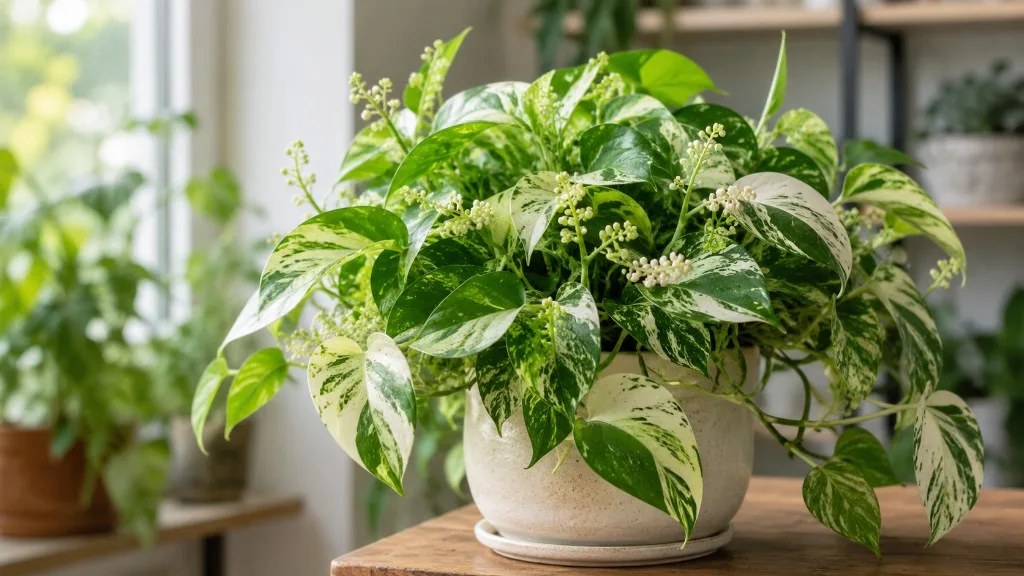
All pothos share a tropical vine habit and a general preference for cycles of thorough watering followed by partial drying. Pearls and Jade is still a pothos - but treating it exactly like a golden pothos in a dim corner is where people get into trouble. The variegated green, cream, and gray-green patches on each leaf mean this cultivar typically wants more light to keep color crisp. More light usually means faster evaporation from the pot and more frequent watering checks, not necessarily more water per session. At the same time, Pearls and Jade grows at a slow to moderate pace and stays smaller than most pothos cultivars, so a large pot of dense mix can stay wet at the bottom long after the surface looks ready for water.
The Spruce notes that Pearls and Jade pothos should be watered once the top 1 to 2 inches of soil has dried out, and that exact frequency shifts with season, light, and pot type (Clemson HGIC - pothos watering guidance). That aligns with what growers see in practice: a moisture check beats a calendar, and this cultivar’s forgiving reputation applies to occasional dryness, not to weeks of neglect or chronic wet feet. If you already know golden pothos, keep the same thorough watering technique - but expect Pearls and Jade to dry a little slower in moderate light and wilts a little sooner once the root zone crosses from “approaching dry” to “too dry.”
The Top Two Inches Dry Rule
The most reliable Pearls and Jade pothos watering trigger is simple: do not add water until the top 2 inches of potting mix feel dry to the touch. For a typical 6-inch nursery pot, that is roughly to the second knuckle of an index finger. In a shallow 4-inch pot, two inches may be most of the root zone - which is fine; shallow pots dry fast and the rule still protects you from surface-only guessing. In a deep 8-inch pot, the top two inches drying tells you the upper root zone is ready for water even if the very bottom of the mix still holds slight moisture - which is normal and healthy for an epiphytic aroid that hates sitting in a waterlogged core.
Two inches is a practical compromise. One inch alone is often too shallow on peat-based mixes that look dry on top while staying damp underneath. Three or four inches can leave a small Pearls and Jade too dry for too long, especially in bright light where leaves lose turgor quickly once the accessible moisture is gone. If your plant consistently wilts before the top two inches feel dry, you may be in too much direct sun or a pot that is too small - fix placement or repot before shortening the dry window further.
How to Test Soil Moisture Correctly
Use one method consistently until you learn how your specific pot behaves. The finger test is free and accurate once you stop relying on surface color alone. Insert your finger straight down to the second knuckle. If the mix feels cool and slightly clingy, wait. If it feels dry and loose, water. A dry wooden chopstick or bamboo skewer pushed to the bottom and left for a few minutes works the same way: damp stick means wait; clean dry stick means water. Pot weight is the advanced version - lift the pot when you know the plant is freshly watered and again when the top two inches are dry. A noticeably lighter pot confirms what your finger already told you.
A moisture meter can help if you struggle with touch, but read it near the root ball, not at the rim where probes often show falsely dry. Whatever tool you use, check before you pour, not after you have already decided today is watering day. The goal is a repeatable signal tied to root-zone readiness, not guilt about a schedule.
When the Surface of the Mix Lies to You
Peat-heavy indoor mixes, top dressing with decorative moss, and cachepots that trap humidity all create a dry-looking surface over damp interior soil. Pearls and Jade in a decorative outer pot with no drainage is a common setup - and a common overwatering trap. You see pale, crisp-looking top layer, assume dryness, add water, and the inner pot never drains properly. Within weeks, lower leaves yellow, stems soften at the soil line, and the plant wilts even though the mix is wet - classic early root rot.
If the top crust is dry but a skewer pulled from mid-pot comes out dark and cool, do not water. Instead, improve airflow around the pot, confirm the inner container has holes, and remove any standing water from the outer shell. For plants in very dense old mix, the surface can also hydrophobe - water runs down the inside wall while the root ball stays dry. That is a soil and Pearls and Jade Pothos repotting guide issue more than a watering-frequency issue, but the fix starts with noticing the mismatch between what the top looks like and what the middle feels like.
How Often to Water Pearls and Jade Pothos
There is no honest single answer in days. How often to water Pearls and Jade pothos depends on how fast your pot dries, which is driven by light, temperature, pot material, mix structure, root mass, and season. Use these ranges as starting checkpoints, then let the top-2-inches-dry rule override them:
| Season / conditions | Typical starting interval | Adjust when |
|---|---|---|
| Bright indirect light, warm room, active growth | Every 7–10 days | Pot lightens and top 2 in. dry sooner → water; still damp → wait |
| Moderate light, stable indoor temps | Every 10–14 days | Same dry test; do not stretch beyond wilting |
| Cooler, dimmer fall and winter | Every 14–21 days | Growth slows; mix stays wet longer - check deeper before watering |
| Recently repotted into larger pot | Add 3–7 days to prior rhythm | Extra mix holds moisture until roots fill it |
| Terracotta, small pot, strong light | Often 5–8 days in summer | Faster evaporation through porous walls |
The Spruce observes that Pearls and Jade may need weekly watering in warm bright months and every two weeks in cooler dimmer months - but only when those intervals match what your finger or skewer confirms (Clemson HGIC - pothos watering guidance). A plant under a grow light in a heated room in February can dry as fast as a summer patio plant. A plant in a north window in an unheated porch slows dramatically. Check weekly; water only when the rule says yes.
Step-by-Step: How to Water Pearls and Jade Pothos Thoroughly
When the top two inches are dry, one thorough drink beats three small splashes across the week. Partial top-ups keep the surface wet while the middle stays inconsistently moist - a pattern that encourages fungus gnats and uneven root growth. Pearls and Jade wants a full cycle: soak, drain, dry down, repeat.
Take the plant to the sink if you can. Use room-temperature water - cold tap water shocks warm roots; heavily chlorinated water is usually fine for established plants but let it sit overnight if your municipality treats aggressively. Pour slowly across the entire soil surface until you see steady runoff from the drainage holes. That usually takes 30 seconds to a few minutes depending on pot size and mix. Let it drain for 10–15 minutes, then empty the saucer or lift the nursery pot out of the decorative shell and dump any pooled water. Never leave the bottom sitting in runoff overnight.
If you bottom-water occasionally, set the pot in a basin of water for 20–30 minutes, let it wick up, then drain fully the same way. Bottom watering alone can accumulate salts over time; alternating with top watering flushes the mix. Avoid misting as a substitute for watering - leaf misting does not hydrate roots and wet variegated foliage in low airflow can spot or invite fungal marks.
Pre-Water Checks Before You Pour
Run through this 30-second checklist every time:
- Top 2 inches dry? Finger, skewer, or trusted meter - if no, stop.
- Pot weight light enough? Confirms dry-down, especially in plastic pots.
- Leaves telling a consistent story? Limp with dry mix → water. Limp with wet mix → do not water; inspect for rot.
- Drainage path clear? Holes open, saucer empty, no outer pot trapping water.
- Seasonally appropriate? In winter, an extra day of dry-down is often safer than an extra day of wet soil.
Skipping the checklist is how calendar watering turns into chronic overwatering - the single biggest killer of Pearls and Jade pothos indoors.
Signs Your Pearls and Jade Pothos Needs Water
Healthy Pearls and Jade holds its leaves at a slight angle with firm, matte-to-satin texture. As the mix approaches dryness, you may notice subtle leaf droop - not dramatic collapse, but a softer silhouette. Pot weight drops. The top mix lightens in color and pulls slightly away from the pot wall in extreme cases. If you wait until every leaf hangs like a curtain, you are still usually within recovery range - Pearls and Jade Pothos overview communicates thirst clearly compared to stoic succulents.
Other reliable cues include slightly softer leaf feel when you pinch a mature leaf between thumb and finger - not mushy, just less rigid - and slowing of new unfurling during an otherwise active growth period. Variegated cultivars sometimes show slight graying or loss of gloss on the green portions when thirsty. Trust dry soil plus one physical leaf cue over leaf cues alone; leaves can droop from heat stress, recent repotting, or root damage while soil is wet.
Drought Tolerance vs Wilting: What Is Normal for This Cultivar
Pearls and Jade pothos is drought tolerant in houseplant terms: it survives missed waterings that would damage calatheas or ferns, and it stores moisture in succulent-like stems that plump back up after a drink. That tolerance is not permission to let the plant go bone dry repeatedly. Occasional dryness is recoverable. Repeated drought cycles damage fine root hairs, compacted mix pulls away from pot walls, and the plant becomes skittish - wilting faster each time and taking longer to perk up.
Wilting when too dry looks like this: mix is dry to depth, pot is light, leaves are soft and limp but still green, and stems remain firm except at the very tips. Water thoroughly and most plants recover within a few hours to overnight. That is normal drama for this species.
Wilting with wet soil is a different problem entirely: mix is damp, pot is heavy, lower leaves may be yellow, and stems near the soil line feel mushy or hollow. That pattern points to root rot from overwatering, not thirst. Adding more water makes it worse. If you are unsure, smell the drainage hole - sour, musty odor suggests anaerobic mix. Pull the plant gently from the pot only if you are prepared to trim black mushy roots and repot into fresh mix.
Some growers deliberately let leaves droop slightly before watering to avoid overwatering. That technique can work for experienced hands in bright light with fast-draining mix. For Pearls and Jade in average indoor conditions, do not wait for full collapse - the top-2-inches-dry rule already builds in enough buffer. Letting leaves stay wilted for multiple days risks brown leaf tips, permanent creasing, and root dieback.
Recovery After a Dry Spell
If you came home to a fully limp Pearls and Jade in dry, shrunken mix, rehydrate in one session rather than dribbling water for a week. Soak until runoff, drain completely, and place the plant back in bright indirect light - not direct sun while stressed. Leaves should firm within hours. If some leaves stay curled or develop crisp brown edges, those patches will not revert; trim damaged tips for appearance once the plant stabilizes.
When mix has pulled away from the pot walls, water may channel down the sides without wetting the root ball. In that case, bottom water for 30–45 minutes, then top water lightly to settle the mix. Consider repotting into fresh, slightly moist mix if the plant dries out to the point of repelling water repeatedly - that is a soil structure problem, not a watering schedule tweak.
Signs You Are Overwatering Pearls and Jade Pothos
Overwatering is less about volume in one session and more about watering again before the root zone needed it. Signs accumulate gradually:
- Yellow leaves, often starting on older lower foliage while newer top leaves still look green
- Soft, mushy leaves that do not firm up after watering - different from the temporary softness of thirst
- Black or brown spots on variegated sections, sometimes with a yellow halo
- Musty soil smell from the pot bottom
- Fungus gnats hovering near the surface - their larvae thrive in constantly moist top layer
- Stem base turning dark and slimy at the soil line
- Persistent wilting despite wet mix - roots cannot absorb water when rotted
Pearls and Jade is especially vulnerable to root rot in low light plus heavy mix plus no drainage. The plant looks “thirsty” because damaged roots fail to transport water, so the instinct is to water more - accelerating the decline. When several of these signs appear together, stop watering, confirm drainage, and inspect roots before the next drink.
Root Rot From Overwatering: Prevention and Early Response
Root rot on Pearls and Jade pothos is a fungal and bacterial consequence of oxygen-starved, waterlogged roots. Healthy roots are firm and white or tan. Rotting roots are brown, black, slimy, or hollow and may smell sour. Prevention is straightforward and far easier than rescue:
- Water only when the top 2 inches of mix are dry.
- Use a pot with drainage holes - non-negotiable for long-term health.
- Plant in well-draining mix - standard potting soil amended with 20–25% perlite is a solid default; target pH around 6.0–6.5.
- Empty saucers and cachepots after every watering.
- Match watering to season - cut frequency sharply when growth slows in cool dim months.
- Place in adequate light - bright indirect light helps the plant use water and keeps the mix cycling properly.
If you catch rot early - a few yellow leaves, slight softness at the base, but still plenty of firm white roots - unpot, trim mushy tissue with clean scissors, dust cuts if you wish, and repot into fresh dry mix. Wait one week before watering lightly, then return to the top-2-inches rule. If most of the root system is gone, propagate healthy stem cuttings with nodes as backup while you attempt to save the mother plant. Severe rot often means starting fresh from vines rather than reviving the original root ball.
The Spruce lists root rot as a result of overwatered conditions on Pearls and Jade and recommends watching for pests and disease alongside watering habits (Clemson HGIC - pothos indoor care). That matches what extension-style guidance says for pothos generally: fix drainage and frequency before reaching for fungicides.
Seasonal Watering Adjustments
Pearls and Jade pothos does not fully dormancy like a deciduous tree, but metabolic rate and water use drop when days shorten and rooms cool. The same pot that needed water every eight days in July may still be moist at fourteen days in January - yet growers often keep pouring on a summer schedule because the plant still has leaves.
Spring and Summer Active Growth
From mid-spring through early fall, new leaves unfurl more regularly and transpiration rises with warmer temperatures and longer days. Check the pot at least once a week. When the top two inches dry and you see active growth, water thoroughly. Plants on bright shelves, in hanging baskets near windows, or under supplemental grow lights may dry faster - sometimes twice as fast as a shaded bookcase plant in the same home. Increase check frequency, not splash volume.
Summer air conditioning lowers humidity and can speed surface drying while roots still sit in cool damp mix near the AC line - another reason the finger test to two inches matters more than how fast the top crust dries. Grouping plants or using a humidity tray helps leaf edges, but humidity does not replace proper dry-down between waterings.
Fall and Winter Slow-Down
From late fall through winter, stretch intervals and expect 14–21 days between waterings in many temperate indoor setups - always subject to the dry test, not the calendar. Cooler mix holds moisture longer. Shorter days mean less photosynthetic drive for new growth. A Pearls and Jade that is not pushing new leaves does not need the same water throughput as a summer plant.
Reduce watering before you reduce light when moving plants away from windows for cold drafts - but do not park Pearls and Jade in a dark corner to “reduce watering needs.” Low light increases rot risk because the plant uses less water while you may still water on habit. If winter light is weak, water less but keep the plant as bright as your space allows. Do not fertilize on a wet, idle winter root zone - that is adjacent to watering but worth stating: food on cold wet roots compounds stress.
Pot, Soil, and Drainage Factors That Change Watering
Pot material changes evaporation speed. Unglazed terracotta breathes and dries fastest - good insurance against overwatering, but Pearls and Jade may need more frequent checks in hot dry rooms. Glazed ceramic and plastic retain moisture longer; the top-2-inches rule still works, but the lower root zone stays wetter, so drainage holes matter more. Oversized pots relative to root mass are a hidden overwatering machine - the extra mix stays soggy for weeks. Pearls and Jade is a slow grower; match pot size to roots plus modest room to grow, not a huge decorative container.
Soil structure is the other half. A standard indoor potting mix with 20–25% perlite drains well while holding enough moisture for a tropical vine. Heavy straight peat, garden soil, or mix without perlite stays wet too long and compacts within months. If water sits on the surface longer than a few seconds before soaking in, or the pot weight stays heavy for weeks, repot into airier mix rather than watering less and less until the plant wilts.
Cachepots and cover pots should never hold standing water. Lift, drain, replace. If aesthetics require a sealed bottom decorative pot, grow in a nursery pot inside it and never let the outer shell become a reservoir.
Light, Temperature, and Humidity Effects on Water Use
Light drives water use more than most beginners expect. Pearls and Jade needs bright indirect light to maintain variegation; in that brighter spot, the pot dries faster and the plant uses water actively. In too little light, the mix dries slowly while the plant looks dull and leggy - the dangerous combination for root rot. Fix light first; then adjust watering to match the new dry-down speed over one to two weeks.
Temperature between roughly 65–85°F (18–29°C) suits this cultivar. Hot rooms above the upper range increase evaporation; cold drafts below the lower range slow growth and can leave mix cold and damp for extended periods. Do not water on a schedule tied to outdoor weather alone - a heated indoor winter still dries pots, just slower than summer.
Humidity in the 40–60% range is comfortable for Pearls and Jade. Higher humidity slightly reduces leaf water loss but does not stop mix dry-down from drainage and root uptake. Very dry air below 30% may crisp leaf edges on stressed plants, but crisp edges from underwatering usually come with light dry pots, while crisp edges from rot come with wet heavy pots. Read the root zone, not just the leaf margin.
Pet households: All Epipremnum aureum varieties contain insoluble calcium oxalate crystals toxic to cats and dogs if chewed (ASPCA - Golden Pothos). Keep the plant and drainage runoff out of reach - watering day is when saucers and sinks are most accessible to curious pets.
Common Pearls and Jade Pothos Watering Mistakes
Watering on a fixed weekday without checking soil is the most common error. Tuesday is not inherently watering day; dry top two inches is watering day.
Using ice cubes or tiny daily splashes keeps the surface wet and the habit irregular. Tropical vines want full cycles, not perpetual dampness.
Trusting a moisture app or calendar reminder over your finger after repotting, moving homes, or changing seasons. Reset your expectations whenever the environment changes.
Leaving the plant in wet outer pots after thorough watering - root rot starts at the bottom, not where you look first.
Confusing drought wilting with rot wilting and either overwatering a dry plant (less common) or watering a rotting plant (very common). Dry pot, limp green leaves → soak. Wet pot, yellow leaves, mushy base → stop and inspect roots.
Waiting for every leaf to droop as a permanent strategy. Pearls and Jade wilts when too dry, but repeated extreme wilting damages leaves and roots even when recovery looks quick.
Repotting into huge containers to “water less often.” You create more often rot, not less work.
Conclusion
Pearls and Jade pothos watering is disciplined but not difficult: check whether the top 2 inches of mix are dry, water thoroughly until drainage runs clear, empty standing water, and let the pot dry down again before the next session. The plant earns its reputation as drought tolerant - it forgives a missed check better than many houseplants - yet it wilts clearly when left too dry, and that wilting is your cue to act, not to panic. The real danger is the opposite habit: watering on autopilot, keeping mix constantly moist, and inviting root rot in a cultivar that needs air around its roots as much as it needs moisture.
Check weekly through the seasons, adjust for light and pot type, and read dry soil plus limp leaves differently from wet soil plus yellow leaves. Get that distinction right and Pearls and Jade stays compact, variegated, and steady - the kind of plant that looks effortless because someone is actually reading the pot, not the calendar.
When to use this page vs other Pearls and Jade Pothos guides
- Pearls and Jade Pothos overview - Start here for whole-plant context before deep-diving this topic.
- Pearls and Jade Pothos problems hub - Jump to symptom-specific fix guides when this care topic does not resolve the issue.
- Root Rot on Pearls and Jade Pothos - Escalate here when watering adjustments are not enough.
Related Pearls and Jade Pothos guides
- Pearls and Jade Pothos overview
- Pearls and Jade Pothos light
- Pearls and Jade Pothos soil
- Pearls and Jade Pothos propagation
- Pearls and Jade Pothos fertilizer
- Pearls and Jade Pothos repotting
- Root Rot on Pearls and Jade Pothos
- Pearls and Jade Pothos problems
Related tool
Try the Plant Watering Calculator with pearls-and-jade-pothos pre-selected to estimate needs for your setup.