Pearls and Jade Pothos Propagation Guide
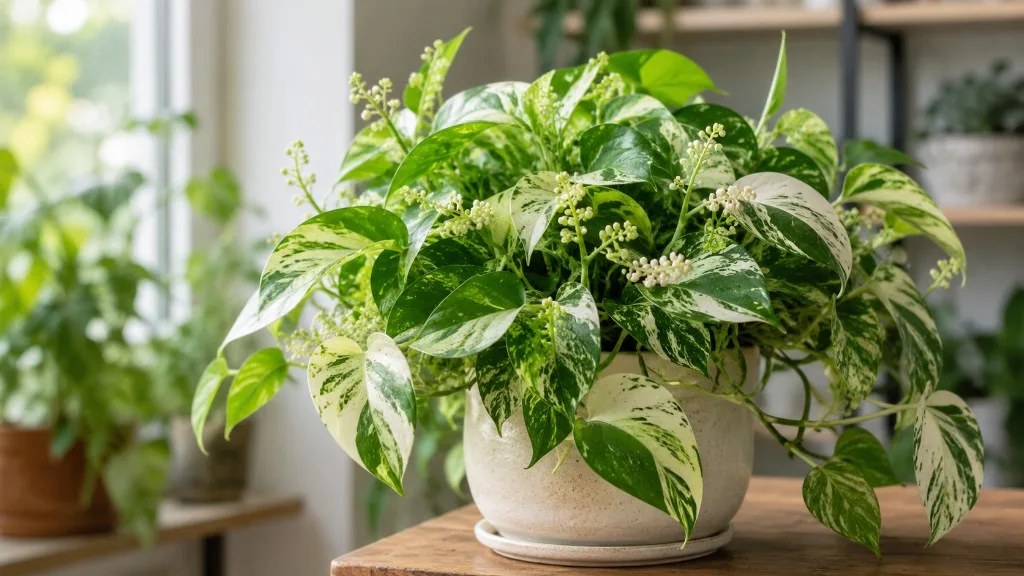
Pearls and Jade Pothos Propagation Guide
Pearls and Jade Pothos Propagation Guide
Pearls and Jade pothos propagation is one of the most satisfying projects in indoor gardening because the plant roots readily from stem cuttings - yet the results are not always identical to the parent. This compact, heavily variegated cultivar of Epipremnum aureum was bred for its small leaves splashed with white, gray, and green, and multiplying it at home comes down to a few non-negotiable rules: cut below a node, keep leaves out of the water or bury the node in moist soil, provide Pearls and Jade Pothos light guide, and accept that variegation may vary on the offspring. Whether you root in a glass jar or plant directly into potting mix, the biology is the same. What changes is how you monitor progress and when you move the cutting into its permanent home.
Why Pearls and Jade Pothos Is Worth Propagating at Home
Propagating Pearls and Jade pothos lets you turn one trailing plant into several without buying new pots every time a shelf needs filling. The cultivar is slower and smaller than golden pothos or jade pothos, which makes each rooted cutting feel like a genuine win rather than an afterthought. You can rescue a leggy parent by cutting back long bare vines and rooting the tops. You can share rooted cuttings with friends who admire the speckled foliage. You can fill a hanging basket evenly instead of waiting years for one small plant to bush out on its own.
The process is forgiving enough for beginners and interesting enough for collectors who care about variegation stability. Unlike seeds - which pothos essentially never produces indoors - stem cuttings give you a genetic copy of the parent plant. That copy is asexual, meaning it carries the same mutation that created Pearls and Jade in the first place. What it does not guarantee is that every new leaf will show the exact same white-to-green ratio you see on the vine you cut from today.
What Makes This Cultivar Different From Other Pothos
Pearls and Jade is not a random sport someone found at a garden center. It is a patented cultivar - botanically designated ‘UFM12’ and protected under U.S. Plant Patent PP21,217 - developed at the University of Florida IFAS Mid-Florida Research and Education Center in Apopka. Researchers exposed Marble Queen pothos cuttings to gamma radiation and selected a single branch mutation that produced smaller leaves with irregular patches of white, gray, and green on both leaf surfaces. According to the UF/IFAS publication EP441, mature Pearls and Jade leaves average roughly 7–8 cm long compared to about 12 cm on Marble Queen, and the plant grows in a noticeably more compact, dense habit.
That breeding history matters for propagation because Pearls and Jade has been reproduced commercially for years exclusively through asexual methods - tip cuttings and single-node cuttings - and the patent documentation confirms those methods produce plants true to type across successive generations. In plain terms: the cultivar is designed to be cloned from stems, not grown from seed. Your home propagation setup is doing exactly what the original breeders did, just on a kitchen windowsill instead of inside a greenhouse propagation chamber.
The trade-off is speed. Variegated pothos cultivars carry less chlorophyll per leaf area than all-green types, so they photosynthesize less efficiently and root more slowly. Pearls and Jade is also a chimeral variegation pattern, meaning the color sectors exist in specific cell layers rather than uniformly through the leaf. That instability is part of what makes the plant beautiful - and part of why offspring sometimes surprise you.
What You Can Realistically Expect From a Cutting
A healthy Pearls and Jade cutting with at least one node will usually produce roots within two to six weeks during active growth, though this cultivar often sits at the longer end of that range compared to a standard golden pothos. You should expect a rooted cutting to grow slowly at first, pushing one or two small leaves before it settles into a steady trailing rhythm. The variegation on those first new leaves may match the parent closely, appear more green than you hoped, or show a different balance of white speckles and gray-green patches.
You should not expect instant bushiness. Pearls and Jade is a slow to moderate grower indoors, and a single-node cutting may look sparse for months before it branches. You should not expect every cutting to succeed - a stressed parent, a node buried too deep in soggy soil, or a jar of stagnant water can all kill tissue that would otherwise root easily. What you can expect, with clean material and consistent light, is a high success rate that makes the effort worthwhile.
Understanding Nodes - The Non-Negotiable Part of Every Cutting
Every pothos propagation method - water, soil, sphagnum, perlite, or anything else - depends on the node. A node is the slightly swollen point along the stem where a leaf attaches and where roots can emerge. It contains undifferentiated meristem tissue capable of forming adventitious roots and, eventually, new vine growth. Without a node, you are rooting a leaf petiole that may stay green for weeks in water but will never become an independent plant.
This rule is universal across Epipremnum aureum cultivars, but it is worth stating plainly because beginners often cut a pretty leaf with an inch of stem and wonder why nothing happens. Pearls and Jade is not exceptional here. It is standard pothos biology, and respecting it saves you from the most common propagation failure.
How to Spot a Node on a Trailing Vine
Follow any Pearls and Jade vine with your finger and you will feel slight ridges or bumps at regular intervals - typically every few centimeters, aligned with each leaf. At each bump, a leaf emerges on a short petiole, and sometimes you will see a small brown nub or a thin aerial root already forming. That bump is the node. On older vines the aerial root may be several centimeters long and hairy; on younger growth it may be barely visible, but the swelling at the leaf base is the reliable marker.
When preparing a cutting, identify at least one node you plan to submerge in water or bury in soil. Many growers prefer cuttings with two nodes: one submerged for rooting and one above the water or soil line to fuel early growth through its attached leaf. Single-node cuttings work well too, especially when you are maximizing material from a long vine you are pruning back.
Why Leaf-Only Cuttings Fail
A pothos leaf removed with a centimeter of stem but no node is a decoration, not a propagation candidate. The leaf can photosynthesize and even produce callus tissue at the cut end, but it lacks the meristem needed to organize root and shoot development. You may see roots emerge from the petiole base in rare cases, but those roots almost never support sustained vine growth. If you have been trying to root individual Pearls and Jade leaves in water and getting nowhere, the missing node is almost certainly the reason.
The same logic applies to cuttings where the node is accidentally cut off. Always position your shear blade a few millimeters below the node, not through it. Cutting into the node damages the very tissue you need for rooting.
When to Propagate Pearls and Jade Pothos
Timing will not make an impossible cutting succeed, but it can shorten the wait by weeks. Pothos roots fastest when the plant is in active growth - warm temperatures, long days, and bright indirect light all increase the metabolic rate of both parent and cutting. Pearls and Jade does not follow a rigid outdoor calendar in most homes, but it still responds to seasonal shifts in light and temperature near windows.
Best Season and Growing Conditions for Fast Rooting
Spring and summer are the ideal windows for Pearls and Jade pothos propagation in the Northern Hemisphere. Longer daylight hours and warmer ambient temperatures - roughly 18–29°C (65–85°F) - support steady root initiation without the dormancy drag of winter. If you propagate in late fall or winter, expect rooting to take longer and watch for cuttings that sit unchanged for three or more weeks before you see the first white root tip. That delay is normal in cool, dim conditions, not necessarily a sign of failure.
Place propagation jars or pots in bright indirect light, not direct sun. A north-facing or east-facing window, or a few feet back from a south- or west-facing glass, gives enough energy for rooting without scorching the small variegated leaves. Temperature stability matters as much as brightness: a cutting on a cold windowsill at night and a hot sill by day will root more slowly than one in a consistently warm room.
Signs Your Parent Plant Is Ready (and When to Wait)
Take cuttings from a parent that is actively pushing new growth - firm leaves, no widespread yellowing, no active pest infestation, and soil that dries on a predictable rhythm. A healthy Pearls and Jade plant gives you firm stems, crisp variegation, and nodes that may already show small aerial roots. Those aerial roots are a bonus, not a requirement, but they often accelerate water rooting because the tissue is already primed for moisture uptake.
Wait if the parent is recovering from root rot on Pearls and Jade Pothos, a recent repot, shipping stress, or a major pest outbreak. Propagation steals resources from the mother plant, and weak parents produce weak cuttings that rot before they root. Stabilize the original plant first - correct watering, address pests, let it sit for two to three weeks after Pearls and Jade Pothos repotting guide - then take your cuttings from the healthiest vines.
How to Take Stem Cuttings From Pearls and Jade Pothos
Good propagation starts before the jar or pot enters the picture. Sterile tools, deliberate cut placement, and thoughtful vine selection determine whether you get a rooted plant in three weeks or a slimy stem in one. Pearls and Jade responds to the same cutting technique as other pothos cultivars, but because variegation and leaf size are the whole point of Pearls and Jade Pothos overview, vine selection deserves extra attention.
Choosing Healthy Vines and Variegation Patterns
Select vines with firm, unblemished leaves and obvious nodes spaced at regular intervals. Avoid stems with yellowing tissue, brown spots, or mushy sections near the soil line. If you are pruning a long bare vine - common on Pearls and Jade when lower leaves drop and the top keeps growing - take cuttings from the younger end where leaves are still attached and healthy.
Variegation on the parent node and leaf does not guarantee identical variegation on every offspring leaf, but cuttings taken from strongly variegated sections tend to produce more speckled new growth than cuttings from predominantly green sections of the same plant. If you want maximum white and gray patterning on your new plant, choose nodes attached to leaves showing clear multi-color patches rather than mostly green foliage. If you prefer a faster-growing, greener plant, a cutting from a greener section will usually oblige - at the cost of the signature Pearls and Jade look.
For a standard propagation batch, cut vine segments roughly 10–15 cm (4–6 inches) long with one or two leaves and one or two nodes. Remove the leaf closest to the cut end so it will not sit underwater or underground, leaving one or two leaves at the top to photosynthesize while roots form.
Making Clean Cuts Below the Node
Use sharp, clean scissors or pruning shears. Wipe the blades with rubbing alcohol or a 10% bleach solution between plants if you are taking multiple cuttings. Position the blade about 3–5 mm below the node - not through it - and make one decisive cut rather than a crushing partial snip. A clean cut minimizes infection risk and leaves the meristem tissue intact.
If you are dividing a long vine into several cuttings, work in order along the stem: cut below a node, then move up to the next node and repeat. Each piece should retain at least one node and preferably one leaf. You can propagate several cuttings in the same jar as long as leaves do not crowd each other and all submerged nodes have room; just remember that a crowded jar is harder to keep clean.
Water Propagation Step by Step
Water propagation is the most popular method for Pearls and Jade pothos because it lets you watch root development in real time. The cultivar roots well in water when nodes are submerged and leaves stay dry, and the visual feedback is especially helpful for a slow-rooting variegated plant where patience is tested. Water propagation is not permanently sustainable for robust long-term growth - pothos eventually wants soil - but it is an excellent rooting stage.
Setting Up Your Jar and Water Routine
Choose a clear glass jar or vase so you can monitor root color and water clarity without disturbing the cutting. Fill it with room-temperature water - tap water is fine in most municipalities, though heavily chlorinated water can be left open overnight before use, and growers in areas with very hard or treated water sometimes prefer filtered water to reduce mineral film on roots.
Place the cutting so that at least one node is fully submerged while all remaining leaves sit above the water line. A leaf resting in water will rot within days and can contaminate the whole jar. Position the container in bright indirect light and keep it away from heating vents and cold drafts.
Change the water once a week, or sooner if it looks cloudy or smells off. Hold the cutting gently, pour out the old water, rinse the jar, and refill with fresh room-temperature water. You do not need to add rooting hormone to the water for pothos; the plant roots readily without it. Within one to three weeks in warm, bright conditions, you should see small white root bumps at the submerged node. On Pearls and Jade, four to six weeks is not unusual before roots reach transplant-ready length, especially in cooler months.
Watch for problems: yellowing on the remaining leaf often means too little light or a cutting that was already stressed. Mushy brown stem tissue at the submerged node means rot - usually from a damaged node, a leaf underwater, or stagnant water left too long. Remove the rotting section, recut below a healthy node if tissue remains, and start fresh in a clean jar.
When to Transplant Water-Rooted Cuttings Into Soil
Move the cutting to soil when roots are roughly 5–8 cm (2–3 inches) long with several branch points. Waiting until you have multiple roots reduces transplant shock and gives the plant enough anchor to handle watering in a mix. Transplanting too early - a single half-centimeter nub - often leads to the cutting wilting in soil because the tiny root system cannot supply enough water.
Do not wait so long that the roots become a dense, jar-filling mat. Water roots are adapted to an oxygen-rich aquatic environment and are more fragile than soil roots. The longer a pothos lives in water, the harder the transition to potting mix can become. Two- to three-inch roots with a few side branches are the sweet spot.
To transplant, fill a small pot with drainage holes using a well-draining aroid mix - standard indoor potting soil amended with 20–25% perlite works well for Pearls and Jade. Create a hole, gently guide the roots into the mix without crushing them, and bury only the rooted node and stem base. Leaves and the upper stem should sit above the soil line. Water thoroughly once, let excess drain, and place the pot back in the same bright indirect light the cutting had in water. Keep the mix slightly more moist than you would for an established plant for the first seven to ten days, then transition to a normal dry-down rhythm.
Soil Propagation Step by Step
Soil propagation skips the water stage and roots cuttings directly in potting mix. The advantage is a smoother long-term transition - roots that form in soil are built for soil from the start. The disadvantage is invisible progress: you cannot see roots forming, so you rely on new leaf growth and gentle resistance tests instead. Both water and soil methods work for Pearls and Jade; choose based on whether you prefer visual monitoring or a one-step finish.
Potting Mix and Planting Depth for Node Cuttings
Use a small pot - 8–10 cm (3–4 inches) is enough for one or two cuttings - with a drainage hole. Fill it with a loose, airy mix: peat- or coco-based potting soil blended with perlite at roughly one part perlite to three or four parts mix. Pearls and Jade is an aroid that hates sitting in waterlogged substrate, and fresh cuttings are especially vulnerable to rot if the mix stays saturated without oxygen.
Make a narrow hole with a pencil or your finger and insert the cutting so the node is buried about 1–2 cm below the surface. Firm the mix gently around the stem for contact, but do not compress it so hard that air pockets disappear. The leaf or leaves should sit above the soil. If a tall leaf makes the cutting wobble, a small stake or a loose humidity cover - a clear plastic bag propped on sticks so it does not touch leaves - can stabilize the setup for the first two weeks.
Water lightly after planting so the mix is evenly moist but not dripping. Thereafter, keep the top of the mix lightly moist until you see signs of growth. A gentle upward tug on the stem after three to four weeks will meet slight resistance when roots have formed; if the cutting pulls out cleanly with no roots, replant and keep waiting. Direct-soil rooting on Pearls and Jade typically takes three to six weeks in warm, bright conditions.
Some growers dip the cut end in rooting hormone powder before planting. It is optional for pothos and not required for success, but it may shave a few days off rooting time on slow cultivars. If you use hormone, tap off excess powder so you are not dumping concentrated product into the mix.
How Variegation Behaves on Propagated Offspring
This is the question Pearls and Jade collectors care about most, and the honest answer is nuanced. Because the cultivar was selected as a stable asexual clone - reproduced by tip and node cuttings at the University of Florida and confirmed true to type across successive generations in patent trials - propagated plants are genetically the same cultivar as the parent. You are not creating a new random seedling. You are cloning a known mutation.
In home conditions, however, variegation may vary on offspring from one cutting to the next and even from one leaf to the next on the same rooted plant. Chimeral variegation depends on how cell layers divide during leaf development, and environmental factors - especially light intensity - strongly influence how much white and gray sector tissue appears in each new leaf. A cutting rooted from a boldly variegated node may produce its first leaf with generous white patches and its fourth leaf noticeably greener if light drops in winter. Conversely, a cutting from a greener section may develop more variegation if you give it brighter indirect light after rooting.
Reversion - when a variegated plant pushes predominantly green leaves - is a real risk with Pearls and Jade, particularly in low-light placements. Variegated tissue has less chlorophyll, so the plant can survive but grows slower; in dim conditions the plant physiologically favors greener, more efficient leaves. If you want to preserve the speckled look on propagated offspring, give rooted cuttings the same bright indirect light the parent needs, avoid deep shade, and prune back all-green vines if they begin to dominate the plant over time.
You may also notice slight differences in leaf size and texture between a water-rooted cutting and a soil-rooted one, or between cuttings taken from mature vines versus young tips. Smaller, slightly undulated leaves are characteristic of this cultivar and should appear on true Pearls and Jade offspring regardless of propagation method. If a cutting produces large, smooth, all-green leaves resembling golden pothos, suspect mislabeling of the parent plant rather than a propagation error.
Manage expectations accordingly. Propagation multiplies the plant reliably; it does not photocopy every leaf’s exact paint splatter pattern. Most growers find that well-lit, healthy propagated Pearls and Jade plants look close enough to the parent to satisfy the collection - with occasional leaves that surprise you.
Conclusion
Pearls and Jade pothos propagation comes down to stem cuttings with nodes, clean tools, bright indirect light, and patience suited to a slow variegated cultivar. Root in water if you want to watch progress and move to soil when roots reach a few inches; root directly in a perlite-amended mix if you prefer a single-step finish. Take cuttings during active growth from a healthy parent, change propagation water weekly, and keep leaves out of submerged zones to prevent rot.
The offspring will be true Pearls and Jade clones, but variegation on new leaves may differ from the parent vine - sometimes more white, sometimes more green - depending on which node you selected and how much light the rooted plant receives afterward. That variability is part of living with a chimeral cultivar born from a gamma-ray mutation at the University of Florida, not a sign that you propagated wrong. Give each new plant consistent care, prune green reversion if it overtakes the variegation you want, and you will build a trailing collection that earns its place on any shelf - one node cutting at a time.
When to use this page vs other Pearls and Jade Pothos guides
- Pearls and Jade Pothos overview - Start here for whole-plant context before deep-diving this topic.
- Pearls and Jade Pothos problems hub - Jump to symptom-specific fix guides when this care topic does not resolve the issue.
Related Pearls and Jade Pothos guides
- Pearls and Jade Pothos overview
- Pearls and Jade Pothos watering
- Pearls and Jade Pothos light
- Pearls and Jade Pothos soil
- Pearls and Jade Pothos fertilizer
- Pearls and Jade Pothos repotting
- Pearls and Jade Pothos problems
Related tool
Try the Propagation Success Calculator with pearls-and-jade-pothos pre-selected to estimate needs for your setup.