Root Rot on Pearls and Jade Pothos: Causes, Checks & Fixes
Quick answer
Root rot on Pearls and Jade Pothos means enough roots have decayed that vines wilt on wet soil. Stop watering, unpot, trim all mushy tissue, repot in fresh perlite-amended mix sized to the root mass, and wait one week before the first light drink.
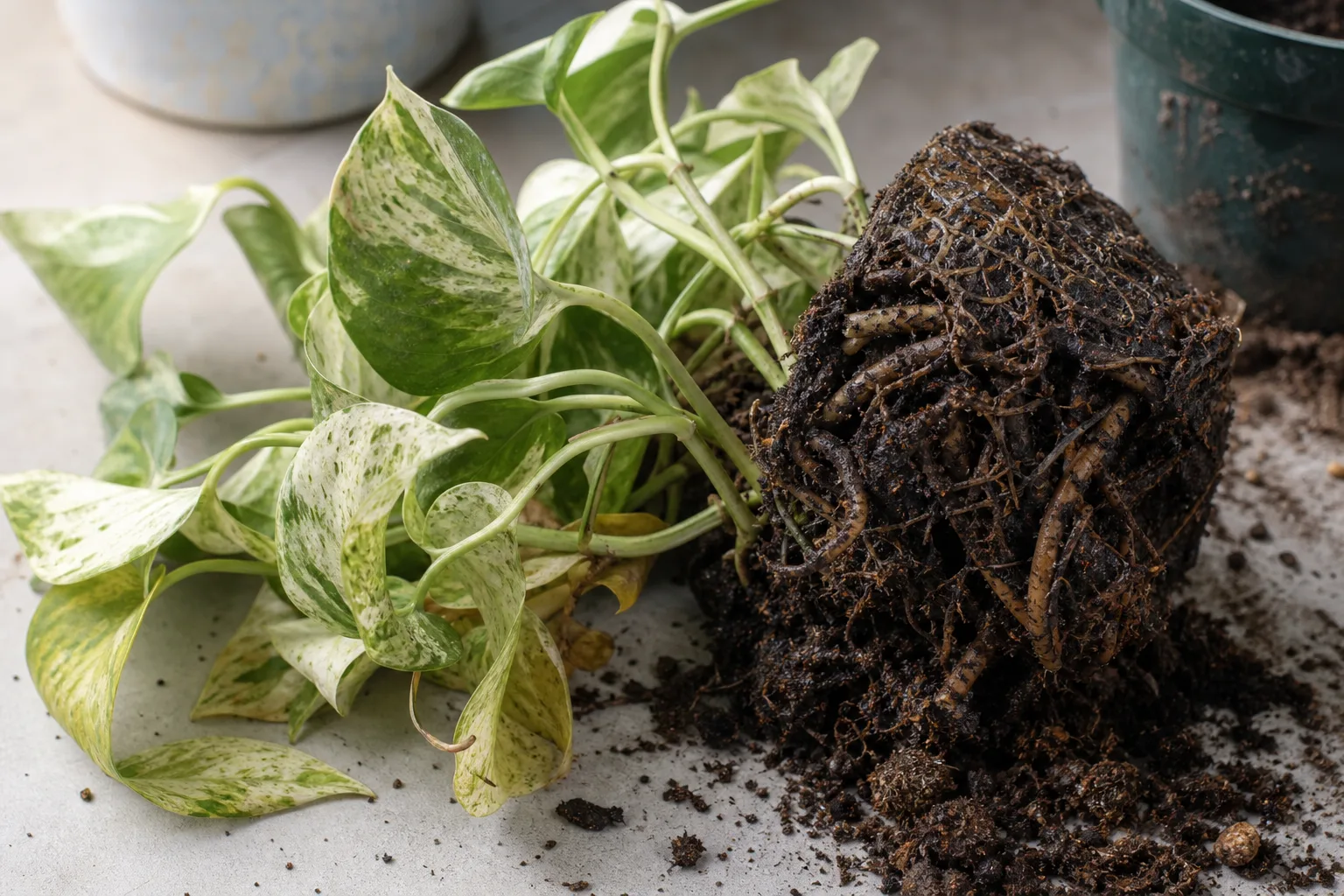
Root Rot on Pearls and Jade Pothos: Causes, Checks & Fixes
This guide covers root rot on Pearls and Jade Pothos. See also the general Root Rot guide, watering, and light pages for this plant.
Root Rot on Pearls and Jade Pothos: Causes, Checks & Fixes
Quick answer
Root rot on Pearls and Jade Pothos (Epipremnum aureum ‘Pearls and Jade’) is confirmed decay in the root zone-not the early wet-soil stress you catch before roots fail. This Florida-developed variegated cultivar has small white-and-green marbled teardrop leaves-mature blades average 7–8 cm (2.5–3 in.) long, roughly half the size of parent Marble Queen-and grows more slowly than golden pothos. Rot can advance quietly while you water on a faster vine’s schedule. Vines store moisture in their stems, which means limp foliage on a heavy wet pot often appears only after substantial root damage underground.
First step: stop watering immediately. Do not give another drink, fertilize, or repot on impulse. Unpot and inspect roots once you confirm wet mix plus declining stems-trim all mushy tissue, repot in fresh draining mix, and wait before watering again.
This page is the confirmed-rot rescue guide. If stems are still firm and you suspect early overwatering rather than decay, start with overwatering on Pearls and Jade Pothos for dry-down triage first.
What root rot looks like on Pearls and Jade Pothos
Above ground
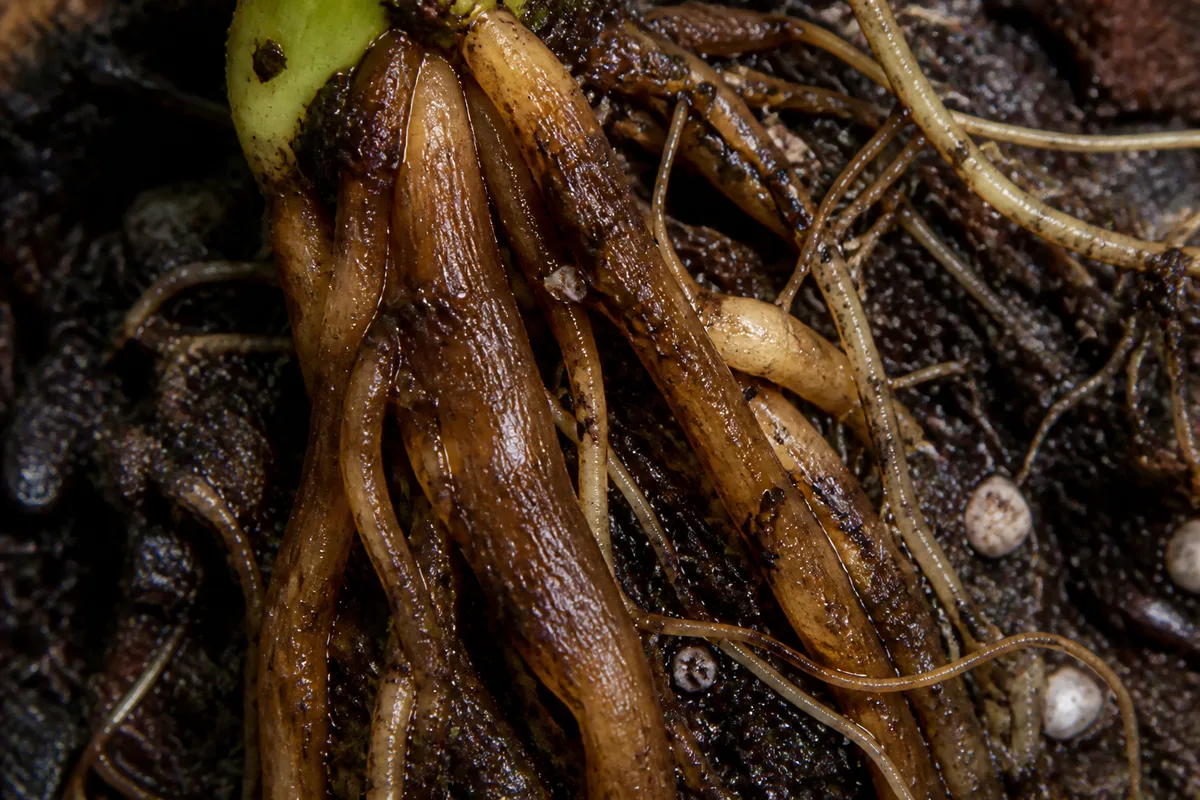
Root Rot symptoms on Pearls and Jade Pothos - compare with healthy tissue on the same plant.
On this compact cultivar, rot rarely announces itself with one dramatic sign. Watch for a pattern:
- Yellow leaves, often starting on lower vines while the pot still feels heavy
- Limp, drooping foliage despite moist soil-damaged roots cannot move water upward even though stems hold some stored moisture
- Soft or darkening stem bases where tissue meets wet mix
- Fading variegation as the plant weakens; new leaves may emerge smaller or mostly green
- Sour or swampy smell from the drainage hole
- Stalled growth for weeks even in spring and summer
Pearls and Jade leaves are smaller and thinner than golden pothos, so early yellowing can look subtle. A single old leaf near the soil line may be normal senescence. Widespread yellowing with a wet root zone is not.
The confusing case is wilting with wet soil. That combination almost always means root failure, not thirst. Adding water because the vines look limp is the mistake that turns mild stress into advanced rot.
Below ground
Slide the plant out and rinse away old mix. Healthy pothos roots are firm and pale white or tan. Rotting roots are slimy, brown, or translucent and pull away when rinsed. Root rot on Epipremnum often follows overwatering or poorly drained soil. Advanced cases show blackened tissue climbing from root tips toward nodes.
Why Pearls and Jade Pothos gets root rot
Several traits stack the odds against this cultivar indoors.
Slow variegated growth. White and grey marbled tissue photosynthesizes less than all-green leaves, so the plant draws less water from the mix. What reads as moderate watering for golden pothos can leave Pearls and Jade sitting in saturated mix for days-especially in winter when growth slows.
Low light slows dry-down. Pearls and Jade needs bright indirect light to hold its marbling. In a dim corner, transpiration drops and peat-based mix stays wet longer. Many growers water on habit while the plant barely uses moisture-see not enough light when variegation fades alongside chronic dampness.
Calendar watering. Watering every Sunday regardless of pot weight is a common trigger. Cool rooms below about 18°C (65°F) further reduce uptake while saucers hold runoff.
Container and mix mistakes. Oversized pots hold a large wet zone around a small root ball. Cache pots without drainage trap runoff. Heavy, aged potting mix that has broken down holds water like a sponge.
Misreading wilt. Because pothos vines store water, the plant can look stable briefly while roots fail. Limp leaves on damp soil mean roots are dying-not that the plant is dry.
Epipremnum roots may rot in poorly drained soils when culture keeps the mix wet rather than allowing dry-down between drinks.
How to confirm the cause
Work through these checks in order:
- Moisture at depth - Push your finger 3–5 cm (1–2 in.) into the mix. Cool, clinging soil at depth with a heavy pot days after watering points to chronic wetness.
- Wilting vs. moisture - Wilting with wet soil strongly suggests root dysfunction. Wilted leaves may indicate soil that is too dry or too wet; on Pearls and Jade, wet-soil wilt is the rot signal.
- Stem firmness - Pinch vines near the soil line. Firm green tissue suggests earlier damage; soft, mushy bases mean rot is climbing the vine.
- Smell - Sour or rotten odor from the drainage hole supports rot over simple underwatering.
- Root inspection - Unpot carefully. Compare firm pale roots with mushy brown tissue. If more than a few roots are decayed, treat rot as confirmed-not a dry-down pause.
If the pot is light, mix is dry throughout, and leaves are limp with slightly crispy edges, underwatering is more likely.
First fix for Pearls and Jade Pothos
Unpot, trim all rotted roots, and repot in fresh draining mix - then hold water until cut tissue can dry.
That is the rescue path once roots are mushy. Do not water wilting vines while soil is still saturated-that deepens oxygen loss. Roots growing in waterlogged soil may die because they cannot absorb the oxygen needed to function normally.
Step-by-step recovery
Choose a path based on severity after unpotting:
Mild rot (firm stems, some brown roots, sour smell)
- Rinse away wet mix; trim brown or mushy roots with sterilized scissors until only firm tissue remains.
- Let the root ball air on newspaper for several hours in bright indirect light.
- Repot into fresh standard potting mix with 20–25% perlite in a pot sized to the trimmed root mass-not the full trailing vine length.
- Wait five to seven days before the first light watering so cut surfaces are not plunged back into saturated mix.
- Hold fertilizer until new variegated growth looks stable for two weeks.
Moderate rot (spreading yellow, many mushy roots, soft lower nodes)
- Trim all decay back to firm tissue. Discard saturated soil entirely.
- If more than half the root mass is gone, take healthy stem cuttings with marbled nodes as backup before repotting the main plant.
- Repot only if firm stem tissue remains above the rot line. See Pearls and Jade propagation for node-cutting steps.
- Place in bright indirect light-not a dark corner while recovering. Review the light guide for placement.
Severe rot (soft stems, mostly mushy roots, blackening bases)
- Trim all decay. If little root mass remains, propagate firm cuttings and discard the main root ball if the base is fully soft.
- Keep trimmings away from pets-golden pothos is toxic to cats and dogs via calcium oxalate crystals. Contact your veterinarian if a pet ingests trimmings during rescue.
- Expect partial recovery over weeks; severe cases may survive only through propagated cuttings.
When trimming damaged tissue, sterilize blades between cuts and dispose of mushy roots in the trash-not the compost pile if you have other houseplants nearby.
Recovery timeline
One to two weeks: Mild cases often stabilize once rotted roots are trimmed and the new mix dries on schedule. Yellowing should stop spreading; stems stay firm.
Two to four weeks: Moderate trimming and repotting may show new small leaves with white-and-green marbling. Old damaged leaves drop rather than recover color-judge success by fresh growth, not saved yellow blades.
Six to eight weeks: Plants that lost significant root mass rebuild slowly. Pearls and Jade never pushes growth as fast as golden pothos even when healthy.
Worsening signs: stems softening further after repot, blackening climbing from soil line, or collapse without new buds after six weeks in warm bright conditions.
Damaged leaves will not re-green. Firm stems plus new variegated tips are the recovery markers.
Lookalike symptoms
| Pattern | Pot weight | Roots on inspection | Likely cause | First move |
|---|---|---|---|---|
| Limp vines, wet mix, sour smell | Heavy | Mushy brown tissue | Root rot | Trim, repot, hold water |
| Early yellow, firm stems, wet mix | Heavy | Firm pale roots | Overwatering (pre-rot) | Dry-down triage |
| Limp vines, dry mix throughout | Light | Firm roots | Underwatering | One thorough soak after dry-down |
| One lower yellow leaf, firm plant | Normal | Firm roots | Normal aging | Remove leaf; no repot |
| Long gaps, green reversion, normal dry-down | Normal | Firm roots | Low light | Brighten placement |
Overlap is common. Yellow leaves and drooping leaves on Pearls and Jade can stem from several causes-always pair leaf symptoms with pot weight and root firmness before watering again.
What not to do
Do not water because leaves look limp while soil is still wet-that deepens root damage. Avoid repotting into a much larger pot “to help drainage”; extra wet soil volume slows drying on a slow grower. Do not fertilize stressed roots in soggy mix. Skip misting as a substitute for fixing soil moisture.
Do not assume Pearls and Jade can follow golden pothos watering schedules-the variegated compact form uses less water per the watering guide. Never leave the pot sitting in a full saucer after watering.
Do not confuse wilting on wet soil with thirst. That wet-soil wilt paradox is the signature rot trap on pothos.
Pearls and Jade care cross-check
Before assuming rot is the only problem, confirm the basics match this cultivar:
- Light - Bright indirect light keeps marbling sharp and helps the pot dry between drinks. Dim shelves compound wet-soil risk.
- Soil - Perlite-amended mix in a pot sized to roots, not trailing vine length. Oversized containers are a common rot trigger.
- Watering rhythm - Check the top 3–5 cm (1–2 in.) before every drink per the watering guide. Pearls and Jade dries slower than golden pothos.
- Drainage - Open holes and empty saucers after every watering. Cache pots without drainage defeat even good mix.
How to prevent root rot next time
Match watering to how fast your pot dries in bright indirect light, not a calendar. Water only when the top 3–5 cm (1–2 in.) is dry-roughly every 7–10 days in active growth and every 10–14 days in cooler winter months, but always confirm with your finger or pot weight.
Use well-draining mix with perlite, pots with open drainage holes, and saucers emptied after every drink. Allow soils to dry between waterings. Place the plant where it gets enough light to use water predictably-variegated pothos in dim corners stay wet and lose pattern.
After repotting, learn the new dry-down rhythm before assuming the old schedule still fits. Review the soil guide and repotting guide for mix ratios and pot sizing.
When to propagate instead
If the stem base is fully soft and most roots are mushy on inspection, the plant may not be saveable as a whole. Firm vine sections with healthy variegated nodes-typically several nodes above any soft tissue-can be propagated in water or moss. That is a salvage path, not a first response.
Take cuttings while tissue is still firm. Pearls and Jade is a mutation of Marble Queen; nodes with visible white marbling often produce similarly patterned new growth. See Pearls and Jade propagation for cutting placement and when to move rooted cuttings into mix.
About this guide
Author: sai-ananth · Reviewed by: LeafyPixels Review Board · Reviewed: 2026-06-16
Recommendations were cross-checked against Clemson HGIC pothos indoor care, Missouri Botanical Garden overwatering guidance, NC State Extension pothos profile, UF/IFAS Pearls and Jade publication, ASPCA golden pothos toxicity listing, and LeafyPixels watering, overwatering, propagation, and light guides.
Conclusion
Root rot on Pearls and Jade Pothos begins with waterlogged mix on a slow variegated grower-not mysterious wilt. Confirm by inspecting roots, trim all decay, repot into fresh draining substrate sized to what remains, and water only after the top 3–5 cm (1–2 in.) dries. Catch it while stems are still firm and this cultivar recovers far more reliably than after the base collapses.
Related guides: Pearls and Jade overview · Watering · Overwatering · Underwatering · Yellow leaves · Drooping leaves · Wilting · Light · Propagation · Soil · Repotting
When to use this page vs other Pearls and Jade Pothos guides
- Pearls and Jade Pothos watering guide - Use for routine moisture checks before assuming root rot is the main issue.
- Pearls and Jade Pothos problems hub - Browse all 4 common issues on this species.
- Yellow Leaves on Pearls and Jade Pothos - Different entry point when symptoms overlap with root rot.