Brown Tips on Pearls and Jade Pothos: Causes, Checks & Fixes
Quick answer
Brown tips on Pearls and Jade Pothos usually mean dry air or mineral-heavy water is stressing the small variegated leaf margins-not a disease. Measure humidity near the plant, raise it toward 40–60%, and switch to filtered water if tips keep appearing on new growth.
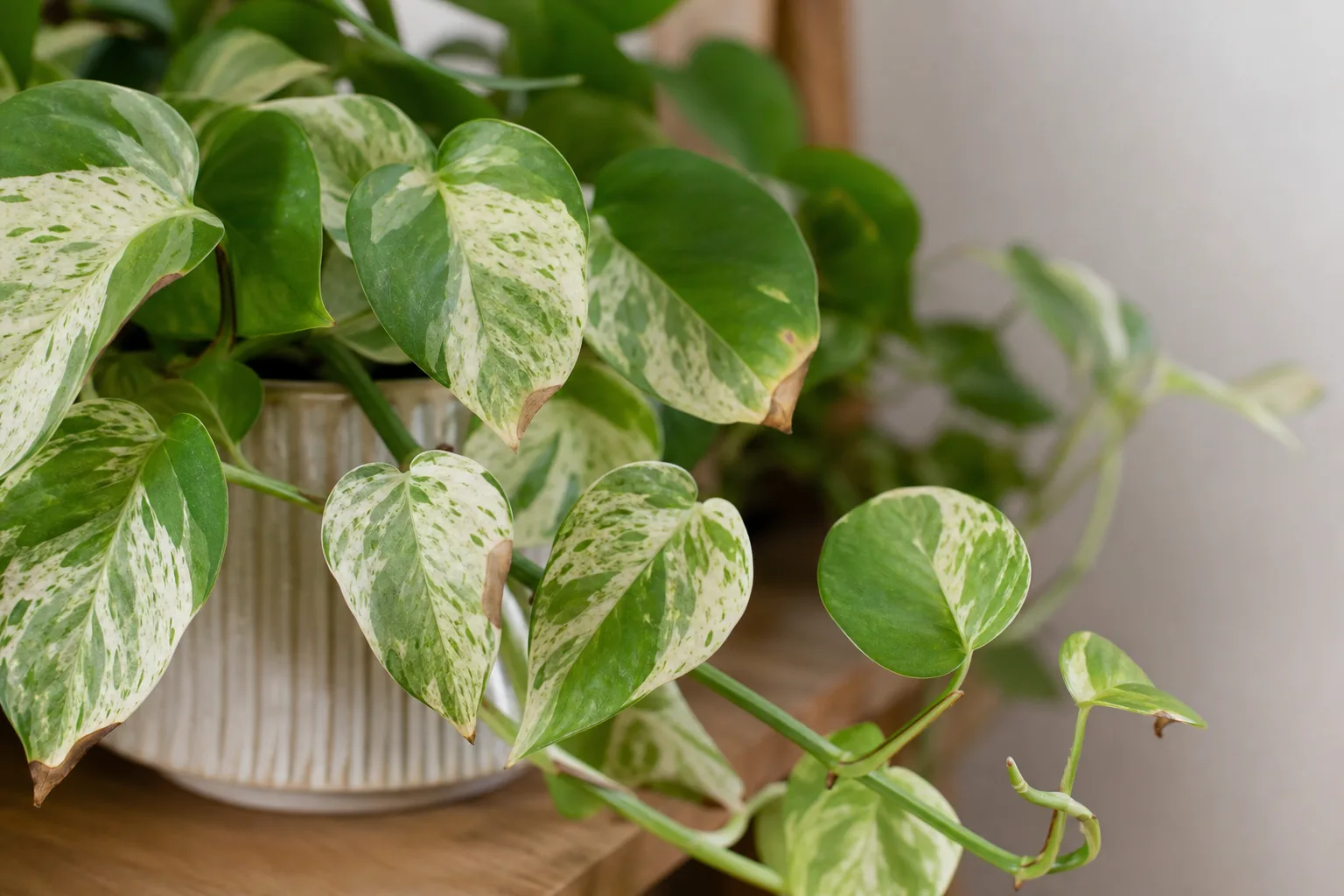
Brown Tips on Pearls and Jade Pothos: Causes, Checks & Fixes
This guide covers brown tips on Pearls and Jade Pothos. See also the general Brown Tips guide, watering, and light pages for this plant.
Brown Tips on Pearls and Jade Pothos: Causes, Checks & Fixes
Quick answer
Brown tips on Pearls and Jade Pothos (Epipremnum aureum ‘Pearls and Jade’) are almost always an environment or water-quality problem on the plant’s smaller marbled leaves-not a fungal disease. Low humidity is the most likely cause of brown leaf tips on houseplants; mineral-heavy tap water and alternating drought with heavy watering can also crisp leaf edges before the rest of the blade shows stress.
First step: measure humidity beside the pot with a hygrometer. Pearls and Jade targets 40–60% in normal home care. If readings sit below 40%-common when heating or AC runs-raise local humidity before Pearls and Jade Pothos repotting guide, fertilizing, or trimming aggressively. Once air moisture is stable, switch to filtered or rested tap water for four to six weeks if tips still appear on new leaves.
What brown tips look like on Pearls and Jade Pothos
On this cultivar, damage shows on the small heart-shaped leaves first. Mature Pearls and Jade blades average roughly 7–8 cm long-noticeably smaller than Marble Queen pothos-so a little tip browning looks more dramatic against the white-and-grey marbling.
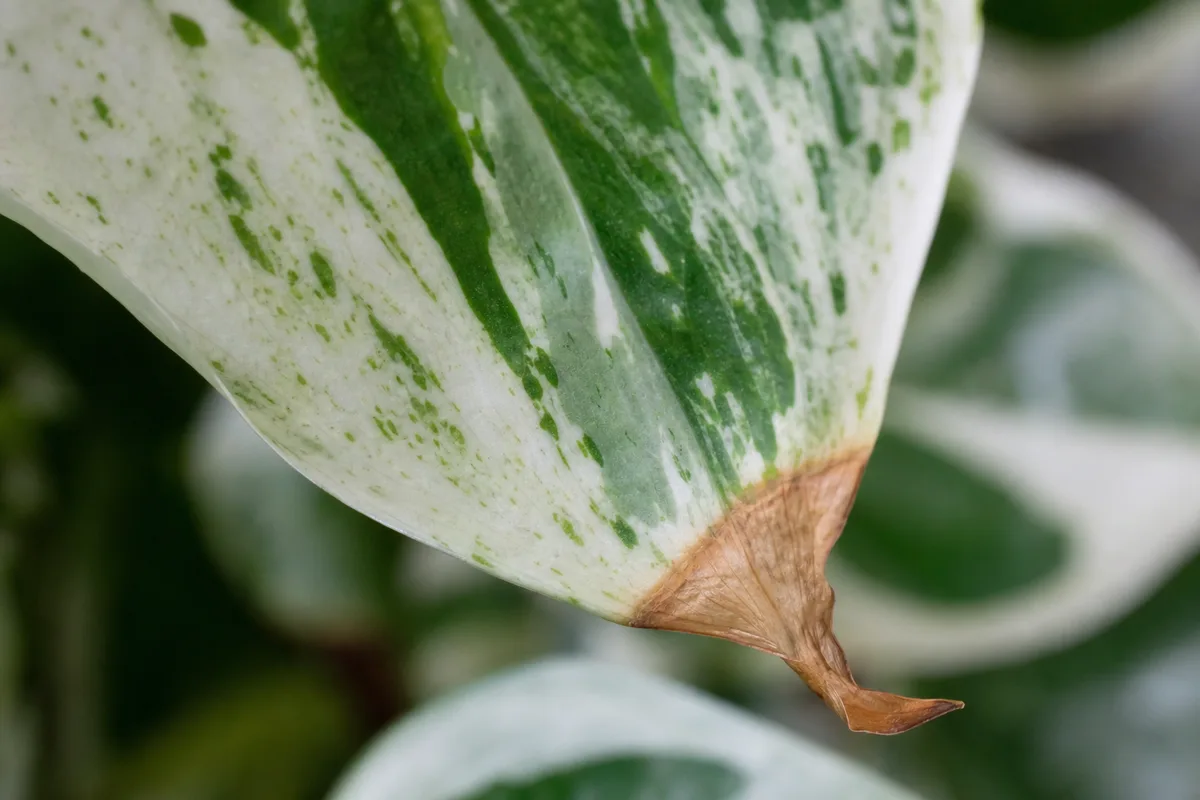
Brown Tips symptoms on Pearls and Jade Pothos - compare with healthy tissue on the same plant.
Typical tip-burn pattern:
- Dry, crispy tan-to-brown tips at the very end of the leaf, sometimes creeping slightly down one margin
- Green tissue still firm behind the brown zone; stems stay pliable, not mushy
- Scattered older leaves affected while newer growth may still look clean-until the stress continues
- No wet lesions, halos, or spreading soft brown patches typical of bacterial problems
Variegated white and grey sections make brown tips easy to spot. That visibility is cosmetic, not proof of a worse disease-but it does mean you should act before many leaves accumulate damage.
Why Pearls and Jade Pothos gets brown tips
The leaf tip is the farthest point from the roots. When moisture delivery or air humidity fails, that tissue desiccates first. Pearls and Jade is a slow-growing variegated cultivar with thinner-looking margins than all-green golden pothos, so the same dry winter room that barely bothers a standard pothos can crisp Pearls and Jade Pothos overview’s edges.
Low humidity
Indoor humidity often drops below 40% when furnaces, fireplaces, or air conditioning run. Tropical vines lose water through their leaves faster than roots can replace it in dry air. Pearls and Jade is listed among variegated pothos cultivars that need strong light to hold color; dry air stacked on winter heating accelerates tip dieback from low humidity on those smaller leaves.
Hard or mineral-heavy tap water
Calcium, magnesium, and treated-water additives can accumulate at leaf margins over time. While pothos is less fluoride-sensitive than dracaena or spider plant, repeated hard-water watering plus salt buildup in soil can still scorch leaf edges from water quality-especially on heavily variegated tissue with less green photosynthetic area to recover.
Inconsistent watering
Letting the pot go bone-dry, then soaking heavily stresses feeder roots. Damaged roots cannot hydrate leaf margins reliably, and tips brown even when the mix feels wet again. Pearls and Jade uses water slowly; a calendar built for faster golden pothos often swings between drought and saturation.
Salt and fertilizer buildup
Excess salts can build up in the soil when too much fertilizer is applied, which can also lead to brown leaf tips. Slow growers fed on the same schedule as vigorous pothos types are prone to salt stress without showing yellow leaves first.
Heat vents and direct sun scorch
Hot dry air from registers or a few hours of direct sun through glass can brown tips and margins on variegated leaves that have less chlorophyll buffer. This is environmental scorch, not rot-but it looks similar from across the room.
How to confirm the cause
Work through these checks in order before changing multiple variables at once:
- Humidity at plant level - Place a hygrometer within 30 cm of the foliage, not across the room. Below 40% strongly fits dry-air tip burn; 40–60% makes water quality or Pearls and Jade Pothos watering guide the next suspect.
- Season and placement - Did tips appear after heat season started, or after moving the pot beside a vent or south window? Timing narrows humidity versus light scorch.
- Water source - White crust on the pot rim or soil surface suggests mineral buildup. Very hard tap water plus frequent feeding increases salt injury risk.
- Soil moisture pattern - Push a finger 3–5 cm into the mix. Alternating very dry and very wet cycles point to inconsistent watering or a rootbound pot that dries unevenly.
- Stem and root sanity - Firm stems and neutral-smelling soil support cosmetic tip burn. Soft stems, sour odor, or yellowing on many leaves while soil stays wet mean inspect roots for rot before blaming humidity alone.
- New growth test - After two weeks of stable humidity, do emerging leaves still show tips? If yes, switch to filtered or rested tap water and flush accumulated salts.
First fix for Pearls and Jade Pothos
Raise humidity toward 40–60% at the plant, not just in the room.
Group the pothos with other plants, run a small humidifier nearby, or move it to a naturally humid spot with adequate Pearls and Jade Pothos light guide-such as a bright bathroom or kitchen if light is sufficient. Avoid misting as your only strategy; it lifts humidity for minutes, not the hours this vine needs.
Keep the plant off active heat vents and out of direct sun while humidity improves. Do not increase watering to “compensate” for dry air-that invites the overwatering problems this slow cultivar already risks.
Step-by-step recovery
After humidity stabilizes for one to two weeks:
- Audit watering - Water only when the top 3–5 cm of mix is dry, then soak until water runs from drainage holes and discard saucer water. Allow soils to dry between waterings and match rhythm to pot weight, not a fixed weekly schedule.
- Test water quality - If new tips still appear, water with filtered or tap water rested overnight for one month. Compare new leaf edges on the same vine.
- Flush salts if needed - If white crust is visible, run clean water through the pot at two to three times the pot volume once, let it drain fully, then resume normal watering.
- Trim cosmetic damage - Snip fully dead tip tissue with clean scissors, following the leaf shape and leaving a thin brown margin so you do not cut into living green cells.
- Adjust light if scorch suspected - Move back from direct sun to bright filtered light. Pearls and Jade needs strong indirect light for variegation but burns faster than all-green pothos in hot direct beams.
Do not repot on day one for tip burn alone. Repot only if the plant is severely rootbound, mix never dries evenly, or root inspection shows decay.
Recovery timeline
Expect one to three weeks before new leaves emerge with clean edges after humidity and watering corrections. Older browned tips will not re-green-success means fresh marbled leaves without fresh crisping.
Because Pearls and Jade grows slowly, visible improvement may take longer than on golden pothos. Judge recovery by new growth and firm stems, not by saving every old leaf. If tips keep appearing on successive new leaves after four to six weeks of corrected care, revisit water quality and salt flushing before assuming disease.
Lookalike symptoms
| What you see | Likely cause | Quick check |
|---|---|---|
| Crispy tips only; firm stems | Low humidity or water quality | Hygrometer below 40%; hard-water crust |
| Brown tips after moving to sunny window | Light scorch | Direct sun on variegated leaves |
| Tips brown with limp vines and wet heavy pot | Root stress from overwatering | Sour smell; mushy roots on unpotting |
| Brown spots with yellow halos mid-leaf | Leaf spot or injury | Not confined to tips; spreading lesions |
| Stippling or webbing with edge damage | Spider mites | Inspect leaf undersides with magnification |
Soft brown tissue climbing from soil line with wet mix is rot or stem injury-not the dry tip burn this guide addresses.
Mistakes to avoid
- Misting alone as humidity fix-it does not sustain 40–60% through a heating season.
- Watering more because tips look dry; soggy mix damages slow-growing roots and worsens margins.
- Heavy fertilizing to “green up” tips; salts burn edges on variegated leaves faster.
- Cutting deep into healthy green tissue when trimming; leave a sliver of brown at the cut.
- Repotting and fertilizing the same week you notice tips-stacked stress hides what actually worked.
Wear gloves when trimming if sap contacts skin; keep cut leaves away from pets, since all Epipremnum aureum varieties contain calcium oxalate crystals toxic to cats and dogs.
How to prevent brown tips next time
Maintain 40–60% humidity near the plant through winter heating. Water when the top 3–5 cm is dry, using well-draining mix with perlite so roots stay healthy between drinks. Prefer filtered or rested water if your tap supply is very hard or you feed regularly.
Keep Pearls and Jade in bright indirect light-enough for variegation, not hot direct scorch. Flush salts every few months during active growth if you fertilize. Rotate the pot weekly so one side is not baked by a window while the other sits in a dry corner.
When to worry
Tip burn alone is low urgency. Escalate if browning spreads up margins on most new leaves, stems soften at the base, soil smells sour, or yellowing clusters appear while the mix stays wet. Those patterns point to root rot on Pearls and Jade Pothos or severe overwatering on this slow cultivar-not cosmetic dryness.
If humidity, water quality, and watering rhythm are corrected and successive new leaves still crisp, unpot once to check for compacted, salt-crusted, or rotted roots before treating for disease.
When to use this page vs other Pearls and Jade Pothos guides
- Pearls and Jade Pothos watering guide - Use for routine moisture checks before assuming brown tips is the main issue.
- Pearls and Jade Pothos problems hub - Browse all 4 common issues on this species.
- Yellow Leaves on Pearls and Jade Pothos - Different entry point when symptoms overlap with brown tips.