Manjula Pothos Repotting: When, How, and Mistakes to Avoid
Manjula Pothos Repotting: When, How, and Mistakes to Avoid
Manjula Pothos Repotting: When, How, and Mistakes to Avoid
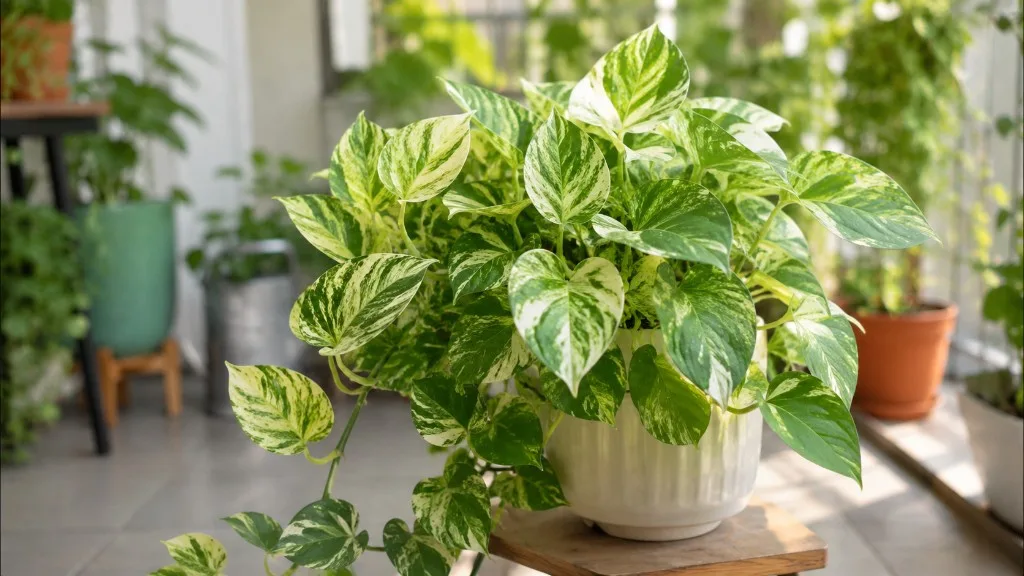
Manjula Pothos (Epipremnum aureum ‘Manjula’, also sold as Happy Leaf Pothos and HANSOTI14) is a slow-growing, heavily variegated pothos cultivar with broad wavy leaves splashed in cream, white, and green. That painterly foliage is why collectors buy it - and why repotting mistakes show up on the next leaf unfurl, not just in the root zone. Manjula shares the same Epipremnum aureum biology as Golden Pothos, but it fills pots more slowly, dries mix one to three days slower in the same room, and is more likely to push green reverted growth after stress if light is weak.
Done well, a Manjula repot is a quiet maintenance hour: one pot size up, fresh aroid mix, a week of gentle watering, and new cream-splashed leaves within a few weeks. Done poorly - oversized container, bare-root washing, winter timing in a dim office - the same plant can sit wilted or mostly green for months while you wonder whether it is dying or merely offended. This guide walks through when to repot, how to do it in eight clear steps, and the Manjula-specific signals that tell you recovery is working.
Author: sai-ananth · Reviewed by: LeafyPixels Review Board · Updated: 2026-06-15
Methodology: recommendations are checked against extension references, cultivar biology, and LeafyPixels Manjula Pothos overview care data before publication.
Quick Answer
Repot Manjula Pothos every 12–24 months when roots circle drainage holes, water runs through without absorbing, growth stalls despite good light, or the pot dries unnaturally fast. Spring through early summer is the safest window. Go one pot size up (about 2–5 cm / 1–2 inches wider), use a chunky aroid mix (roughly 2 parts potting mix : 1 perlite : 1 orchid bark - details on our soil guide), water lightly for the first week, and hold fertilizer for four to six weeks. Success on Manjula means new leaves with stable cream-and-green variegation, not just the old damaged foliage looking the same.
Why Repotting Matters for Manjula Pothos
Repotting solves three problems that show up as leaf symptoms if you ignore them long enough. First, roots eventually circle the pot and compress into a dense mat that cannot absorb water or oxygen efficiently. Second, peat and coir-based mix breaks down over 12–24 months, collapsing the air pockets aroid roots need. Third, salts from tap water and fertilizer accumulate in old mix and can burn fine root hairs, producing brown tips or pale new growth even when watering looks conservative.
Manjula belongs to Araceae, the arum family. Aroids tolerate moist soil only when it stays airy - stagnant wet mix is where root rot starts. The most common repotting failure is jumping to a pot much too large, which keeps the lower half of the mix saturated while the top looks dry. Manjula’s forgiving reputation makes that mistake easy to miss: the plant may look merely “quiet” for weeks while roots lose oxygen under variegated leaves that still appear cosmetic.
What fresh soil fixes in a slow-growing variegated cultivar
Fresh mix restores structure - perlite, bark chunks, and pore spaces that compacted peat lost. Extra root room lets white root tips spread outward instead of spiraling, which improves uptake after each watering cycle. On Manjula specifically, the payoff is visible on new leaves: stable variegation, normal leaf width, and reasonable internode length. A root-bound Manjula in spent mix often pushes smaller, greener, or slower-opening leaves because the plant is rationing energy while roots fight dense, hydrophobic soil.
Because Manjula is a moderate grower compared with fast golden pothos, mix breakdown can hide longer. Do not wait for half the vine to yellow before checking the root ball. If dry-down time has lengthened by several days compared with six months ago in the same spot, peat has likely compacted even if vines still look acceptable above soil.
When Manjula Pothos Needs Repotting
Plan a full repot every 1–2 years for an actively growing indoor Manjula, or sooner when multiple signals appear together during the growing season. Penn State Extension notes pothos generally benefits from repotting when roots emerge from drainage holes or growth slows - guidance that applies to Manjula, though this cultivar often needs the longer end of that calendar because it fills pots more slowly.
The clearest signs are visual: roots emerging from drainage holes, a root ball that holds a perfect pot-shaped mold when you slip the plant out, water that runs straight through without wetting the core, growth that stalls despite proper light and conservative watering, top-heavy wobble where foliage outweighs the root anchor, and very fast drying followed by wilt hours after watering. When two or more of these show up together in spring or summer, repotting is usually the right move.
Root-bound and drainage signals
Lift the pot and inspect the bottom first. Roots peeking through holes mean the plant has used the volume it was given. Slide the plant out gently - if you see circling roots at the bottom and little fresh mix on the sides, you are root-bound. Hydrophobic channeling is subtler: water races down the gap between shrunken mix and pot walls while the center stays dry. That pattern means structure collapse, not underwatering on Manjula Pothos alone.
Manjula tolerates slightly snug pots better than swimming in oversized containers - a useful trait until roots are genuinely circling and drainage fails. If the plant is only mildly tight but mix still drains evenly and new leaves keep stable variegation, you can defer until the next active season.
When not to repot for yellow leaves alone
Yellow leaves can mean overwatering, cold drafts, low light, natural aging of lower foliage on a long trailing vine, or compacted sour mix. Repotting a plant already stressed for unrelated reasons adds another variable and often makes diagnosis harder. Confirm the root zone is the bottleneck before you commit.
If yellowing appeared right after a recent watering binge, a light change, or a move to a dim corner, fix that condition first - see our yellow leaves and not enough light guides. Repot when roots are circling, mix smells sour, or drainage has clearly failed, not because one lower leaf yellowed on an otherwise healthy vine.
Best Time of Year to Repot Manjula Pothos
Spring through early summer is the safest window for most indoor growers. Rising temperatures and lengthening days trigger active shoot and root development, so Manjula can colonize fresh mix before summer heat or autumn dimming. Clemson HGIC recommends repotting pothos during active growth when temperatures are warm and days are longer.
Early autumn can work as a backup if your Manjula still pushes steady new growth and indoor temperatures stay in the 18–29°C (65–85°F) range with good light. Avoid winter repotting unless delay would clearly harm the plant - severe root-binding with repeated wilting, active root rot requiring trimming and fresh mix, or a broken pot. If you must repot in winter, use a modest size increase, bright indirect light, and water more cautiously until new growth returns in spring.
Repot Decision Table
| Situation | Action | Why on Manjula |
|---|---|---|
| Roots circling + fast dry-down + stalled variegated growth | Full repot now (spring/summer ideal) | Slower cultivar still hits binding; variegation stalls first |
| Mix smells sour or mushy roots | Emergency repot regardless of season | Rot spreads fast in dense wet peat |
| Slightly tight pot, healthy new cream-splashed leaves | Defer to next spring | Manjula tolerates snug fit; avoid unnecessary shock |
| Salt crust, slow drainage, no circling yet | Top-dress or full repot in spring | Variegated leaves mask slow decline |
| Yellow leaves only, roots white and firm | Do not repot - fix light/water first | Misdiagnosis adds stress without fixing trigger |
Choosing Pot Size and Material
The most important decision is diameter, not aesthetics. Manjula wants one step up, not a mansion. Jumping from a 12 cm nursery pot to a 20 cm decorative container keeps unused soil wet for days while the small root system catches up - the classic path to rot in low-light shelves where Manjula is often displayed.
Measure current inner diameter and choose a pot 2–5 cm (about 1–2 inches) wider, with the same depth profile or slightly deeper if the plant is top-heavy in a hanging basket. From 10 cm, move to 12–13 cm. From 15 cm, move to 17–18 cm. Repeat the one-size-up rule each repot across the plant’s life.
The one-size-up rule for variegated pothos
The principle matches root biology: roots grow into soil progressively, and until they do, excess mix is a water reservoir with little uptake. Clemson HGIC recommends a pot only 1–2 inches wider than the current container with drainage holes. On Manjula, the stakes are slightly higher because less chlorophyll per leaf means slower water use - oversized pots stay wet longer than the same upgrade on golden pothos in identical light.
Every pot needs drainage holes. Cachepots without holes work only if the inner nursery pot drains freely and you empty standing water after every watering. Terracotta dries faster - useful if you tend to overwater. Plastic retains moisture longer - helpful in bright, dry east windows. Glazed ceramic sits between; weight helps stabilize top-heavy trailing baskets.
Best Soil Mix for Repotting Manjula Pothos
Use a chunky, well-draining aroid blend - not unamended bagged peat alone. The Missouri Botanical Garden describes Epipremnum as preferring moist, well-drained soils. For Manjula repotting, our default 2:1:1 volume blend performs well in most homes:
- 2 parts indoor potting mix
- 1 part perlite or pumice
- 1 part orchid bark (medium grade)
In humid, low-light placements, lean chunkier - 35–40% perlite and bark combined - because Manjula dries slower than golden pothos in the same room. Full ratio dials, pH targets (6.0–6.5), and failure diagnostics live on our Manjula soil guide. Mix ingredients dry in a tub before repotting; do not layer gravel at the bottom - it does not improve drainage and can raise the perched water table.
Step-by-Step: How to Repot Manjula Pothos
Gather the new pot, pre-mixed soil, clean scissors, a chopstick, and a watering can. Work at a table if the plant hangs from a high hook - reroute vines carefully rather than yanking them.
Step 1: Water 24 hours before repotting so the root ball holds together.
Step 2: Add a small mound of fresh mix to the bottom of the new pot. No gravel drainage layer.
Step 3: Turn Manjula on its side and slide it out, supporting stems at the base. Squeeze flexible nursery pots or run a knife around rigid pots if needed.
Step 4: Inspect roots. Trim brown, mushy tissue with clean scissors. Tease circling roots at bottom and sides gently outward.
Step 5: Set the plant so the previous soil line sits about 1–2 cm below the rim. Do not bury stems deeper than they grew.
Step 6: Backfill with fresh mix, working soil between roots with a chopstick. Firm lightly - remove air gaps without compressing mix.
Step 7: Water thoroughly until excess runs from holes. Empty the saucer. Place in bright, indirect light out of direct sun for 7–10 days.
Step 8: Hold fertilizer for at least four to six weeks while roots settle. Resume moisture checks from our watering guide rather than a fixed calendar.
Root inspection and teasing circling roots
The goal is to redirect growth, not destroy the root ball. Manjula relies on fine root hairs for uptake; bare-rooting by washing every particle of old soil away strips those hairs and extends recovery - especially painful on this slower cultivar. Keep most of the original root mass intact while freeing the outer circling layer.
If roots are densely matted, you may slice 1–2 cm off the bottom with a clean knife to stimulate new white tips. Avoid removing more than one-third of total root mass unless rescuing rot. White, firm roots are healthy; brown mush and sour smell mean trim and repot into chunkier mix, not “wait and see.”
Worked example (home-climate heuristic): A Manjula in a 12 cm nursery pot, variegated vine stalled on a north-facing shelf, upsized to 15 cm with 2:1:1 aroid mix in April. Mild wilt lasted five days; first new cream-splashed leaf appeared around week four after light was improved to bright filtered east exposure. Timelines vary with temperature and light - treat them as rules of thumb, not guarantees.
Common Repotting Mistakes and Recovery
Oversized pots top the list. More soil without more roots means chronic bottom wetness and yellow lower leaves that look like feeding issues but are oxygen problems at the root level. Stick to one size up even if you imagine the plant will grow into the space soon - Manjula fills volume over weeks, not overnight.
Bare-rooting or over-washing removes fine hairs. Tease, do not scrub. Immediate fertilizing after repot can burn tender root tips in fresh, already nutrient-containing mix. Clemson HGIC recommends skipping fertilizer while roots re-establish. Wait for new growth matching normal leaf size and variegation.
Repotting for the wrong diagnosis - yellow leaves from cold, direct sun scorch, or recent overwatering - adds stress without fixing the trigger. Pots without drainage holes turn repotting into a long-term rot trap. Stacking changes - repot plus hard pruning plus relocation in one weekend - compounds shock on a moderate grower. Space major interventions when possible.
Recovery Timeline and Variegation Signals
Mild transplant shock on Manjula usually shows as slight wilting, a pause in new leaves, or one or two dropped lower leaves for one to two weeks - a home-climate heuristic, not a lab measurement. The plant should perk up after a careful drink and should not smell sour at soil level.
Full root re-establishment typically takes four to six weeks in warm, bright indoor conditions - again a practical rule of thumb. New growth is the clearest success signal: firm stems, normal leaf width, and cream-and-green variegation on fresh leaves. Older damaged leaves will not heal; judge recovery by the newest unfurl.
Watch for reversion after repot shock in low light: solid-green stems outgrowing variegated sections because the plant pushes chlorophyll where energy is scarce. If new leaves arrive mostly green after repot, improve light before assuming the cultivar is “lost,” and remove fully reverted runners per our pruning guide. Wilting beyond three weeks, sour soil smell, or spreading yellowing suggests rot, buried stems, or an oversized pot - slip the plant out and inspect rather than waiting indefinitely. Persistent drooping after repot often ties to moisture rhythm in fresh mix - check the bottom of the pot, not only the surface.
Top-Dress vs Full Repot for Manjula Pothos
Full repot - remove the plant, loosen roots, replace essentially all old mix - is appropriate when roots are bound, mix is compacted or sour, or you are correcting rot. Top-dressing - scrape out the top 3–5 cm of old mix and replace with fresh blend without disturbing roots - is a gentler mid-season option when drainage is still acceptable but salts have built up or the surface has crusted.
Top-dressing in early spring can buy two or three months if the plant is not yet circling at the bottom, but it will not fix roots spiraling under the root ball. Because Manjula grows slowly, growers sometimes top-dress once and defer full repot - reasonable if new leaves keep stable variegation and dry-down time stays predictable. Never reuse mix from a rot case; fresh blend is simpler and safer.
How Repotting Connects to Other Manjula Care
Repotting resets soil and the watering rhythm. Manjula in fresh, chunkier mix often needs lighter watering for two to three weeks and no fertilizer for at least a month while roots explore new volume. After that, return to moisture checks on our watering page - expect intervals to lengthen slightly as soil volume increases.
Combine spring repotting with propagation only if the parent plant is already stable; stressed parents root cuttings poorly. Patent note: USPP27,117 covers commercial propagation of ‘Manjula’; home cuttings for personal use are standard practice. For shared Epipremnum repot mechanics without cultivar dials, see Golden Pothos repotting - then return here for variegation recovery and slower fill-in expectations.
Related guides: overview · soil · light · watering · fertilizer · propagation · pruning · root-bound · root rot
Pet Safety During Repotting
Manjula Pothos contains insoluble calcium oxalate crystals that irritate cats and dogs if chewed - the ASPCA lists golden pothos as the genus proxy for Epipremnum varieties. Keep repotting debris, trimmings, and loose leaves out of reach while you work, especially if cats treat trailing vines as toys. Contact your vet if ingestion symptoms appear. Wear gloves if sap irritates your skin.
Conclusion
Manjula Pothos repotting comes down to reading the roots, choosing spring or early summer when you can, moving one pot size up with fresh chunky aroid mix, and judging success on new variegated leaves - not on whether old cream sectors repair. This cultivar fills pots slowly and recovers slowly in dim rooms, so check roots on a 12–18 month calendar even when vines look fine, but never repot on autopilot when the real problem is light or watering.
Get pot size and soil right and Manjula rewards you with stable painterly foliage on the next unfurl. Oversize the container, bare-root without cause, or repot into winter darkness and the same plant can revert toward green while you wait months for a recovery signal. Treat repotting as a targeted fix for the root zone, pair it with adequate light, and you will rarely lose a healthy Manjula to a routine upgrade.
When to use this page vs other Manjula Pothos guides
- Manjula Pothos overview - Start here for whole-plant context before deep-diving this topic.
- Manjula Pothos problems hub - Jump to symptom-specific fix guides when this care topic does not resolve the issue.
- Root Rot on Manjula Pothos - Escalate here when repotting adjustments are not enough.