Root Rot on Manjula Pothos: Causes, Checks & Fixes
Quick answer
Root rot on Manjula Pothos follows chronically wet mix in dim light-the wilt paradox means limp vines on soggy soil, not thirst. First step: unpot, trim mushy roots, repot in fresh perlite-rich mix, and withhold water for five to seven days.
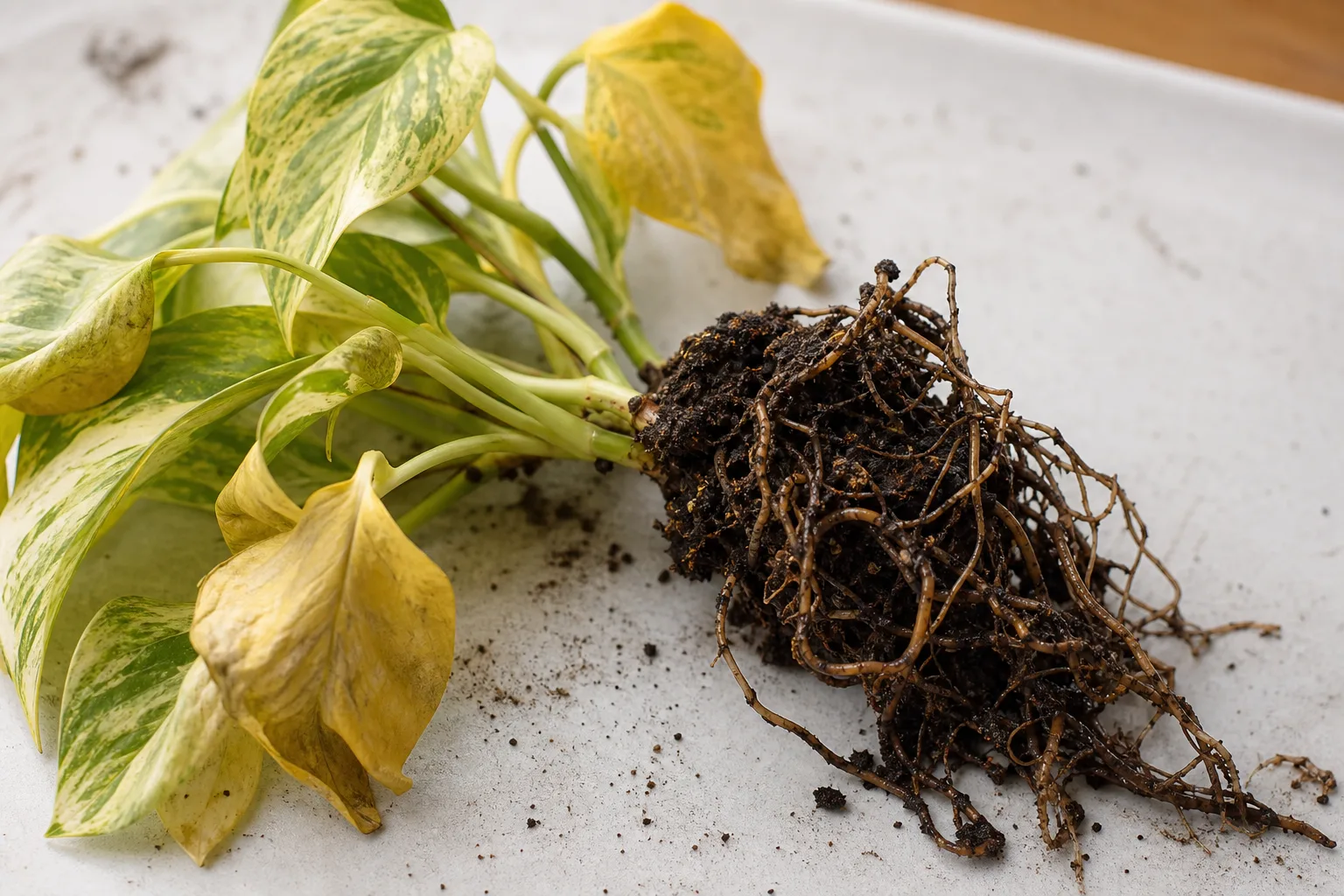
Root Rot on Manjula Pothos: Causes, Checks & Fixes
This guide covers root rot on Manjula Pothos. See also the general Root Rot guide, watering, and light pages for this plant.
Root Rot on Manjula Pothos: Causes, Checks & Fixes
Quick answer
Root rot on Manjula Pothos (Epipremnum aureum ‘Manjula’, PP27,117) follows chronically wet potting mix in conditions where this slow, heavily variegated cultivar cannot use water fast enough. Roots lose oxygen, fungal decay sets in, and the plant shows yellow lower leaves and limp trailing vines-even though the soil feels damp.
That mismatch is the wilt paradox: damaged roots cannot move water upward, so the plant looks thirsty while the mix stays heavy. Manjula stems store moisture, which can delay visible wilt for days after roots have already failed. Do not pour more water onto soggy soil.
First step: unpot, rinse roots, trim all mushy tissue, and repot in fresh airy mix. Withhold water for five to seven days so cut ends callus. If symptoms are mild and roots are still firm on inspection, you may be at the overwatering stage rather than full rot. This page covers confirmed rot-mushy roots, sour smell, or stem softening at the soil line.
What root rot looks like on Manjula Pothos
Root rot on Manjula does not always announce itself with drooping leaves on day one. The stem moisture buffer and broad wavy variegated leaves mask early damage.
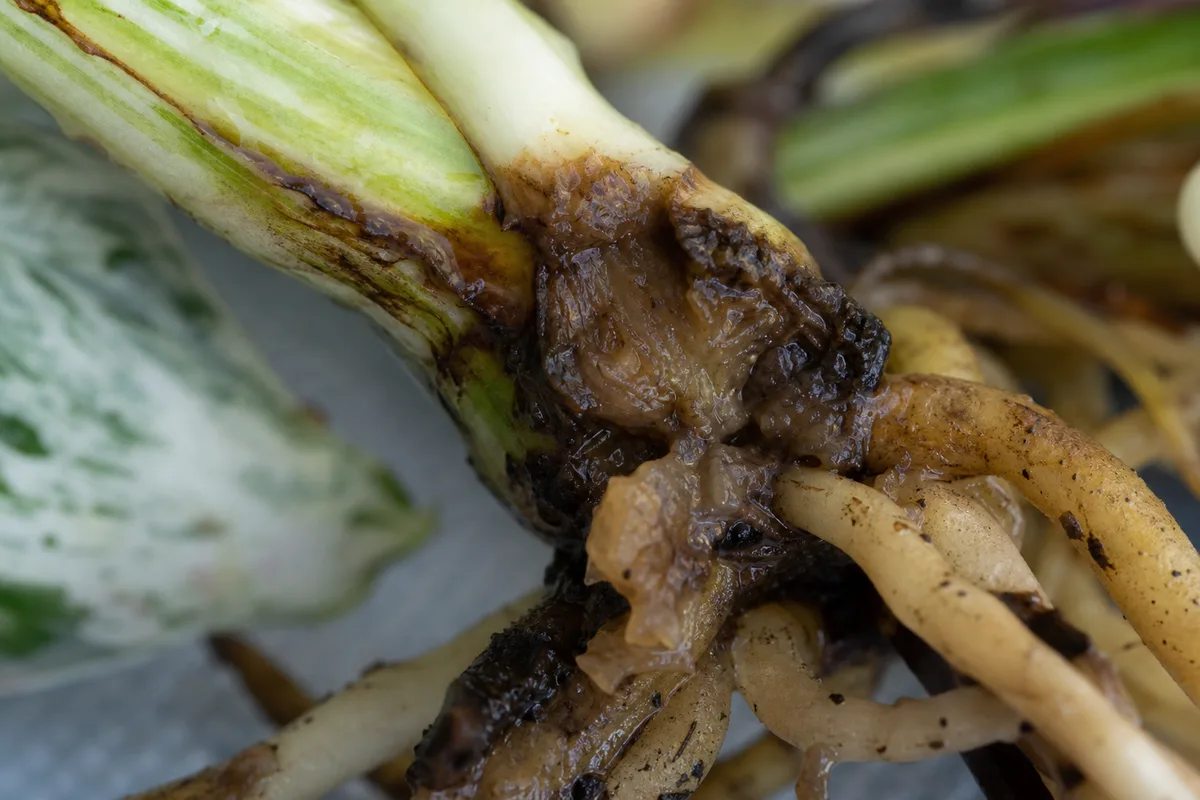
Root Rot symptoms on Manjula Pothos - compare with healthy tissue on the same plant.
Early signs
- Limp vines on wet mix - The wilt paradox: foliage hangs while the top 4–5 cm of mix stays damp for many days
- Yellow lower leaves spreading up the vine when saturation is chronic; yellow is soft, not the crisp papery yellow of severe underwatering
- Variegation fade on new unfurling leaves - Cream and white sectors dull or collapse before green tissue; pale new growth in a dim wet corner is often an early root-zone warning
- Pot feels heavy when lifted despite limp foliage
- Growth stalls - New Manjula leaves take one to two weeks to open even in health; rot slows that further
Advanced signs
- Soft stems at nodes near the soil line
- Sour, musty, or rotten smell from drain holes when you lift the pot
- Blackening tissue climbing from soil upward on one or more vines
- Fungus gnats hovering when soil never dries; larvae thrive in constantly moist peat
- Surface mold on wet mix - see mold on soil for the moisture signal, not the mold itself as the primary problem
Below ground: firm white vs. mushy brown roots
When you unpot, compare roots side by side on the root ball:
| Healthy Manjula roots | Rotting roots |
|---|---|
| Firm, springy when pressed | Slimy, hollow, or collapsing |
| White, cream, or pale tan | Brown to black |
| Hold soil when rinsed gently | Slip off or dissolve between fingers |
| Even thickness along length | Pinched, translucent, or swollen sections |
| No odor | Sour or rotten smell on the root mass |
Healthy pothos roots are firm and pale. Rotting roots are slimy, brown, or black and pull away when rinsed. On Manjula, even a few mushy feeder roots at the base of a heavy variegated vine can produce the wilt paradox above soil long before every root fails.
Why Manjula Pothos gets root rot
Manjula is a patented, slower-growing cultivar with broad wavy leaves swirled in cream, white, and green. Heavy variegation means less chlorophyll per leaf than Golden Pothos, so the plant generally transpires and uses water more slowly in the same window-yet many owners water on the same calendar as solid-green pothos.
Low light plus wet mix is the classic Manjula rot setup. Bright, indirect light helps variegated tissue metabolize water; in a dim corner with peat-heavy soil, mix stays wet for days while the plant uses little-exactly the anaerobic conditions that invite decay fungi. See our light guide before increasing water frequency.
Calendar watering ignores season, pot size, and how fast your mix dries. Container plants prefer moist, not soggy, soil-Manjula needs the dry side of that range with predictable dry-down between thorough drinks.
Oversized pots, cachepots without drainage, and full saucers hold a wet zone around a small root ball. Hanging baskets with attached saucers that never get emptied create the same problem. Repotting into wet heavy mix without perlite after buying from a nursery greenhouse is another common trigger-match soil and repotting practice to rescue needs.
Cool rooms and winter slowdown make summer watering habits excessive. A trailing pot on a cold windowsill can stay wet for two weeks while patented slow growth stalls. Continuing weekly summer pours into winter is a frequent path from overwatering to confirmed rot.
Pothos tolerates brief dry spells better than chronic wet feet-that tolerance makes owners underestimate how long wet mix has already been damaging Manjula roots.
How to confirm the cause
Work through these checks in order before repotting or propagating:
- Soil moisture at 4–5 cm - Stick your finger or a chopstick into the mix. Wet at that depth many days after watering confirms saturation-not a one-time mistake.
- Pot weight - Lift the container. Heavy with limp foliage on wet mix fits waterlogging; a light pot with limp leaves points to underwatering instead.
- Wilting vs. moisture - Limp leaves with heavy wet soil strongly suggest root dysfunction, not drought.
- Light check - Weak light plus wet mix is the classic Manjula rot pairing; fading variegation on new growth supports the diagnosis.
- Smell - Sour or swampy odor from drain holes supports rot over simple underwatering.
- Stem nodes - Press tissue at the soil line. Soft, dark nodes indicate advanced rot; firm stems with wet mix still need root inspection.
- Root inspection (decisive) - Slide the plant out gently. Compare firm pale roots with mushy tissue using the table above.
Confirmed root rot: sour smell, mushy roots, and/or soft stems at the soil line on chronically wet mix.
Not confirmed yet: wilt on moist soil for less than 48 hours with firm stems-recheck before watering again or see overwatering on Manjula Pothos.
Root rot vs. lookalikes
Use this table before unpotting when you are unsure which branch fits:
| Pattern | Key signs | Soil / pot | First action |
|---|---|---|---|
| Early overwatering | Soft yellow lower leaves, limp vines on wet mix | Heavy pot; damp 4–5 cm down for days; roots still firm on spot-check | Stop watering until top 4–5 cm dry → overwatering |
| Confirmed root rot | Sour smell, mushy brown roots, soft stems at soil line | Chronic wet mix; gnats or mold common | Unpot, trim, repot → this page |
| Underwatering | Limp wilt, crisp edges, thin leaves | Light pot; bone dry throughout | One thorough soak → underwatering |
| Transplant shock | Mild wilt after recent repot; firm roots on inspection | Fresh mix may stay evenly moist | Bright indirect light; resume normal dry-down checks |
| Low light alone | Leggy sparse vines, pale variegation, no sour smell | Moist or dry; firm stems and roots | Move to brighter spot → light |
| Cold damage | Yellow or limp leaves after cold exposure | May be moist or dry; no mushy roots | Warm stable room; inspect roots if decline continues |
If the mix is dry throughout, the pot is light, and leaves are crispy, underwatering is more likely. Do not withhold water further without checking.
First fix for Manjula Pothos
Unpot, rinse roots under lukewarm water, and trim all brown mushy tissue with clean scissors.
That single rescue pass removes decaying roots that spread infection and lets oxygen reach surviving tissue. Keep firm white or tan roots; cut until tissue feels solid, not hollow. Sterilize scissors between cuts on badly infected plants.
Repot into fresh, airy mix-standard potting mix with 20–30% perlite works well for rescue repots-with a container only slightly larger than the remaining root ball and open drainage holes. Plant at the same depth as before.
Wait five to seven days before the first light watering so trimmed root ends callus. Move the plant to bright indirect light-not a dark recovery corner where mix will not dry predictably.
Do not fertilize, mist heavily, or return the plant to the same soggy mix. Do not water because leaves look limp when the repotted mix is still moist.
Mild, moderate, and severe recovery branches
Choose the path that matches what you find on the root ball:
Mild (roughly less than one-quarter of roots mushy, firm nodes, no sour smell yet)
- Trim affected feeder roots only; keep the majority of the root mass.
- Repot in the same or slightly smaller clean pot with fresh perlite-amended mix.
- Withhold water five to seven days, then resume the watering guide dry-check rhythm at 4–5 cm.
- Expect new root tips within two to three weeks in warm bright light.
Moderate (about one-quarter to one-half of roots mushy, some yellow leaves, nodes still firm)
- Trim aggressively back to firm tissue; discard all old wet mix.
- Size the pot to the remaining root mass, not the trailing vine length.
- Take one or two variegated node cuttings as backup before repotting-see propagation.
- Withhold water five to seven days; judge recovery by firm stems and clean variegation on newly unfurling leaves, not by old yellow foliage re-greening.
Severe (more than half of roots mushy, soft nodes, or sour smell)
- Salvage firm vine sections with one or two nodes above the rot; root in water or moist perlite.
- Discard the rotted base, old soil, and mushy roots in a sealed bag away from other plants.
- If any firm roots remain, repot the trimmed base-but expect the mother plant to recover slowly or fail while cuttings root faster.
- On Manjula, severe loss often means restarting from variegated cuttings rather than saving the original root ball.
Step-by-step recovery
- Remove the plant from wet mix; discard saturated soil-decay fungi survive in infected debris.
- Rinse roots gently; trim all soft or discolored tissue; sterilize tools between cuts.
- Choose a pot sized to the remaining root mass-not dramatically larger.
- Fill with fresh perlite-enhanced mix; position in bright indirect light for faster dry-down.
- Water lightly once after repotting only if mix is dusty-dry; otherwise wait five to seven days.
- When you resume, water until a small amount drains, then empty saucers completely within thirty minutes.
- Hold fertilizer until new leaves unfurl cleanly with stable cream-and-green variegation.
- Trim yellow leaves after the root zone stabilizes to reduce stress on remaining roots.
Recovery timeline
Days 1–7: Wilting should ease once cut roots callus and you stop saturating fresh mix. Old yellow leaves will not turn green again-they may drop or stay until you trim them.
Weeks 2–3: New root tips are the best below-ground success signal. Mild cases with most roots intact often show them in warm bright light. Clean variegation on newly unfurling leaves tells you light and water are back in balance-pale all-green new growth means move closer to the window, not add water.
Weeks 4–8: Vine fullness rebuilds slowly on this patented cultivar. Judge recovery by firm stems, new nodes, and stable marbling on fresh growth-not by hoping damaged foliage re-greens.
Worsening signs: stems soften further after repot, blackening climbs the vine, or new leaves emerge small and pale then collapse-propagate backup cuttings immediately.
Severe node rot often requires propagation rather than saving the whole plant. Wilted leaves with wet soil indicate rotting roots cannot take up water-recurrence is common if drainage and light are not fixed.
What not to do
Do not water limp vines automatically when soil is already wet-check roots first.
Do not repot into oversized pots or garden soil-excess wet mix around a small root ball restarts the cycle.
Do not leave the plant in standing saucer water or a cachepot that traps runoff.
Do not jump to direct sun to dry mix faster-variegated Manjula leaves scorch easily.
Do not fertilize stressed roots immediately after repotting.
When unpotting and trimming, wear gloves if sap irritates your skin. Manjula Pothos contains calcium oxalate crystals toxic to cats and dogs if chewed. Bag and discard mushy roots, trimmed stems, and old soil so pets cannot reach them. Contact your veterinarian if a pet chews pothos tissue or shows mouth irritation after exposure.
How to prevent root rot next time
Match watering to how fast the pot dries in your light-not the calendar. Allow soil to dry between waterings-check dryness at 4–5 cm before every major drink, as detailed in our watering guide. In bright indirect light, many Manjula plants need water roughly every 7–10 days in summer and every 10–14 days in winter-always confirm with finger and pot-weight checks.
Use perlite-rich mix and multiple drain holes. Move dim, wet plants to brighter spots before increasing water frequency. Empty saucers after every drink.
Catch early wet-soil problems on the overwatering guide before they become confirmed rot. Treat fungus gnats as a chronic-moisture warning.
Manjula Pothos care cross-check
Root rot prevention aligns with the full Manjula care stack:
- Light - Bright indirect light strong enough to hold variegation also helps the plant use water predictably
- Watering - Dry-check at 4–5 cm before every soak; wilt on wet mix means stop, not pour
- Soil - Chunky perlite-amended mix drains between drinks instead of staying spongy
- Repotting - Size up one step at a time after rescue stabilizes
- Propagation - Node salvage when root loss is severe
A Manjula in weak light with a weekly watering habit will stay wet and rot even in good mix. Variegation loss on new leaves is often an early warning that light and water are out of balance-see yellow leaves and drooping leaves for earlier-stage triage.
When to worry
Escalate immediately if nodes soften, stems blacken from soil upward, soil smells sour, or the plant collapses within days of wilting on soggy mix.
Early root browning with firm nodes still allows repotting rescue. Take variegated node cuttings before rot reaches every vine.
Give up on the original root ball when no firm white or tan roots remain, rot has reached most of the crown, or salvaged cuttings fail to root after several weeks in bright indirect light.
Conclusion
Confirmed root rot on Manjula Pothos is a wet-soil rescue problem, not bad luck. Success looks like yellowing that stops, firm nodes at the soil line, and new leaves unfurling with crisp cream-and-green variegation within a few weeks of trim-and-repot in airy mix-not old damaged leaves turning green again. If the root ball is mostly gone, variegated node cuttings often outpace the mother plant on this slow cultivar. Match watering to dry-down at 4–5 cm and bright enough light that the pot actually dries between drinks.
Related Manjula Pothos guides
- Manjula Pothos overview - species context, variegation, and full care map
- Watering - dry-check rhythm and prevention
- Underwatering - dry pot lookalike and wilt triage
- Overwatering - early wet-soil triage before roots turn mushy
- Drooping leaves - early limp vines before full collapse
- Wilting - full vine collapse and soft nodes
- Yellow leaves - color change with wet-soil patterns
- Fungus gnats - chronic moisture warning
- Mold on soil - surface growth on wet mix
- Soil - perlite mix and drainage
- Repotting - when and how after root rescue
- Propagation - salvage cuttings from failing plants
- Light - variegation and water-use coupling
- Pothos root rot (genus guide) - Epipremnum-wide context
Related tool
Use the Root Rot Risk Checker to narrow causes for root rot on this plant before changing multiple variables at once.