Wilting on Manjula Pothos: Causes, Checks & Fixes
Quick answer
Wilting on Manjula Pothos means roots cannot supply water-usually from overwatering and rot in wet soil, or severe underwatering in dry soil. First step: lift the pot and check moisture at 3–5 cm depth before watering.
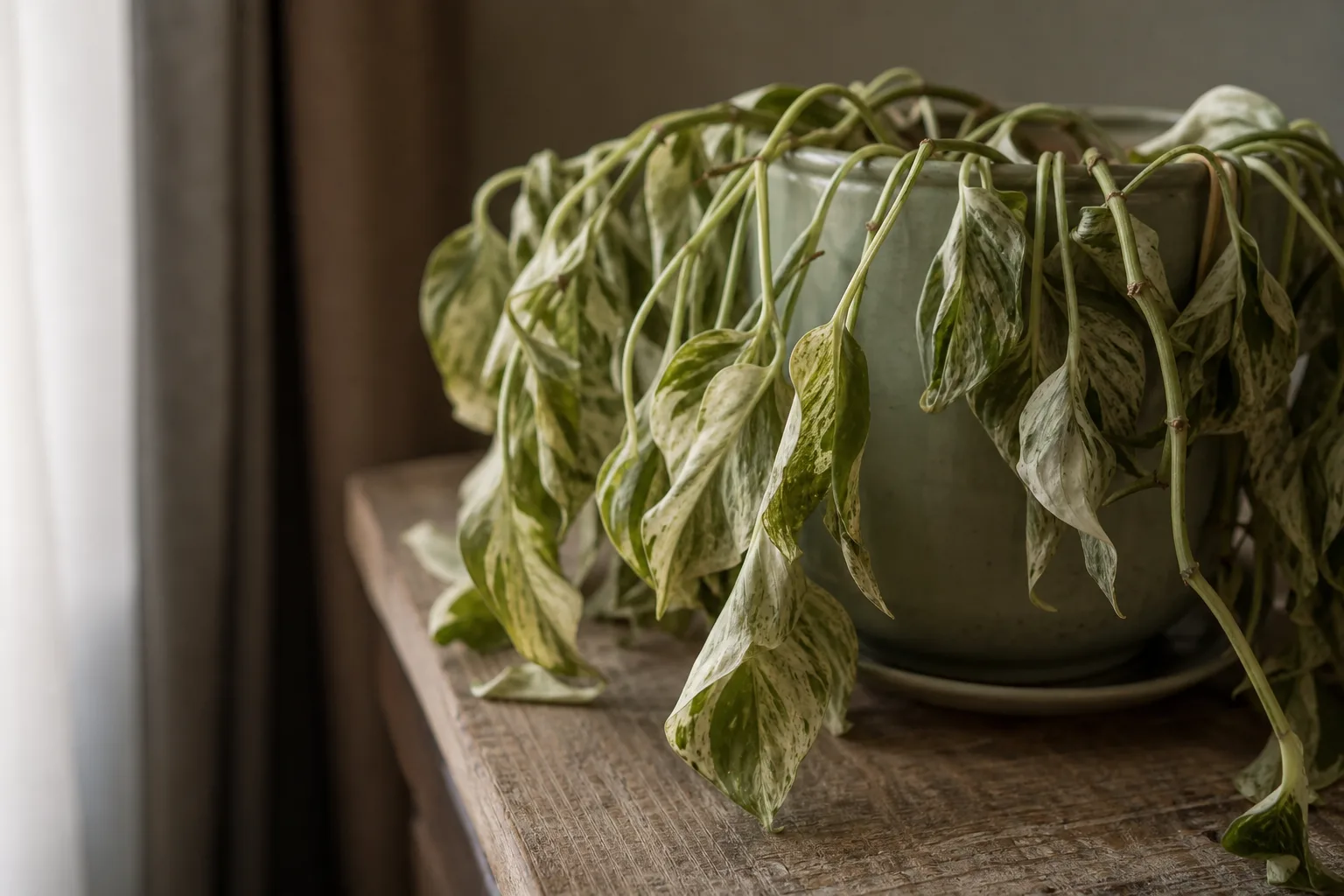
Wilting on Manjula Pothos: Causes, Checks & Fixes
This guide covers wilting on Manjula Pothos. See also the general Wilting guide, watering, and light pages for this plant.
Wilting on Manjula Pothos: Causes, Checks & Fixes
Quick answer
Wilting on Manjula Pothos (Epipremnum aureum ‘Manjula’) means roots are not moving water to the leaves-either because they are rotting in saturated mix or because the root ball is too dry. The wavy, variegated leaves collapse along whole vines, which looks alarming but often reverses quickly once you match the fix to the cause.
First step: lift the pot and check moisture at 3–5 cm depth before you water. A heavy wet pot needs dry-down and possibly root inspection. A light dry pot needs one thorough soak-not repeated shallow splashes.
What wilting looks like on Manjula Pothos
Wilting is more than casual droop. Vines lose turgor entirely: heart-shaped leaves hang flat instead of holding their usual wavy curve, and trailing stems feel limp from tip to soil line. On this patented cultivar, cream and white variegation may look collapsed or translucent when cells lose water pressure.
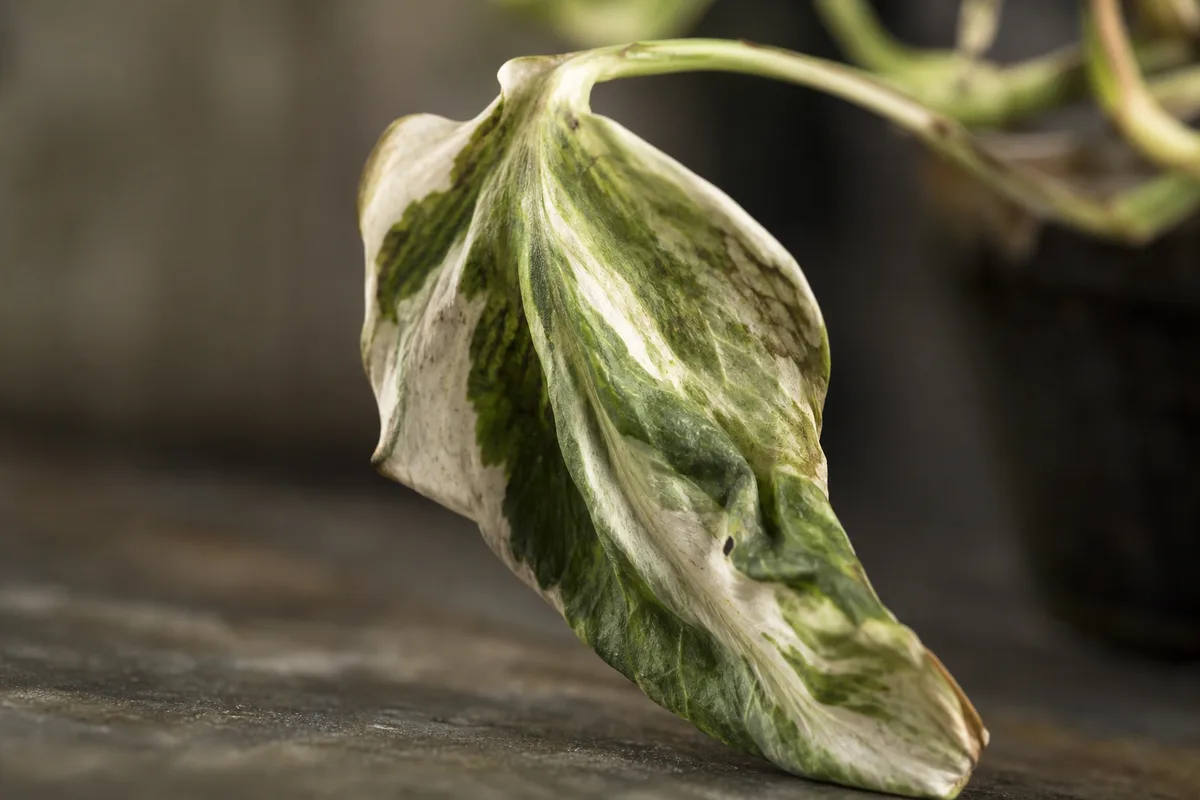
Wilting symptoms on Manjula Pothos - compare with healthy tissue on the same plant.
Dry-soil wilting pairs with a lightweight pot, shrunken mix pulling from the pot walls, and sometimes crispy brown edges on variegated sections that dry out first. Wet-soil wilting shows damp surface mix, yellow lower leaves, and limp vines despite moisture-a classic sign that rotting roots cannot take up water. Advanced rot adds a sour smell from the drain hole and soft, dark tissue at stem nodes.
Transplant wilting appears within days of Manjula Pothos repotting guide: leaves droop while mix is evenly moist and roots look mostly firm when you check-root disturbance temporarily limits uptake. Heat-stress wilting may hit afternoon vines in hot bright windows, then recover overnight if roots and soil moisture are otherwise healthy.
Why Manjula Pothos gets wilting
Manjula Pothos is an aroid trailing vine that prefers bright, indirect light and a well-draining, airy mix. It is a slower-growing cultivar than golden pothos, so recovery from root damage takes longer once wilting sets in.
Overwatering and root rot on Manjula Pothos
The most dangerous wilt on Manjula starts below the soil. Root rots on houseplants often show up when gardeners notice wilt even though mix is wet. Saturated peat-heavy soil in dim corners deprives roots of oxygen; decay fungi attack weakened tissue until uptake fails. Excess moisture reduces oxygen in the soil, damages fine roots, and produces the same wilt symptoms as drought-even though the problem is too much water, not too little.
Manjula in weak light uses water slowly. Watering on a calendar while the top 3–5 cm stays wet is the classic setup. Oversized pots, saucers left full, and mix without perlite extend wet cycles.
Severe underwatering on Manjula Pothos
At the other extreme, prolonged drought collapses turgor. Too little water may lead to temporarily drooping leaves on pothos vines. Trailing Manjula in bright summer windows or small hanging baskets can dry faster than growers expect-especially when hydrophobic old mix repels surface water while the core stays dry.
Repotting and transplant stress
Manjula often wilts after repotting. Fine root hairs damaged during transfer cannot absorb efficiently for days, so leaves droop even in moist mix. Overwatering during this window invites rot in already stressed roots. Spring repotting into fresh perlite mix usually resolves temporary wilt within one to two weeks if light and watering stay stable.
Heat and environmental stress
Hot afternoon sun on a south window increases transpiration faster than roots can supply water, causing temporary wilt that recovers by evening. Cold drafts below 10°C (50°F) can also stress vines without changing soil moisture. Stabilize placement before assuming disease.
How to confirm the cause
Do not treat every limp Manjula vine the same way. Work through these checks in order:
- Pot weight - Heavy and wet suggests rot risk; light and dry suggests drought.
- Moisture at 3–5 cm - Probe with a finger or skewer. Surface appearance lies; depth tells the truth.
- Wilting vs. moisture pattern - Plants with root rots are often wilted even though soil is wet. Dry wilt and wet wilt need opposite first actions.
- Recent care events - Repotting within the last week, a heat wave, or a missed watering narrows the cause.
- Stem nodes - Soft, dark nodes at the soil line suggest advanced rot, not simple thirst.
- Smell - Sour or swampy odor from the drain hole supports rot over drought.
- Root spot-check - Slide the plant out if wet wilt persists. Firm white roots differ sharply from mushy brown tissue.
If afternoon wilt recovers overnight with moderate soil moisture and firm nodes, heat stress is likely-not rot.
First fix for Manjula Pothos
Lift the pot, check moisture at 3–5 cm depth, then act on what you find-do not water by reflex.
If mix is dry: Water thoroughly until excess drains from the bottom, then empty the saucer completely. For very dry mix that repels water, bottom-water 20–30 minutes so the root ball rewets evenly. Leaves often perk within hours if roots are firm.
If mix is wet and vines are wilted: Stop watering immediately. Move the plant to brighter indirect light so the pot dries faster. If stems feel soft or mix smells sour, unpot, trim mushy roots, and repot in fresh perlite-enhanced mix-same protocol as active root rot. Do not add water to wet, wilting plants; that deepens rot.
If wilt followed repotting within the past week: Hold steady-Manjula Pothos light guide, lightly moist (not soggy) mix, no fertilizer. Avoid repotting again unless roots are clearly rotting.
Step-by-step recovery
Dry-soil recovery
- Soak until water runs from drainage holes; discard saucer water.
- Wait 24 hours-most drought wilt on healthy Manjula improves visibly.
- Resume watering only when the top 3–5 cm dries.
- Trim fully crispy leaves after turgor returns; they will not green up again.
Wet-soil / rot recovery
- Unpot and rinse roots; cut all brown, black, or slimy tissue with sterilized scissors.
- Repot into a clean pot sized to remaining roots with standard mix plus 20–30% perlite.
- Water lightly once, then let the top 3–5 cm dry before the next drink.
- Hold fertilizer until new leaves unfurl cleanly-Manjula leaves take one to two weeks to open.
- Take stem cuttings with nodes as backup if more than half the root mass is gone.
Transplant recovery
- Keep bright indirect light and stable room temperature.
- Water when the top 3–5 cm dries-do not compensate wilt with extra water.
- Avoid moving, pruning heavily, or fertilizing for three to four weeks.
- Expect gradual firming over seven to fourteen days if roots stay intact.
Recovery timeline
Mild drought wilt on firm roots often reverses within hours to one day after a deep soak. Variegated leaves that went fully limp usually regain shape; crispy edges stay damaged.
Wet-soil wilt from early rot may take two to three weeks to stabilize after root trim and repot in warm bright light. New unfurling leaves with strong variegation signal that light and water are back in balance.
Severe node rot or wilt that spreads despite corrected care may require propagation from healthy vine tips rather than saving the whole plant. Wilted leaves with wet soil indicate rotting roots cannot take up water-recurrence is common if drainage and light stay wrong.
Lookalike symptoms
- Drooping leaves without full collapse - Often early drought or normal afternoon transpiration; less severe than true wilt.
- Yellow leaves only on Manjula Pothos - May precede wilt; check moisture before leaves collapse.
- Leggy pale vines - Low light stress without immediate wilt; soil may still cycle normally.
- Spider mite damage - Fine webbing and stippled leaves; vines may droop from pest stress, not water alone.
Causes to rule out
- Simple underwatering - Light pot, dry 3–5 cm, rapid perk-up after watering, firm white roots.
- Root rot - Wet heavy pot, sour smell, mushy roots, yellow base leaves.
- Transplant shock - Recent repot, moist mix, mostly firm roots, gradual recovery.
- Heat stress - Afternoon wilt, evening recovery, healthy roots when checked.
What not to do
Do not water every wilted Manjula automatically-wet wilt worsens with more water. Do not repot on day one unless roots are clearly rotting or mix is failing. Do not move a collapsed plant into harsh direct sun. Do not fertilize stressed roots. Do not leave saucers full of drainage water. Wear gloves when handling cut tissue-Manjula Pothos is toxic to cats and dogs via insoluble calcium oxalates.
How to prevent wilting next time
Match watering to how fast your pot dries in your light. Allow soil to dry between waterings-roughly every 7–10 days in summer and every 10–14 days in winter for Manjula in bright indirect light. Use perlite-rich mix, open drainage holes, and empty saucers after every drink. Container plants prefer moist, not soggy, soil-Manjula needs the dry side of that range.
Lift pots periodically to learn their weight when properly watered versus dry. Repot in spring with minimal root disturbance, and avoid jumping to oversized containers.
Manjula Pothos care cross-check
Wilting prevention aligns with the basics: bright indirect light so water use stays predictable, checking dryness at 3–5 cm before every major watering, and fast-draining mix. A Manjula in a dim wet corner will wilt from rot even with “correct” weekly watering. Variegation fading on new leaves often warns that light and water are out of balance before full collapse.
When to worry
Escalate immediately if nodes soften and blacken, wilt spreads up vines while soil stays wet, or the plant fails to perk within 48 hours after appropriate drought correction or rot treatment. Take healthy node cuttings before rot reaches every vine. Early wet wilt with firm nodes still allows rescue if you stop watering and inspect roots promptly.
Conclusion
Wilting on Manjula Pothos always traces back to the root zone-dry, rotting, or temporarily damaged. Confirm with pot weight and moisture at 3–5 cm, then apply the matching fix: deep soak for dry wilt, dry-down and root inspection for wet wilt, steady care for transplant stress. Prevent recurrence with drainage, bright indirect light, and watering guided by the pot-not the calendar.
When to use this page vs other Manjula Pothos guides
- Manjula Pothos watering guide - Use for routine moisture checks before assuming wilting is the main issue.
- Manjula Pothos problems hub - Browse all 40 common issues on this species.
- Underwatering on Manjula Pothos - Different entry point when symptoms overlap with wilting.
- Root Rot on Manjula Pothos - Different entry point when symptoms overlap with wilting.
- Yellow Leaves on Manjula Pothos - Different entry point when symptoms overlap with wilting.