Manjula Pothos Light Needs: Best Window, Sun & Warning Signs
Manjula Pothos Light Needs: Best Window, Sun & Warning Signs
Manjula Pothos Light Needs: Best Window, Sun & Warning Signs
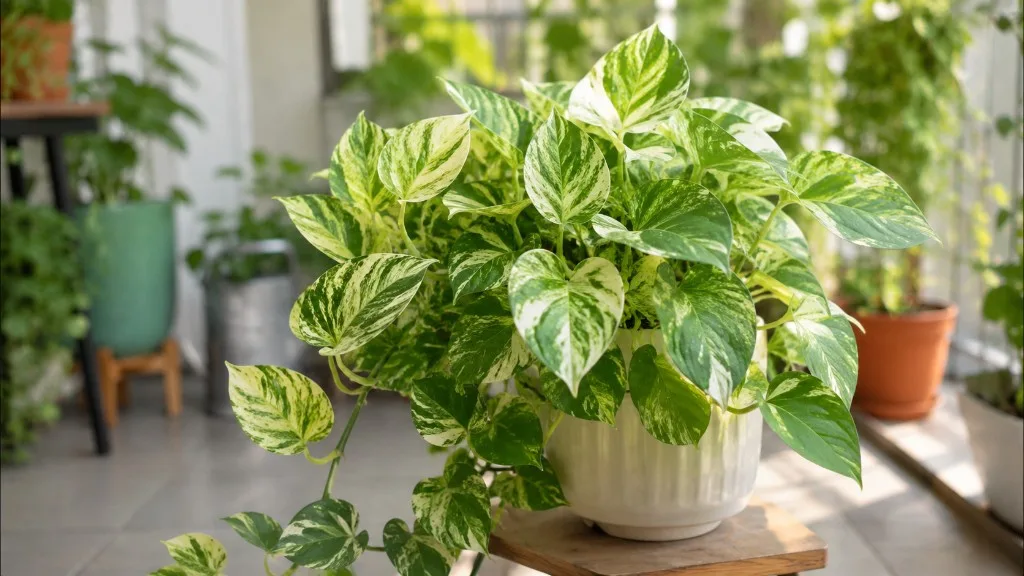
Manjula Pothos (Epipremnum aureum ‘Manjula’, HANSOTI14) is a slow-growing, heavily variegated pothos cultivar with broad wavy leaves splashed in cream, white, and green. That painterly foliage is why collectors buy it-and why light mistakes show up on the next unfurling leaf, not six months later. Manjula shares Epipremnum aureum biology with golden pothos, but its white sections contain less chlorophyll and need more usable light per leaf to sustain the same growth rate and hold variegation.
The practical goal is not to find the dimmest corner where the plant refuses to die. The goal is placement where new leaves emerge with stable cream-and-green variegation, internodes stay reasonably short, and soil dries on a predictable rhythm tied to active photosynthesis. Penn State Extension lists pothos cultural needs as bright indirect light indoors-Manjula sits at the higher end of that range because variegation is the first thing sacrificed in shade. For the full care picture, see our Manjula Pothos overview and pair light placement with watering and soil choices that match how fast the pot dries in your room.
This guide covers how much light Manjula actually needs, best window placement, direct sun tolerance, honest low-light limits, grow-light setups, seasonal shifts, warning signs, and a decision table for too much vs. too little vs. adequate variegation light.
Quick Answer
Give Manjula Pothos bright indirect light most of the day-east windows, filtered south exposures, or a full-spectrum grow light if the room is dim. It tolerates medium indirect light but thrives where new leaves keep bold white and cream splashes without scorch. Pull back from harsh direct afternoon sun on white patches. Judge success by variegation on the newest leaf, not by survival of older foliage. Clemson HGIC notes that variegated pothos cultivars may lose coloring in lower light-Manjula is among the cultivars most sensitive to that trade-off.
How Much Light Manjula Pothos Actually Needs
Variegated pothos cultivars are not shade plants with a tolerance label-they are light-hungry relative to their green tissue area. Each white or cream sector photosynthesizes less than green tissue. Manjula’s patented leaf form includes broad wavy blades with large pale sections, so the plant must compensate with higher overall brightness or accept slower growth and reversion. The HANSOTI14 patent describes compact, slow, controlled growth under greenhouse shade cloth-indoors, that translates to bright ambient light without prolonged hot direct beams on pale tissue.
Indoors, target roughly 200–400 foot-candles (2,000–4,000 lux) at the leaf surface: bright enough to cast a soft hand shadow, without prolonged hot direct beams on pale tissue. Medium indirect light near 100–200 foot-candles often keeps Manjula alive but gradually shifts new growth greener. Below that, you are in survival mode-wet soil, leggy growth, and loss of the cultivar’s identity. The RHS Epipremnum growing guide recommends a bright spot out of direct midday sun for pothos generally; Manjula needs that baseline plus extra headroom for variegation.
Surviving vs. Thriving on Manjula
In insufficient light, thick Epipremnum leaves and stored reserves let Manjula look fine for months while it quietly stops producing variegated runners. New stems emerge solid green because chlorophyll density increases wherever photons are scarce-a pattern Clemson HGIC links to variegated aroids needing brighter light than all-green forms. Soil that would dry in five days near a window may stay wet for three weeks in a dim hallway-inviting overwatering and root stress on an already-slow cultivar.
In bright indirect light, the same plant produces shorter internodes, broader new leaves, and stable cream splashes. That is the difference between a Manjula and a generic green pothos with a few faded spots. Judge light by new growth after any placement change, not by whether old leaves remain attached.
Manjula Pothos Light Decision Table
Use this table when the newest unfurling leaf-not room brightness to your eyes-tells you something is off.
| What you see | Likely light level | Foot-candles (approx.) | First action |
|---|---|---|---|
| Bold cream/white/green on newest leaves; soil dries in 5–10 days | Adequate variegation light | 200–400 fc at leaf | Maintain placement; rotate hangers weekly |
| Mostly green new leaves; long gaps between nodes; wet soil 2+ weeks | Too little light | Under ~150 fc at leaf | Move closer to brightest indirect source or add grow light |
| Bleached white patches turning crisp brown; curling on sun-facing leaves | Too much direct sun | Hot direct beams on pale tissue | Pull back, add sheer curtain, or move off south/west sill |
| Plant survives but variegation fades over 2–3 months | Borderline / declining | 100–200 fc at leaf | Increase light before green runners dominate the pot |
| Top of hanger looks fine; bottom third reverts green | Uneven light cone | Bright above, dim below cascade | Shorten vines, raise hanger, or add overhead grow light |
Re-check the table three to four weeks after any move-Manjula grows slowly enough that one new leaf is your best diagnostic.
Best Window Placement for Manjula Pothos
East-facing windows are the safest default: cool morning sun acclimates pale tissue, then steady indirect brightness the rest of the day. Set the pot within two to four feet of the glass unless summer morning sun scalds white patches-in that case, move back a foot or add sheer fabric.
South-facing windows work when the pot sits three to six feet back or behind a sheer curtain. Manjula’s white sectors scorch faster than golden pothos on the same sill.
West windows need extra caution in summer-afternoon heat plus direct rays often crisp cream margins within days.
North windows maintain existing plants in some rooms but rarely deliver the brightness needed for bold new variegation. Pair with a grow light if north is your only option.
Rotate hanging baskets a quarter turn weekly so both sides of the vine receive similar brightness-trailing Manjula often reverts on the shaded back side first.
East, South, West, and North Windows
An east window mimics the dappled-bright conditions pothos evolved under in Southeast Asian forests-filtered intensity with a short direct period. Two to four feet from unobstructed east glass usually lands in Manjula’s sweet spot.
A south window delivers the highest total daily light. Distance and diffusion matter more here than compass direction alone. Watch for bleaching after the summer solstice even if winter placement worked.
A west window carries afternoon heat load through the pane. Treat it like south with extra monitoring during heat waves.
A north window provides gentle indirect light all day but often sits at the lower edge of acceptable brightness for variegation. Reduce watering to match slower metabolism and accept slower growth-or supplement with artificial light.
Can Manjula Pothos Take Direct Sun?
Manjula can handle some direct sun when acclimated-especially gentle morning exposure. Store plants grown under shade cloth need two to three weeks of gradual moves toward brighter positions. Watch the newest unfurling leaf; scorch appears there first as bleached tissue turning crisp brown. Clemson HGIC lists leaf scorch among common pothos issues tied to intense light.
Harsh midday or afternoon sun through clear south or west glass is risky for any cultivar with large white patches. If you want a windowsill look, east glass or south glass with a sheer curtain is the compromise.
Outdoor summer shade (dappled patio light) can produce excellent growth in warm climates-bring indoors before frost and expect an acclimation period when returning to dimmer rooms in autumn.
Low-Light Limits: What Manjula Tolerates
Manjula inherits pothos low-light tolerance in the sense that leaves stay attached-but not in the sense that variegation persists. Expect these patterns in sustained dim conditions:
- Internodes lengthen; vines look leggy between leaves
- New leaves smaller and more green than cream
- Solid-green runners outgrow variegated sections
- Soil stays wet longer; fungal gnat risk rises
- Growth nearly stops in winter dim rooms
A bathroom with a small frosted window or an office desk far from glass may keep the plant alive six to twelve months before reversion dominates. For long-term display, add light rather than accepting green recovery growth. Clemson HGIC describes Manjula as slower growing than other cultivars-low light amplifies that slowness and pushes the plant toward solid green new tissue.
Grow Lights for Manjula Pothos
When natural light is insufficient, use a full-spectrum LED grow light positioned twelve to eighteen inches above the foliage for 10–12 hours daily. UF/IFAS guidance on supplemental lighting applies to foliage houseplants: match duration to the plant’s active period and avoid leaving lamps so close that white leaf patches heat-scorch.
Hang lights above trailing vines, not only the pot crown-lower leaves on a long hanger often sit in shade while the top looks fine. A short moss pole or trellis can lift variegated growth into the light cone. Office desks with ceiling fluorescents alone rarely deliver enough leaf-facing brightness for Manjula variegation-dedicated grow lamps outperform ambient room fixtures.
Seasonal Light Changes
Winter: Shorter days and cloudy weather reduce effective brightness even beside the same window. Manjula grows slower-reduce watering accordingly-but do not interpret slow growth as permission to move into a darker corner. Supplement with a grow light if new leaves emerge mostly green from November through February.
Summer: Higher sun angle can suddenly intensify south and west exposures. Watch for bleaching after the solstice even if winter placement worked fine.
After moves: Relocating between rooms changes both light and humidity. Give three to four weeks before judging variegation on new leaves.
Signs Manjula Pothos Is Getting Too Little Light
- New leaves predominantly green with little cream or white
- Long bare stems between leaves (leggy growth)
- Smaller leaf size than when you bought the plant
- Soil wet more than ten days after watering in a moderate indoor temperature
- Variegated sections on old leaves while new growth reverts-classic light decline
First fix: Move closer to the brightest indirect source or add a grow light. Prune solid-green runners back to a variegated node once light improves so the vine does not outcompete pale sections. Review pruning technique before cutting reverted stems.
Signs Manjula Pothos Is Getting Too Much Light
- Bleached white patches turning papery brown
- Crisp margins on sun-facing leaves
- Curling or wilting during peak afternoon sun despite moist soil
- Sudden damage within days of moving to a south sill
First fix: Pull back from direct rays or add sheer filtration. Do not compensate with extra water-scorch is a light problem, not thirst.
Light and Watering: The Linked Check
Bright light increases transpiration and speeds soil dry-down. Dim light slows both-so the same weekly watering schedule that worked in summer near a window overwaters Manjula after a move to a dim shelf. Re-tune using the watering guide finger test whenever you change light, not only when leaves droop. Chunky well-draining soil helps in bright spots where the pot dries fast; in dim corners, light correction matters more than mix tweaks alone.
Light and Variegation Stability
Manjula variegation is unstable under stress-low light is the most common revert trigger. Cream and white sectors lack chlorophyll; when the plant cannot meet energy demand, meristem tissue produces greener leaves because they photosynthesize more efficiently. You cannot “fertilize back” variegation without adequate light-nitrogen on a dim plant often pushes soft green growth attractive to pests.
Once a runner reverts fully green, cut it back to the last node with balanced variegation after light improves. Leaving green stems in place lets them dominate the pot. The HANSOTI14 patent notes distinctive green and yellow-green variegation on each leaf-when new leaves lose that pattern, the fix is photons, not patience.
Hanging Baskets vs. Shelves
Trailing Manjula in hangers often receives excellent light at the top and shade at the bottom third of the vine. Either shorten vines, rotate frequently, or hang higher so more of the cascade sits in the bright zone. Shelf placement at window height keeps the full vine in more even indirect light than a long hanger beside the glass. This asymmetry explains why one side of a basket reverts while the crown still looks variegated-a pattern that confuses growers who judge only the top leaves.
Comparing Manjula to Golden and Marble Queen Pothos
Golden pothos tolerates dimmer rooms and still grows steadily. Marble Queen needs more light than golden but often less patience than Manjula, which is slower and more revert-prone per Clemson HGIC cultivar notes. If golden pothos thrives on your north shelf, Manjula on the same shelf will likely lose variegation within a season-plan one brightness tier higher for Manjula. Marble Queen’s streaky two-tone variegation and Manjula’s patchy three-color swirls respond similarly to light stress, but Manjula’s large white sectors scorch faster under direct sun.
Measuring Light at the Leaf Surface
Human eyes adapt to dim rooms; plants do not. A simple field test on a clear day: hold your hand between the foliage and the window. A soft, readable shadow with defined edges usually indicates bright indirect light in Manjula’s target range. A faint or absent shadow suggests low light-survivable, not ideal for variegation.
Phone light-meter apps measure lux at the phone sensor-place the sensor at leaf height facing the window for a rough reading. Rough targets: 2,000–4,000 lux for thriving variegation, 1,000–2,000 lux for borderline maintenance, below 1,000 lux for long-term reversion risk. Readings vary by app and phone model; use trends across placements in your home rather than chasing exact numbers. Re-measure in late winter if growth stalls without other care changes.
Common Light Mistakes with Manjula Pothos
- Buying for variegation then placing in a dim office “because pothos tolerate low light”
- Moving directly from shop shade to south glass without acclimation
- Judging light by room brightness to human eyes instead of leaf-facing measurement
- Ignoring green reversion on new stems until the whole pot is solid green
- Keeping the same watering calendar after a major light increase or decrease
- Treating hanger top leaves as proof the entire vine has enough light
Conclusion
Manjula Pothos is a cultivar you buy for cream-and-white new leaves-and light is the variable that keeps or loses that pattern. East and filtered south exposures, honest grow-light supplementation when north or office placement is your only option, and the decision table above beat generic “pothos tolerates low light” advice for HANSOTI14. Watch each new unfurl, link every placement change to a fresh watering check, and prune reverted runners once brightness improves. For the rest of the care stack, start at the Manjula overview and align soil and light so the pot dries at a pace this slow grower can handle.
When to use this page vs other Manjula Pothos guides
- Manjula Pothos overview - Start here for whole-plant context before deep-diving this topic.
- Manjula Pothos problems hub - Jump to symptom-specific fix guides when this care topic does not resolve the issue.
- Not Enough Light on Manjula Pothos - Escalate here when light adjustments are not enough.
- Leggy Growth on Manjula Pothos - Escalate here when light adjustments are not enough.