Best Soil for Manjula Pothos: Mix, Drainage & Repotting
Best Soil for Manjula Pothos: Mix, Drainage & Repotting
Best Soil for Manjula Pothos: Mix, Drainage & Repotting
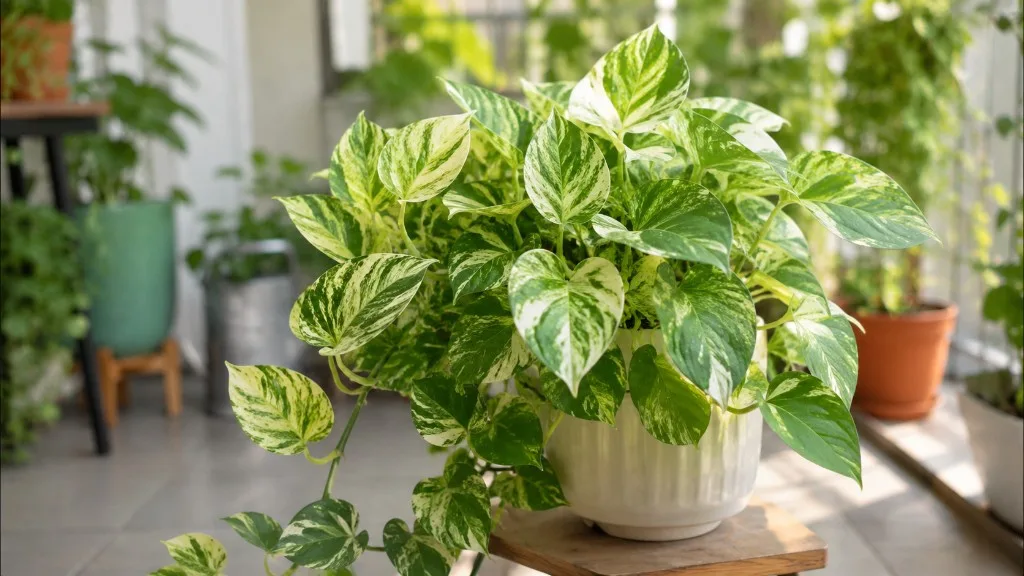
Manjula Pothos soil is where most variegated pothos problems actually start - not on the watering calendar, not in the fertilizer bottle, and not because the plant is “dramatic.” Manjula Pothos (Epipremnum aureum ‘Manjula’) is a slow-growing, heavily variegated aroid with broad wavy leaves splashed in cream, white, and green. Those pale sectors contain less chlorophyll than solid-green pothos leaves, which means the plant generally uses water more slowly and tolerates wet mix longer before leaves tell you something is wrong. That forgiveness is dangerous. A Manjula in heavy peat sitting in a dim corner can look merely “quiet” for months while roots lose oxygen, variegation fades on new leaves, and a sour smell builds in the pot long before half the vine yellows.
The practical target for most homes is a chunky, well-draining aroid mix: roughly 2 parts indoor potting mix, 1 part perlite, and 1 part orchid bark by volume, in a pot with drainage holes, targeting pH 6.0–6.5. If your Manjula lives in a humid, low-light spot - the classic north-facing shelf where collectors display variegated foliage - lean drainage-heavier with 35–40% perlite and generous bark. If it hangs in a bright, dry east window, the default 2:1:1 blend usually performs well. Pair the mix with moisture checks from our Manjula watering guide rather than a fixed calendar, because this cultivar often dries one to three days slower than Golden Pothos in the same room.
This guide covers why aroid structure matters for Manjula specifically, exact DIY ratios, environmental dials, commercial options, pH and mineral buildup, pot and cachepot traps, soil-failure diagnostics, repot timing, propagation substrates, and the mistakes that fade variegation while roots suffocate in mix that never dries.
Author: sai-ananth · Reviewed by: LeafyPixels Review Board · Updated: 2026-06-15
Methodology: recommendations here are checked against extension references, cultivar biology, and LeafyPixels Manjula Pothos overview care data before publication.
Quick Answer: The Manjula Pothos Soil Recipe
The best soil for Manjula Pothos in a typical indoor home is a DIY aroid blend you can mix in a bucket in five minutes:
- 2 parts indoor potting mix - organic base and fine-root anchoring
- 1 part perlite - drainage and resistance to compaction
- 1 part orchid bark (medium grade) - chunky air pockets mimicking forest debris
That 2:1:1 ratio (by volume, not weight) produces mix that dries evenly from the top down - the pattern pothos prefers when you water on moisture checks. If you only change one thing about store-bought soil, add at least 25–30% perlite; even that single amendment shortens wet dwell time noticeably. Use a pot with drainage holes, target pH 6.0–6.5, and refresh the mix every 12–24 months before peat collapses into anaerobic mud.
Default, Humid Low-Light, and Dry Bright-Room Dials
| Situation | Suggested volume blend | Why Manjula cares |
|---|---|---|
| Default (moderate light, 30–50% humidity) | 2 parts mix : 1 perlite : 1 bark | Balanced drainage for typical 7–14 day dry-down |
| Humid low-light (north shelf, bathroom, dim office) | 1.5 parts mix : 1 perlite : 1 bark (or 30% mix / 35% perlite / 35% bark) | Slower transpiration + less evaporation = longer wet time; chunkier mix compensates |
| Dry bright room (east/west window, AC heat, <35% humidity) | 2 parts mix : 1 perlite : ¾ part bark | Slightly more retention prevents daily wilt without going dense |
These dials are starting points. Your finger, a chopstick probe, and pot weight tell you whether to add perlite or bark at the next repot - not a blog chart from a different climate.
Why Aroid Soil Structure Matters for Manjula Pothos
Manjula Pothos belongs to Araceae, the aroid family shared with philodendrons and monsteras. In forest habitats - including the Society Islands where Epipremnum aureum is documented - the species climbs trees and sends roots into loose leaf litter, bark debris, and open organic material rather than dense ground soil. Those roots are semi-epiphytic: they breathe between rain events and rarely sit in stagnant water for days. Indoors, the closest analogue is not “more peat” but more structure - visible perlite flecks, bark chips, and stable macropores that keep the root zone from going anaerobic.
Missouri Botanical Garden describes pothos as suited to a peaty, well-draining potting mix. That pairing matters: peaty for moisture retention and slight acidity, well-draining as the non-negotiable half. Straight bagged potting soil - especially formulas heavy on fine peat and wetting agents - often fails the drainage test on its own. Water enters easily, exits slowly, and the bottom of the pot stays wet while the surface looks dry. Pothos roots tolerate that longer than many houseplants, but chronic wetness still reduces root function and produces yellow leaves growers blame on mysterious overwatering when the real issue is substrate physics.
Semi-Epiphytic Roots and Indoor Containers
Container culture removes the forest’s natural drainage gradient. Every watering fills pores from the top; gravity pulls water down; a perched water table forms at the bottom unless mix particle size and hole count let excess exit quickly. Manjula’s slower growth means it explores and refreshes its root zone less aggressively than Golden Pothos, so compacted mix persists longer without obvious top growth signals. A mix that worked at repotting can become a wet brick eighteen months later even if your watering rhythm did not change. Good Manjula soil is therefore not only a recipe but a system you refresh before structure collapses - especially in plastic pots in dim rooms where nothing dries quickly.
The mix should feel loose in your hand, not like wet clay. When you squeeze a moist handful, it should hold together briefly then crumble. You should see white perlite and bark chips distributed evenly. When you water thoroughly, excess should exit drainage holes within minutes, not pool on the surface for an hour.
Manjula Cultivar Context: Variegation, Slower Growth, and Wet-Root Risk
Manjula is not generic pothos with a different paint job. It is a patented cultivar (PP27,117, breeder denomination HANSOTI14) discovered in India, with broad wavy leaves and painterly cream-and-white variegation. Clemson HGIC lists Manjula as a slower-growing cultivar with broad upright leaves and a bushy habit compared with faster vining forms. Indoors, expect trailing stems up to roughly 2 meters over time in good light - far short of the 40 feet NC State documents for favorable outdoor growth, but enough that pot size and mix structure matter for years, not weeks.
High variegation changes the soil conversation in two ways. First, white and cream leaf sectors contain less chlorophyll, so the plant generally transpires more slowly than solid-green pothos in the same window. The same pot may hold moisture one to three days longer than a Golden Pothos beside it - which looks like “forgiving” behavior until roots sit wet long enough for rot. Second, Manjula is often placed in lower light because collectors want to display variegated foliage without bleaching pale sections. Wisconsin Horticulture notes that low light results in loss of variegation as the plant produces greener leaves with more chlorophyll. Pair dim placement with soggy mix and you get a double failure: roots starved for oxygen while new growth reverts toward green - a problem that looks like a light or fertilizer issue but starts in the pot.
Manjula vs Golden and Marble Queen Soil Needs
All pothos cultivars share the same genus-level requirement: airy, well-draining mix with a dry-down cycle between waterings. Clemson HGIC states pothos should be potted in an airy, well-draining soil mix and allowed to dry between waterings. The cultivar difference is how long mix stays wet relative to how fast the plant uses water, not a different species chemistry.
Golden Pothos grows faster, transpires more actively in typical light, and often dries pots quicker - unamended mix fails it too, but failure shows up sooner. Marble Queen and Manjula sit in the high-variegation group: slower pace, more risk in low light with dense mix. Manjula’s tighter internodes and broader leaves also mean a given pot holds more foliage mass per root volume in display arrangements, which can skew how fast mix dries compared with a sparse Golden vine in the same container. Practical rule: if Golden Pothos in your home thrives in a 2:1:1 blend, Manjula in a dimmer spot in the same home usually needs more perlite and bark, not the same recipe copied without adjustment. For full aroid mix physics shared across the species, see our Golden Pothos soil guide - then apply the Manjula dials above.
The Best DIY Manjula Pothos Soil Recipe
The best soil for Manjula Pothos in most indoor setups is a DIY aroid blend built from three common ingredients. You do not need exotic products - indoor potting mix, horticultural perlite, and orchid bark cover the majority of homes.
Core recipe (default dial):
- 2 parts indoor potting mix - nutrient base; avoid “outdoor,” “garden,” or “moisture control” formulas
- 1 part perlite - expanded volcanic glass; highest-impact drainage amendment
- 1 part orchid bark (medium) - chunky macropores; mimics epiphytic debris
Mix dry ingredients thoroughly in a bucket before potting. Uneven distribution - bark on top, peat at the bottom - creates zones that dry at different speeds and makes watering decisions harder. Some growers express a similar blend as 50% potting mix, 30% perlite, 20% orchid bark; both land in the same functional range.
Optional additions in small amounts:
- 5–10% worm castings - mild slow nutrition at repot; skip if you fertilize regularly on our Manjula fertilizer page
- 10% coco coir - gentle moisture buffer in very dry homes; replace part of the peat-heavy base, do not stack on retentive mix
- Small handful of horticultural charcoal per gallon - odor control in humid rooms; not required
Never use garden soil, topsoil, or outdoor bed soil indoors. Never pot in pure peat moss or pure coco coir without large fractions of perlite and bark - both hold water beautifully and drain poorly without structural amendments.
Base Ratios That Work in Most Homes
For a standard apartment with moderate humidity (30–50%), moderate indirect light, and indoor temperatures around 18–29°C (65–85°F), the 2:1:1 blend above is the default. It supports the common rhythm - water when the top 4–5 cm dries, often every 7–14 days depending on light - without staying wet at the bottom while the surface looks ready. Clemson HGIC recommends watering pothos when the top 1.5 to 2 inches of soil have dried out; your mix must drain fast enough that “dry at depth” means the center is approaching readiness, not still saturated while the top crust feels dry.
If Manjula sits in bright, warm conditions and dries quickly, shift slightly toward retention: 2 parts mix, 1 part perlite, ¾ part bark, or add a small coco coir fraction. If it lives in a dim corner where pots stay wet two weeks, lean drainage-heavy: 1.5 parts mix, 1 part perlite, 1 part bark with perlite up to 40% of total volume.
Optional Ingredients and What They Do
Perlite increases pore space and resists compaction better than fine peat alone. Use horticultural grade, mixed throughout - not as a top dressing. Pumice substitutes at similar volume if you prefer heavier particles that do not float when you water aggressively.
Orchid bark - usually fir or pine - adds large chunks that break down over 12–24 months, one reason to refresh mix periodically even when the plant is not root-bound. Fine orchid mix alone behaves too much like bark-flavored peat; combine with perlite. Coarse bark suits larger pots and very drainage-forward blends.
Coco coir holds moisture with a more open structure than fine peat and rewets more easily after drying. Useful in dry homes; risky as a large fraction in humid, low-light Manjula setups unless perlite and bark fractions rise accordingly. Hydrate and fluff coir bricks fully before measuring ratios.
Adjusting Your Mix for Your Home Environment
The same Manjula pothos soil mix performs differently in a humid bathroom than in an air-conditioned office. Environmental drying rate - driven by light, temperature, humidity, and airflow - should dictate amendments more than social-media recipes.
Light is the hidden variable. A Manjula on a north-facing shelf and the same cultivar 2 meters from an east window may share a watering phrase (“when top 4–5 cm dries”) but experience wildly different intervals. Low light slows transpiration and extends wet time; the mix should be chunkier to compensate. High light pulls water faster; overly gritty mix causes constant wilt unless you want to water every few days. Placement guidance lives on our Manjula light page - soil and light are one system for variegated cultivars.
Pot material matters too. Unglazed terra-cotta pulls moisture through walls and dries edges faster than glazed ceramic or plastic. A terra-cotta user can run slightly more retentive mix; a plastic hanging basket in low light needs more drainage in the blend itself because the pot will not help.
Humid Low-Light Rooms vs Dry Bright Windows
Humid low-light setups - bathrooms with showers, tropical climates, homes above 55% humidity, north-facing display shelves - slow evaporation. The default 2:1:1 mix may stay wet at the bottom for ten days while the surface looks ready. Increase perlite to 35–40% and bark to 25–30%, dropping base mix toward 25–35%. Watch for sour smell, fungus gnats, and soft yellow leaves with wet stems; all point to mix staying saturated too long. This is the most common Manjula failure mode: beautiful variegated plant in a spot chosen for display, not drying rate, sitting in nursery peat that never aerates.
Dry bright rooms - humidity below 35%, heavy heating or AC, desert climates - lose moisture quickly. Symptoms of an overly drainage-heavy blend include frequent wilt, crispy tips on older leaves, and pots that feel feather-light two days after watering. Adjust by keeping perlite at 25–30% while increasing the potting mix fraction toward 50% of total volume and reducing bark to 10–15%.
Pot Material and Seasonal Shifts
Seasonal shifts count even indoors. Winter dimming and cooler rooms extend dry-down time; many growers need more drainage in winter, not less, because Manjula drinks slower while mix still holds the same water. Resume default mix fractions in spring when new growth accelerates. Penn State Extension lists pothos among adaptable houseplants that prefer warm indoor conditions; in homes kept cooler than 18°C (65°F), soil stays wet longer and mix choice matters more.
| Pot type | Effect on dry-down | Manjula soil note |
|---|---|---|
| Unglazed terra-cotta | Faster edge drying | Can use slightly retentive 2:1:1 default |
| Plastic nursery/hanging | Slower drying | Favor chunkier mix, especially in low light |
| Glazed ceramic | Moderate; no wall breath | Match mix to light, not pot aesthetics alone |
| Cachepot (outer only) | Traps runoff if not emptied | Inner pot must drain; never standing water |
Commercial Aroid Mixes vs DIY Amendments
Commercial aroid, jungle, or houseplant chunky mixes - pre-blended bags labeled for philodendron, monstera, or generic aroids - are legitimate if the ingredient list leads with coco coir or peat, perlite, and bark. They save time and usually drain better than unamended indoor potting soil. Quality varies: some “aroid” mixes are still too fine for a dim-room Manjula, while others skew so chunky that dry-home growers fight constant wilt.
Standard indoor potting mix amended at home beats most specialty products applied without inspection. Read the bag: if you see forest products, perlite, and peat in the first lines, amending with 30% perlite and 15% bark often suffices for Manjula. If the mix already contains slow-release fertilizer, note the start date and avoid double-fertilizing at repot.
Can you use regular potting soil for Manjula Pothos? Yes - as a base, not straight from the bag. Amend with at least 25–30% perlite and 15–20% orchid bark so it drains fast enough indoors. Unamended mix often stays wet too long, especially in low light, and leads to root problems even when watering seems conservative.
Cactus or succulent mix alone is usually too lean unless blended 50/50 with indoor potting mix and still amended with bark for structure. Straight cactus mix in low light dries unevenly and offers little anchoring for trailing vines.
Moisture-control potting mixes with water-absorbing crystals are a poor fit. Manjula does not need extended water storage; crystals keep the root zone wet longer precisely when growers assume they are helping busy schedules. Check moisture manually instead - the same principle as our watering guide emphasizes.
Soil pH and Mineral Buildup for Manjula Pothos
Manjula Pothos prefers slightly acidic soil, with an ideal range of pH 6.0–6.5 and a tolerable window of roughly 5.5–7.0. The RHS epipremnum growing guide describes slightly acidic compost as suitable for epipremnums. In that band, nutrients remain available to roots. Most quality indoor potting mixes already buffer near 6.0 thanks to peat acidity balanced with limestone.
Obsessive pH tuning is rarely necessary for hobbyists. If Manjula grows steadily, new leaves unfurl with stable cream-and-green variegation, and you repot on a 1–2 year cycle into fresh mix, pH usually takes care of itself. Consider testing when new growth is pale despite good light and conservative watering, young leaves show interveinal yellowing, or reuse very old, heavily leached mix without refresh.
Hard tap water with high alkalinity can nudge pH upward over time through repeated watering. If white crust forms on soil and new growth washes out, flush with plain water periodically and refresh mix at repot rather than chasing chemistry weekly. If leaf tips burn or crust persists, repotting into fresh peat-based mix often corrects faster than additives on a stressed plant.
Pots, Drainage Holes, and Cachepot Traps
Even perfect Manjula pothos soil fails in a pot that traps water. Drainage holes are non-negotiable for long-term indoor culture. Clemson HGIC links root rot to overwatering or poorly draining soil; a hole lets excess exit so roots are not marinating in runoff. One centered hole suffices on small pots; larger containers benefit from multiple holes. After watering, excess must exit within minutes.
Pot size interacts directly with soil performance. Manjula tolerates slightly root-bound conditions better than swimming in an oversized container. Choose a pot 2–5 cm wider than the root ball at repot - one size up, not three. Oversized pots hold excess wet mix around roots that cannot use it, especially in low light where Manjula already dries slowly.
Cachepots - decorative outer pots without holes - are fine only if the inner nursery pot drains freely and you empty standing water after every watering. Never let the bottom sit in a permanent puddle; that converts well-draining mix into bog soil within days.
Why Gravel Layers Do Not Fix Bad Mix
The gravel layer myth persists: a stratum of stones at the bottom does not create better drainage and can raise the perched water table, keeping roots closer to saturated zone. Clemson HGIC notes that using a well-draining soil mix and proper watering prevents root rot - the fix is uniform chunky mix from bottom to top, not stones under dense peat. Fill the pot with the same aroid blend throughout.
Signs Your Manjula Pothos Soil Is Failing
Soil problems announce themselves before every leaf yellows if you check the root zone, not only the foliage. Manjula’s slower growth can mask failure longer than Golden Pothos, so run these diagnostics deliberately.
Chronic yellow leaves on multiple stems while you water on a reasonable schedule often mean roots sit wet too long. Check the bottom drainage hole with a finger - if mix there is wet while the top is merely “kind of dry,” your blend or pot size is wrong, not your calendar alone.
Sour, swampy, or musty smell from the pot signals anaerobic breakdown. Healthy mix smells earthy. Sour odor means repot and trim mushy roots, not another week of “letting it dry out” while pathogens spread. Wisconsin Horticulture connects overwatering with roots losing oxygen - smell often precedes visible collapse.
Fungus gnats in large numbers point to surface moisture persisting for days. They breed in wet organic matter; fixing drainage and drying the top 2–3 cm between waterings breaks the cycle faster than traps alone.
Water runs down the sides and out the bottom without wetting the core - hydrophobic or shrunken mix pulled away from pot walls. Submerge the pot briefly to rewet, then plan refresh at repot; chronic channeling means structure collapse.
New variegation fading toward green in a dim spot with damp soil often reflects a soil–light interaction: the plant pushes chlorophyll while roots struggle in stale mix. Moving to brighter light helps, but chunkier fresh mix is usually required too - not more fertilizer.
Slow or stunted new growth in adequate light with regular feeding may mean compacted mix - roots cannot penetrate, oxygen is low, and water moves unpredictably. Gently slip the plant out: white healthy roots should fill the pot; brown mush, sparse roots, or a solid wet mass confirm soil failure. See our root-rot problem guidance if mushy roots are advanced.
| Symptom | Likely soil cause | First fix |
|---|---|---|
| Lower yellow leaves, wet stem bases | Mix too dense / pot too large | Repot chunkier; one size up max |
| Sour smell | Anaerobic breakdown | Repot, trim rot, fresh 2:1:1 |
| Gnats, mold on surface | Chronic surface wetness | More perlite; dry top 2–3 cm |
| Green reversion in low light + wet pot | Light + drainage failure | Brighter spot or chunkier mix |
| Crispy wilt every 2–3 days | Mix too gritty for conditions | Slightly more potting mix fraction |
When to Refresh or Repot Manjula Pothos
Manjula Pothos does not demand annual repotting, but mix refresh every 12–24 months - or when symptoms appear - prevents slow decline. Repot when roots circle heavily at drainage holes, growth slows despite good light, mix has compacted and drains slowly, water channels down pot sides, or odor and gnats persist after watering adjustments.
Because Manjula is a slower-growing cultivar, mix can break down on a longer calendar than fast Golden Pothos while still looking “fine” above soil - do not wait for half the vine to yellow. A useful trigger: if dry-down time lengthened by several days compared with six months ago in the same spot, peat has likely compacted even if roots are not yet circling.
Avoid repotting brand-new nursery plants the day you bring them home unless mix is clearly failing or pests are visible. Quarantine, learn the drying rhythm for two to three weeks, then repot if needed. Also avoid repotting actively wilting or pest-stressed plants until stabilized - except when rotten roots require emergency surgery.
Best timing is active growth season - spring through early fall - when roots regenerate quickly. For step-by-step workflow, pot choice, and recovery expectations, use our dedicated Manjula repotting guide.
A Real-World Repot Vignette
Picture a 15 cm (6-inch) plastic hanging basket of Manjula in a north-facing office - chosen for soft light on variegated leaves. Unamended nursery peat stayed wet 14 days between waterings even when the surface felt dry. Lower leaves yellowed; white sectors on new growth narrowed toward green. Repotted into 2 parts mix, 1 perlite, 1 bark with extra perlite for the low-light dial, same pot size with confirmed drainage holes. Dry-down improved to about 8 days; lower yellowing stopped; new leaves held broader cream patches once light was modestly improved. The soil change did not replace light needs, but soggy mix had been hiding how dim the spot actually was.
Soil for Manjula Pothos Propagation Cuttings
Propagation mix should drain slightly faster than established plant mix because small pots and few roots stay wet longer. A workable Manjula propagation blend:
- 1 part indoor potting mix
- 1 part perlite
- 1 part orchid bark (fine to medium)
Stem cuttings with nodes root well in this blend, in water, or in sphagnum-perlite mixes - all valid if you manage moisture. Soil propagations fail when growers use dense peat alone in 5 cm pots and keep them saturated “to help rooting.” Roots need oxygen and stable moisture, not swamp conditions. Full workflow - nodes, patent note for commercial sale, transition timing - is on our Manjula propagation guide.
Keep propagations in bright indirect light, water when the top centimeter dries, and transition rooted cuttings to standard 2:1:1 mix once roots are 5–8 cm and hold soil when you tug gently.
Common Manjula Pothos Soil Mistakes to Avoid
These failures show up repeatedly with variegated pothos in dim rooms:
- Using unamended bagged potting soil in low light - the fastest path to chronic wet roots on Manjula
- Copying Golden Pothos dry-down timing without checking depth - Manjula often holds moisture longer
- Oversized pots “so it can grow” - excess wet mix, not faster growth
- Gravel drainage layers - do not work; uniform chunky mix does
- Garden soil indoors - compaction, pests, unpredictable drainage
- Repotting on arrival or while stressed - compounds shock unless roots are rotting
- Cachepots holding standing water - negates well-draining mix instantly
- Water-retaining crystals - extend wet time when Manjula wants partial dry-down
- Ignoring breakdown because growth is slow - waiting until variegation collapses
- Treating green reversion as fertilizer deficiency when mix is soggy in low light
- Matching summer watering habits to winter soil without adjusting for slower drying in cool months
Manjula survives many mistakes temporarily because it is forgiving - which is exactly why soil problems hide until they are advanced.
Pet safety note: Manjula Pothos is a cultivar of Epipremnum aureum, and the ASPCA lists Golden Pothos as toxic to cats and dogs due to calcium oxalate crystals. Soil and fertilizer are not pet-safe either; keep pots out of reach of animals that dig in mix.
Practical Checks: Drainage Test and Smell Test
Two quick checks catch failing mix before leaves tell the full story.
One-minute drainage check: After a full watering, Manjula should drain freely. If water sits on top, runs down the sides without wetting the core, or remains trapped in a cachepot, the soil system needs correction - more perlite and bark, better hole clearance, or saucer emptying. Lift the inner pot from a cachepot and confirm no standing water.
Root-zone smell test: Fresh mix smells earthy. Sour, swampy, or stagnant soil around Manjula means roots may be losing oxygen from overwatering or poor structure even before widespread yellowing. If smell fails, slide the plant out, inspect roots, and repot into fresh aroid blend rather than adding another half-cup of water because leaves drooped.
Squeeze test on moist mix: A handful should clump lightly then fall apart. A tight mud ball that smears like clay means repot time - structure has collapsed regardless of what the vine looks like above soil.
Related Manjula Pothos Care Guides
Soil is one layer of a connected system. Use these sibling pages next:
- Manjula Pothos overview - species context, variegation, toxicity, full care map
- Manjula watering - depth checks, dry-down rhythm, variegation and moisture
- Manjula light - brightness for variegation; pairs with chunkier mix in dim spots
- Manjula repotting - step-by-step repot workflow and recovery
- Manjula propagation - rooting cuttings and patent context for home growers
- Golden Pothos soil - full aroid mix physics for the same species base
Conclusion
The best soil for Manjula Pothos is a well-draining aroid mix - typically 2 parts indoor potting mix, 1 part perlite, and 1 part orchid bark - adjusted chunkier for humid low-light display spots and slightly richer for dry bright windows, in a pot with drainage holes, refreshed before peat collapses into anaerobic mud. Target pH 6.0–6.5, check the root zone with drainage and smell tests, and repot when dry-down slows or mix sours - not when half the vine has already yellowed. Manjula’s slower growth and heavy variegation mean soil failure whispers before it screams; listen at the pot, not only at the leaves.
Soil is the system that decides how much air, moisture, and recovery time roots get after every watering. When new leaves unfurl with stable cream-and-green patterning and the pot dries on a predictable top-down rhythm, your mix is doing its job. When smell, gnats, chronic yellow leaves, green reversion in dim light, or water that never moves through the pot appear, fix the substrate before chasing fertilizer or moving the plant room to room. Get the Manjula pothos soil mix right once, refresh it on schedule, and this slow, sculptural cultivar becomes far easier to keep - not harder than Golden Pothos, but less forgiving of dense peat in the corners where collectors actually display it.