Leggy Growth on Manjula Pothos: Causes, Checks & Fixes
Quick answer
Leggy Manjula Pothos vines with long bare gaps between leaves mean etiolation from insufficient light. Move to bright indirect light, wait one week, then cut bare stems above a node. Stretched cane does not compact on its own-only new growth tightens after light improves.
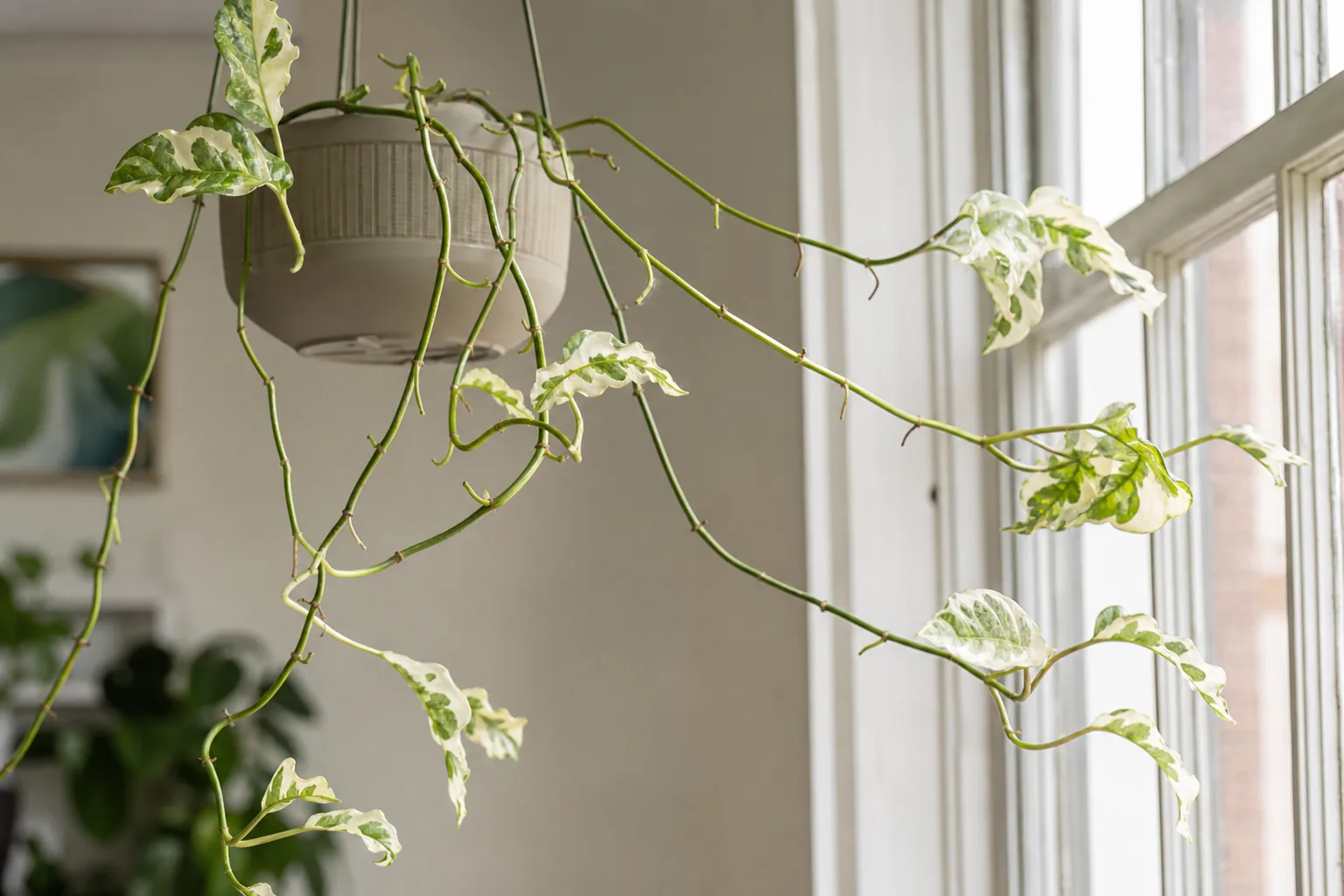
Leggy Growth on Manjula Pothos: Causes, Checks & Fixes
This guide covers leggy growth on Manjula Pothos. See also the general Leggy Growth guide, watering, and light pages for this plant.
Leggy Growth on Manjula Pothos: Causes, Checks & Fixes
Quick answer
Leggy growth on Manjula Pothos (Epipremnum aureum ‘Manjula’) is etiolation-indoor plants become spindly or leggy as they stretch for more light when photons are too weak for heavily variegated leaves. You will see long bare gaps between leaves, smaller new foliage with fading white swirls, and vines leaning hard toward the brightest window.
First step: move the pot to bright indirect light within about 1–3 feet of an east window or a south window filtered by sheer curtain. Manjula needs more usable light than solid-green pothos because lower light may cause variegated varieties to lose coloring. Do not prune, fertilize, or repot on day one-give the plant one week in the brighter spot so you can see how fast the mix dries and whether new leaves start showing better variegation.
This page is the leggy-growth and pruning-recovery guide. If you are catching dim placement early-before long bare stems dominate-see not enough light on Manjula Pothos for placement diagnostics. For proactive window placement year-round, use the Manjula light guide.
What leggy growth looks like on Manjula Pothos
Healthy Manjula vines hold relatively short internodes and broad, wavy leaves marbled in white, cream, silver-green, and green. Etiolated plants read differently:
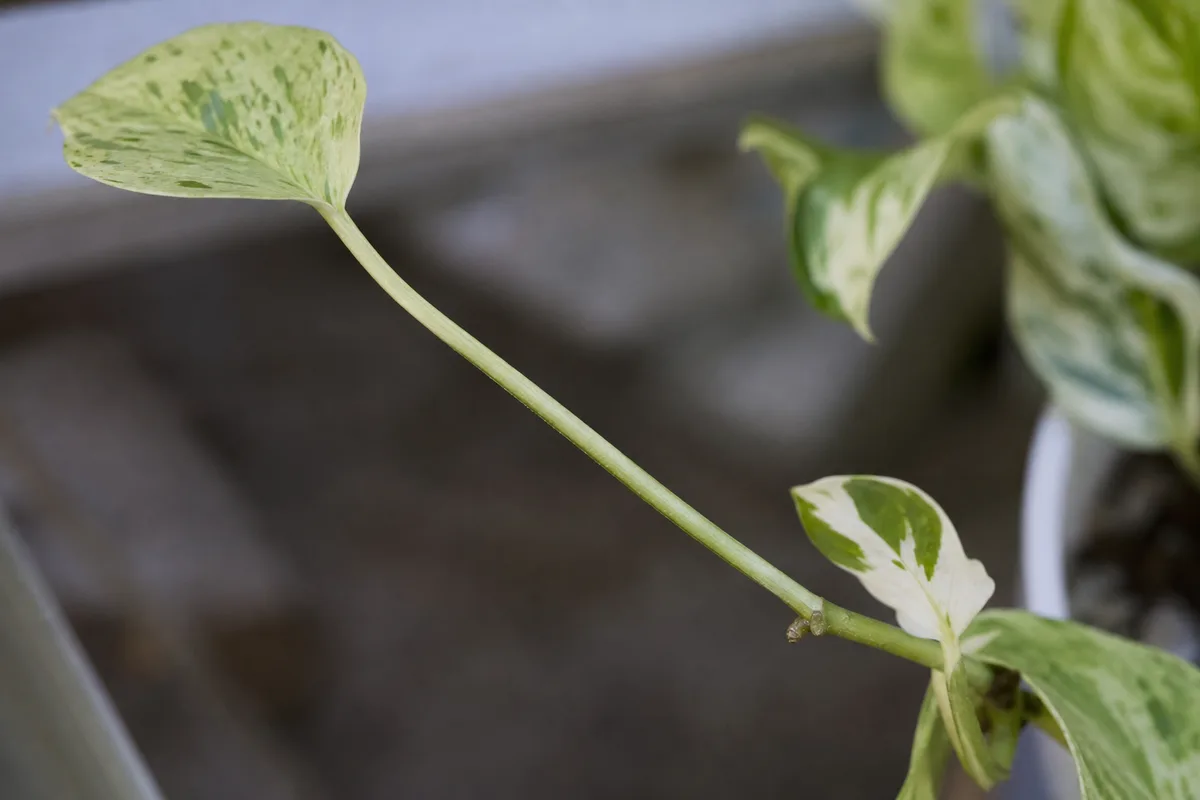
Leggy Growth symptoms on Manjula Pothos - compare with healthy tissue on the same plant.
Stretch and bare stems
- Long gaps between leaves along the vine-internodes that used to be tight now look like bare wire with foliage only at the tips
- Vines reaching or leaning toward a window, lamp, or doorway-pothos leaves grow toward the light
- Thin, weak stems compared with the bushy look Manjula usually keeps when well lit
Variegation fade on new growth
- New leaves opening smaller, with reduced white and cream patches
- Older leaves may look duller; white areas on leaves already formed will not fully regain pattern
- Slow unfurling-new leaves can take weeks to open in dim light
Normal trailing vs. leggy
A long trailing vine with closely spaced healthy leaves is normal Manjula behavior. Legginess is the pattern of long empty internode gaps with undersized pale foliage at the ends. If you are unsure, measure the gap between the last three leaves on the longest vine-stretch is definitive when that spacing keeps widening on new growth.
Why Manjula Pothos gets leggy
Manjula belongs to the same species as Golden and Marble Queen pothos, but its leaf is more white than green. White and cream sectors photosynthesize poorly; the plant compensates by needing brighter indirect light than Jade or Neon cultivars tolerate. In dim corners it can survive in low light-but it will etiolate, revert toward green on new leaves, and use water so slowly that wet soil becomes a second problem.
Common triggers in real homes:
The “bright room, dark plant” trap. A living room with large windows can still deliver low light at the pot if it sits more than 6–8 feet from glass, behind furniture, or on a wall opposite the window-light intensity decreases rapidly with distance from the source.
High shelves and bookcases. Upper foliage may get acceptable light while lower nodes on the same vine sit in shade-explaining green reversion on new tips while older leaves still show variegation.
Seasonal daylight loss. Winter short days reduce intensity even when the pot never moved.
Assuming all pothos are equal. Solid-green pothos can look acceptable farther from a window. Manjula behaves more like Marble Queen or Pearls and Jade-cultivars that require lots of light to maintain intense coloring.
Because Manjula is a slower-growing, bushier cultivar than Golden pothos, weak light can stall it for months before you notice. The variegation pattern on new leaves is the early warning, not sudden leaf drop.
Over-fertilizing in dim light does not fix stretch; it only feeds weak tissue. Leggy vines in wet soil also raise rot risk because the plant uses little water while mix stays damp-a pattern covered in the watering guide and overwatering pages.
How to confirm the cause
Work through these checks before you change watering, repot, or spray for pests:
- Hand-shadow test at the leaf. Stand where the pot sits at midday. Hold your hand between the window and the foliage. A sharp, dark shadow suggests usable indirect light; a faint or absent shadow in a room that feels bright means the spot is probably too dim for this cultivar.
- New growth color and spacing. Compare the last three leaves on the longest vine. Mostly green new foliage with widening internodes strongly suggests etiolation-not a disease.
- Direction of growth. Vines leaning or growing only toward one window confirm the plant is seeking more energy.
- Soil dry-down speed. Stick a finger 3–5 cm into the mix. If it stays cool and damp for two weeks with no recent watering, low light may be slowing uptake. Pair vine stretch with damp soil before blaming overwatering alone.
- Rule out direct sun stress. Pale patches turning papery brown on the window-facing side mean too much sun, not too little. Move back from glass rather than forward.
- Pest and rot check. Inspect nodes and soil surface. Soft brown stems with sour-smelling mix indicate root trouble that low light may have enabled-confirm mushy roots before treating rot instead of light.
If light is weak and the mix is soggy, fix placement first. Brighter light increases water use and makes your normal watering rhythm safer.
The first fix to try
Move the entire pot to bright indirect light and leave everything else alone for one week.
Choose a spot within roughly 1–3 feet of an east-facing window, or a south- or west-facing window with sheer curtain or filtered light. Place pothos in moderate to bright light and avoid direct sun-unfiltered midday rays scorch Manjula’s pale sectors quickly.
Do not repot, fertilize, or cut back all leggy growth on day one. The plant needs time to adjust photosynthesis and drying rate in the new spot. After seven days, if the top 3–5 cm of mix dries on a normal schedule, your watering was likely excessive for the old dim location-allow the soil to dry between waterings when that depth feels dry.
No suitable window? Add a full-spectrum LED grow light 30–45 cm above the foliage for 12–14 hours daily. Raise the lamp if leaves show heat stress. See the light guide for placement bands and grow-light duration.
Step-by-step shaping and propagation
Once the plant has sat in better light for one to two weeks:
- Identify bare stems with no leaves for 15 cm or more along the vine.
- Cut 1–2 cm above a node with clean shears; leave at least two leaves on the parent stem if possible. Trim vining stems just above a node to encourage bushier side shoots once light supports new growth.
- Propagate healthy tip sections in water or moss-do not discard variegated cuttings. Follow the propagation guide for node spacing and rooting patience; Manjula roots more slowly than Golden pothos.
- Rotate the pot weekly-turn the container weekly so all sides receive similar exposure and the lean corrects slowly.
- Hold fertilizer until two to three weeks of improved new leaves appear. Feed monthly at half strength only after growth looks stable.
For detailed pruning angles and when to remove fully reverted green-only vines, see the pruning guide.
Critical permanence note: Stretched internode sections do not shrink back after you improve light. Only new growth emerges with tighter spacing. Bare cane between old leaf scars stays bare unless you prune and wait for side shoots below the cut.
Recovery timeline
Manjula is a moderate, variegation-limited grower. Expect:
| Phase | What to expect |
|---|---|
| Week 1 | Vines may still lean; mix should start drying faster. No visible change on old leaves or bare stem sections. |
| Weeks 2–4 | First new leaf after the move shows the real response-more white and cream if light is enough; still mostly green if the spot remains too dim. Side shoots may begin below pruning cuts. |
| Weeks 4–8 | Several new leaves with improved pattern; pruning cuts begin branching. Leggy sections look less bare as side shoots fill in. |
| 2–3 months | Plant looks noticeably bushier if light stays consistent. Fully reverted old leaves remain green unless you removed them. |
If new leaves stay solid green after four weeks in what you believe is bright indirect light, the spot is still too dim-move closer to the window or add a grow light rather than increasing fertilizer.
Lookalike symptoms
| What you see | Likely cause | What to check |
|---|---|---|
| Long bare internodes, small pale leaves, lean toward window | Low light (etiolation) | Hand-shadow test; distance from glass |
| Yellow leaves, wet heavy pot, soft stems | Overwatering-often worsened by dim light | Soil moisture at depth; see overwatering |
| Limp leaves, soil pulled from pot edge | Underwatering | Dry mix throughout; no strong lean toward light |
| Crisp brown patches on pale variegation facing glass | Sun scorch | Direct afternoon sun on foliage |
| Uniform yellowing on old leaves, firm non-stretched stems | Nutrient or root stress | Feeding history; root firmness when unpotting |
| Stippling and webbing on leaf undersides | Spider mites | Often in hot, dry, bright conditions-not classic dim-corner stretch |
Wet soil plus leggy growth usually means both low light and too much water-fix light first, then water less.
Mistakes to avoid
- Pruning the entire plant before improving light. You remove stored energy from leaves that still help the plant while it adjusts.
- Moving Manjula into direct sun to “fix” low light quickly. Pale variegation scorches; increase indirect light gradually.
- Watering on the old schedule after a light upgrade. Faster drying with the same volume invites underwatering stress; slower drying in dim light invited rot.
- Fertilizing heavily to bring back white patches. Variegation is a light response, not a nitrogen fix.
- Expecting old leaves or bare stem sections to re-variegate or fill in. Only new growth reflects corrected light.
- Keeping only the prettiest variegated vine in light while the rest of the pot sits shaded. Revert-prone stems will dominate the pot.
When pruning, keep cuttings away from pets-pothos sap contains insoluble calcium oxalates that irritate mouth tissue. For ingestion concerns, contact the ASPCA Animal Poison Control Center at (888) 426-4435.
How to prevent leggy growth next time
Place Manjula where it receives bright indirect light for most of the day-light levels of 150 foot-candles or more maintain variegation and leaf size-not just where the pot looks decorative on a tall shelf. Rotate the pot every one to two weeks.
In offices, north rooms, or winter months, run a full-spectrum grow light on a timer rather than accepting slow reversion as normal. Match watering to how fast the top 3–5 cm dries in that light level; brighter spots need more frequent checks, not automatically more water volume.
When buying, choose plants with crisp variegation on the newest leaves, not only on older foliage-the seller’s bright bench may hide a plant that was already reverting.
When to worry
Cosmetic legginess without rot is not an emergency-correct placement and patience restore new leaf color over weeks. Escalate when low light overlaps with moisture problems:
- Stems soft at nodes while soil stays wet for many days
- Yellow leaves spreading up multiple vines within a week
- Sour smell from the pot or mushy roots when you unpot to inspect
- Fungus gnats persistent on surface mold in constantly damp mix
Those signs mean insufficient light may have slowed water use enough to threaten roots. Improve light and reduce watering frequency; follow the root rot guide if roots are mushy.
Related Manjula guides
- Manjula Pothos overview
- Light needs
- Watering
- Pruning
- Propagation
- Not enough light - placement diagnostic when stretch is mild
- Overwatering
- Root rot
- Slow growth