Yellow Leaves on Manjula Pothos: Causes, Checks & Fixes
Quick answer
Yellow leaves on Manjula Pothos are a symptom-not a diagnosis. First step: lift the pot and press your finger 3–5 cm into the mix. A heavy wet pot with soft yellow lower leaves points to overwatering; a light dry pot with crisp yellow edges points to drought. One yellow leaf at the oldest node on a long trailing vine is often normal aging on this slow-growing variegated cultivar.
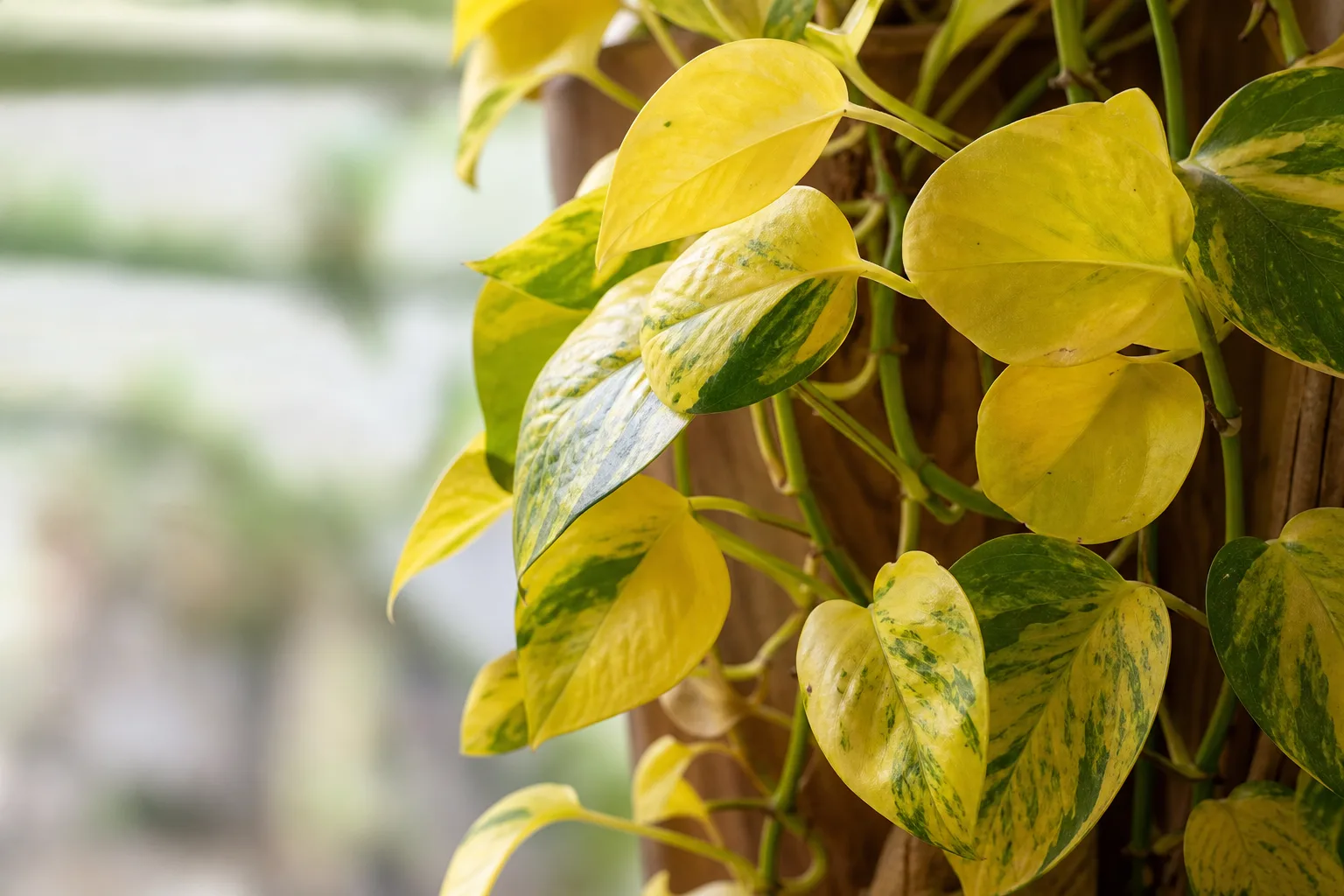
Yellow Leaves on Manjula Pothos: Causes, Checks & Fixes
This guide covers yellow leaves on Manjula Pothos. See also the general Yellow Leaves guide, watering, and light pages for this plant.
Yellow Leaves on Manjula Pothos: Causes, Checks & Fixes
Quick answer
Yellow leaves on Manjula Pothos (Epipremnum aureum ‘Manjula’) tell you something in the root zone, light level, or temperature has shifted-they are not a single disease with one cure. On this slow-growing, heavily variegated cultivar, the pattern matters as much as the color.
Use this page to triage wet soil, drought, light stress, cold drafts, and normal vine aging. Once you confirm the cause, follow the linked deep dives for overwatering, root rot, underwatering, or not enough light rather than stacking fixes here.
First step: lift the pot and check moisture 3–5 cm deep. A heavy, wet pot with soft yellow lower leaves usually means the mix has stayed damp too long-yellow leaves are often caused by overwatering on pothos. A light, dry pot with crisp yellow or brown-edged leaves fits drought stress. Fading cream-and-white variegation on new leaves with long gaps between nodes points to low light before full yellowing spreads. One yellow leaf at the oldest node on an otherwise healthy trailing stem is often normal vine senescence-not an emergency.
What yellow leaves look like on Manjula Pothos
Manjula leaves are wide, heart-shaped, and wavy-edged with swirled cream, white, and green variegation. Yellowing rarely appears without other clues if you know what to compare.
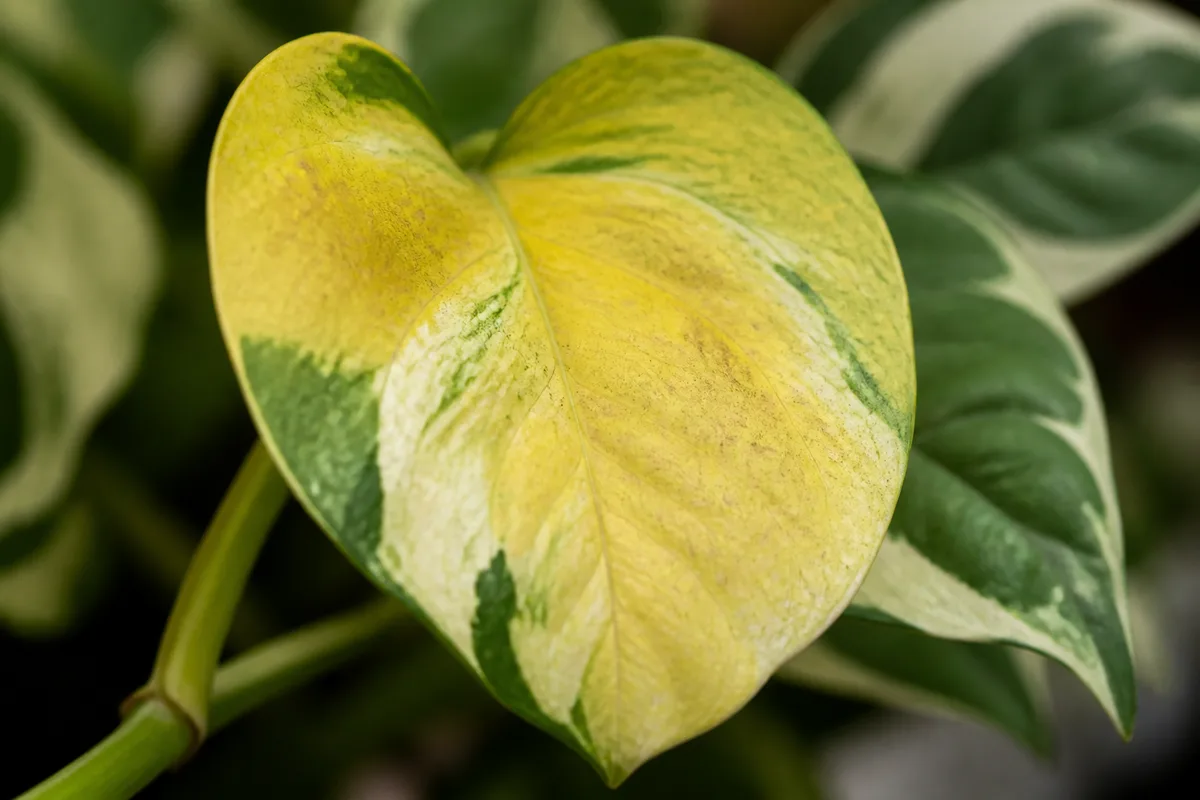
Yellow Leaves symptoms on Manjula Pothos - compare with healthy tissue on the same plant.
Overwatering pattern (most common)
You often see yellowing begin on older lower leaves while the mix remains damp several days after watering. Leaves can look soft rather than crispy. Stems may feel limp on wet soil-a trap because pothos stores water in thick stems and can look thirsty while roots fail. If this continues, roots lose oxygen and rot risk rises because excess water reduces root-zone aeration. Small dark flies hovering when you water, or larvae on constantly damp surface soil, are a secondary signal that the mix is staying too wet-fungus gnats thrive in moist potting media.
Underwatering pattern
Yellowing from drought stress is usually paired with very light pot weight, dry mix, and some edge crisping. Leaves may droop, then improve quickly after a full soak if roots are still healthy.
Low-light + wet-soil compound pattern
Manjula needs more light than greener pothos types to hold its cream-and-white variegation-lower light may cause variegated varieties to lose coloring. In dim corners, new leaves often lose variegation and grow smaller before full yellowing appears. Slower growth also means slower water use, so a schedule that worked in brighter months can become overwatering in a dim corner-even when you water less often.
Normal aging pattern
A single yellow leaf at an older node on an otherwise growing vine is often normal leaf turnover-over time, leaves yellow and fall off, concentrating most leaves at the end of the stems on vining pothos. That is very different from rapid multi-leaf yellowing climbing toward the vine tips.
Cold-draft damage
Sudden yellowing, translucent patches, or drop after a cold night near a window, drafty door, or AC vent. Pothos suffers below about 50°F (10°C) and hot or cold blasts from vents can dry out leaves and damage plant cells.
Post-repot stress
Yellowing within two weeks of repotting-especially if you watered heavily into fresh peat-often traces to moisture shock rather than a new disease. Fresh mix holds water differently; the top may look dry while the center stays saturated on a slow-growing Manjula.
Why this cultivar is prone to yellowing
Manjula is a variegated pothos cultivar (Epipremnum aureum ‘Manjula’) bred for heavy cream-and-white patterning. Clemson HGIC notes Manjula is slower growing than other cultivars, so it typically uses less water between drinks than Golden Pothos. Owners switching from a fast golden pothos watering rhythm often keep Manjula too wet without realizing it.
Pothos is in the Araceae family and is typically managed with drying cycles between waterings rather than constantly wet media. When light is weak, variegation often dulls and water demand drops further, so yellowing can be a light-and-watering issue together, not only one or the other.
Wilt-on-wet-soil paradox: If vines look limp but the pot is heavy and damp, do not add more water. Limp stems on saturated mix often mean failing roots, not thirst-confirm with a moisture check and root smell before the next drink.
How to confirm the cause (before fixing)
Work through these checks before changing fertilizer, pot size, or watering habits:
- Pot-weight test - Lift the container. Heavy days after you last watered suggests slow dry-down or overwatering; very light suggests drought.
- Moisture depth - Press your finger 3–5 cm into the mix near the pot edge-not only the surface. Trailing vines shade the top layer; the center may stay wet while the surface looks dry.
- Which leaves yellow - Lower leaves only on wet soil fits root stress. Upper/new leaves pale with faded variegation fits light. One old leaf at the lowest node on a long vine fits aging.
- New growth quality - All-green weak new leaves point to low light stress in a variegated cultivar before full yellowing spreads.
- Stem firmness and smell - Soft blackening tissue at the soil line on damp mix, or a sour root-zone smell, escalates to unpotting the same day.
- Placement audit - Note distance from windows, AC vents, and drafty doors. Cold below ~50°F (10°C) can yellow leaves within days.
- Fungus gnat check - Flies rising when you water, or larvae on damp surface soil, support an overwatering branch even when leaves still look partly firm.
First fix for Manjula Pothos
Match one primary action to what you confirmed-do not stack repotting, fertilizer, and light moves on the same day.
If soil is wet
Stop watering until the top 3–5 cm dries. Move the plant to bright indirect light so the pot cycles moisture faster. Empty saucers within 30 minutes of any drink. If stems soften or mix smells sour, inspect roots per the root rot guide-do not add more water hoping leaves re-green.
If soil is dry
One thorough soak until a little water runs from drainage holes, then discard saucer water. Resume the Manjula Pothos watering rhythm-water when the top 3–5 cm feels dry, not on a fixed calendar.
If variegation faded and internodes stretched
Move to bright indirect light within 2–4 feet of an east or filtered west window. Do not increase watering in a dim corner-fix light first. Details in the not enough light guide.
If only one old leaf at a proximal node yellows
No emergency fix. Snip the fully yellow leaf at the node if it bothers you. Watch apical growth on the same vine-green new leaves confirm normal senescence.
If cold draft exposure is suspected
Relocate away from the cold source (window sill, vent, door). Avoid fertilizing or repotting until new leaves at the vine tips stay green for two weeks.
If yellowing followed a recent repot
Pause watering until the top of fresh mix dries to your usual depth. Do not resume your old calendar on wet new peat. Give slow-growing Manjula 2–3 weeks before judging whether the yellow leaf was transplant stress or ongoing root failure.
What not to do
- Do not fertilize yellow leaves on wet soil - Salt stress and root damage both yellow foliage; yellow leaves are often linked to overwatering before low fertility on pothos.
- Do not increase watering when leaves look pale in a dim corner - Fix light or dry-down first; dim rooms keep mix wet longer on slow-growing Manjula.
- Do not judge recovery by “center growth” - Manjula is a vine; watch the lead stem’s apical nodes, not a rosette crown.
- Do not repot on day one unless roots are mushy or mix is sour-unnecessary disturbance on a stressed vine delays recovery.
- Do not discard fallen yellow leaves within pet reach - Epipremnum aureum is listed as toxic to cats and dogs if chewed.
Recovery timeline (realistic expectations)
Fully yellow leaves will not re-green-they drop or you remove them. Judge recovery by new leaves at apical nodes along the trailing stems, not by old blade color.
| Severity | What to expect |
|---|---|
| One overwatered drink on firm roots | Stabilization in 1–2 weeks after mix dries |
| Mild wet-soil stress on slow Manjula | 2–3 weeks for new turgid leaves at nodes |
| Light correction after variegation fade | Cream-and-white pattern on fresh leaves in 2–4 weeks |
| Severe root rot after trimming | Several weeks; some vines may not recover |
| Single-node senescence | Immediate once the old leaf drops; no further spread |
Grower recovery note (March 2026): A trailing Manjula in a 15 cm pot showed lower-leaf yellowing on damp mix in a north-facing corner. After moving to bright filtered east light and waiting until the top 3 cm dried before each drink, new leaves at the vine tips showed stronger cream variegation within about three weeks-old yellow blades did not re-green.
Signs you are on track: firm stems at the soil line, faster dry-down matching your light level, and compact new leaves with visible variegation.
Signs the problem is worsening: yellowing climbs toward apical tips, stems mushy on wet soil, or new leaves stay pale and small after four weeks in corrected light and water.
Lookalike checks at a glance
| Pattern | Soil status | Most likely cause | First move | Urgency |
|---|---|---|---|---|
| Older lower leaves yellow, soft texture | Wet/heavy pot | Overwatering or early root rot | Pause watering, improve light, inspect roots if worsening | Same-day root inspect if sour smell |
| Scattered yellow + some crisping | Very dry/light pot | Underwatering cycles | Deep soak, then dry-down rhythm | Routine monitor |
| Slower growth, weaker variegation, gradual yellowing | Damp for long periods in dim placement | Low light plus low water use | Increase indirect light, reduce watering frequency | Act within a week |
| One old leaf yellows, rest stable | Mixed | Normal aging | Remove leaf, monitor only | Routine monitor |
| Sudden yellow/translucent patches after cold night | Unchanged | Cold draft or vent blast | Relocate pot away from cold source | Routine unless stems collapse |
| Yellowing 1–2 weeks after repot | Often wet center, dry surface | Post-repot moisture shock | Dry-down pause; no heavy re-watering | Routine unless stems soften |
How to prevent yellow leaves next time
- Keep the plant in bright indirect light so variegation stays strong and dry-down stays predictable-see Manjula Pothos light.
- Water only after the top 3–5 cm has dried-full workflow in the watering guide. Remember Manjula dries down slower than Golden Pothos because of slower growth.
- Use a free-draining aroid mix and a pot with working drainage holes; empty saucers after every drink.
- Keep trailing vines away from cold windows and AC blasts in winter; avoid sustained exposure below ~50°F (10°C).
- Recalibrate when seasons or room light change; winter schedules are usually slower.
- Watch for fungus gnats as an early wet-soil signal-let the top 1–2 inches of soil dry between drinks before reaching for sprays.
For complete care calibration, cross-check with the Manjula Pothos overview.
When to worry
Inspect roots the same day if multiple leaves yellow quickly while soil remains wet, stems feel soft at nodes, or the root zone smells sour. Stop watering, unpot, and follow the root rot guide before repotting or fertilizing.
Escalate immediately if:
- More than a third of leaves yellow within a week on wet heavy soil
- Stems soften or blacken at the soil line with a sour smell
- Yellowing reaches new growth at apical tips while mix stays damp
- The plant sat below ~50°F (10°C) and vines collapse-not just one leaf
Routine monitoring is enough if one old leaf yellows at the lowest node on a long trailing vine, stems stay firm, and green leaves keep emerging at the tip.
Related Manjula problem guides
Use this page as the yellow-leaf diagnostic hub; branch once you know the cause:
- Manjula Pothos overview - full care, pet safety, and troubleshooting hub
- Overwatering - wet-soil yellowing and dry-down fixes
- Root rot - mushy roots when wet soil yellowing advances
- Underwatering - light dry pot and crisp yellow leaves
- Not enough light - variegation fade and leggy vines before full yellowing
- Watering - prevention rhythm and pot-weight checks
Conclusion
Yellow leaves on Manjula Pothos are a pattern-recognition problem on a slow-growing variegated vine-not a mystery disease. Lift the pot, read wet versus dry, note whether cream variegation is fading on new growth, and distinguish one old leaf at a proximal node from widespread stress climbing the stem.
Read next by scenario: wet heavy soil with soft lower leaves → overwatering; sour smell or mushy roots → root rot; light dry pot with crisp edges → underwatering; faded variegation and long internodes → not enough light.
Related tool
Use the Yellow Leaves Diagnosis Tool to narrow causes for yellow leaves on this plant before changing multiple variables at once.