Underwatering on Manjula Pothos: Causes, Checks & Fixes
Quick answer
Underwatering on Manjula Pothos shows as limp trailing vines, thin or slightly curled leaves, and bone-dry mix that may pull away from the pot. First step: water thoroughly until excess drains, then empty the saucer.
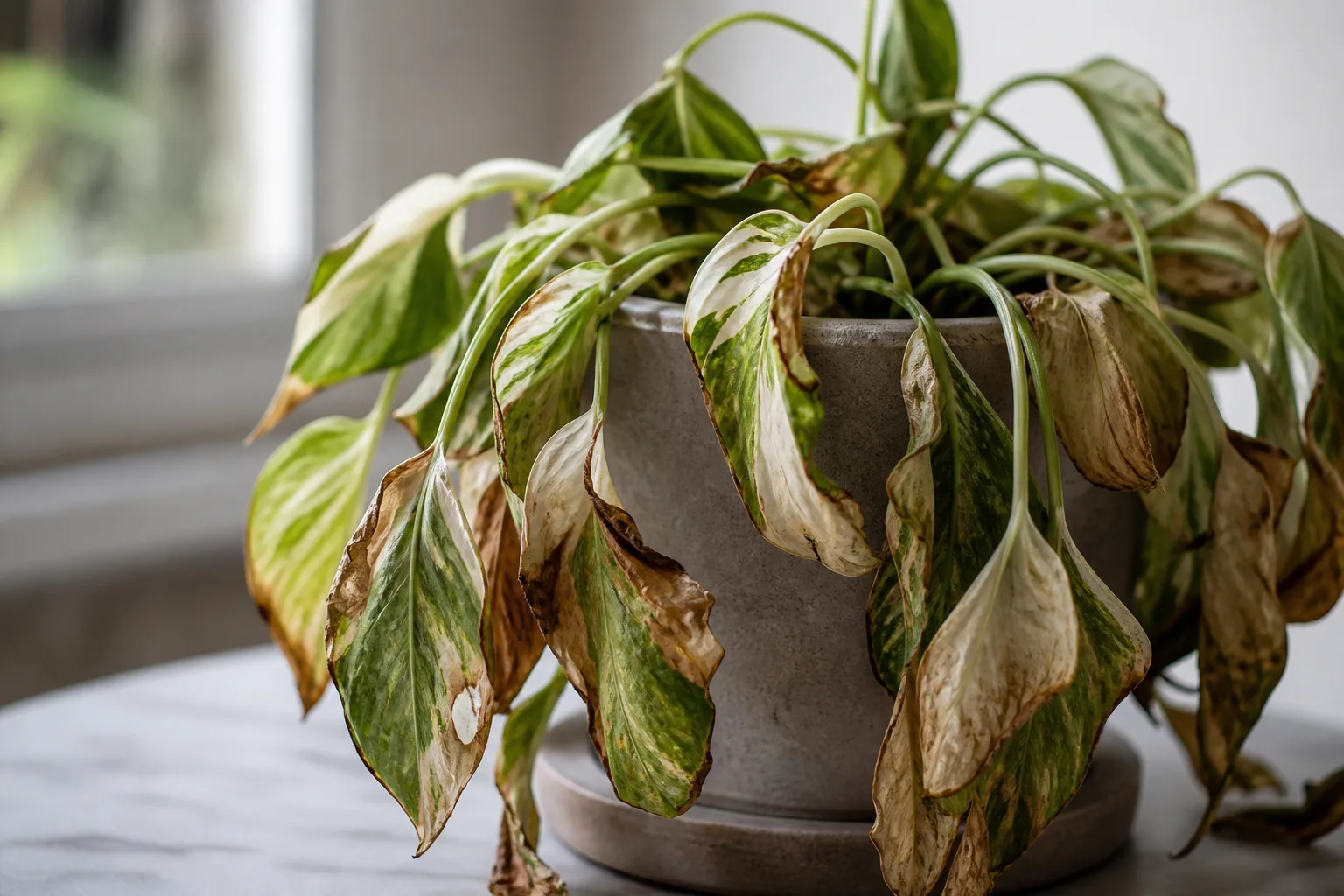
Underwatering on Manjula Pothos: Causes, Checks & Fixes
This guide covers underwatering on Manjula Pothos. See also the general Underwatering guide, watering, and light pages for this plant.
Underwatering on Manjula Pothos: Causes, Checks & Fixes
Quick answer
Underwatering on Manjula Pothos (Epipremnum aureum ‘Manjula’) is a moisture deficit in the root zone, not a disease. Trailing vines lose turgor, heart-shaped leaves feel thin or slightly curled, and the pot becomes noticeably light. Unlike rot, the mix is dry-not soggy-and roots stay firm and pale when you inspect them.
First step: water thoroughly at the sink until water runs freely from the drainage holes, then empty the saucer. Do not mist leaves, fertilize, or repot on day one. A deep soak is the single action that confirms or rules out simple drought.
What underwatering looks like on Manjula Pothos
Manjula is a heavily variegated cultivar with broad, wavy leaves swirled in cream, white, silver-green, and green. When the root ball runs dry, the whole plant looks deflated-but the pattern has cultivar-specific clues.
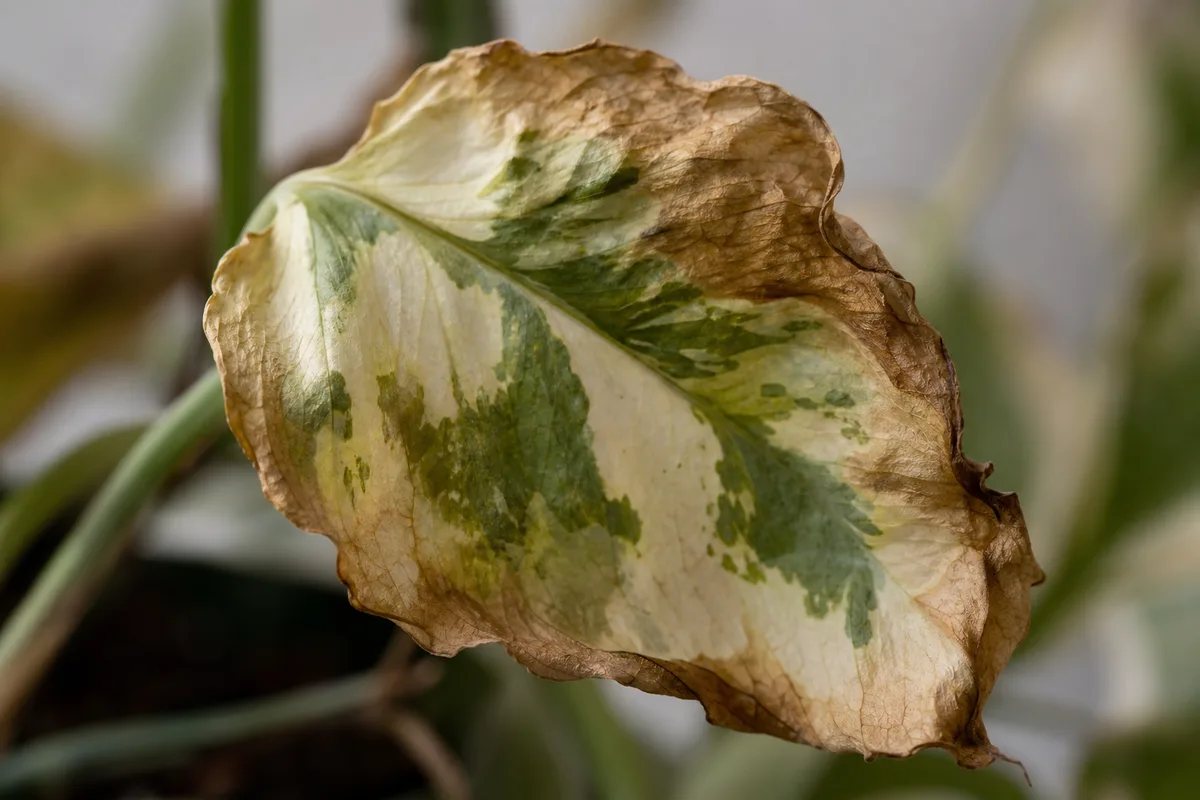
Underwatering symptoms on Manjula Pothos - compare with healthy tissue on the same plant.
Early thirst:
- Vines hang limply instead of holding their usual gentle arch
- Leaves feel thin or papery rather than plump and leathery
- Leaf edges curl slightly inward, especially on newer growth
- Pot feels unusually light when lifted
- Top 3–5 cm of mix is dry; in advanced drought, soil shrinks and pulls away from the pot wall
As drought continues:
- Cream and white variegated sections brown or crisp before solid green areas-pale tissue has less chlorophyll and shows stress first
- Older leaves may yellow and drop after repeated dry cycles
- New leaves stall, stay small, or fail to unfurl fully
- Growth slows; the plant looks stalled despite otherwise healthy placement
What underwatering is not: Yellow lower leaves on wet soil, a sour smell from the drain hole, or soft brown stems at nodes point to overwatering or rot-not thirst. Penn State Extension notes that too little water leads to temporarily drooping leaves, while too much water causes root rot on Manjula Pothos-symptoms that overlap above soil but diverge once you check moisture at depth.
Why Manjula Pothos gets underwatered
Pothos tolerates missed water better than chronic saturation, which makes underwatering easy to underestimate until vines collapse. Manjula adds a few cultivar-specific wrinkles.
Bright light increases water use. Manjula needs more light than solid-green pothos to hold its variegation. Clemson HGIC describes Manjula as a slower-growing cultivar that still requires bright, indirect light-placement near a window means faster evaporation from leaves and mix than a pothos tucked in a dim corner. Summer sun through glass can dry a small pot in a week even when winter watering stretched to two weeks.
Calendar watering fails. Many growers water every Sunday regardless of season. Clemson HGIC recommends allowing soil to dry between waterings and adjusting to the plant’s actual need. Manjula in active spring growth drinks faster than the same plant in a cool, short-day winter room.
Hydrophobic, peat-heavy mix. When potting mix dries completely-common after travel or neglect-peat repels water. Surface watering runs straight through the gap between shrunken soil and the pot wall without rewetting the root ball. The top looks briefly damp while the center stays dust-dry. Clemson HGIC notes that peat allowed to dry completely is difficult to rewet and holds less water afterward.
Root-bound pots mimic chronic drought. As roots fill the container, water channels down the sides and out the bottom before the dense center absorbs moisture. You may water on schedule yet the inner root zone stays dry-vines droop again within days. NC State Extension describes pothos as an easy vining houseplant that eventually concentrates leaves at stem tips; a crowded root mass in a unchanged pot is a frequent hidden trigger.
Environmental accelerators: Heating vents, air-conditioning drafts, and sunny window sills speed drying. Hanging baskets exposed to warm rising air lose moisture faster than floor pots. Small nursery pots outgrow their water reserve quickly once Manjula fills them with trailing stems.
How to confirm the cause
Work through these checks in order before treating:
- Pot weight - Lift the container. A light pot with limp foliage strongly suggests drought; a heavy pot after several dry days suggests saturated mix or poor drainage instead.
- Finger test at 3–5 cm - Stick your finger into the mix up to the second knuckle. Bone-dry at that depth confirms underwatering. Damp or cool soil means do not add more water yet.
- Soil gap check - Look for daylight between the mix and the pot rim. Shrunken soil that has pulled inward indicates prolonged dryness or hydrophobic peat.
- Leaf texture - Thin, flexible, slightly curled leaves on dry soil fit drought. Mushy stems on wet soil do not.
- Variegation pattern - Browning concentrated on white and cream sections while green tissue is still firm often tracks dehydration or low humidity; confirm soil dryness before blaming humidity alone.
- Perk test (after watering) - If you already watered lightly, wait two hours, then soak thoroughly. Leaves that regain stiffness within a few hours confirm thirst. No response after 24 hours with moist soil suggests root damage, binding, or rot-unpot to inspect.
- Root spot-check (optional) - Slide the plant out if drought was severe or perk failed. Healthy drought-stressed roots are firm and white or tan. Brown, mushy roots mean rot from past overwatering, not current underwatering.
If the mix is wet throughout, the pot is heavy, and lower leaves are yellow, switch diagnosis to overwatering or root rot instead of adding more water.
First fix for Manjula Pothos
Take the pot to a sink and water slowly until water runs freely from every drainage hole. Let it drain completely, then empty the saucer.
That single deep soak rehydrates the root zone and tells you within hours whether drought was the problem. Wisconsin Horticulture Extension advises watering only when the soil surface is dry and using a well-aerated medium-Manjula in perlite-rich mix drains well, so a thorough pass is essential rather than a quick splash.
If water runs straight through
When mix has gone hydrophobic:
- Water once from the top until runoff appears.
- Set the pot in a basin of water so the mix is submerged halfway up the pot for 20–30 minutes.
- Remove when the surface feels moist, drain fully, and empty the saucer.
- Clemson HGIC recommends the double-watering method or soaking the pot in a bucket when soil becomes very dry and hard to rewet.
Do not leave the pot sitting in standing water overnight-that invites the rot you are trying to avoid.
Step-by-step recovery
After the first deep soak, support recovery in this order:
- Wait for the perk - Most pothos vines show noticeable lift within two to six hours; full turgor often returns by the next morning. Resist watering again until the top 3–5 cm dries.
- Trim only dead tissue - Snip fully brown, crispy leaves at the base if they bother you. Partial green remains on a leaf; leave it to photosynthesize.
- Stabilize light - Keep Manjula in bright, indirect light. Do not jump from a dim corner to direct afternoon sun while the plant is stressed-variegated leaves burn easily.
- Hold fertilizer - Skip feed until new growth looks healthy for two weeks. Salts on drought-stressed roots add stress without fixing thirst.
- Repot only if binding is confirmed - If vines droop again every three to four days despite thorough soaks, unpot. If roots circle densely and water races through, move up one pot size into fresh perlite-amended mix after the plant stabilizes-not on the same day as the rescue soak.
- Refresh hydrophobic mix if needed - Old peat that repeatedly repels water may need Manjula Pothos repotting guide into new airy mix even if the plant is not root-bound. Wait until turgor normalizes, then repot within a week.
Recovery timeline
Hours 0–6: Limp leaves begin stiffening; vines hold their shape again.
Day 1–2: Most turgor returns. Any crispy tips on white variegation stay brown permanently.
Week 1–2: New leaves may emerge smaller or slower while roots rebuild. Steady green growth means the schedule is working.
Week 3+: Normal leaf size and variegation on fresh growth signal full recovery. Persistent limpness on moist soil means investigate roots, not water volume.
Judge success by new growth and post-watering perk, not by old damaged leaf edges turning green again-they will not.
Lookalike symptoms
| What you see | Soil check | Likely cause |
|---|---|---|
| Limp vines, light pot, dry 3–5 cm | Bone dry | Underwatering |
| Limp vines, heavy pot, wet 3–5 cm | Stays damp days | Overwatering / root rot |
| Crispy tips only, firm leaves | Moist | Low humidity or fluoride |
| Leggy sparse vines, pale variegation | Moist or dry | Not enough light |
| Droopy every 3–4 days after soak | Moist briefly, then dry fast | Root-bound pot |
| Brown patches on leaves, dry soil | Dry | Heat or sun scorch plus drought |
Wilting is not always thirst. Clemson HGIC warns that root injury-including rot from too much water-reduces uptake and causes wilting; adding water in that case makes the problem worse.
Mistakes to avoid
- Misting instead of soaking - Surface moisture does not rehydrate roots. Soil moisture fixes drought; misting does not.
- Assuming droop always means “add water” - Wet soil plus droop means stop and inspect roots first.
- Watering on a fixed calendar - Season, light, and pot size change how fast Manjula dries. Check the mix every time.
- Shallow splashes - A cup of water on dry, shrunken mix wets the surface only. Soak until runoff or bottom-water.
- Fertilizing a dry plant - Rehydrate first. Fertilizer on drought-stressed roots can burn tender feeder roots.
- Repotting immediately - Unless mix is failing or roots are bound, let the plant perk before disturbing the root ball.
- Direct sun while stressed - Dehydrated variegated leaves scorch quickly. Manjula Pothos light guide is enough during recovery.
How to prevent underwatering next time
Build a routine around reading the pot, not the clock:
- Check dryness at 3–5 cm before every major watering. Penn State Extension recommends watering when soil is dry and notes pothos is better kept slightly too dry than too wet- but chronic neglect still damages roots and leaves.
- In bright summer placement, expect roughly every 7–10 days; in cooler winter rooms with shorter days, stretch toward 10–14 days-always confirm with your finger.
- Use a well-draining mix with 20–30% perlite so water reaches roots when you do water, but the pot does not stay soggy.
- Empty saucers within 30 minutes after every soak so the bottom of the root zone can breathe between drinks.
- After vacations, assume mix may be hydrophobic and plan a bottom soak instead of a light top sprinkle.
- Repot when roots circle the pot and water runs through too fast-before chronic inner dryness becomes normal.
Manjula is forgiving compared with fussier variegated aroids, but repeated drought cycles strip older leaves and stall the slow variegated growth that makes this cultivar worth keeping. Consistent dryness checks take less time than nursing a collapsed hanging basket back to health.
When to worry
Routine thirst is fixable in hours. Escalate when:
- Soil was dust-dry for weeks and large sections of vine feel hollow or brittle
- Leaves do not perk within 24 hours after a confirmed deep soak and moist root-zone soil
- Stems soften at nodes while mix is wet- that is rot, not drought
- More than half the foliage is crispy and no new growth appears after two weeks of corrected care
If severe drought killed most feeder roots, take healthy stem cuttings with nodes as backup before the last vines fail. Manjula roots easily in water once tissue is firm again-but prevention is always simpler than propagation rescue.
When to use this page vs other Manjula Pothos guides
- Manjula Pothos watering guide - Use for routine moisture checks before assuming underwatering is the main issue.
- Manjula Pothos problems hub - Browse all 40 common issues on this species.
- Wilting on Manjula Pothos - Different entry point when symptoms overlap with underwatering.
- Brown Tips on Manjula Pothos - Different entry point when symptoms overlap with underwatering.
- Yellow Leaves on Manjula Pothos - Different entry point when symptoms overlap with underwatering.