Brown Tips on Manjula Pothos: Causes, Checks & Fixes
Quick answer
Brown tips on Manjula Pothos usually come from dry air, chronic dry-down stress, mineral or fertilizer salt buildup, or direct sun scorch on pale variegation. First, move the plant out of direct sun and water thoroughly only if the top 3-5 cm is dry, then adjust humidity and water quality based on what you confirm.
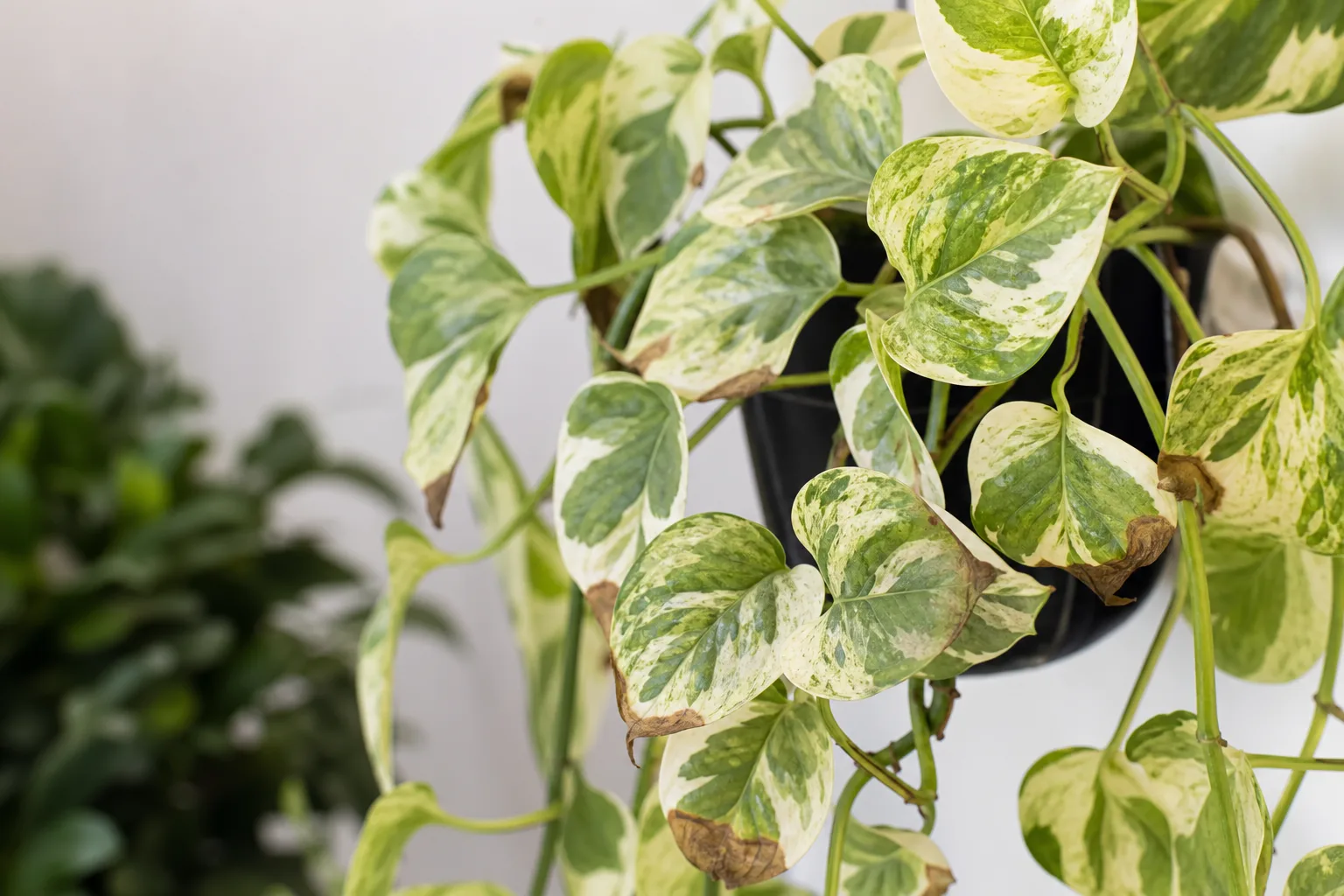
Brown Tips on Manjula Pothos: Causes, Checks & Fixes
This guide covers brown tips on Manjula Pothos. See also the general Brown Tips guide, watering, and light pages for this plant.
Brown Tips on Manjula Pothos: Causes, Checks & Fixes
Quick answer
Brown tips on Manjula Pothos (Epipremnum aureum ‘Manjula’, PP27,117) are usually a stress signal, not a contagious disease. On this patented broad-leaf cultivar, pale cream variegation often browns first because those areas have less chlorophyll and scorch or dry out faster in harsh conditions (Clemson HGIC). Most cases come from one of four patterns: very dry air, repeated underwatering, salt accumulation from fertilizer or water, or direct sun exposure that scorches leaf tissue (RHS).
First fix: get the plant into bright, indirect light and check soil moisture 3-5 cm deep. If that layer is dry, water thoroughly so the full root ball is rehydrated, then let excess water drain.
What brown tips look like on Manjula Pothos
On Manjula, tip burn usually begins as tan or medium-brown necrosis at the point of the leaf, then creeps along the edge. Tissue is dry and crisp, not wet or translucent. If the center of the leaf stays firm while only margins crisp, think humidity or salts first.
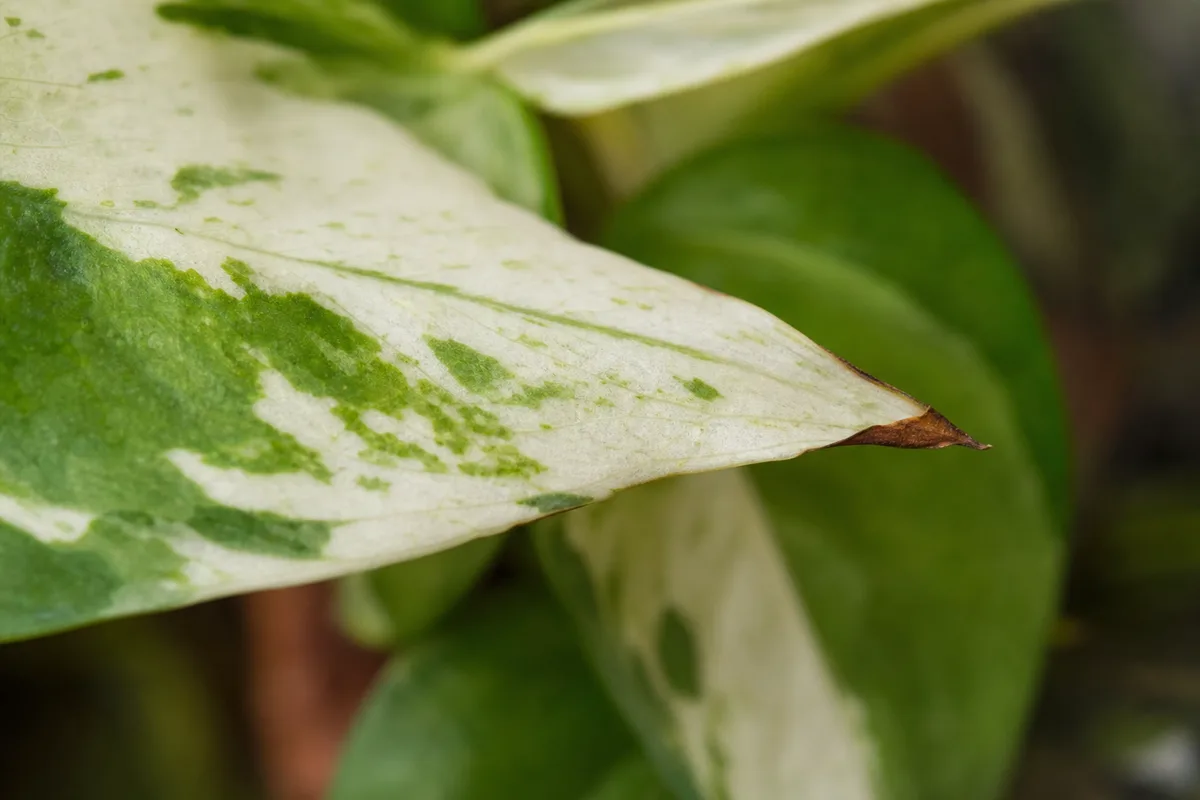
Brown Tips symptoms on Manjula Pothos - compare with healthy tissue on the same plant.
Sun scorch looks different: pale or bleached patches on leaf surfaces facing the window, which later turn papery brown (RHS). Drought stress often includes a very light pot and mild wilting before browning starts.
Because Manjula is slower-growing than many pothos cultivars, old damage can stay visible for a while even after you correct care.
Why Manjula Pothos gets brown tips
1) Low humidity and hot indoor airflow
Pothos tolerates average indoor humidity, but tip dieback becomes more common when air is very dry or leaves sit in warm airflow from vents (Clemson HGIC). If your hygrometer is consistently below roughly 35%, this is a likely contributor. For deep dry-air fixes, see our low humidity guide-this page owns differential diagnosis across causes.
2) Chronic dry-down (underwatering pattern)
A single late watering rarely causes lasting damage, but repeated cycles where the whole pot becomes bone dry can crisp edges and tips. This is common in chunky mixes or small terracotta pots that dry fast. Leaves may look dull and thin before obvious tip browning. See underwatering on Manjula Pothos when dry cycles repeat.
3) Salt buildup from fertilizer or water source
Leaf-edge burn can occur when soluble salts accumulate in the root zone. White crust on the soil surface or pot rim is a practical clue (University of Missouri IPM). Applying fertilizer to already dry soil increases this risk. Acute post-feed injury is covered on our fertilizer burn page.
4) Direct sun scorch on variegated tissue
Epipremnum prefers bright but indirect light; prolonged direct sun can scorch foliage (RHS). On Manjula, cream sections often burn before green tissue, so browning can look sudden after a location change. Review light placement if scorch patches face a window.
5) Why this shows up early on Manjula
Manjula is a variegated cultivar of Epipremnum aureum (Araceae), and variegated pothos commonly lose margin quality sooner under light or moisture stress than fully green forms (NC State Extension). Because new replacement leaves are not produced instantly, old tip damage can remain visible for weeks even after conditions improve.
Symptom comparison table
| Pattern | What you see | Pot / soil cue | New growth | Urgency |
|---|---|---|---|---|
| Dry air | Even tip/margin crisp on many leaves | Normal weight; soil dries at usual pace | Continues browning at unfurl | Low–medium |
| Drought | Tips crisp; leaves may droop first | Very light pot; top 3-5 cm bone dry | Stops when rehydrated | Medium |
| Salt buildup | Margins and tips; white crust on rim | Normal to dry; recent feeding | New leaves brown at edges after feed | Medium |
| Sun scorch | Bleached patches on window-facing surface | Normal moisture | Damage on exposed side only | Low if moved |
| Spider mites | Stippling plus webbing; edges worsen late | Normal; often warm dry corner | Spreads with pest | Medium–high |
| Root trouble | Yellowing, wilt, tip burn secondary | Wet, sour mix; soft stems | Rapid decline on many leaves | High |
How to confirm the cause (5-minute check)
- Check pot weight and top-layer moisture: if pot is very light and top 3-5 cm is dry, drought stress is likely active.
- Look at lesion pattern: tip-and-margin crisping suggests moisture/salt stress; upper-surface bleached patches suggest light scorch.
- Measure humidity near foliage: consistently low RH strengthens a humidity diagnosis.
- Inspect the newest leaves: fresh tip damage means the cause is ongoing now, not historical.
- Scan stems and root-zone smell: soft stems or sour, constantly wet media point away from simple tip burn and toward root trouble.
The first fix to try
For most Manjula plants with brown tips, the best first move is to stabilize moisture without overcorrecting:
- Move plant to bright, indirect light.
- If top 3-5 cm is dry, water thoroughly until excess drains.
- Empty saucer so roots are not left standing in water.
This one move addresses two common triggers at once: drought stress and uneven root hydration. After that first correction, wait and watch new growth before making additional big changes.
Step-by-step recovery after first fix
Step 1: Correct the environment
Keep temperatures in the normal indoor warm range and away from strong heat blasts; epipremnums generally perform best around 18-30°C (RHS). Avoid abrupt shifts from low light to direct afternoon sun.
Step 2: Reduce salt pressure
If you see crusting, run plain water through the pot to leach excess salts, then let it drain fully. Pause fertilizer until you see healthy new growth. Follow our fertilizer guide when you resume at half strength.
Step 3: Adjust humidity realistically
Aim for a steadier moisture zone around foliage. Grouping plants helps a little, but a humidifier is usually more reliable than occasional misting in dry seasons.
Step 4: Trim only after conditions improve
Brown tissue does not recover. Trim tip necrosis for appearance once you see the spread has stopped. Manjula sap contains insoluble calcium oxalate crystals that irritate pets if chewed-discard trimmed debris where cats and dogs cannot reach it.
Lookalike problems to rule out first
- Dry-air or salt tip burn: starts at tips/margins; tissue is crisp; leaf center often stays firm.
- Underwatering stress: pot is very light, leaves may droop first, then tips and margins dry.
- Sun scorch: exposed surface patches bleach first, then turn papery brown.
- Spider mite injury: fine stippling and possible webbing on undersides, with edge browning as damage worsens-see spider mites on Manjula.
- Root trouble: wet sour mix, soft stems, rapid decline on multiple leaves at once.
If your pattern does not clearly match simple tip burn, inspect roots and stems before changing fertilizer, light, and watering all at once.
Recovery timeline for Manjula
- First 7-14 days: progression should slow if the cause is corrected.
- Weeks 2-6: new leaves should emerge with cleaner tips.
- Beyond 6 weeks: if new leaves still brown at unfurling, reassess light intensity, salts, and watering rhythm.
Judge success by new growth quality, not old damaged leaves.
Mistakes to avoid
- Watering on a fixed calendar without checking moisture depth.
- Pushing fertilizer to “heal” stress damage.
- Leaving the pot in direct summer sun because pothos is labeled “low maintenance.”
- Heavy misting in dim corners while ignoring root-zone moisture.
- Ignoring early crusting or repeated tip burn on new leaves.
How to prevent brown tips next time
Use this quick prevention loop:
- Keep Manjula in bright indirect light, with sun filtered by distance or curtains when needed (RHS).
- Water deeply when the top layer dries, not before-see our watering guide.
- Flush the pot periodically if fertilizer is used regularly.
- Keep airflow gentle and avoid direct heater or AC streams.
- Track seasonal humidity so winter dryness is managed early.
When to worry
Escalate beyond routine tip-burn care if you see any of these:
- soft or collapsing stems
- persistent sour smell from wet soil
- rapid browning on many new leaves in a short window
- blackened tissue spreading from nodes or petioles
Those signs suggest a broader root or stem problem that needs a deeper inspection.
Related Manjula guides
For overlapping symptoms, use these pages together:
- Manjula Pothos overview - full care map and cultivar context
- Watering guide - dry-check rhythm; use when drought is the confirmed cause
- Light guide - placement and scorch prevention
- Low humidity problem - deep dry-air fixes; this page owns tip-burn differential diagnosis
- Underwatering problem - chronic dry-down when pot weight is the clue
- Fertilizer burn - acute post-feed salt injury
- Fertilizer guide - conservative feeding after recovery
- Spider mites problem - stippling and webbing, not environmental crisp alone
Related tool
Use the Plant Problem Diagnosis Tool to narrow causes for brown tips on this plant before changing multiple variables at once.