Fertilizer Burn on Manjula Pothos: Causes, Checks & Fixes
Quick answer
Fertilizer burn on Manjula Pothos usually follows heavy or repeated feeding and shows as brown, crispy leaf tips and margins, often with white salt crust on the soil. Stop fertilizer immediately and flush the pot with plain water until it drains freely.
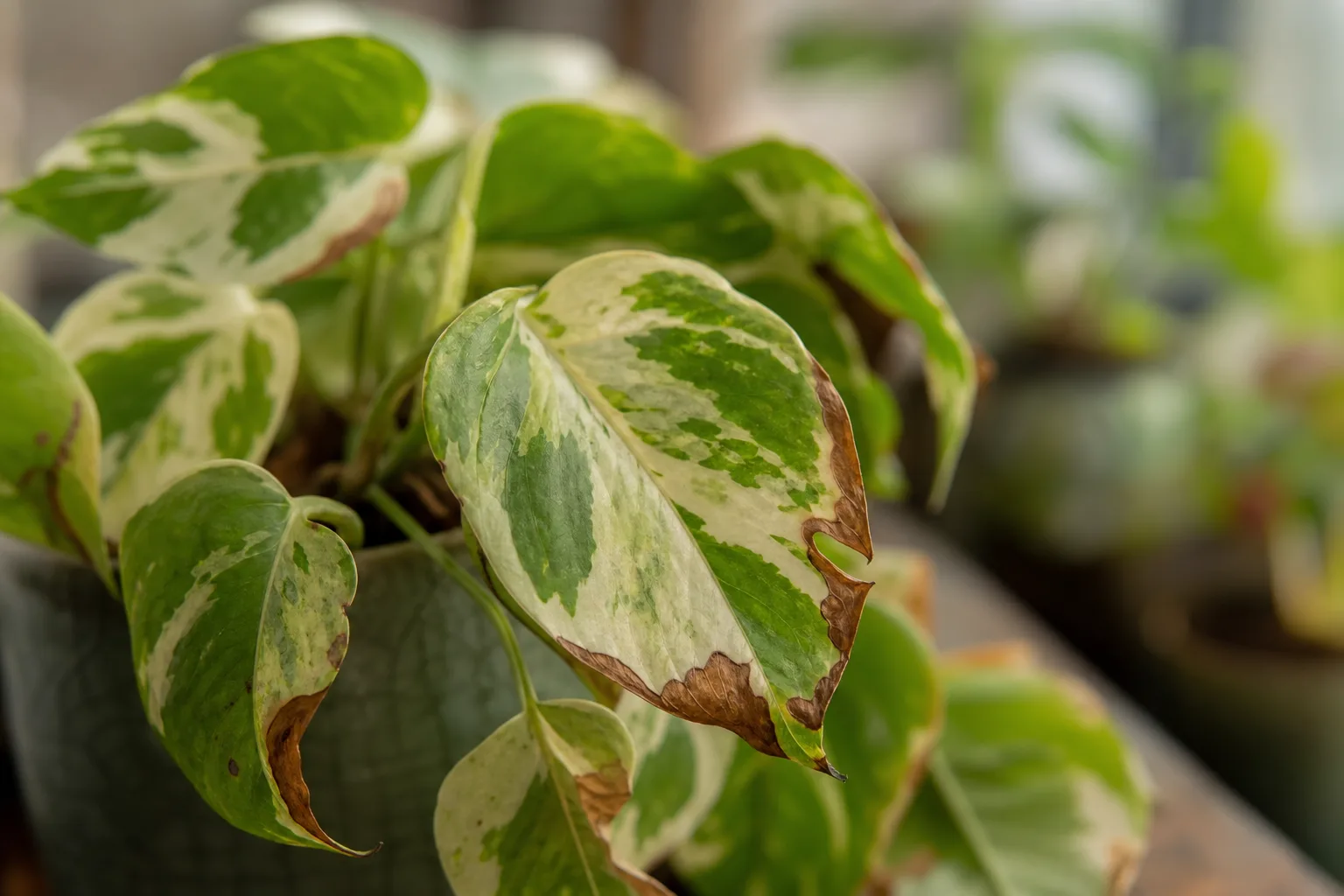
Fertilizer Burn on Manjula Pothos: Causes, Checks & Fixes
This guide covers fertilizer burn on Manjula Pothos. See also the general Fertilizer Burn guide, watering, and light pages for this plant.
Fertilizer Burn on Manjula Pothos: Causes, Checks & Fixes
Quick answer
Fertilizer burn on Manjula Pothos is almost always excess soluble salts in the root zone, not a disease. Too much fertilizer, feeding on dry soil, or salts left behind after repeated watering without leaching pull moisture out of leaf margins and show up as dry brown tips-often on the broad, wavy leaves this slow-growing cultivar is known for. First step: stop all fertilizer and flush the pot with plain water until excess runs freely from the drainage holes.
This page owns acute post-feed salt injury. Chronic tip burn from humidity, fluoride, or drought is covered on brown tips and crispy leaves.
What fertilizer burn looks like on Manjula Pothos
Damage usually appears on leaf tips and margins first. Tissue turns tan, brown, or crispy while the rest of the blade may still feel firm. On Manjula’s cream-and-white variegation, pale sections sometimes brown before green tissue when salt stress is mild-a useful cultivar-specific clue after a recent feed.
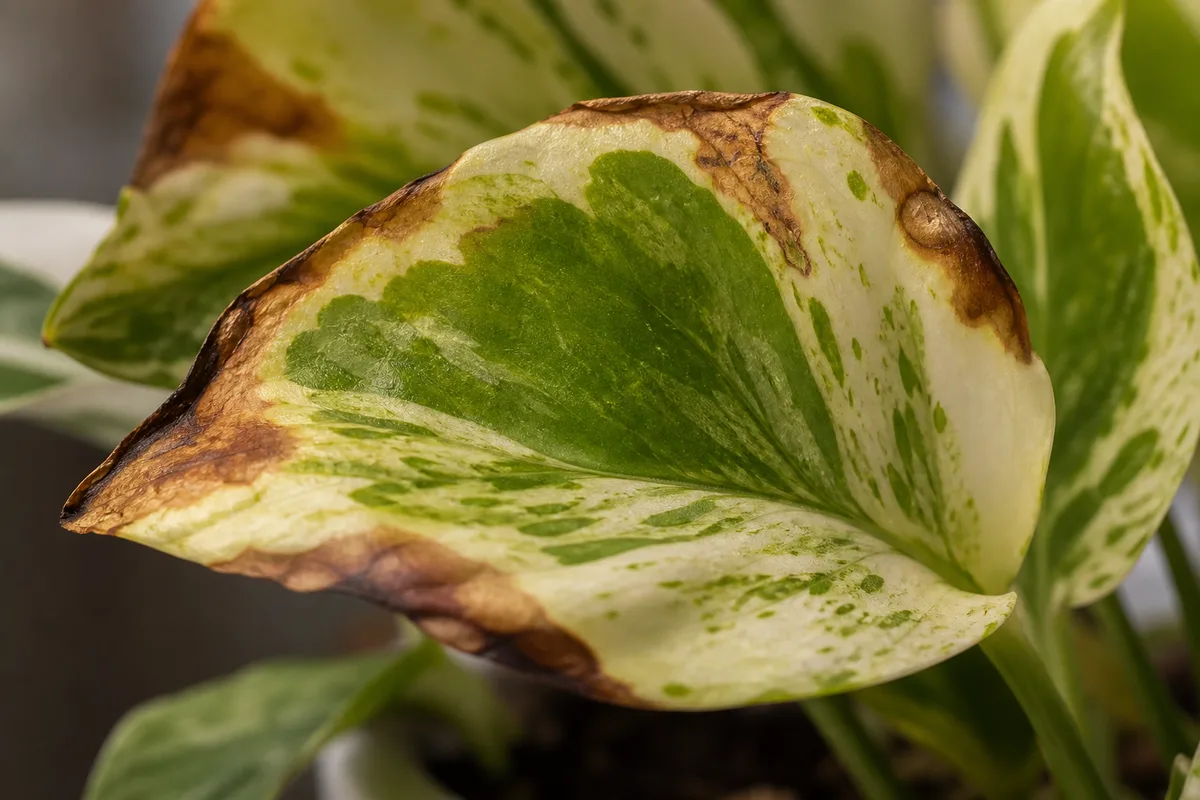
Fertilizer Burn symptoms on Manjula Pothos - compare with healthy tissue on the same plant.
You may see a white or pale crust on the soil surface or pot rim-that is evaporated mineral residue, not mold (University of Maryland Extension). Several leaves along the same vine often show similar edge burn within a week or two of a heavy feed. Lower leaves are not necessarily affected first; salt damage can show on both old and newer foliage depending on when you last fertilized.
Whole-leaf yellowing with wet, sour soil is not fertilizer burn. Sudden collapse after one normal dose is rare unless the plant was already stressed or the mix was heavily salted.
Why Manjula Pothos gets fertilizer burn
Manjula Pothos is a moderate feeder, not a heavy one. It is a slower-growing pothos cultivar with broad, wavy leaves and uses less nitrogen during winter dormancy. Growers who feed on the same schedule as faster pothos cultivars, use full-strength indoor doses, or fertilize every watering can push salts past what the root ball can handle.
Soluble salts from synthetic fertilizer and hard tap water accumulate as water evaporates from the mix. When concentration rises, roots struggle to take up water; salts can move into leaves and concentrate at tips and margins, causing salt burn necrosis. Feeding dry soil concentrates fertilizer at root tips and worsens burn. Feeding in late autumn or winter, when Manjula is barely pushing new leaves, leaves unused salts sitting in the pot.
Variegated Manjula leaves have less chlorophyll per leaf area than all-green pothos, so the plant is less forgiving of care stacking-feeding while the pot stays wet from overwatering, or right after repotting, compounds salt stress fast. UF/IFAS notes that variegated Epipremnum tissue can show necrosis under stress before green sectors.
How to confirm the cause
Work through these checks before repotting or trimming heavily:
- Feeding history - Did you fertilize within the past two weeks? Was the dose full strength, slow-release, or applied to dry soil?
- Salt signs - White crust on soil or pot exterior supports excess salts. Scratch the surface lightly; a gritty white layer confirms buildup.
- Soil moisture - Burned leaves with firm stems and moderately dry soil fit salt damage. Mushy stems with constantly wet mix suggest root rot.
- Pattern - Tip and margin necrosis on multiple leaves after feeding fits burn. Interveinal yellowing on older leaves alone suggests deficiency, not excess.
- New growth - If the newest unfurling leaf already has brown edges right after a feed, stop fertilizer and flush.
Symptom comparison table
| Pattern | Timing | Variegation clue | Soil cue | Urgency |
|---|---|---|---|---|
| Fertilizer burn | Days–2 weeks after feed | Cream/white margins first | Crust on rim; firm stems | Medium |
| Low humidity / fluoride | Gradual over winter | Even tips on many leaves | Normal moisture | Low |
| Sun scorch | After light move | Bleached patches facing window | Normal moisture | Low |
| Under-fertilization | Months of pale growth | Smaller new leaves | Normal | Low |
| Root rot | Any | Yellow from base up | Wet, sour; soft stems | High |
First fix for Manjula Pothos
Stop all fertilizer immediately. Do not “balance” burn with more products.
Place the pot in a sink or tub and leach with plain room-temperature water until a volume roughly three times the pot size has drained through. Let the pot drain fully and empty the saucer so salty water is not reabsorbed. Repeat once after five minutes if salt crust was visible-first pass dissolves salts, second pass washes them out.
Hold fertilizer for four to six weeks while you watch new growth. Resume only when the plant pushes clean leaves and you are in active growing season-follow our fertilizer guide at half strength.
Step-by-step recovery
After the initial flush, move Manjula to bright indirect light so it can recover without direct sun scorching stressed foliage (Clemson HGIC). Keep your normal watering rhythm: allow the top 3–5 cm of mix to dry before watering again. Do not let the pot go bone dry for weeks, but avoid keeping it soggy while roots heal.
Trim fully brown leaf tips with clean scissors if they bother you cosmetically; trimming does not fix the cause. Manjula sap contains calcium oxalate crystals toxic to pets-discard trimmed debris safely. Remove only leaves that are mostly dead-Manjula is slow to replace foliage.
If white crust was thick or the plant wilted despite moist soil after flushing, repot into fresh, well-draining mix with 20–30% perlite per our soil guide. Rinse visible salt from roots gently with plain water. Do not fertilize for at least one month after repotting.
Recovery timeline
Most Manjula Pothos plants stabilize within two to four weeks after a single over-feed if roots were still healthy. Expect one to two new leaf cycles-roughly four to eight weeks for this slow cultivar-before you can judge full recovery. Burned tissue never turns green again; success means new leaves unfurl without crisp margins.
Worsening wilting, spreading stem softness, or leaves dropping in clusters after flushing means salt or root damage was severe-repot and inspect roots rather than waiting.
Lookalike symptoms
Brown tips from low humidity or fluoride look similar but are not tied to recent feeding. Those often build slowly over winter near heating vents and may affect only oldest leaves-see brown tips and low humidity.
Direct sun scorch bleaches or browns patches on leaves facing the window, not uniform tip burn on vines fed recently.
Under-fertilization shows pale, smaller new growth over months-not sudden crispy margins after a dose.
Root rot pairs yellowing and soft stems with wet, sour soil; flushing makes rot worse if drainage is poor.
Mistakes to avoid
Do not feed again to “help the plant recover.” Do not use Epsom salt or random supplements without a clear deficiency pattern. Do not apply fertilizer to dry soil or a wilted plant. Do not use full-strength outdoor fertilizer indoors. Do not ignore salt crust and keep feeding on schedule. Do not combine slow-release pellets with monthly liquid feed without adjusting dose. Do not repot and fertilize the same week unless the mix is clearly failed.
How to prevent fertilizer burn next time
Feed Manjula Pothos monthly at half strength during spring and summer active growth only. Water the day before feeding so the root zone is evenly moist. Pause entirely in autumn and winter when growth slows.
Leach the pot every few months by watering until excess drains, waiting five minutes, and watering again-especially if you use synthetic fertilizer regularly or hard tap water.
Repot every one to two years so salts do not accumulate indefinitely in old mix. Match feeding to light: a plant in bright indirect light uses nutrients faster than one in a dim corner, but neither needs heavy doses.
When to worry
Escalate if stems soften at nodes, the plant wilts while soil stays wet after flushing, or more than a third of leaves drop within a week. Thick salt crust with blackened root tips may mean the plant needs fresh mix and a long fertilizer pause-not another flush alone.
A few crispy tips on an otherwise vigorous vine after one corrected flush is manageable. Widespread margin burn on every vine with no new growth after six weeks warrants repotting and root inspection.
Related Manjula Pothos guides
- Manjula Pothos overview - cultivar context and care map
- Fertilizer guide - conservative post-recovery feeding schedule
- Brown tips - chronic tip burn differential diagnosis; this page owns acute post-feed injury
- Crispy leaves - multi-cause margin necrosis
- Low humidity - winter dry-air tip burn without recent feed
- Overwatering - wet soil plus care stacking
- Soil guide - perlite mix and repot after severe salt damage