Crispy Leaves on Manjula Pothos: Causes, Checks & Fixes
Quick answer
Crispy leaves on Manjula Pothos are dry, brittle tissue-most often on cream or white variegation-from sun scorch, underwatering, or low humidity. First step: pull the pot out of direct sun and feel the top 3–5 cm of soil; water thoroughly if bone dry, or relocate to bright indirect light if variegation facing a window has browned.
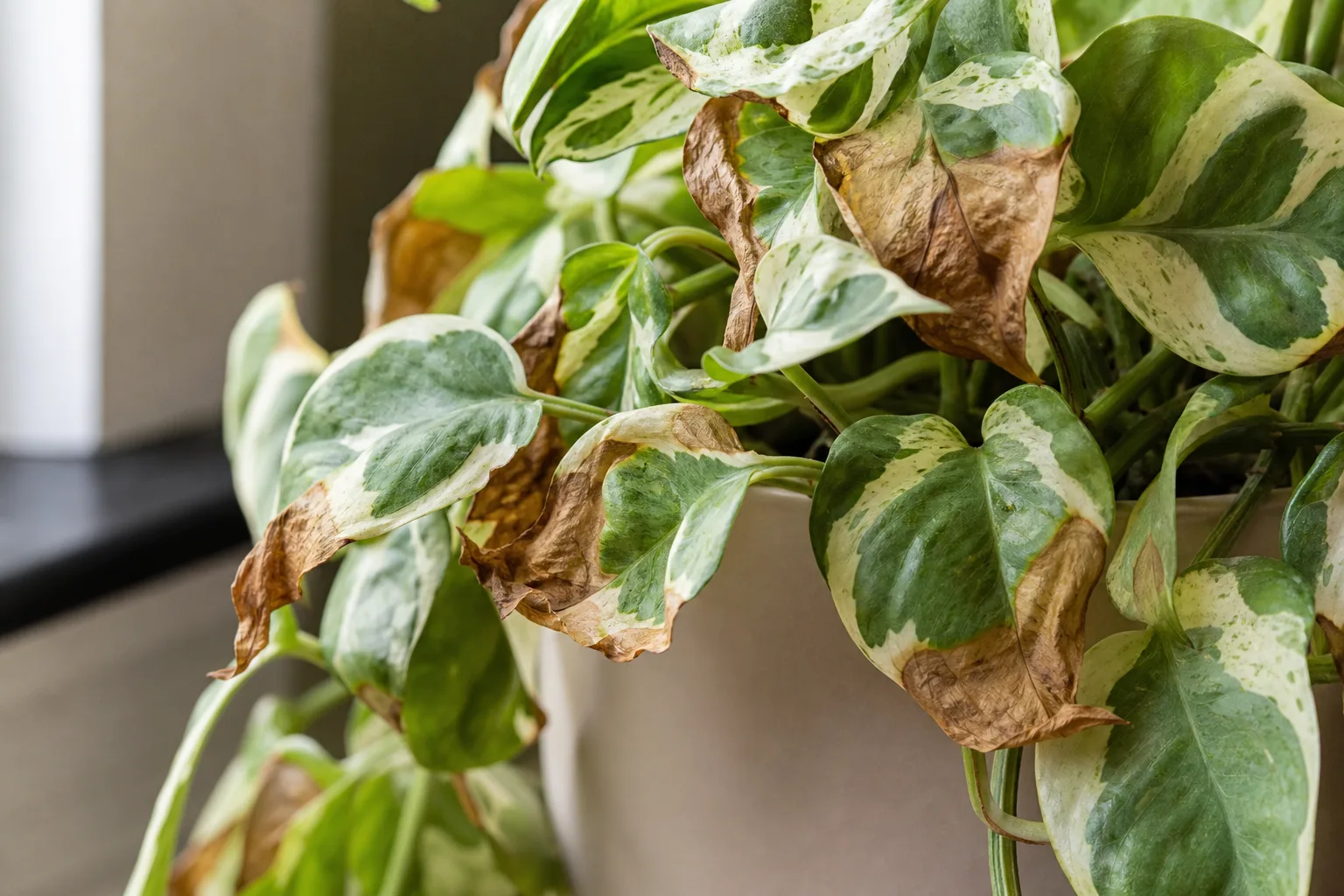
Crispy Leaves on Manjula Pothos: Causes, Checks & Fixes
This guide covers crispy leaves on Manjula Pothos. See also the general Crispy Leaves guide, watering, and light pages for this plant.
Crispy Leaves on Manjula Pothos: Causes, Checks & Fixes
Quick answer
Crispy leaves on Manjula Pothos mean dry, dead leaf tissue-not rot. The wavy, marbled leaves of this slower-growing variegated cultivar lose moisture fastest on cream and white sections that carry less chlorophyll than solid green pothos leaves. Sun scorch, underwatering on Manjula Pothos, and low humidity are the usual triggers; disease is rare when stems stay firm and soil smells normal.
First step: move the pot out of any direct sunlight on the foliage, then feel the top 3–5 cm of soil. If soil is bone dry and leaves feel thin or papery, water thoroughly until excess drains. If soil moisture is normal but white variegation facing a window has turned tan and brittle, Manjula Pothos light guide-not more sun-is the fix.
What crispy leaves look like on Manjula Pothos
Healthy Manjula leaves are broad, slightly wavy, and marbled in cream, silver-green, and deep green. Crispy damage breaks that pattern in predictable ways:
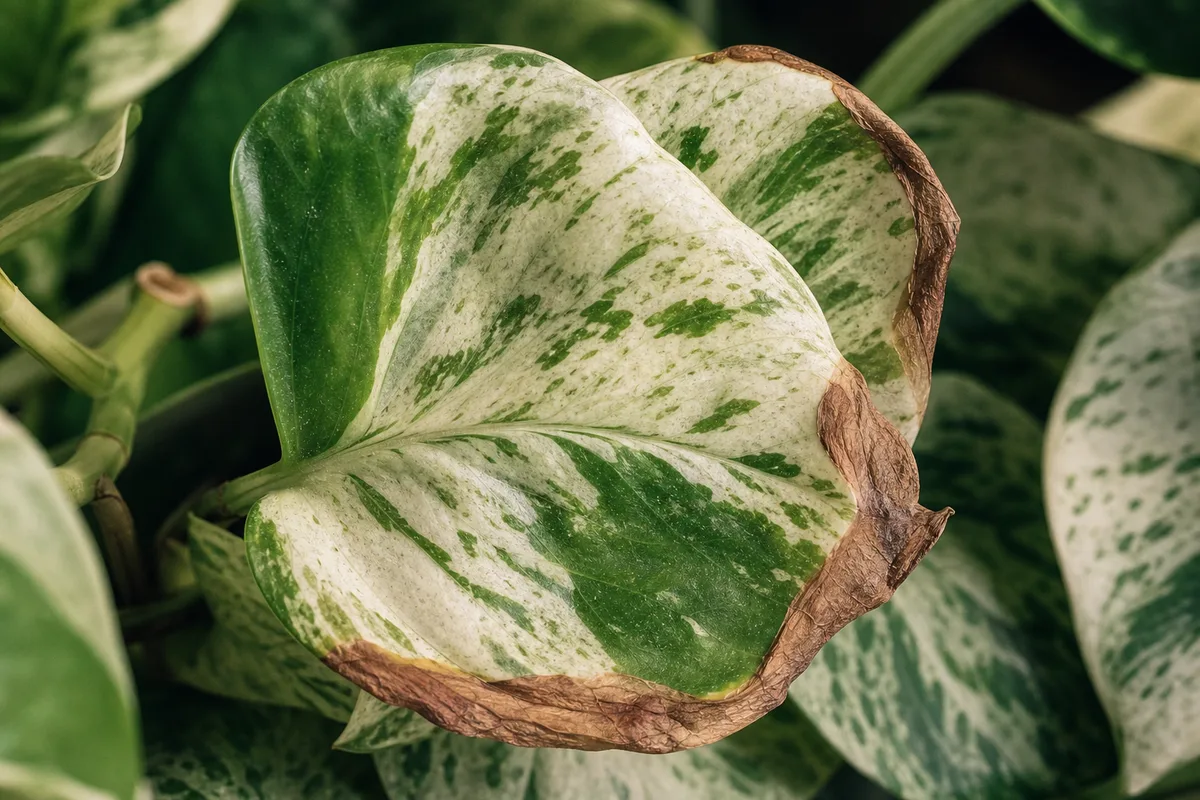
Crispy Leaves symptoms on Manjula Pothos - compare with healthy tissue on the same plant.
- Dry, papery brown or tan patches that crumble when rubbed-not soft, wet, or black
- Edges and tips turning brittle first, often on the cream or white portions before green tissue
- Large scorch blotches on the leaf half facing a south or west window after recent relocation
- Whole-leaf crispiness on several vines at once when soil has been dry for weeks
- Uniform tip burn on trailing vines near a heating vent or radiator during winter
What crispy leaves do not look like: yellowing that starts at the petiole and spreads inward on soggy soil, mushy stems at nodes, water-soaked brown spots with halos, or fine stippling with silk webbing underneath. Those patterns point to overwatering, rot, fungal leaf spot, or spider mites-not simple dry tissue stress.
Manjula’s variegation makes it more vulnerable to scorch and edge desiccation than neon or jade pothos. White and cream sectors transpire without the protective pigment load green tissue carries, so they brown and crisp while the rest of the vine still looks structurally fine.
Why Manjula Pothos gets crispy leaves
Direct sun on variegated tissue
Manjula needs bright, indirect light to hold its marbling, but direct sun-especially hot afternoon rays through glass-overheats pale leaf sections. Leaf scorch and tip dieback often trace to intense light combined with low humidity. West-facing sills and unfiltered south windows are the most common scorch sites for trailing Manjula baskets.
Underwatering
Pothos stores some moisture in its vines, but prolonged drought pulls water from leaf margins first. Allow soil to dry between waterings, then water thoroughly-Manjula’s slower growth means a missed watering cycle on a root-bound pot can crisp several leaves before the vine droops obviously. Dry soil pulling away from the pot edge and limp, thin-feeling blades confirm drought stress.
Low humidity and harsh tap water
Manjula tolerates average indoor humidity, but winter heating and AC vents drop air moisture for months. Cream variegation crisping at tips while stems stay firm and soil dries on schedule fits dry air. Fluoride and salt buildup from hard tap water or excess fertilizer also desiccate margins over time-white crust on the soil surface is a clue.
Heat and cold drafts
Hot and cold air from vents dries leaf cells quickly. Manjula hanging over a radiator or beside a cold winter window can show crispy edges on the exposed vine while inner leaves stay clean. Temperatures below about 10°C (50°F) can also damage foliage on epipremnums kept near drafty glass.
Fertilizer burn
Manjula is not a heavy feeder. Salts from over-fertilizing on dry soil burn leaf edges and can feel similar to humidity stress. If you fed recently and see tip crisping with crusty soil, flush with plain water before feeding again.
How to confirm the cause
Work through these checks in order:
- Light audit - Did the plant move closer to a window, lose a sheer curtain, or get rotated so pale sections now face direct sun? Scorch patches localized to one sun-exposed side strongly confirm light stress.
- Soil moisture - Insert a finger into the top 3–5 cm. Bone-dry soil with papery leaves supports underwatering. Wet, heavy soil with yellowing from petioles outward suggests rot-not crisp dry tissue.
- Tissue texture - Pinch affected areas. Crispy and brittle = environmental dryness or scorch. Soft, mushy, or smelly = rot or advanced disease.
- Placement scan - Note vents, radiators, fireplaces, and AC returns within a metre. Clustered tip burn on vines in the airflow path points to humidity or draft stress.
- New growth watch - Damage on the newest unfurling leaf means the current environment is still wrong. Crispiness only on old leaves at the end of long vines may be historical once care is corrected.
- Pest check - Flip leaves and look for stippling, fine webbing, or gritty residue. Spider mites thrive in warm, dry conditions and can accompany winter crispiness but need separate treatment.
If humidity reads above 45%, soil is evenly moist, and scorch patches still spread on white variegation, direct light is the priority fix-not more watering.
First fix for Manjula Pothos
Move the pot out of direct sunlight and into bright indirect light, then water thoroughly only if the top 3–5 cm of soil is bone dry.
Pull Manjula back from unfiltered south or west glass, or hang a sheer curtain between the plant and the window. Variegated pothos cultivars scorch faster than solid green forms; stopping sun exposure today prevents new crispy patches tomorrow.
If the soil check shows drought, water until excess runs from the drainage holes and discard the saucer water. Do not let the pot sit in standing water-Manjula is vulnerable to root rot on Manjula Pothos when roots stay wet in dim corners after a rescue soak.
Hold off on fertilizer, Manjula Pothos repotting guide, and heavy pruning until new leaves unfurl clean for two weeks. One environmental correction at a time gives you a clear read on what worked.
Step-by-step recovery
After the first fix:
- Raise humidity toward 40–60% at leaf height if tips keep crisping despite normal watering-a humidifier or plant grouping works better than once-daily misting in low light.
- Switch to filtered or overnight-rested tap water if new leaves still burn at edges with stable humidity. Mineral edges mimic dry-air damage on variegated pothos.
- Trim fully brown or scorched leaves with clean scissors. Cosmetic only; trimmed tissue will not regreen.
- Flush the pot with plain water in spring if white salt crust sits on the soil surface from past over-fertilizing.
- Inspect weekly for spider mites while air is dry. Rinse undersides in the shower if you see stippling-humidity helps prevention but does not replace pest control.
- Acclimate gradually if you need more light for variegation-shift the pot closer to the window over one to two weeks rather than jumping from a dark corner to a sunny sill.
Recovery timeline
Sun scorch stops spreading within days once direct light is removed. Underwatering recovery shows firmer leaves within 24–48 hours after a thorough soak, though old crispy edges remain brown.
New leaves emerging without fresh burn typically take two to four weeks on Manjula because this cultivar grows more slowly than golden or neon pothos. Judge success by clean new growth, not by old damaged tissue turning green.
If four weeks pass with stable care and new leaves still emerge crispy, revisit water quality, humidity readings, and whether any direct sun still hits foliage for part of the day.
Lookalike symptoms to rule out
Brown tips only (not full patches) - Often low humidity or fluoride alone. See our low-humidity and brown-tips guides if damage is limited to margins.
Root rot from overwatering - Yellow leaves starting at the petiole, soft stems, sour soil. Opposite of firm, dry crispy tissue.
Fungal leaf spot - Wet-looking brown spots with yellow halos that spread. Requires airflow and isolation, not just a light move.
Spider mites - Stippling on upper surfaces, fine silk on undersides. Dry air favors mites but crispiness from mites is speckled, not large papery scorch patches.
Cold damage - Darkened, limp leaves after exposure to cold drafts or transport below about 10°C (50°F). Differs from slow edge desiccation from dry indoor air.
Mistakes to avoid
Do not leave scorched Manjula in direct sun hoping green sections will compensate-pale tissue keeps dying until you relocate the pot.
Do not overwater after noticing crispiness without checking soil first. Soggy roots on a variegated pothos invite rot while leaves still look dry at the edges.
Do not fertilize stressed vines to push new growth. Feed only after light, water, and humidity stabilize and new leaves open cleanly.
Do not mist heavily in dim corners as a humidity fix-evaporating droplets on broad Manjula leaves in low light can invite fungal spotting without raising ambient moisture.
Do not expect old crispy tissue to heal. Waiting for brown patches to regreen delays the real signal: undamaged new leaves.
How to prevent crispy leaves next time
- Keep Manjula in bright indirect light-never direct sun on foliage, especially white variegation
- Water when the top 3–5 cm dries, thoroughly each time, and reduce frequency in winter
- Maintain 40–60% humidity near leaf height during heating season
- Filter tap water or let it rest overnight if tip and edge crisping recurs every winter
- Acclimate slowly when moving to a brighter room-shift over one to two weeks
- Keep trailing vines away from radiators, vents, and hot window glass
- Flush salts from the pot annually if you fertilize during the growing season
- Watch new unfurling leaves as your early warning system-they show problems before old vine tips do
When to worry
Crispy leaves alone on firm Manjula vines are usually cosmetic and reversible through environment fixes. The plant is not dying because of dry tip tissue on older leaves.
Escalate when:
- Stems soften at nodes while soil stays wet-humidity and light fixes will not fix rot
- More than a third of leaves yellow and collapse within a week
- Black, spreading spots appear with sour-smelling soil
- Spider mites spread to every vine despite corrected placement
- New growth fails to open and shrivels-a sign combined stress exceeds what trimming can solve
If only older leaves on long trailing vines are crispy and new growth is clean after your fixes, the plant is stable. Trim or tolerate the cosmetic damage.
Conclusion
Crispy leaves on Manjula Pothos are a distress signal from dry dead tissue-most often sun scorch on pale variegation, underwatering, or dry indoor air. Move out of direct sun, confirm soil moisture, then stabilize humidity and water quality without stacking repots and fertilizer. Old burn will not reverse; watch the next leaves that unfurl for proof your fix worked.
When to use this page vs other Manjula Pothos guides
- Manjula Pothos watering guide - Use for routine moisture checks before assuming crispy leaves is the main issue.
- Manjula Pothos problems hub - Browse all 40 common issues on this species.
- Brown Tips on Manjula Pothos - Different entry point when symptoms overlap with crispy leaves.
- Curling Leaves on Manjula Pothos - Different entry point when symptoms overlap with crispy leaves.