Low Humidity on Manjula Pothos: Causes, Checks & Fixes
Quick answer
Low humidity on Manjula Pothos shows as dry brown tips and crispy cream variegation while stems stay firm and soil dries normally. First step: move the pot away from heating vents and measure humidity at leaf height-target 40–60% before changing your watering.
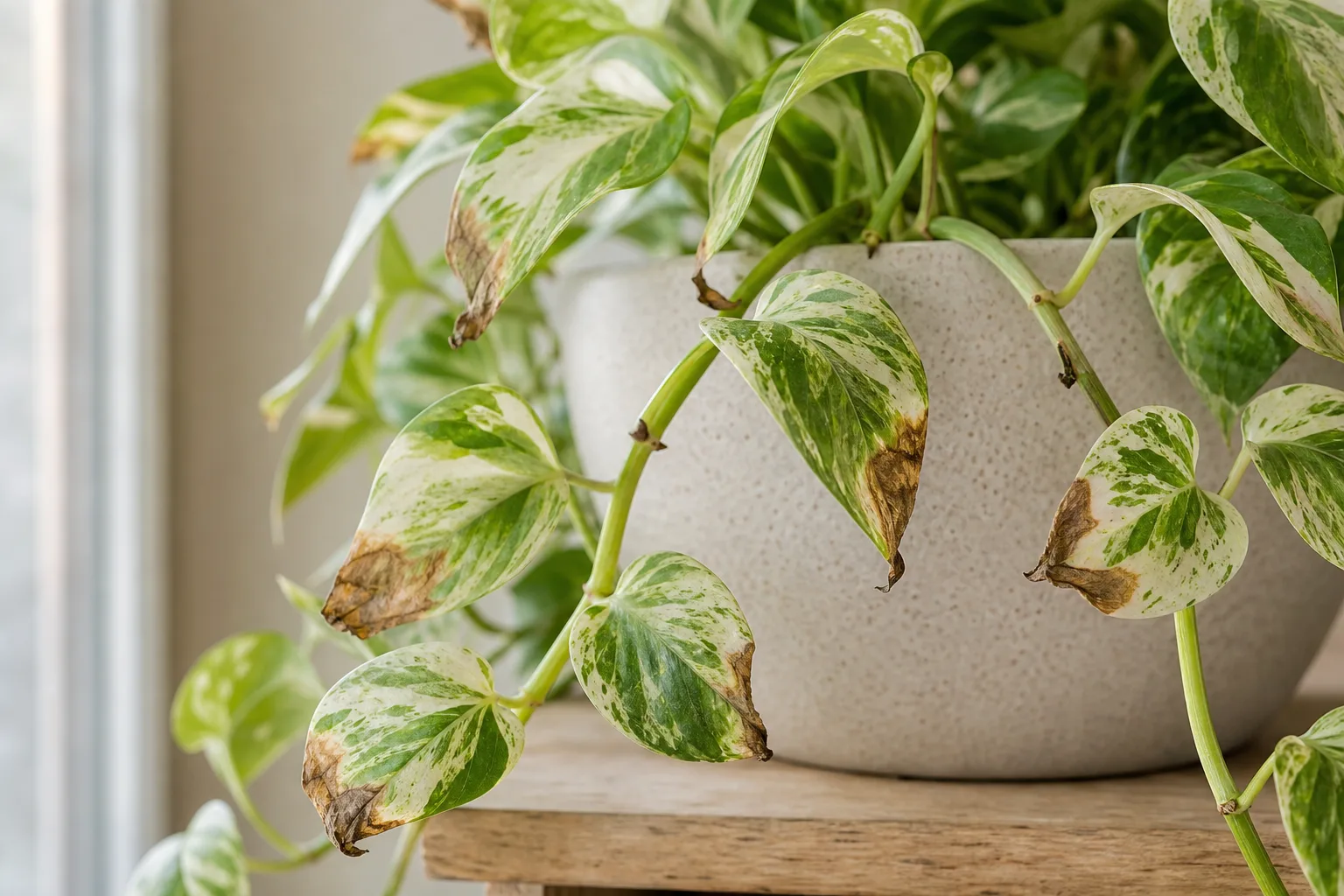
Low Humidity on Manjula Pothos: Causes, Checks & Fixes
This guide covers low humidity on Manjula Pothos. See also the general Low Humidity guide, watering, and light pages for this plant.
Low Humidity on Manjula Pothos: Causes, Checks & Fixes
Quick answer
Manjula Pothos survives average indoor air better than many tropicals, but its broad, wavy leaves-especially the cream and white variegation-lose moisture fast when humidity drops. Low humidity rarely kills a healthy pothos vine; it causes dry brown tips, crispy leaf edges, and dull variegation while stems stay firm and roots stay healthy.
First step: move the pot away from heating vents, radiators, and AC returns, then check humidity at leaf height with a hygrometer. If readings sit below 40% and soil moisture is normal, dry air-not underwatering on Manjula Pothos-is your main problem. Raise local humidity toward 40–60% before you change your Manjula Pothos watering guide.
What low humidity looks like on Manjula Pothos
Dry-air damage on Manjula is cosmetic and patterned, not a whole-plant collapse.
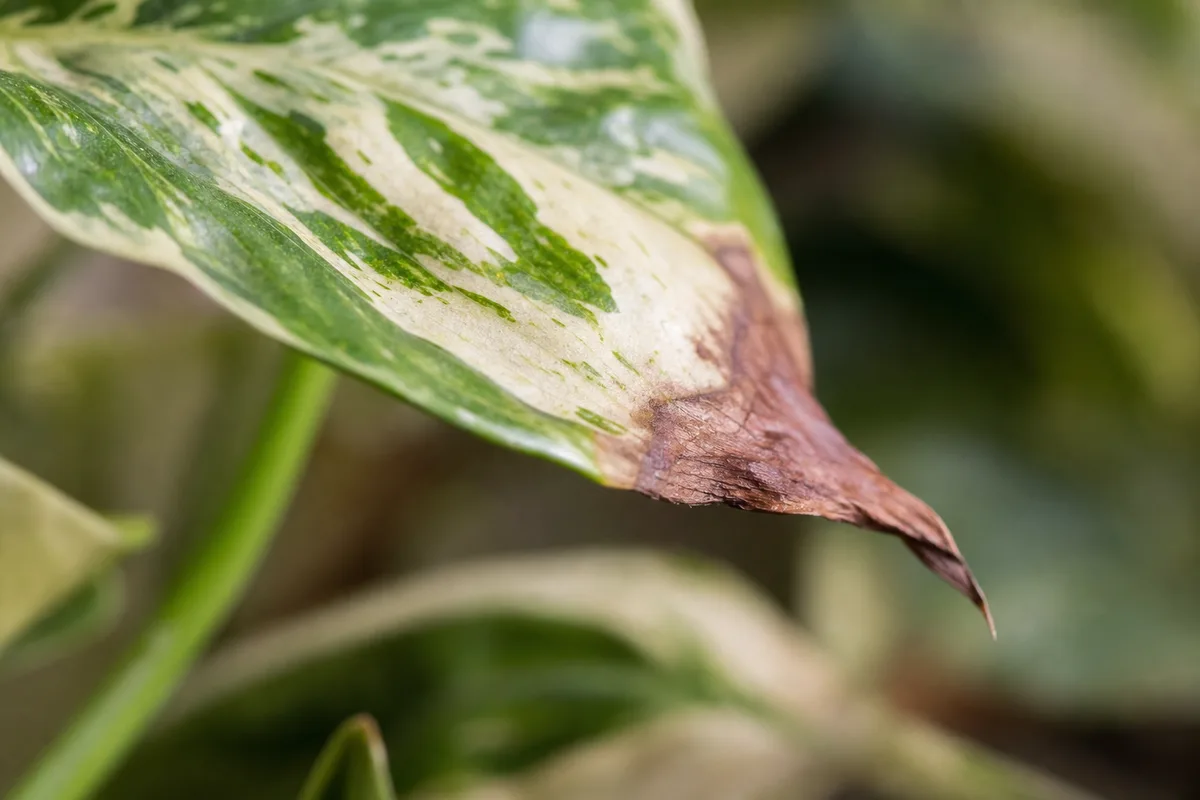
Low Humidity symptoms on Manjula Pothos - compare with healthy tissue on the same plant.
Typical signs include:
- Dry tan or brown tips on Manjula Pothos on otherwise firm, green-backed leaves
- Crispy edges on cream or white variegation before green tissue browns
- Minor tip burn on newly unfurling leaves during winter heating season
- Dull, papery feel on leaf margins without yellowing from the base
- Damage clustered on vines nearest a vent, radiator, or sunny winter window
What low humidity does not look like: mushy stems at nodes, sour-smelling wet soil, whole-leaf yellowing starting at the petiole, or black soft spots spreading inward. Those patterns point to overwatering, rot, or disease-not dry air alone.
Manjula’s patented cultivar leaves are broader and more upright than classic golden pothos, with more exposed surface area on the variegated sections. White and cream tissue lacks chlorophyll and transpires differently, so variegated margins often crisp first even when the rest of the vine looks fine.
Why Manjula Pothos gets low humidity stress
Pothos evolved in warm, humid understory conditions. Indoors, winter heating can pull relative humidity into the 20–30% range for months. Forced-air vents and space heaters create micro-climates below 25% within a metre of the airflow-exactly where hanging Manjula baskets often hang.
Manjula is slower-growing than neon or golden pothos, so it replaces damaged leaves less quickly. That makes tip burn linger visually even after you fix the air.
Several home situations stack the problem:
- Central heating running continuously from November through March
- Trailing vines draped over radiators or near floor registers
- Bright south-facing windows in winter-sun plus dry glass-adjacent air accelerates edge desiccation
- Newly acclimating plants moved from a humid greenhouse or nursery bench to a dry apartment
- Air-conditioned rooms where cold dry air blows across foliage all summer
Dry air also sets the stage for spider mites, which multiply faster when humidity is low and temperatures are warm. Mite damage looks different from pure humidity burn, but the two often appear together on stressed Manjula vines.
How to confirm low humidity is the cause
Work through these checks in order before you buy equipment or change watering:
- Placement audit - Note every vent, radiator, fireplace, and draft path within arm’s reach of the pot. Damage on the vine facing the heat source strongly implicates dry air.
- Hygrometer reading - Place a small hygrometer at leaf height for 24 hours. Below 30–40% supports low humidity; 50% or above makes dry air a less likely sole cause.
- Soil moisture check - Insert a finger into the top 3–5 cm. Normal dry-down with firm leaves and crispy tips fits humidity stress. Bone-dry soil plus limp leaves suggests underwatering is contributing.
- Water quality cross-check - Fluoride and salt burn also hit tips. If you use hard tap water and see white crust on the soil surface, water quality may overlap with humidity-address both, but do not skip the placement fix.
- New growth test - Watch the next leaf that unfurls after you move the plant. Clean margins on new tissue confirm the environment was the trigger; continued tip burn means humidity is still too low or water quality is still an issue.
- Pest inspection - Flip leaves and check for stippling, fine webbing, or gritty undersides. If present, treat mites separately-raising humidity helps prevention but does not replace pest control.
If humidity reads above 45%, soil is unevenly dry, and newest leaves still burn, look at underwatering or fertilizer salt buildup before blaming air moisture alone.
First fix for Manjula Pothos
Move the pot to a stable spot at least one metre from heating vents, radiators, and AC returns, with trailing vines not hanging directly over heat sources.
This costs nothing, works immediately, and tells you within one to two weeks whether placement was the main driver. Manjula handles being relocated more easily than a heavy repot-just avoid bouncing it between rooms every few days.
After the move, leave watering exactly as it was when soil dried normally. Do not water more to “compensate” for dry air-that invites root rot from overwatering on a plant already prone to overwatering damage in its white variegated sections.
Once the plant sits in stable air, add a hygrometer reading. If humidity still reads below 40% at leaf height, proceed to a room humidifier or plant grouping-not misting alone.
Step-by-step recovery
After relocation and measurement:
- Run a cool-mist or evaporative humidifier near the plant (not directly on leaves) until leaf-height readings hold 40–60% for several days. Humidifiers raise ambient moisture more reliably than pebble trays in large dry rooms.
- Group tropical plants on the same shelf or plant stand. Shared transpiration creates a modest humidity bubble around the cluster.
- Use a pebble tray if you lack a humidifier-set the pot on pebbles above water level so evaporation rises around the foliage without keeping roots wet.
- Switch to filtered or overnight-rested tap water if tips on new growth continue despite good humidity. Mineral edges mimic dry-air burn on variegated pothos.
- Trim fully brown tips with clean scissors following the leaf’s natural curve. Cosmetic only; trimmed tissue will not regreen.
- Inspect weekly for spider mites while air is dry. Rinse undersides in the shower if you see stippling-dry stress and mites often overlap in winter.
Hold off on fertilizer, Manjula Pothos repotting guide, and heavy pruning until new leaves unfurl clean for at least two weeks. Stressed Manjula vines need boring stability, not a stack of interventions.
Recovery timeline
Placement fixes can slow new tip burn within three to seven days if vents were the main trigger. Humidifier use typically shows cleaner new growth within two to four weeks-Manjula’s slower growth rate means visible recovery takes longer than on neon pothos.
Old crispy tips remain brown permanently. Judge success by new unfurling leaves, not by old damaged tissue turning green.
If four weeks pass with stable 45%+ humidity and new leaves still emerge burnt, revisit water quality and light intensity before assuming humidity was wrong.
Lookalike symptoms to rule out
Underwatering - Whole leaf droop, dry soil throughout the pot, and crispy tissue from the tip inward on multiple leaves at once. Fix watering first; humidity alone will not rehydrate a bone-dry root ball.
Salt and fluoride burn - Brown tips with white mineral crust on soil or pot rim, often from excess fertilizer salts in the soil. Often develops slowly regardless of season. Filtered water fixes it; humidifiers do not.
Direct sun scorch - Large papery brown patches on white variegation facing a window, usually after a sudden move to stronger light. Not tied to winter heating.
Spider mites - Yellow stippling on upper surfaces, fine silk on undersides, gritty feel when wiped. Dry air favors mites but requires pest treatment, not just humidity.
Root rot from overwatering - Yellowing from petiole outward, soft stems, sour soil. Opposite of the firm-stem pattern low humidity produces.
Mistakes to avoid
Do not overwater to combat dry air-Manjula’s biggest indoor killer is soggy soil, not dry tips.
Do not rely on once-daily misting in dim corners. Moisture evaporates in minutes and wet foliage in low light can invite fungal spotting without raising ambient humidity meaningfully.
Do not place a humidifier so close that leaves stay constantly wet-that risks leaf-spot issues on broad Manjula blades.
Do not ignore ants or stippling while focusing only on humidity. Dry winter air and spider mites often arrive together on trailing vines.
Do not expect old leaves to heal. Waiting for crispy tips to regreen delays the real signal: clean new growth.
How to prevent low humidity next time
- Keep Manjula off radiator ledges and away from floor registers year-round
- Run a humidifier in the plant room from first heating cycle through late winter
- Group humidity-loving plants rather than isolating Manjula in the driest room of the house
- Monitor new leaf tips each winter-they are the earliest humidity barometer on variegated cultivars
- Acclimate new purchases slowly when moving from a humid shop to a dry home; hold other care changes for two weeks
- Maintain Manjula Pothos light guide without hot afternoon sun on white sections-light and dry air together burn variegation faster
- Keep trailing vines away from direct heat sources such as radiators year-round to reduce repeat tip burn
Target 40–60% at leaf height as a practical indoor range. Manjula tolerates brief dips lower, but cream margins show wear when dry spells last weeks.
When to worry
Low humidity alone is a low-severity, cosmetic issue on established Manjula Pothos with healthy roots. You do not need emergency repotting or fungicides for dry tips on firm vines.
Escalate care when:
- Spider mites spread across multiple vines despite humidity improvements
- Stems soften at nodes while soil stays wet-humidity fixes will not fix rot
- New leaves fail to open and collapse, suggesting combined drought and pest stress
- Variegation reverts entirely to green on new growth-that usually signals insufficient light, not humidity alone
If only old leaves on long trailing vines show tips and new growth is clean after environmental fixes, the plant is stable. Trim or tolerate the cosmetic damage.
Conclusion
Low humidity on Manjula Pothos announces itself through crispy variegated edges and brown tips while the vine stays structurally sound. Move away from dry air sources, confirm readings with a hygrometer, then raise moisture toward 40–60% without overwatering. Old burn will not reverse-watch new leaves for proof that your air fix worked.
When to use this page vs other Manjula Pothos guides
- Manjula Pothos watering guide - Use for routine moisture checks before assuming low humidity is the main issue.
- Manjula Pothos problems hub - Browse all 40 common issues on this species.
- Brown Tips on Manjula Pothos - Different entry point when symptoms overlap with low humidity.
- Curling Leaves on Manjula Pothos - Different entry point when symptoms overlap with low humidity.