Aphids on Portulaca: Causes, Checks & Fixes
Quick answer
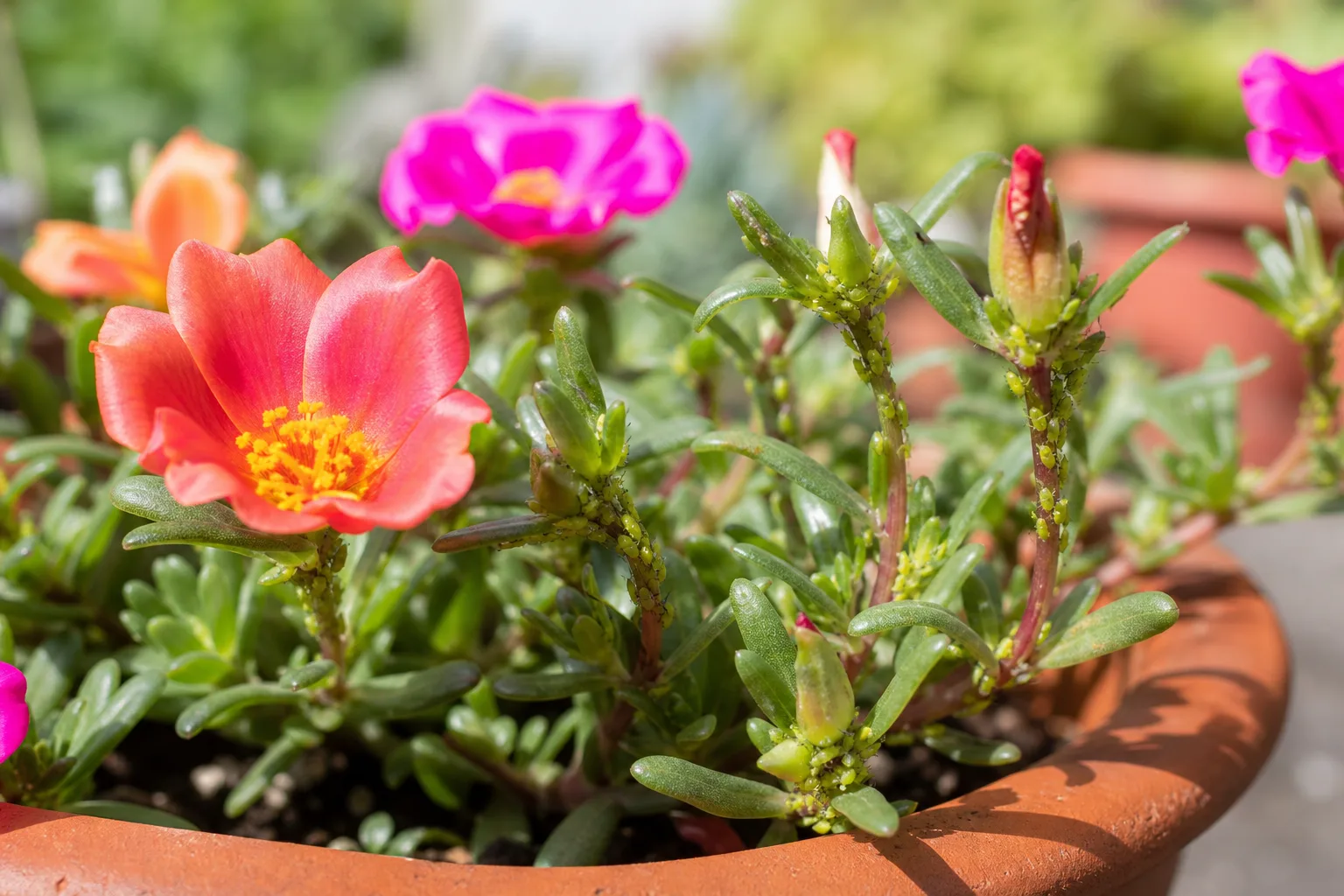
Aphids on Portulaca cluster on soft new stem tips and flower buds-the pest Missouri Botanical Garden tells Moss Rose growers to watch for. First step: Rinse trailing shoots with a strong morning water jet, then apply insecticidal soap on cool mornings if colonies persist.
Aphids on Portulaca: Causes, Checks & Fixes
This guide covers aphids on Portulaca. See also the general Aphids guide, watering, and light pages for this plant.
Aphids on Portulaca: Causes, Checks & Fixes
Quick answer
Aphids on Portulaca (Portulaca grandiflora, Moss Rose) cluster on soft new stem tips and flower buds-the pest Missouri Botanical Garden tells Moss Rose growers to watch for. You may see green, black, or pink pear-shaped insects, sticky honeydew on needle-like leaves, ants marching up trailing stems, and buds that fail to open when feeding is heavy.
First step: rinse colonies off with a strong stream of water early in the morning, targeting tips, buds, and leaf undersides on trailing shoots before you reach for any spray. NC State also lists aphids as an occasional problem on Portulaca alongside slugs outdoors.
Treat urgently when buds are coated before peak bloom-Moss Rose puts its show on those papery flowers, and heavy sap feeding can abort buds that will not reopen on the same stem.
Why Portulaca gets aphids
Tender bud flush is the main target. Moss Rose pushes soft stem tips and swelling flower buds constantly during warm summer flush-the same tissue that makes terrace baskets colorful also attracts aphids that prefer tender new growth. Damage concentrates at stem tops and bud clusters while older lower runners often look fine until honeydew spreads.
Tender bud flush and mixed-container introduction
Mixed summer baskets are a common entry point. Aphids hitchhike from neighboring petunias, calibrachoa, or verbena into Moss Rose pockets where dense trailing mats hide colonies on inner runners until bloom peak. Quarantine new packs two weeks before combining them with established [portulaca displays](/plants/portulaca/Portulaca overview/) on sunny rails.
Dense trailing habit matters. Moss Rose forms a low mat of succulent needle leaves-colonies tucked under unopened buds and inside hanging-basket pockets stay shaded from casual glances until honeydew appears on leaves below.
Over-fertilized Moss Rose in partial shade
Moss Rose evolved for full sun with lean, sandy soil-not rich mix in partial shade. Over-fertilized Moss Rose in partial shade pushes soft, nitrogen-rich tips that aphids multiply on faster. If your basket sits under an eave or beside taller plants, see portulaca light before blaming random bad luck.
Ants protect colonies. Ants harvest honeydew and defend aphids from predators. Ant trails on pot rims or basket chains often appear before you spot insects feeding on buds-see ants on plant when farming is part of the picture.
Unlike zinnias, virus transmission through aphids is not a well-documented Moss Rose problem in extension literature. Your main risk on Portulaca is bud abortion, stunted tips, and sooty mold-not mosaic mottling.
What aphids look like on Portulaca
- Small pear-shaped soft-bodied insects-green, black, pink, or gray-clustered on newest stem tips, swelling buds, and leaf undersides on trailing shoots
- Colonies tucked under papery unopened Moss Rose buds and at the base of double-flower clusters
- Sticky, shiny honeydew on needle-like leaves below feeding sites or on stems
- Ants traveling up trailing runners toward growing tips
- Curled, yellowed, or stunted newest leaves while older lower foliage stays mostly intact
- White cast skins on leaf undersides after aphids molt
- Black sooty mold growing on untreated honeydew, dulling leaf color
- Buds that stay closed on sunny afternoons when coated with insects-not the normal cloud-cover closing Moss Rose shows on overcast days
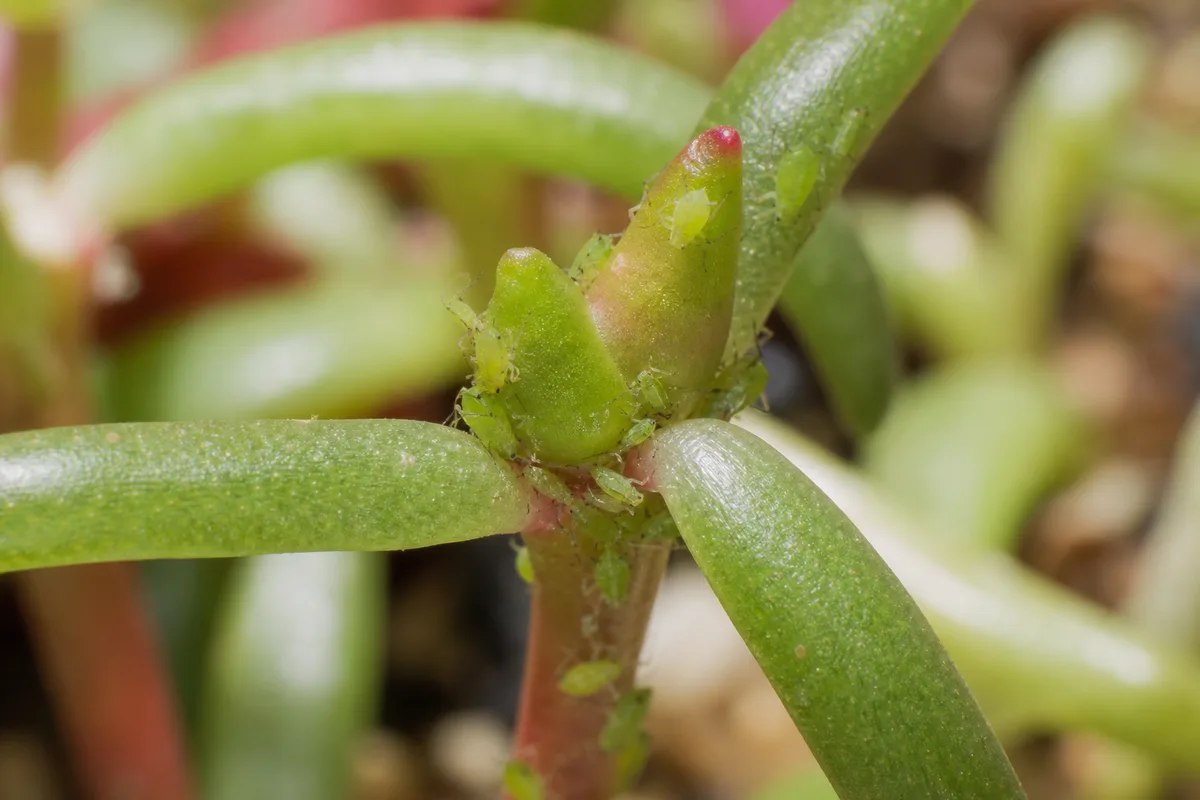
Aphids symptoms on Portulaca - compare with healthy tissue on the same plant.
Unlike slugs-which NC State lists as another occasional Portulaca pest and chew ragged holes overnight-aphids suck sap and leave tissue curled rather than eaten through.
How to confirm the cause
Work through these checks in order:
- Bud and tip scan - Start at swelling flower buds and the topmost growing points on each trailing runner. Aphids colonize the softest Moss Rose tissue first.
- Underside inspection - Lift leaves on upper stems and check backs with a hand lens. Colonies hide under young foliage pressed against buds in dense mats.
- Disturbance test - Touch a cluster gently. Aphids move slowly when disturbed; scale insects do not move at all.
- Honeydew check - Wipe a shiny upper leaf. If stickiness returns within a day, sap feeders are still active above.
- Ant trail follow - Ants marching up stems strongly suggest aphids or other honeydew producers on new growth.
- Bud-closing cross-check - Closed buds on a sunny afternoon with no insects point to shade or overwatering on Portulaca per the portulaca overview. Closed buds coated with soft insects point to aphids.
Step-by-step checks
Hold hanging baskets at eye level and rotate the pot slowly. Inspect every pocket where two runners cross-inner stems stay moist longer and hide colonies. In mixed flats, check Moss Rose last after scanning petunias and calibrachoa neighbors that may have introduced the pest.
Shake tips over white paper. Pear-shaped bodies with cornicles at the rear confirm aphids-unlike mealybugs (waxy cotton in axils) or spider mites (stippling plus webbing in hot dry baskets).
Lookalike symptoms to rule out
| What you see | Likely cause | Next step |
|---|---|---|
| Pear-shaped insects on buds, sticky honeydew, ants on stems | Aphids | Water rinse, then insecticidal soap if needed |
| White cottony masses in leaf axils and stem joints | Mealybugs | Mealybugs guide |
| Fine stippling, webbing, hot dry basket | Spider mites | Increase inspection; water knockdown; see spider mites |
| Silvery petal scars, slender fast insects | Thrips | Inspect open blooms; see thrips |
| Winding pale tunnels inside fleshy leaves | Leaf miners | Leaf miners guide |
| Buds closed on cloudy days only, no insects | Normal photonasty or shade | Move to full sun; reduce nitrogen |
| Ants without visible sap feeders | Honeydew farming | Ants on plant triage first |
First fix for Portulaca
Knock aphids off with a strong jet of water early in the morning, focusing on tips, buds, and leaf undersides on trailing shoots.
Hold stems steady and spray from below so undersides get direct contact. Let foliage dry in sun the same day-Moss Rose tolerates heat but avoid soaking open flowers during peak bee activity when you can direct spray to stems and undersides instead.
This single step dislodges aphids, washes fresh honeydew before it attracts ants, and preserves pollinators better than immediate chemical sprays. Repeat every two to three days until live colonies are gone on inspection.
Do not reach for insecticide on day one without confirming insects. Do not increase nitrogen feeding on a pest-hit Moss Rose-that produces more tender tissue aphids prefer.
Step-by-step recovery
After the initial water blast:
- Repeat water sprays every two to three days through at least one full week while checking tips daily during warm bloom weather.
- Apply insecticidal soap if colonies persist after several rinses. Cover tips, buds, and undersides thoroughly; repeat every four to five days for two to three cycles to catch newly hatched nymphs. Use EPA-registered product-not household dish soap, which can burn succulent foliage.
- Treat early or late in the day when temperatures are below 90°F and bees are less active on open Moss Rose blooms. Pollinator-safe timing matters on heavily flowering hanging baskets.
- Spot-test one stem before full-basket spray. Moss Rose is among the plants sensitive to insecticidal soaps-wait 24 hours after a test patch before treating the whole display.
- Manage ants if they protect colonies. Ant barriers on container edges or stakes can help lady beetles and lacewings reach aphids outdoors.
- Trim heavily coated bud clusters you cannot clean without crushing papery petals-discard bagged clippings, not compost near garden beds.
- Wipe sooty mold off upper leaves with plain water once honeydew production stops. Coated old leaves may stay dull; judge recovery by clean new tips and buds.
Space crowded runners if inner stems stay damp-better airflow slows both aphid buildup and the rot that follows wet shade on Moss Rose.
Recovery timeline
Water knockdown shows results within two to three days when colonies are moderate. A full soap course may take one to two weeks with label-interval repeats. Curled young leaves rarely flatten completely once hardened-watch for clean new growth and undamaged buds instead.
Flower buds that dropped or stayed closed from heavy feeding will not reopen on that stem. Moss Rose blooms in flushes through summer; recovery means the next buds open clean on rinsed runners, not that damaged tissue reverses.
Monitor tips weekly through bloom season. On terrace baskets in Indian summer heat, midday wilting on bone-dry soil is normal drought stress-do not confuse it with aphid curl on soft tips that still feel turgid.
Mistakes to avoid
Do not spray insecticidal soap on water-stressed Moss Rose in midday heat-leaf burn risk rises above 90°F.
Do not use household dish soap. Products not labeled for plants can damage succulent Moss Rose foliage-and Clemson Extension lists Portulaca among soap-sensitive plants that need a 24-hour spot test first.
Do not ignore ants. Aphid control is harder while ants defend colonies from lady beetles.
Do not overwater after rinsing-Moss Rose still needs dry-down watering in full sun. Shallow succulent roots rot quickly in soggy mix.
Do not use systemic insecticides where Portulaca is toxic to pets that might chew fallen leaves. Call ASPCA Animal Poison Control at (888) 426-4435 if a pet ingests treated foliage.
Do not wet dense trailing mats routinely when treating pests-your normal care already avoids overhead watering to reduce rot. Targeted morning rinses for aphid removal are different from daily leaf wetting.
Do not pull the entire basket for three aphids on one runner-early rinsing usually saves the display.
Portulaca care cross-check
Aphids are a pest issue, but weak Moss Rose recovers slower after you knock pests off.
- Light: Full sun-six or more hours of direct sunlight per the portulaca light guide-keeps Moss Rose pushing firm tips and opening flowers.
- Water: Water only when soil is completely dry; avoid saucers that hold runoff after rinsing shoots.
- Soil: Sandy, well-drained, low-fertility mix per the portulaca overview; soggy roots do not cause aphids but stress slows regrowth.
- Season: Moss Rose is a seasonal annual-late-season decline with scattered aphids may not warrant chemical escalation.
Aphids on Moss Rose in wet shade often coincide with rot-confirm stem firmness at the crown and drainage before assuming pests alone explain collapse. Mushy base with no live insects points to root rot, not sap feeders.
How to prevent aphids on Portulaca next time
Scout new growth weekly from late spring through peak summer bloom-the window when Moss Rose pushes constant soft shoots.
Inspect new baskets and nursery packs before planting into mixed terrace displays. Hold newcomers two weeks in isolation when possible.
Grow in full sun with lean soil-avoid heavy nitrogen in partial shade. One slow-release application at planting is enough for many Moss Rose displays.
Deadhead spent blooms to reduce soft tip attractiveness. Control ants to expose colonies to predators outdoors.
Preserve beneficial insects. Lady beetles, lacewings, and parasitic wasps control aphids when broad-spectrum sprays have not wiped them out-use water sprays before chemicals, matching the low-risk approach Oregon State Extension recommends for aphid management.
Space plants 15–30 cm in beds and avoid overcrowding hanging pockets where inner runners stay damp and hidden.
When to worry
Treat as urgent when colonies coat most developing buds before bloom peak, honeydew and sooty mold spread across the trailing mat within days, or ants swarm multiple runners while buds abort.
Moderate aphids on otherwise vigorous blooming Moss Rose are manageable with water and soap if caught early-not an automatic reason to discard the whole basket.
Replace severely declining plants-mushy crowns, most buds lost, reinfestation every week despite two soap cycles-rather than fighting endless spray on a stressed annual. Fresh Moss Rose packs are inexpensive; starting clean mid-season beats coating a failing display in chemicals.
For a mature bloom basket with scattered colonies on outer tips, worry less about plant death and more about bud loss before peak color-rinse early and protect the next flush.
Conclusion
Aphids on Moss Rose target the same soft tips and buds that make terrace baskets shine in summer sun. Inspect new growth weekly, blast colonies off with water before you spray, repeat until clean buds return, and quarantine mixed baskets when neighbors introduce pests. That path protects pollinators, limits bud abortion, and keeps honeydew from coating your trailing display-without the rot risk that follows overwatering a rinsed succulent annual in wet shade.
When to use this page vs other Portulaca guides
- Portulaca watering guide - Use for routine moisture checks before assuming aphids is the main issue.
- Portulaca problems hub - Browse all 50 common issues on this species.
- Ants on Plant on Portulaca - Different entry point when symptoms overlap with aphids.
- Curling Leaves on Portulaca - Different entry point when symptoms overlap with aphids.
- Mealybugs on Portulaca - Different entry point when symptoms overlap with aphids.