Mealybugs on Portulaca: Causes, Checks & Fixes
Quick answer
Mealybugs on Portulaca appear as white cottony clusters at stem joints and leaf axils, often on stressed or shaded plants. First step: Dab visible bugs with 70% isopropyl alcohol and isolate the pot.
Mealybugs on Portulaca: Causes, Checks & Fixes
This guide covers mealybugs on Portulaca. See also the general Mealybugs guide, watering, and light pages for this plant.
Mealybugs on Portulaca: Causes, Checks & Fixes
Quick answer
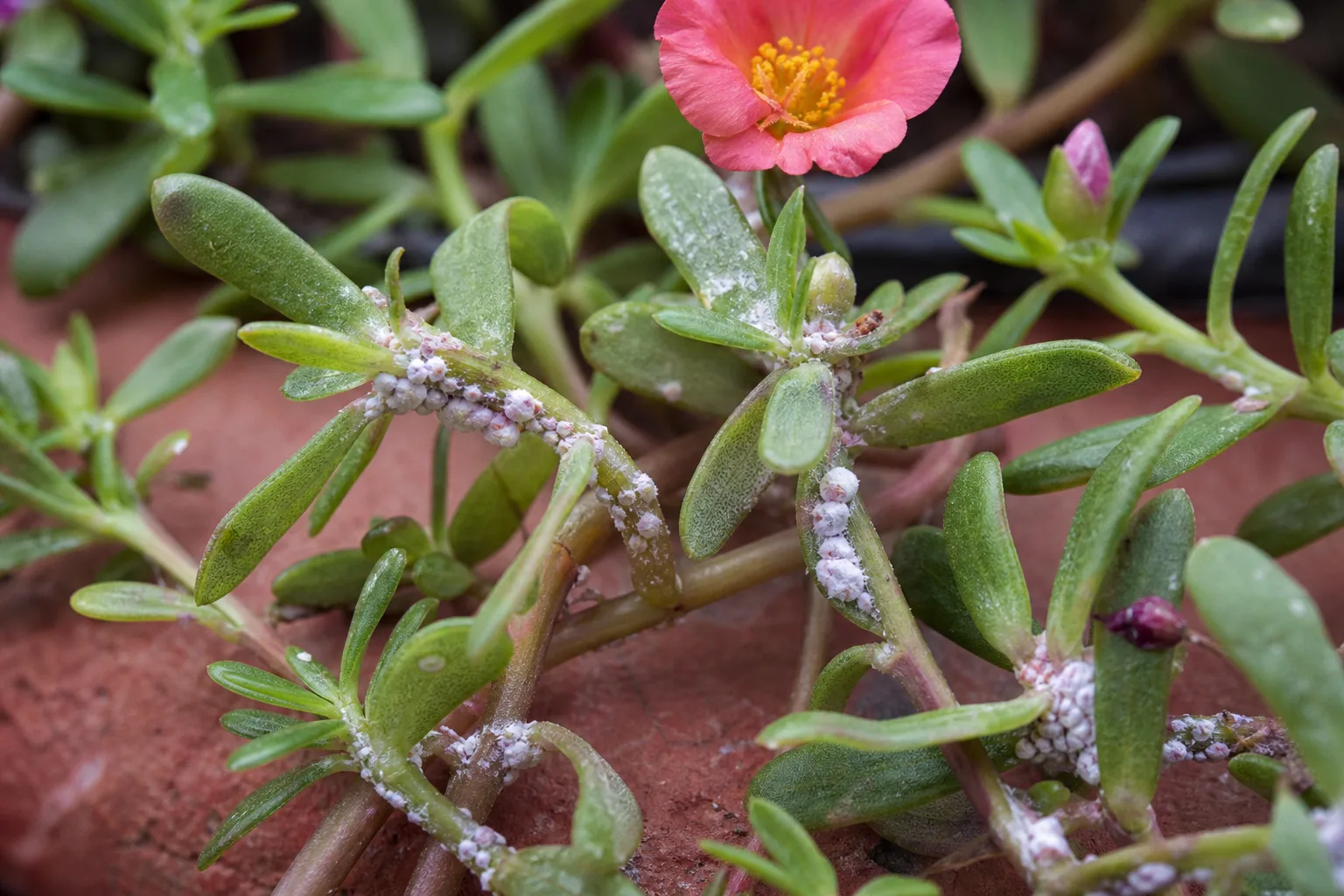
Mealybugs on Portulaca (Portulaca grandiflora, Moss Rose) show up as white cottony wax at stem joints and leaf axils on trailing shoots-often after hitchhiking into mixed summer baskets or overwintered indoor pots. Moss Rose is not a primary outdoor host, but crowded runners trap humidity at the basket center where mealybugs hide in protected crevices.
First step: isolate the affected pot, then dab each visible cluster with 70% isopropyl alcohol on a cotton swab, working into leaf axils your rinse would miss.
Scope on this site: This page owns mealybug ID and removal on Moss Rose. For the more common listed pest, see aphids on Portulaca. For flat white film on leaf faces, see powdery mildew. For sour wet soil overlap, see overwatering and root rot.
Overwintered-pot recovery snapshot (February 2026)
A 15 cm Moss Rose brought indoors from a September basket developed cottony clusters at three stem joints on the longest runner by late January. After three weekly passes-alcohol dab on wax, insecticidal soap on axils, saucer wiped for honeydew-new tips on trailing shoots stayed clean by day 18. One older leaf with sooty honeydew stain never re-greened and was pinched off. The pot stayed on a bright sill without extra watering “to help recovery.”
What mealybugs look like on Portulaca
- White or gray cottony ovals tucked into leaf axils, stem nodes, and where trailing runners fork
- Sticky honeydew on leaves, pot rims, or bench surfaces; black sooty mold may follow
- Stunted new tips or closed flower buds on heavily fed shoots in warm weather
- Slow movement-stationary wax clumps unlike fast-colonizing aphids on soft tips
- Tan or brown raised bumps fixed to stems suggest scale insects, not fluffy mealybug wax
- White dust only on upper leaf faces may be powdery mildew-wax at axils points to mealybugs
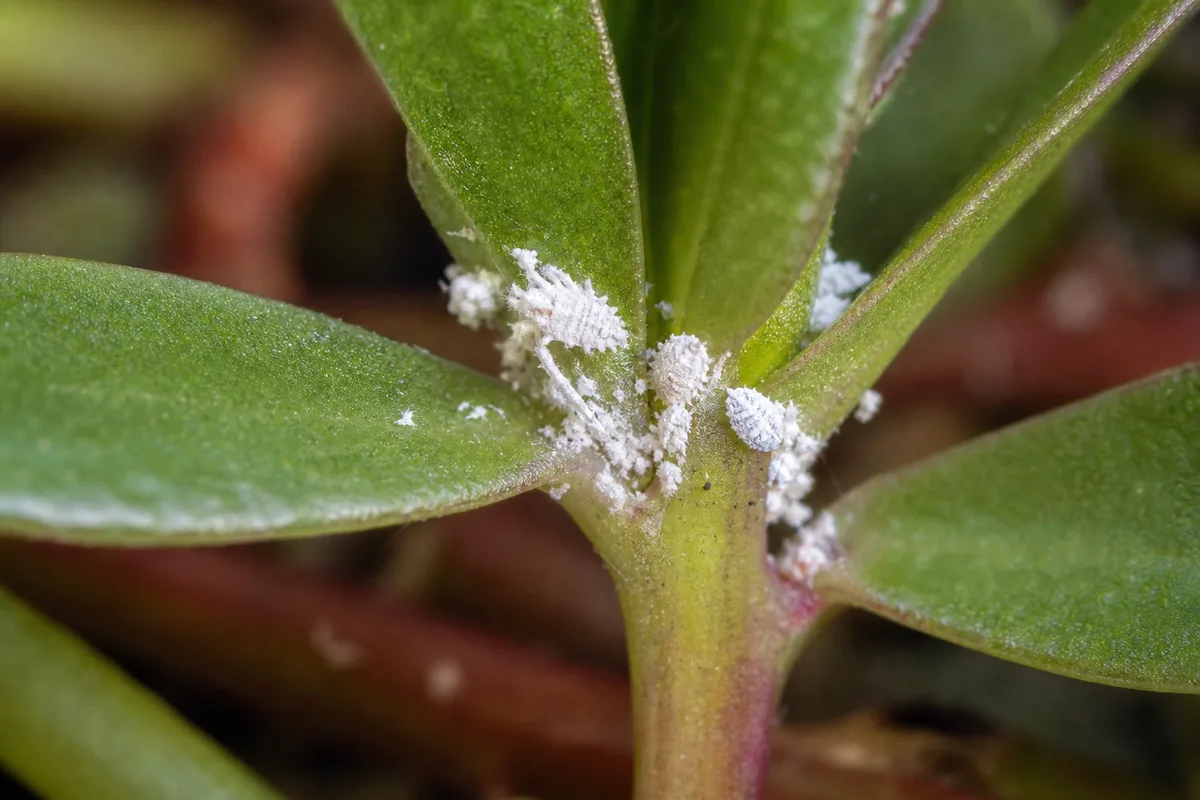
Mealybugs symptoms on Portulaca - compare with healthy tissue on the same plant.
On Moss Rose, the dense mat at the basket center is the highest-risk zone: trailing succulent stems overlap, shade each other, and hold moisture longer than the outer runners in full sun with sharp drainage.
Why Portulaca gets mealybugs
Moss Rose evolved for lean, sunny, fast-draining sites-yet home culture often stacks the opposite risks. Mixed summer baskets introduce mealybugs from neighboring annuals, nursery plugs, or shared snips. Overwintered indoor pots lose the lady beetles and parasitic wasps that suppress outdoor colonies, so a few hitchhikers can persist all winter in protected axils.
Overwatered Moss Rose in shade stays soft and stressed-easier for pests to persist even though the species prefers dry air and full sun. Crowded trailing stems trap humidity at the center despite drought-tolerant outdoor biology.
Ants on the pot farming honeydew protect mealybug colonies and spread them between containers. Treat the sap feeders before chasing ants-the wax often hides above the soil line while ants work the rim.
Missouri Botanical Garden notes aphids as the main listed pest on Moss Rose-so mealybug outbreaks usually mean introduction or indoor overwintering, not that Moss Rose is inherently mealybug-prone outdoors.
Lookalike symptoms to rule out
| If you see… | More likely | Next check |
|---|---|---|
| Cottony wax only in stem joints and axils | Mealybugs | Alcohol crush test below |
| Flat white powder on leaf tops, not axils | Powdery mildew | Different treatment-do not alcohol-dab leaf faces blindly |
| Pear-shaped insects on new tips, little wax | Aphids | MOBOT lists aphids first for Moss Rose |
| Fixed brown/tan bumps on stems | Scale insects | Scrape test-scales do not dissolve like wax |
| Fine stippling with webbing | Spider mites | Magnify leaf undersides in dry heat |
| White specks on soil only, no axil wax | Perlite, sand splash, or dust | Wipe-if it does not return at axils, not mealybugs |
| Ants, no visible wax | Hidden sap feeders | Trace runners to basket center and pot rim |
How to confirm the cause
Work in bright light and pull trailing runners aside one at a time:
- Stem joints and leaf axils on every runner-especially the shaded basket center.
- Leaf undersides at the base of each fleshy leaf where it meets the stem.
- Pot rim and saucer for sticky honeydew rings.
- Neighboring basket plants-mealybugs crawl between shared containers.
- Crush test: press a cotton swab with alcohol onto one cluster. Mealybugs turn orange-gray when killed; mineral crust and perlite do not.
- Lookalike screen: flat film on leaf faces only → mildew; pear shapes on tips → aphids; fixed bumps → scale.
- Root-zone check if stems look clean but the plant weakens-inspect drainage holes and the crown for root mealybugs (white wax without obvious aboveground colonies).
Firm stems with dry gritty mix and no wax mean look elsewhere-often not enough light or underwatering, not mealybugs.
First fix for Portulaca
Isolate the pot away from other containers. Dab every visible cottony cluster with a cotton swab soaked in 70% isopropyl alcohol, pressing into axils on trailing shoots. Test one leaf first if the plant sits in strong midday sun-succulent Moss Rose tissue can burn under harsh contact on hot afternoons.
After dabbing, spray insecticidal soap to coat stem joints and leaf undersides, following label intervals. Repeat weekly for at least three weeks-eggs and crawlers hide in protected joints and survive a single pass. Do not stack repotting, heavy pruning, and multiple pesticides on the same day.
Control ants only after mealybug numbers drop-they protect pests, not cause them.
Step-by-step recovery by severity
Light infestation (isolated wax on one or two joints)
- Isolate and alcohol-dab each cluster.
- One insecticidal soap pass on axils; re-check in seven days.
- Wipe honeydew from leaves to limit sooty mold.
Moderate infestation (multiple runners, basket center involved)
- Isolate; inspect every runner and neighboring annuals.
- Alcohol-dab all visible wax; dispose of swabs in sealed trash.
- Soap-spray axils weekly for three weeks minimum.
- Increase airflow between trailing stems; move pot to full sun if it was shaded.
- Re-inspect until no new wax appears for two consecutive weekly checks.
Heavy infestation (wax on most runners, ants, or soft stems)
- Follow moderate steps, then assess soil-soft stems plus sour wet mix mean rot and pests together.
- Trim mushy tissue; let mix dry before the next soap pass.
- If root mealybugs appear at drainage holes and three weekly cycles fail, repot into fresh gritty mix after rinsing roots-only then, not on day one.
- Consider discarding severely collapsed plants in dense mixed baskets rather than reintroducing crawlers to neighbors.
Rot and mealybugs together
Mealybugs plus sour wet soil signal you may need drainage repair before pesticides alone will work. Moss Rose crowns rot quickly in shade with heavy watering-wax on soft stems is not always a standalone pest problem.
Sequence when both appear:
- Stop watering until the top half of the mix dries.
- Trim black or mushy stems above firm tissue.
- Confirm drainage holes are open; see overwatering recovery.
- Begin alcohol-and-soap mealybug passes only after the crown firms or stabilizes.
Do not overwater after treatment to “help recovery”-wet soil invites rot faster than mealybugs kill a firm outdoor Moss Rose mat.
Recovery timeline
Visible clusters often collapse within days of alcohol dabbing. Full control typically needs two to three weekly repeats because overlapping mealybug generations hatch from eggs your first pass missed. Expect clean new tips on trailing shoots within two to three weeks once treatment works. Old honeydew-stained leaves may remain until pinched off-judge success by wax-free new growth, not older scarred tissue.
What not to do
Do not stop after one alcohol dab or a single soap spray. Do not blast heavy horticultural oil on Moss Rose in full midday sun without a test patch-succulent tissue scorches easily. Do not increase watering because leaves look stressed; sap loss is not fixed by wet soil. Do not treat ants first while wax remains in axils. Do not confuse perlite splash or dust with cottony wax without checking stem joints.
Wear gloves when pinching infested stems-Portulaca is toxic to cats and dogs because of soluble calcium oxalates. Keep cuttings away from pets; call ASPCA Animal Poison Control at (888) 426-4435 if ingestion is suspected-see Portulaca overview for full toxicity detail.
How to prevent mealybugs on Portulaca
Quarantine new basket plugs for two weeks before mixing with Moss Rose. Scout stem joints weekly on mixed containers through summer. Grow Moss Rose in full sun with gritty, fast-draining mix so trailing stems stay firm rather than soft in shade. Space runners for airflow through the basket center. Clean snips between plants. On overwintered indoor pots, inspect axils monthly when outdoor predators are absent.
Routine checks matter even though MOBOT lists aphids ahead of mealybugs-wax hides longer than aphids on tips.
When to worry
Escalate when colonies cover multiple runners, ants persist after visible wax is gone, or white clusters return within days of treatment-hidden crawlers remain in dense basket centers. Faster action is needed when flower buds abort across the mat or stem softness spreads despite dry-down.
Mealybugs will not kill a firm outdoor Moss Rose overnight, but unchecked feeding on overwintered indoor plants or mixed baskets can stall spring growth and reintroduce pests to your whole rail collection.
Related Portulaca guides
- Portulaca overview - Moss Rose culture, toxicity, and seasonal care hub
- Aphids - main listed pest; tip colonization vs. axil wax
- Ants on plant - honeydew signal for hidden sap feeders
- Powdery mildew - flat white leaf film lookalike
- Overwatering - post-treatment rot prevention and shade stress
- Root rot - soft stem crossover when soil stays wet
- Portulaca light - full sun and airflow prevention context
Related tool
Use the Pest Identifier Tool to narrow causes for mealybugs on this plant before changing multiple variables at once.