Flowers Turning Brown on Portulaca: Causes, Checks & Fixes
Quick answer
Brown flowers on Portulaca are usually spent single-day blooms (dry papery tan tissue) or mushy buds after wet weather-not a dying plant. First step: pinch off every brown flower and any soft wet buds, then check whether soil is too wet or bone-dry before watering again.
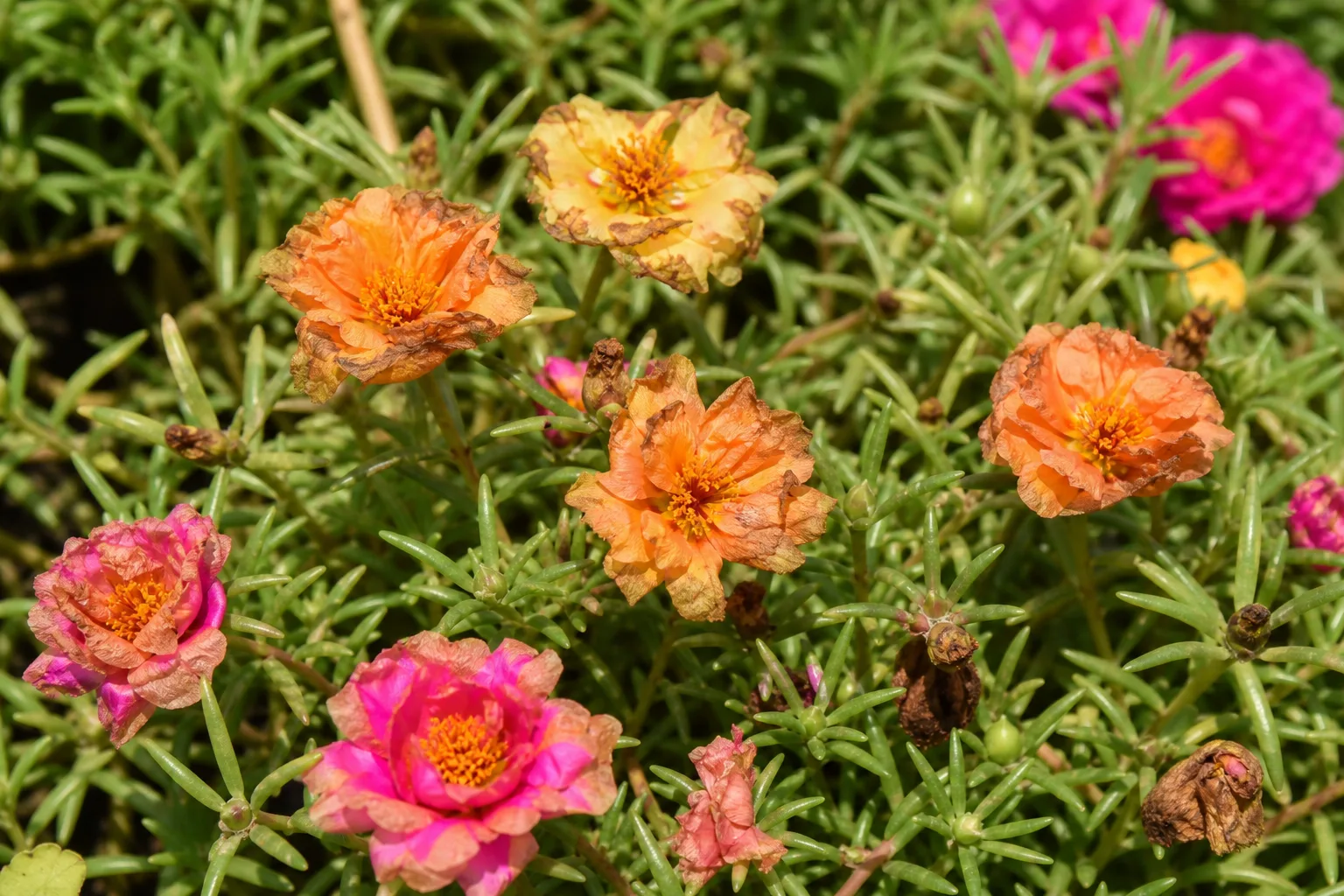
Flowers Turning Brown on Portulaca: Causes, Checks & Fixes
This guide covers flowers turning brown on Portulaca. See also the general Flowers Turning Brown guide, watering, and light pages for this plant.
Flowers Turning Brown on Portulaca: Causes, Checks & Fixes
Quick answer
Brown flowers on Portulaca (Portulaca grandiflora, Moss Rose) mean necrotic tissue-dry papery tan on spent open blooms, or soft mushy brown on buds that abort in wet weather. This is different from faded flowers, where petals lose vivid color but are not necrotic brown, and from bud drop, where unopened buds detach cleanly before petals ever show.
First step: pinch off every brown flower and any soft, wet, or moldy buds. Then probe soil moisture at the stem base before the next drink-soggy mix invites mold; bone-dry soil in shallow hanging baskets can scorch open blooms in afternoon heat.
Moss Rose opens flowers only in direct sun; each bloom lasts roughly one day before petals dry to tan-brown. That daily rhythm is expected. Problems arise when culture pushes buds into rot, scorch, or gray mold-not when dry spent heads sit at trailing tips while plump green buds swell below.
Scope on this site: This page owns brown necrotic flower tissue-dry papery senescence, mushy wet abort, Botrytis gray mold, and heat scorch. For dull washed-out color without brown necrosis, see faded flowers. For clean green buds falling off, see bud drop.
What brown flowers look like on Portulaca
On Moss Rose, brown flowers fall into four common patterns. Texture-not color alone-tells them apart.
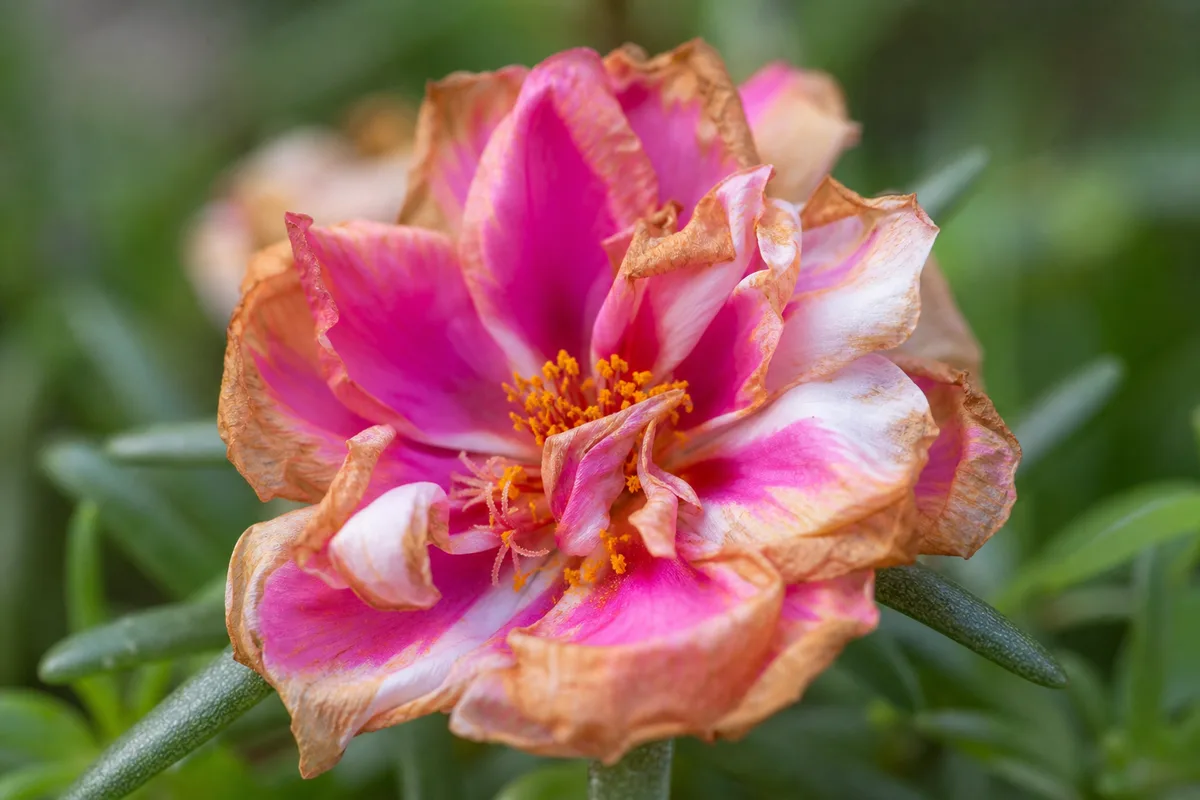
Flowers Turning Brown symptoms on Portulaca - compare with healthy tissue on the same plant.
Normal one-day senescence
Individual flowers open mid-morning in full sun, show peak color by midday, then curl inward and turn dry papery tan-brown by late afternoon or evening. Tissue feels crisp, not mushy. You see brown blooms at stem tips while fresh buds below still look green and swollen. Flowers close at night and on cloudy days and reopen when direct sun returns-closed buds on overcast mornings are not brown flowers.
Wet-weather bud abort
During humid monsoon weeks or after heavy overhead watering, tight buds may turn brown and mushy before petals unfurl. Tissue feels soft and water-soaked, not crisp. Stems may still be firm if roots are healthy. This pattern spikes when a heat spell meets generous water and Moss Rose pushes buds faster than they can open in saturated air.
Botrytis gray mold
Cool, damp, or highly humid stretches favor fuzzy grayish-brown mold on flowers, buds, and stems. Infected petals look water-soaked and decay quickly. Botrytis often gains entry through dead flowers and senescent petals-crowded hanging baskets where spent blooms stay damp are prime entry points. Brown spots spread on petals touching fallen bloom debris. More common in shaded terraces and pots that stay wet overnight than in open sunny beds.
Heat and drought scorch
Extreme heat with bone-dry soil can brown open flowers while leaves wilt midday. Tissue dries fast and feels crisp, like senescence-but happens mid-morning on blooms that never reached their full open cycle. Shallow hanging baskets in scorching sun desiccate open blooms before the day ends even when trailing stems still feel firm.
Less common: aphids on tender buds drain sap and cause buds to shrivel brown without obvious wilting-look for sticky honeydew or ant trails. Root stress from overwatering stops new flowers from opening cleanly even in sun-soft yellow stems at the base alongside brown buds point to rot overlap; see root rot when the crown softens on wet mix.
Why Portulaca flowers turn brown
Moss Rose is a heat-loving succulent annual built for full sun in well-drained sandy or rocky soil. Its flowers are short-lived by design; browning open blooms is expected. Problems arise when culture pushes buds into rot, scorch, or mold.
Single-day bloom cycle. Each Moss Rose flower opens once, shows color for hours, then senesces. Newer hybrids such as Sundance and Sundial remain open most of the day, but fading brown petals at day’s end remain normal on species-type plants. Skipping deadheading leaves dry brown clusters on trailing stems that look alarming but are cosmetic.
Wet petals and soggy soil. Portulaca needs well-drained soil and suffers when mix stays wet-waterlogged mix stresses shallow roots while humid air keeps closed buds damp. Poorly drained soils may lead to crown rot, weakening the plant and producing brown, aborted buds alongside stem decline. Overhead watering, evening irrigation, and monsoon splash keep interior blooms wet-the setup gray mold exploits on senescent petals first.
Rapid bud flush in warm wet weather. When a heat spike meets generous watering, Moss Rose can push buds faster than they open. Excess buds compete for energy; some brown and collapse on the stem while neighbors open fine. This is cultural timing, not necessarily disease-though mushy tissue should still be removed.
Insufficient sun misread as browning. Flowers close when the plant is under stress and on cloudy days. Partial-shade pots may show few open flowers and many closed buds that eventually brown without ever displaying color-not the same as healthy blooms fading after a full open cycle. See not enough light when buds never open bright on clear afternoons.
Drought during active bloom. Moss Rose survives dry spells, but letting soil dry out completely for prolonged periods reduces flower production. Open flowers in shallow dry baskets can scorch brown on the hottest afternoons while stems still feel firm.
Aphids on shoot tips. Aphids can distort growth and damage flower buds on soft shoot tips. Sticky honeydew or ant trails on trailing stems support pest diagnosis when soil moisture looks normal.
How to confirm the cause
Work through these checks in order-the answer usually appears before fungicides or extra fertilizer:
- Dry vs wet brown tissue - Crisp, papery brown on blooms that opened today confirms senescence. Soft, water-soaked, or fuzzy brown points to wet weather mold or bud abort.
- Timing in the day - Did the flower open in morning sun and brown by evening? That is normal. Did a closed bud turn mushy brown without ever opening after rain? That is abort or mold.
- Sun exposure - On a clear afternoon, do any buds open in six or more hours of direct sunlight? All-day closure in bright sun implicates shade stress, not ordinary fade.
- Soil moisture at stem base - Wet heavy mix for days with limp lower stems suggests overwatering and possible rot. Bone-dry soil with midday wilt points to drought scorch on open blooms.
- Recent weather - Record humid monsoon stretch, overhead watering, cold damp nights, or heat spike after dry-down. Mushy buds after wet warm spells fit rapid abort; dry crisp brown on open flowers in heat fits scorch.
- Bud and tip inspection - Hand-lens check for aphid clusters, honeydew, or gray fuzzy spores on petals. Circular leaf spots elsewhere suggest separate disease pressure.
- Stem base firmness - Firm stems with only dry brown spent blooms at tips mean culture is mostly fine. Soft dark stems on wet soil mean rot is compounding flower failure-shift to root rot.
If only open blooms are dry-brown and soil is appropriately dry-down, deadheading is sufficient. If mushy buds appear after wet weather, treat moisture and airflow before anything else.
First fix for Portulaca
Pinch off every brown flower, mushy bud, and moldy petal cluster-then check soil moisture before the next drink.
Use fingers or clean snips to remove spent dry blooms at stem tips. Pull off soft brown buds that will not open; discard them in the bin, not on soil or in compost where spores spread. Remove infected flowers and dispose of them outside the growing area-bag moldy tissue; do not leave it on soil or in open compost piles where spores spread. Do not mist flowers or overhead-water until you classify the problem.
If soil is wet or heavy: skip all watering until the mix is bone-dry at 3 cm depth. Confirm drainage holes flow freely. Empty saucers. Improve airflow around crowded baskets. Do not fertilize stressed roots.
If soil is bone-dry with midday wilt: water deeply at soil level in early morning until moisture exits drainage holes-then return to dry-down rhythm per the Portulaca watering guide. Do not flood repeatedly; Moss Rose prefers moderate dry-down between drinks, not constant sogginess.
If shade is the issue: move the pot to the sunniest open spot and wait for a clear afternoon before judging new opening. Closed buds on the first cloudy day after a move are not proof of failure.
After cleanup and moisture correction:
- Hold off on repotting or heavy pruning until new buds swell
- Rinse confirmed aphids from shoot tips with a strong water stream only after moisture is stable
- Shear back leggy sections only after flowering resumes if plants look sparse mid-season
Do not apply nitrogen fertilizer as a first response. Brown flowers from stress or spent blooms are not fixed by feeding.
Step-by-step recovery
Once deadheading and moisture are corrected, follow the path that matches your pattern.
Normal spent blooms
- Deadhead spent clusters weekly during peak bloom-shearing back to remove seed heads can resume flowering on trailing stems.
- Keep the pot in full sun without moving it while new buds swell-Moss Rose aborts developing flowers when placement shifts during bloom flushes.
- Maintain dry-down watering - Water only when soil is completely dry at depth. In full summer sun that may mean every four to five days.
Expect clean new opens within one to three days on healthy stems.
Wet bud abort and Botrytis
- Remove all mushy and gray-fuzzy tissue daily until spread stops-dead plant tissue is the primary Botrytis spore source.
- Let soggy soil dry completely before the next drink; confirm saucers stay empty.
- Thin crowded basket stems so interior blooms dry faster-improve airflow without stripping all foliage.
- Water at soil level in morning so petals dry by afternoon; never mist blooms.
- Escalate to fungicide only if gray fuzzy mold keeps infecting new buds after two weeks of daily removal, dry-down watering, and airflow fixes in persistently humid weather. Cultural control alone often suffices in garden settings.
Peak bloom may pause two to three weeks until new clean tissue emerges on tips.
Heat scorch on open blooms
- Water deeply once at soil level in early morning when bone-dry soil coincides with midday wilt-then wait for full dry-down before the next drink.
- Move shallow baskets that desiccate by noon to a spot that still gets six-plus hours of sun but avoids reflected heat off dark walls.
- Do not flood after scorch-alternating drought and saturation worsens bud abort.
Crisp brown on open flowers in heat usually stops once moisture stabilizes within one to two weeks.
Root stress overlap
When brown buds pair with soft yellow stems on wet soil:
- Stop watering until mix is bone-dry; inspect crown firmness.
- If the base softens, follow root rot rescue-deadheading flowers alone will not save the plant.
- If stems stay firm after dry-down, resume the normal spent-bloom path above.
Recovery timeline
Dry brown spent blooms are replaced within one to three days as new buds open in heat and sun. Mushy bud abort stops spreading within one to two weeks once soil dries and airflow improves. Botrytis-damaged clusters may pause peak bloom for two to three weeks until new clean tissue emerges on tips.
Brown petals do not regain color-recovery means fresh buds opening cleanly, not old flowers reviving. Judge success by new bloom count on trailing stems, not by color returning on removed tissue.
Lookalike symptoms
Closed flowers on cloudy days - Moss Rose keeps buds shut without sun. They look tight and colored, not dry brown. Wait for afternoon sun before diagnosing browning.
Bud drop - Clean green buds detach and fall off entirely. Brown flowers stay attached as faded or mushy tissue on the stem. See bud drop on Portulaca if buds vanish rather than brown in place.
Brown leaves at the base - Stem rot or aging foliage browns leaves while flowers may still try to open. Soft stems on wet soil mean root trouble, not just spent blooms.
Faded color without brown tissue - Heat-bleached petals look pale or washed out but not necrotic brown. See faded flowers-moisture and sun are the levers, not disease sprays.
Mistakes to avoid
Do not overhead-water or mist blooms to “refresh” them-wet petals invite mold on Moss Rose. Do not interpret every brown tip as disease; dry papery spent blooms are normal. Do not flood pots after seeing brown flowers when soil is already wet-excess water damages roots and worsens bud abort. Do not fertilize heavily to force blooms; excess nitrogen pushes leaves over flowers. Do not strip every closed bud during cloudy weather-many will open when sun returns. Do not compost moldy flower heads.
Wear gloves when handling sap-Portulaca is toxic to pets. If a pet chews flowers or trimmings while you deadhead, call ASPCA Animal Poison Control at (888) 426-4435 or your veterinarian.
How to prevent brown flowers on Portulaca
Site Moss Rose where it receives six or more hours of direct sun daily. Use sandy, fast-draining mix in pots with open drainage per the soil guide. Water at soil level in morning so petals dry by afternoon-full rhythm on the watering guide. Remove spent blooms weekly during heavy flowering. Avoid transplanting or moving budded plants mid-season. Before monsoon, confirm terrace pots drain freely and are not crowded against walls that trap humidity. Choose cultivars bred for longer open hours-Sundial and Afternoon Delight types stay open longer in cooler or cloudier weather-if cloudy-season color matters on your balcony.
When to worry
Routine dry brown at stem tips after a full day of open bloom is expected Moss Rose behavior. Worry when mushy brown buds multiply daily on wet soil, gray fuzzy mold coats unopened buds, stems soften at the base while mix stays soggy, or no flowers open for a full week of clear sun despite firm stems. Those patterns point to rot, persistent mold, or chronic shade-not normal senescence.
Brown vs faded vs bud drop
Use this table when you are unsure which Moss Rose flower page fits your symptom.
| Symptom | Tissue feel | Buds on soil? | Typical cause | Read next |
|---|---|---|---|---|
| Brown flowers (this page) | Dry papery tan or soft mushy brown or gray fuzzy mold | No-tissue stays on stem | One-day senescence, wet abort, Botrytis, heat scorch | Stay here |
| Faded flowers | Petals dull or washed out; not necrotic brown | No | Normal one-day fade, shade stress, cloudy closure | Faded flowers |
| Bud drop | Green unopened buds detach | Yes-clean buds below stems | Shade move, repot shock, wet roots | Bud drop |
| No flowers | No buds ever form | No | Total shade, heavy nitrogen | No flowers |
| Root rot overlap | Mushy brown buds + soft crown | Sometimes | Chronic wet soil | Root rot |
Related Portulaca guides
- Faded flowers on Portulaca - dull or closed petals without necrotic brown tissue
- Bud drop on Portulaca - unopened buds detach before petals show
- Root rot on Portulaca - soft crown on wet soil when brown buds persist
- Overwatering on Portulaca - wet-mix rescue before rot
- Aphids on Portulaca - shriveled brown buds with sticky tips
- Portulaca watering - dry-down rhythm for terrace pots
- Portulaca overview - full Moss Rose care hub
Related tool
Use the Plant Problem Diagnosis Tool to narrow causes for flowers turning brown on this plant before changing multiple variables at once.