Slugs and Snails on Portulaca: Causes, Checks & Fixes
Quick answer
Slugs and snails rasp ragged holes in Portulaca's thick leaves and unopened buds overnight, especially when trailing stems touch damp decking or mulch. First step: go out at dusk with a flashlight and hand-pick feeders on the plant and under nearby pots.
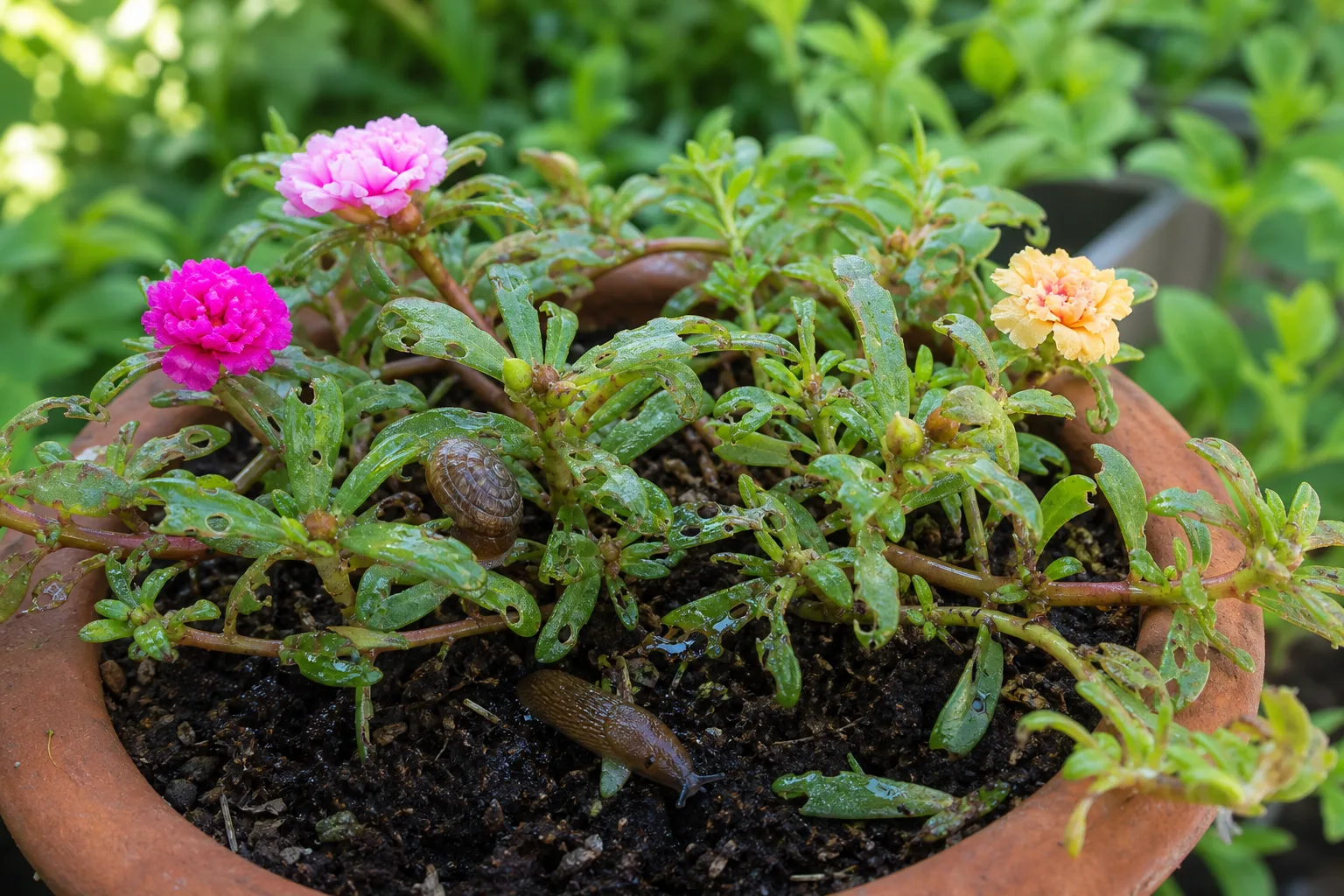
Slugs and Snails on Portulaca: Causes, Checks & Fixes
This guide covers slugs and snails on Portulaca. See also the general Slugs and Snails guide, watering, and light pages for this plant.
Slugs and Snails on Portulaca: Causes, Checks & Fixes
Quick answer
Slugs and snails rasp irregular holes in Portulaca (Portulaca grandiflora, Moss Rose) leaves and unopened buds overnight, then hide by day under pots, mulch, and boards. Their low, trailing habit puts thick succulent tissue close to the damp soil surface slugs cross every night. First step: go out at dusk with a flashlight and hand-pick any slugs on the plant or under nearby containers. Once you confirm active feeding, scatter iron phosphate bait near pot bases and along damp edges-not on the foliage.
Why Portulaca gets slugs and snails
Moss Rose is not a slug magnet like hostas, but extension references list slugs as an occasional problem alongside aphids. The plant’s growth habit explains why damage shows up when it does.
Portulaca spreads low and trails from hanging baskets and terrace pots. Stems and fleshy leaves that rest on decking, mulch, or a full saucer sit in the zone slugs travel after dark. Wisconsin Horticulture notes that Moss Rose has few pest issues, although aphids or slugs can occasionally be a problem-meaning slugs are secondary, not constant, but real when conditions favor them.
Timing matters. Portulaca goes out when warm weather arrives, often while spring nights are still cool and damp. Slugs and snails feed from early spring until frost, with peak activity on overcast, rainy nights-the same weeks young Moss Rose transplants are establishing. Indian terrace gardens in full scorching sun slow slugs during peak summer heat, but damage often returns in wet monsoon spells or when pots sit in partial shade with moist mulch underneath.
overwatering on Portulaca works against Portulaca twice. Moss Rose needs soil that dries fully between drinks; soggy mix under a pot keeps the surface damp and invites slugs while risking crown rot in poorly drained soils. A plant stressed by wet roots is easier for slugs to finish off if they chew through stems at soil level.
What slug damage looks like on Portulaca
Slug and snail feeding on Moss Rose is overnight and mechanical. Typical signs include:
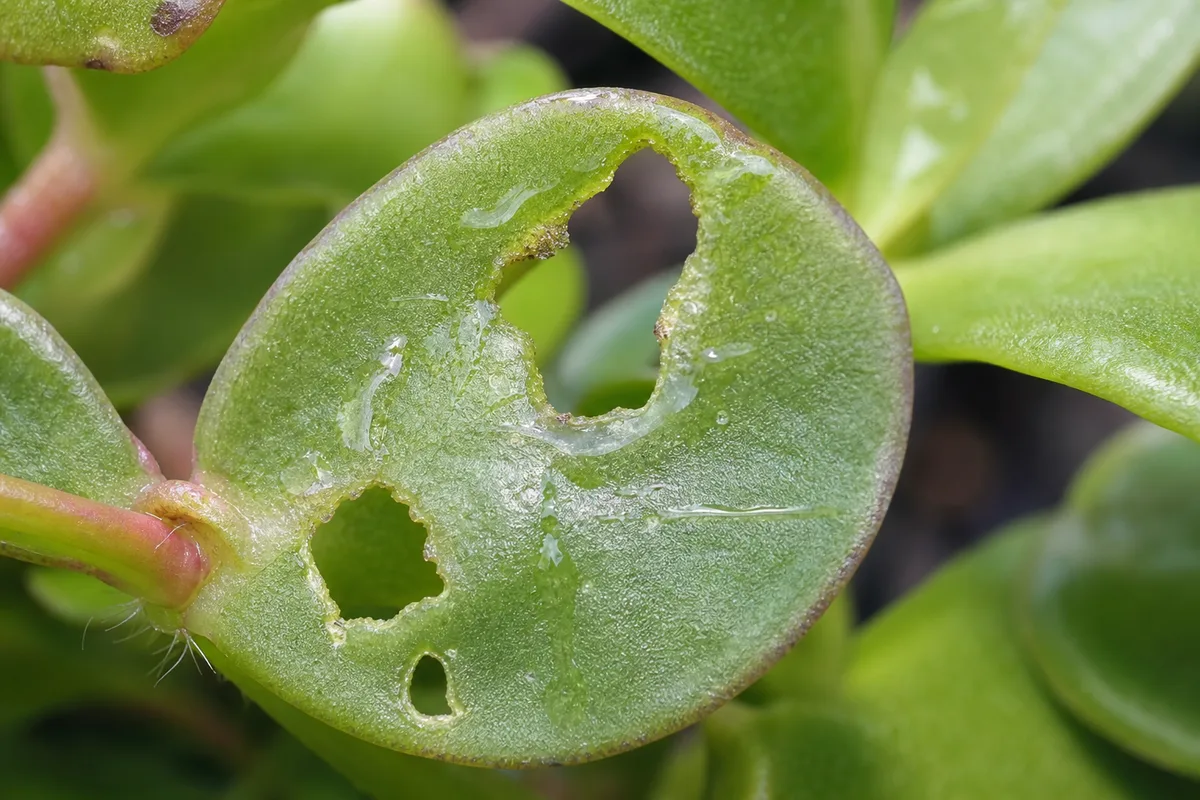
Slugs and Snails symptoms on Portulaca - compare with healthy tissue on the same plant.
- Irregular holes with ragged edges in thick, succulent leaves-especially lower stems and outer runners on trailing varieties.
- Chewed or shredded flower buds that fail to open when sun hits them the next day.
- Silvery slime trails on leaves, pot rims, and paving-not sticky honeydew from aphids.
- Seedlings or freshly rooted cuttings stripped to stubs in severe cases.
- Damage concentrated along one side of a basket or where stems touch damp mulch or lawn.
Unlike underwatering on Portulaca, slug holes appear suddenly on otherwise plump green tissue. Unlike aphids-the main listed pest on Portulaca-you will not see pear-shaped insects clustered on stem tips or shiny honeydew coating leaves.
How to confirm the cause
Slime trails are the clearest slug signature. Caterpillars leave frass pellets; aphids leave honeydew and live colonies on soft tips.
Check in this order:
- Morning scan - Follow slime trails from chewed leaves to pots, saucers, or thick mulch where slugs hide.
- Dusk inspection - Slugs and snails feed primarily at night and on foggy or rainy days. A flashlight after sunset often reveals them on Portulaca stems and closed buds.
- Lift hiding spots - Turn over pots, flat stones, and weed mats within a metre of the plant.
- Rule out aphids - Check newest stem tips and buds for soft-bodied insects and honeydew. Aphids distort tips; slugs chew holes through mature leaves and buds with slime nearby.
If you find slugs under the pot but no slime on the plant, keep watching-another pest may be chewing while slugs use the area only for shelter.
Lookalike symptoms on Portulaca
Aphids cluster on tender new growth and buds, causing curling and honeydew-not ragged holes through thick leaves with slime trails. Missouri Botanical Garden lists aphids as the pest to watch for on Portulaca; slugs are the overnight chewers with mucus evidence.
Caterpillars and budworms chew holes too, but leave frass on leaves below damaged tissue and no slime trails.
Physical scuffing from pets, shoes, or wind-tossed stems can tear succulent leaves without slime-check whether damage aligns with traffic paths.
Overwatering and crown rot show yellowing, mushy stems and collapse from the base up-not isolated ragged holes on otherwise firm tissue.
First fix for Portulaca
Hand-pick at dusk before baiting. Removing active feeders tonight stops damage faster than bait alone, which takes several days to kill slugs after they eat it.
After picking, scatter iron phosphate bait per label around the base of containers, along deck edges, and near irrigation boxes-places slugs travel, not on Moss Rose leaves or flowers. Iron phosphate stops feeding quickly and is safer around pets and wildlife than older metaldehyde products, though Portulaca is toxic to cats and dogs if ingested-keep bait where pets cannot reach it and wash hands after handling chewed plant debris.
For small terrace pots, copper tape on the hanger hook or pot rim can block slugs from climbing. Clear fallen leaves and boards stacked under containers so you remove daytime hiding spots, not just the slugs on the plant.
What not to do
Do not pile bait on foliage or flowers-it belongs on the ground near slug routes. Do not spray insecticidal soap or horticultural oil for slug holes; those target soft-bodied insects, not mollusks. Do not assume every hole is a slug-check for aphids on tips and frass from caterpillars before skipping other controls.
Do not overwater Moss Rose to “wash slugs off.” Wet soil keeps the surface moist longer, which helps slugs and worsens the root-rot risk Portulaca cannot tolerate. Water sparingly and let the mix dry fully between drinks.
Avoid metaldehyde baits if pets or children access the planting area; iron phosphate is the better default for porch and terrace Moss Rose.
Recovery timeline
Chewed leaves and petals do not heal. Judge success by what happens next: new buds should open cleanly in Portulaca light guide without fresh holes within one to two weeks once nightly feeding stops. Portulaca often pushes new side shoots from nodes below damage during warm weather; a hard spring slug attack on one trailing stem rarely kills an established basket if the crown stays firm and soil drains fast.
Seedlings and freshly rooted cuttings stripped to stubs may not recover-protect young plants with bait and copper barriers before damage, not after.
How to prevent slugs and snails on Portulaca
Prevention combines habitat change with early baiting:
- Keep full sun - Moss Rose needs six or more hours of direct sun; hot, dry terrace surfaces slow slug activity compared with shaded ground beds.
- Raise trailing stems - Hang baskets high enough that runners do not rest on damp decking or mulch.
- Water in the morning - Lets container surfaces dry before evening slug activity and matches Portulaca’s drought-tolerant rhythm.
- Remove shelter - Pull weeds, stored pots, and debris from under containers and bed edges.
- Bait before peak spring feeding - Scatter iron phosphate along routes slugs use when you set out Moss Rose, not only after holes appear.
- Use lean, draining mix - Sandy, fast-draining soil dries at the surface faster than heavy potting mix packed around the crown.
When to worry
Cosmetic holes on a few lower leaves on an otherwise blooming basket are annoying, not fatal. Treat when damage reaches unopened buds every night, seedlings collapse entirely, or stems are chewed through at soil level-that can stop flowering for weeks or kill young plants outright.
If hand-picking and iron phosphate for two weeks fail and slime trails keep appearing, look for a persistent moisture source-a leaking downspout, always-wet saucer, or thick mulch piled against stems-and fix drainage and placement before switching to stronger controls.
Portulaca care cross-check
Slug damage on Moss Rose often overlaps with care mistakes that weaken the plant. Confirm the pot dries fully between waterings, stems are firm-not mushy from rot-and the basket sits in full sun rather than shaded damp corners where slugs persist longest. Fixing moisture and light supports recovery even after slugs are cleared.
When to use this page vs other Portulaca guides
- Portulaca watering guide - Use for routine moisture checks before assuming slugs and snails is the main issue.
- Portulaca problems hub - Browse all 50 common issues on this species.