High Humidity on Portulaca: Causes, Checks & Fixes
Quick answer
High humidity on Portulaca rarely needs a dehumidifier-Moss Rose tolerates humid summers. When problems appear, excess moisture in the mix is usually the cause. First step: Stop watering until soil is bone-dry and move the pot to full sun with open airflow.
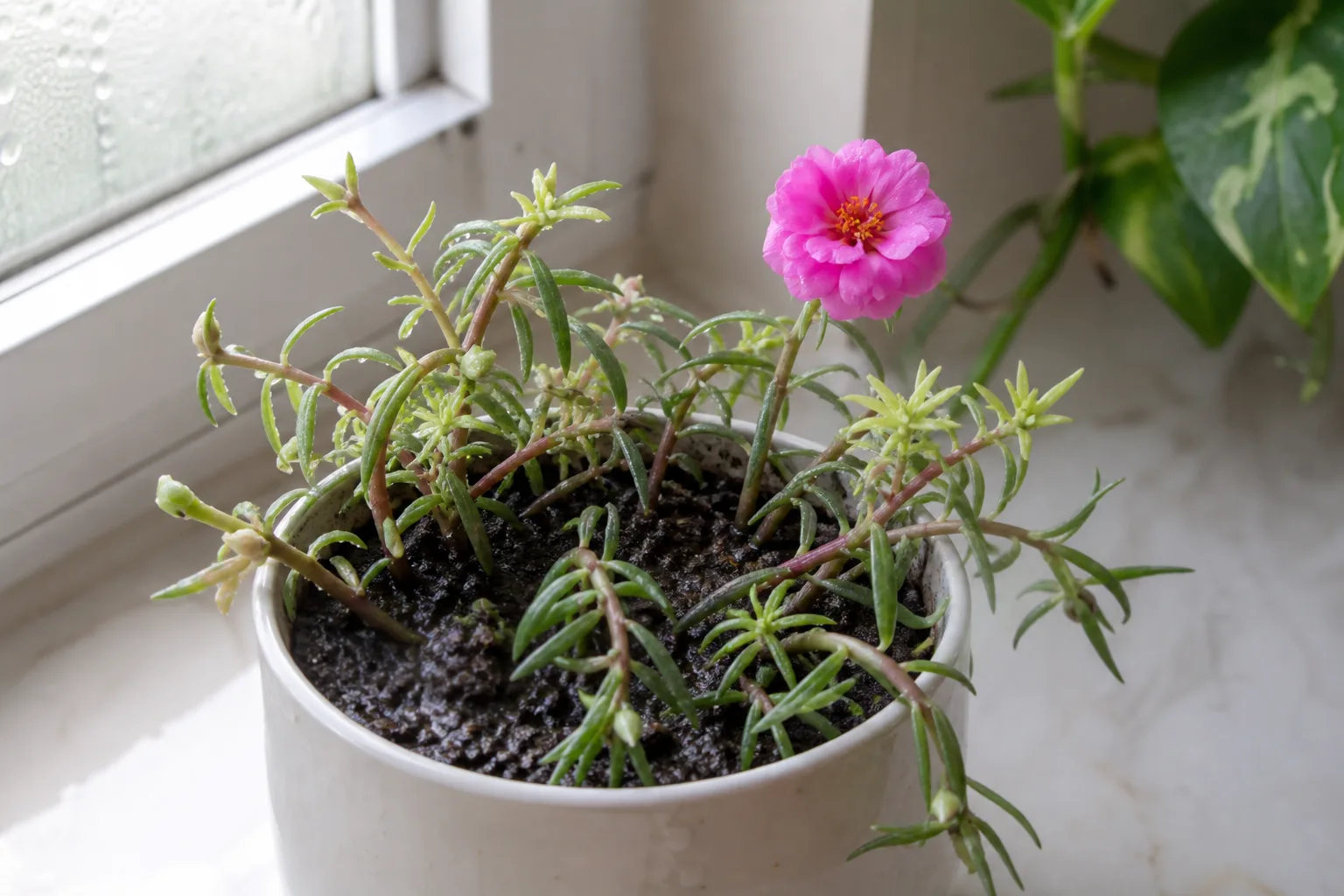
High Humidity on Portulaca: Causes, Checks & Fixes
This guide covers high humidity on Portulaca. See also the general High Humidity guide, watering, and light pages for this plant.
High Humidity on Portulaca: Causes, Checks & Fixes
Quick answer
Outdoor Moss Rose rarely needs a dehumidifier. High humidity on Portulaca (Portulaca grandiflora, Moss Rose) is usually misdiagnosed. Moss Rose does well in heat and humidity and has high drought and heat tolerance. Coastal summers, Southeast monsoon air, and humid terrace weather are normal for this hot, dry weather annual-not a crisis that requires lowering room humidity.
When problems appear, the failure mode is almost always humidity plus slow-drying soil: shaded balconies, dense peat mix, saucers full of water, and overhead watering that never lets the root zone breathe. Treating humid-air stress like a fern problem-misting, pebble trays, or watering on schedule-keeps Moss Rose wet and invites rot.
First step: Stop watering until soil is bone-dry at depth and move the pot to the sunniest, breeziest spot available. Empty saucers and space trailing stems so air reaches the soil. If stems stay soft after several dry days, escalate to the root rot rescue guide.
Scope of this page: Humidity-reframing triage-ambient humid air is usually fine; slow-drying mix is not. For calendar overwatering without a humidity trigger, open overwatering on Portulaca. For confirmed mushy roots, use root rot. For white fuzz only on wet surface soil, see mold on soil.
Why high humidity gets blamed on Portulaca - and when humid air is actually fine
Houseplant advice often assumes humidity is always the enemy or always the cure. Moss Rose stores water in fleshy, succulent leaves and stems and is built for sun-baked, fast-draining sites. Portulaca is shallow rooted, making plants more prone to root rot if overwatered-but that rot risk comes from saturated mix, not from reading 70% on a hygrometer in full sun.
When humid air is genuinely fine: Moss Rose in full sun (six or more hours of direct light) on a coastal terrace, open patio, or in-ground Southeast bed often thrives through humid summers. NC State lists humidity among its resistance challenges alongside drought and heat. The plant is not asking for dry air-it is asking for dry roots between drinks.
When humidity becomes a problem: Humid air slows evaporation only when something else traps moisture-shade under eaves, crowded hanging baskets, saucers holding runoff, heavy peat that stays dark for days, or monsoon weeks when owners keep watering on calendar while rain already soaked the mix. A 25 cm hanging basket in humid coastal shade can stay wet six days after rain; an identical pot in full sun on the same terrace may dry in two.
Monsoon terrace trap: After back-to-back rainy days, Moss Rose on a sheltered balcony still receives “its weekly water” because the schedule says so. Humid air did not hurt the plant-humid air plus scheduled watering on already-wet soil did. Compare finger-test depth from the portulaca watering guide before every soak, not a hygrometer alone.
Hanging basket vs. in-ground: Trailing stems in baskets transpire fast but shallow roots dry unevenly-the crown can stay damp while outer trailers look limp. In-ground plantings in sandy beds drain faster; terrace containers need grittier mix from the portulaca soil guide and more aggressive saucer discipline.
What high-humidity stress looks like on Portulaca
High-humidity damage on Moss Rose shows up as moisture that will not leave the root zone-not crisp brown tips from dry air (see low humidity if someone blames dry air on a sun terrace).
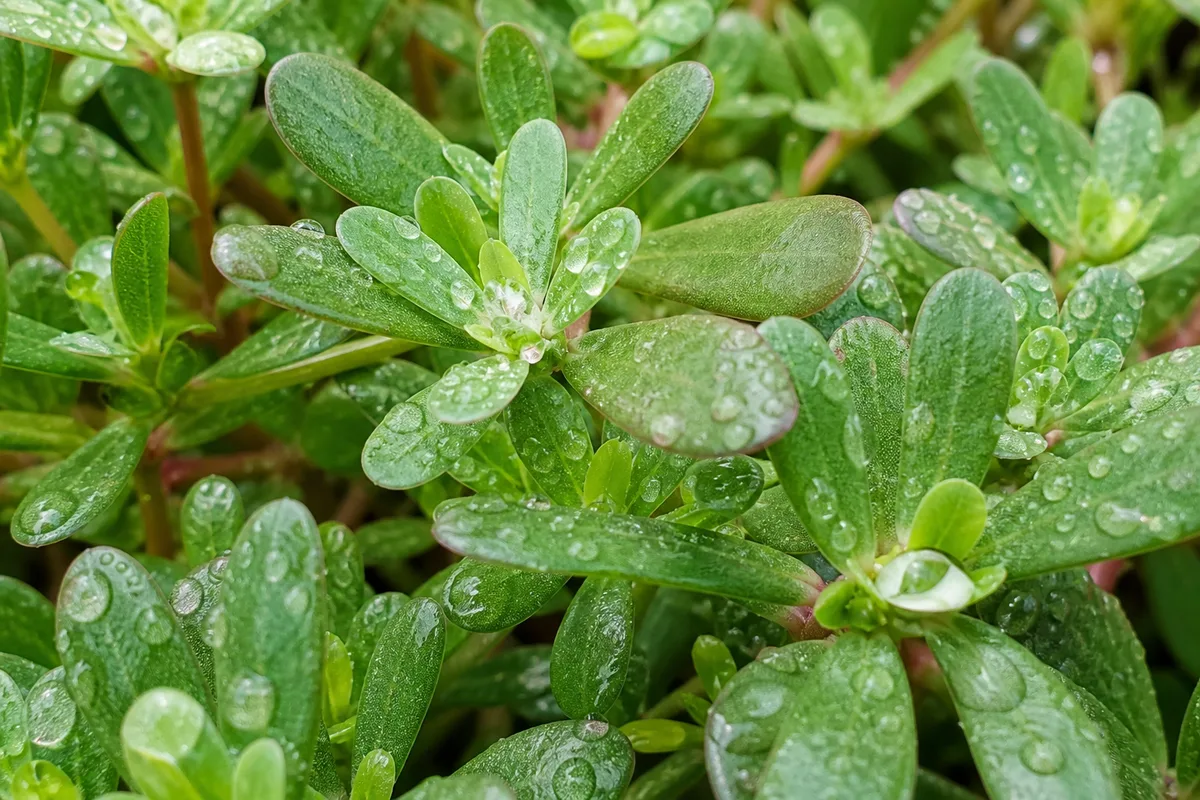
High Humidity symptoms on Portulaca - compare with healthy tissue on the same plant.
Surface mold and fungus gnats:
- White or green fuzzy growth on soil that stays dark and heavy for days
- Often saprophytic mold on organic matter in peaty mix-not always lethal alone, but a warning that the surface never dries
- Small fungus gnats when roots sit in wet soil in humid, still corners
Soft stems at the soil line:
- Yellow or translucent stem bases while mix stays wet-not firm drought limpness
- Trailing stems blackening where they contact wet mulch, saucer water, or crowded pot rims
- Stem or root rots can be a problem in wet soils on this semi-succulent annual
Flower closure that is not normal:
- Moss Rose does not open on cloudy or rainy days-that daily rhythm is normal
- Flowers staying closed on sunny afternoons while soil stays damp and stems feel soft is stress-not weather
Severity ladder:
| Level | What you see | Action |
|---|---|---|
| Cosmetic | Brief surface mold; firm stems; soil dries in 1–2 sunny days | Scrape mold, pause water, improve sun and airflow |
| Moderate | Mold returns; soil wet 3+ days; slight stem yellowing at base | Full dry-down protocol below; check saucers and shade |
| Severe | Soft spongy stems, sour smell, collapse on wet mix | Escalate to root rot rescue |
How to confirm the cause (numbered inspection workflow)
Run these checks in order before buying a dehumidifier or misting:
- Pot weight and soil at depth - Lift the pot. Heavy after days without intentional watering means slow drainage or recent rain you forgot. Probe 2–3 cm deep per the watering guide. If humidity is high but mix dries within one to two days in full sun, the plant is likely fine.
- Stem-base firmness - Push foliage aside at the soil line. Soft, spongy tissue on wet mix confirms moisture stress; firm stems on dry mix point away from humidity as the main issue.
- Sun hours and placement - Note whether the pot sits under eaves, against a wall, or in hanging-basket shade. Moss Rose needs well-drained sandy or rocky soils in full sun-less than six hours of direct sun in humid weather keeps mix damp longer.
- Saucer and runoff - Full saucers, bracket cups, and tray water recreate bog conditions regardless of air humidity. Empty standing water before assessing “high humidity.”
- Airflow - Pots jammed on crowded shelves or under dense overhangs hold moisture longer than open terrace rails. Trailing stems should not blanket the soil surface 24/7.
- Mold and gnat pattern - Surface fuzz on constantly wet mix with adult gnats points to mold on soil crossover-dry the root zone first.
- Hygrometer context (last) - Room humidity near 70% in an open sunny terrace is less informative than soil wet-days and stem firmness. A hygrometer reading alone cannot clear a Moss Rose pot.
Symptom lookalike comparison
| What you see | Soil | Stems | More likely cause |
|---|---|---|---|
| Closed flowers on overcast day | Any | Firm | Normal-blooms reopen in sun |
| Closed flowers on sunny afternoon | Wet | Soft at base | Humidity + slow-drying soil / rot risk |
| Limp trailers | Bone-dry | Firm | Underwatering-not this page |
| White soil fuzz, firm stems | Wet surface only | Firm | Mold on soil-cosmetic if you dry out |
| Fine stippling, webbing in hot dust | Dry | Firm | Spider mites |
| Yellow stems, sour smell, collapse | Wet days | Mushy | Root rot or overwatering |
Not high-humidity stress = bone-dry soil + firm stems in full sun → Moss Rose is fine; no dehumidifier needed.
First fix for Portulaca: dry the mix, not the air
Stop watering immediately. Scrape surface mold if present. Move the pot to the sunniest, breeziest spot available. Empty saucers and space trailing stems so air reaches the soil. Do not mist, add pebble trays, or run a dehumidifier as the first response for outdoor Moss Rose.
If stems are still soft after three to five dry days in full sun, unpot, trim mushy roots, and repot into dry gritty mix-then wait five to seven days before the next drink. Full repot ratios live in the portulaca soil guide. Severe crown collapse may not be reversible on a shallow-rooted annual-replace the plant rather than soaking fungicide into wet mix.
Step-by-step recovery
Once you have paused water and improved sun and airflow:
- Scrape surface mold with a spoon; discard fuzz; leave soil open to air-do not bury wet mold with fresh peat.
- Relocate to full sun with at least six hours of direct light; rotate hanging baskets so the crown gets sun, not just outer trailers.
- Empty all saucers and tray water after every rain or soak; never let Moss Rose sit in pooled runoff in humid weather.
- Wait for bone-dry soil at 2–3 cm depth before the next watering-use the watering guide finger test, not a calendar.
- Trim only fully mushy stems after tissue is clearly dead; firm yellowing may firm up once dry.
- Repot into dry gritty mix only if softness persists after several dry days-shake off wet soil, trim brown mushy roots, air-dry trimmed roots one to two hours, repot dry.
- Treat persistent fungus gnats by drying the soil surface-see fungus gnats on Portulaca if adults remain after dry-down.
Grower observation: A 30 cm Moss Rose terrace bowl in humid coastal shade with a full saucer held wet mix five days after monsoon rain-surface mold and soft stem bases appeared by day four. Saucer emptied, bowl moved to full afternoon sun on an open rail, water withheld. Stems firmed by day eight; flowers reopened the following sunny week. Same cultivar in full sun on the same terrace stayed dry in two days with no mold.
Damaged stem tissue does not re-green. Judge recovery by firm bases, no new mold after dry-down, and new flower buds opening on sunny days within one to two weeks.
Recovery timeline and signs of improvement
Mild (cosmetic mold, firm stems): Surface mold clears within two to four days once soil dries in sun. No repot needed.
Moderate (yellow stem bases, wet 3–5 days): Firmness returns after one dry week in full sun. Hold fertilizer until growth looks stable.
Severe (spongy stems, sour smell): Crown rot may occur in poorly drained soils-collapse can advance within days on shallow roots. Escalate to root rot or replace as a seasonal annual.
Signs of improvement: Lighter pot weight, dry soil at depth, firm stem bases, mold not returning after scrape, flowers opening on sunny afternoons.
Signs of worsening: Spreading softness up stems, sour smell, blackening crown, flowers closed on sunny days while soil stays wet-stop waiting and open root rot rescue.
Lookalike symptoms
Cloudy-day closed blooms mimic stress but reopen in sun-Moss Rose flowers close at night and on cloudy days. Underwatering causes limpness on dry soil, not wet. Spider mites in hot dusty corners cause stippling-not mold. Pure calendar overwatering looks identical at the stem; the humid-air trigger just slowed drying in shade. Use the lookalike table above before treating humidity as the villain.
What not to do - skip the dehumidifier and the misting
Do not buy a dehumidifier as the first response for outdoor Moss Rose in humid summer. Do not mist foliage in humid weather-that keeps leaves wet overnight. Do not mulch with compost or bark on top of container mix; trailing stems trapping wet organic mulch blacken at contact points. Do not keep watering because “humidity is high and plants need water”-Moss Rose prefers dry to moderately moist, well-drained soils; in a humid pot, “moderately moist” still means dry-down cycles, not constant dampness.
Do not repot, fertilize, and spray fungicide on the same day. One primary fix at a time.
How to prevent high-humidity problems on Portulaca
Water only when soil is completely dry at 2–3 cm depth. Use fast-draining sandy mix in full sun per the soil guide. Space pots for airflow on humid terraces. Water early so foliage and soil surface dry before cool evenings. Skip scheduled watering during monsoon weeks until finger tests confirm dryness. Accept that Moss Rose tolerates humid air when roots dry between drinks-see the portulaca overview for container vs. in-ground culture.
During rainy spells, tilt saucers or use pot feet so runoff drains away. Hanging baskets need wider bowls and grittier mix than ground beds because they dry unevenly in humid shade.
When humidity stress is urgent - escalate to root rot rescue
Act fast if stems collapse on wet soil, mold spreads with a sour smell, or flowers fail to open for a week on sunny days while mix stays damp. Dry the root zone before rot reaches the crown-then open root rot on Portulaca if softness climbs or roots are mushy when you unpot.
Low urgency if soil dries within two sunny days and stems stay firm-cosmetic mold only.
Pet safety: Portulaca toxicity and trimming in humid weather
Portulaca is toxic to cats and dogs. Wear gloves when scraping mold or trimming soft, wet stems-sap contact is more likely when tissue is mushy. Keep trimmed debris off patios where pets graze. If a pet ingests a large amount of stems or leaves, contact your veterinarian or the ASPCA Animal Poison Control Center with plant identification-not because humidity changes toxicity, but because wet-weather rescue often involves more pruning debris on the ground.
Related Portulaca guides
| If your situation is… | Start here |
|---|---|
| Calendar watering on wet soil, no humidity angle | Overwatering |
| White fuzz only, firm stems | Mold on soil |
| Mushy roots, sour smell, crown collapse | Root rot |
| Gnats after wet surface persists | Fungus gnats |
| Dry-down rhythm and monsoon skips | Portulaca watering |
| Gritty mix ratios | Portulaca soil |
| General culture | Portulaca overview |