Exposed Roots on Portulaca: Causes, Checks & Fixes
Quick answer
Exposed roots on Portulaca often mean shallow fibrous roots lost their sandy cover through erosion, settling, or crowding-not always rot. First step: check if roots are firm or mushy, then gently top-dress firm pale roots with dry gritty mix while keeping the crown at the same depth.
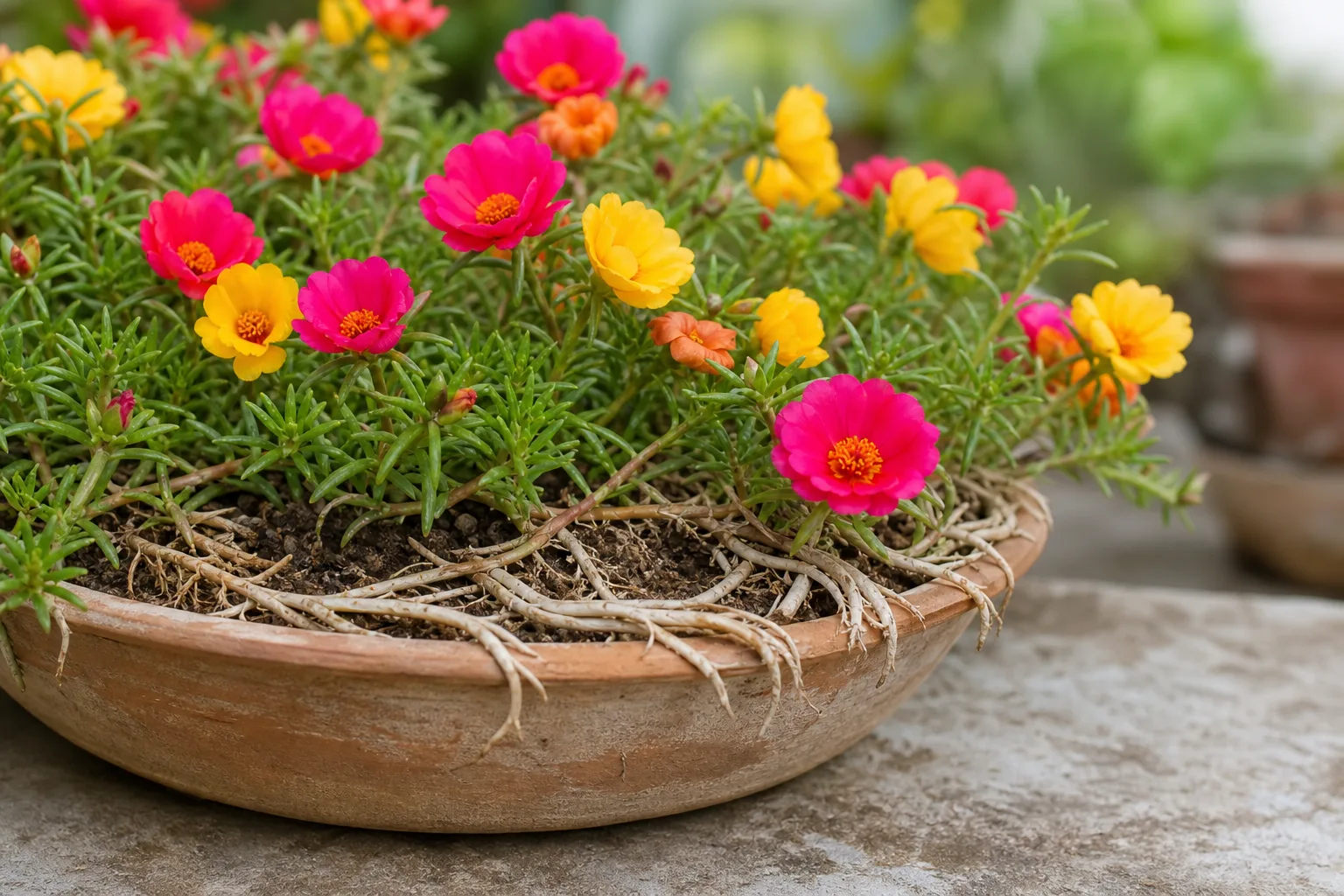
Exposed Roots on Portulaca: Causes, Checks & Fixes
This guide covers exposed roots on Portulaca. See also the general Exposed Roots guide, watering, and light pages for this plant.
Exposed Roots on Portulaca: Causes, Checks & Fixes
Quick answer
Exposed roots on Portulaca (Portulaca grandiflora, Moss Rose) often mean shallow fibrous roots lost their sandy cover through erosion, settling, or crowding-not always rot. First step: check if roots are firm or mushy, then gently top-dress firm pale roots with dry gritty mix while keeping the crown at the same depth.
Moss Rose forms a shallow mat from a central fibrous root system, so some near-surface roots are normal anatomy. The problem starts when those roots sit bare in air and sun, dry out, or turn mushy from chronic wetness at the crown.
What exposed roots look like on Portulaca
Pale, thin, fleshy roots snake across the soil surface or peek through drainage holes. After a hard hand-watering or monsoon downpour, you may see a hollow around the stem where sandy mix washed away. In tight seasonal pots, roots can push mix upward until only a dusting covers the mat.
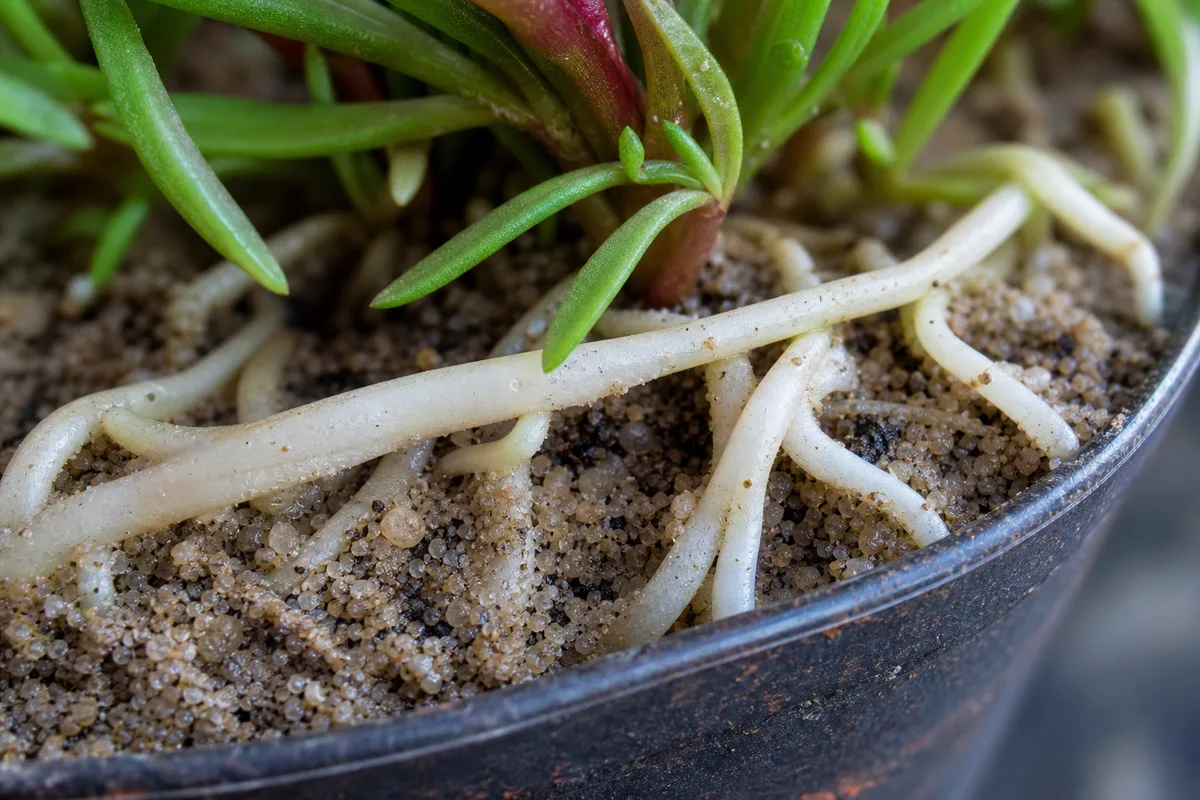
Exposed Roots symptoms on Portulaca - compare with healthy tissue on the same plant.
Healthy exposed tissue feels firm and flexible, often white or tan. Rotting exposed roots turn brown or black, slimy, and smell sour-that is active decay, not erosion alone. Flowers may stay closed on sunny days when surface roots cannot pull water, even if deeper mix feels moist.
Why Portulaca roots become exposed
Portulaca grows from a low central crown with shallow fibrous roots that spread horizontally. That design suits well-drained sandy or rocky soils in full sun but leaves surface roots vulnerable when substrate moves.
Erosion and settling are common on balconies and terraces. Fast-draining sandy mix shifts when you water from above, when heavy rain hits open pots, or when fine peat in the blend decomposes and collapses over a hot season. Lightweight grit washes toward drain holes faster than the crown area, exposing the upper root mat.
Root binding in undersized nursery packs or reused seasonal pots displaces soil upward as circling roots fill the volume. Shallow Portulaca repotting guide-roots only just below the surface per good practice-means even a small soil loss leaves roots visible. Replant with roots only just below the soil surface as soon as possible after transplant; if that thin layer erodes, exposure follows quickly.
Chronic overwatering on Portulaca can also expose roots indirectly: fine tips rot and wash away with repeated flushing, or anaerobic breakdown collapses wet peat plugs. Stem or root rots can be a problem in wet soils on Moss Rose, and mushy decay at the surface often coincides with visible bare roots.
How to confirm the cause
Work through these checks before repotting or flooding the pot:
- Root texture - Firm pale feeders vs. brown mush that slips off when touched.
- Soil history - Recent heavy flush, monsoon season, repot, or years without top-dress?
- Pot size vs. plant spread - Mat wider than pot rim with roots circling inside when lifted?
- Crown firmness - Reddish stems firm above soil vs. soft blackening at the base.
- Wilting pattern - Limp on a light, dry pot with bare surface roots vs. wilt on heavy wet mix.
- Smell - Sour anaerobic odor from holes confirms rot, not simple erosion.
- Light - Dim sites slow drying and extend stress on any exposed tissue after washout.
First fix for Portulaca
Gently top-dress firm exposed roots with fresh dry gritty mix-roughly 40% potting mix, 40% coarse sand or perlite, and 20% fine gravel-keeping the crown at the same depth, not buried deeper under wet compost.
Brush away algae or crust only if roots stay firm. Trim only black mushy tips with clean scissors; leave pale feeders intact. Add mix around the stem and across bare roots, tapering so the crown sits at its original line. Water once lightly to settle grit, then let the pot dry fully before the next drink.
Do not flood to “help roots settle” on wet soil-that invites more rot. Make this one change first before stacking repot, fertilizer, or fungicide.
Step-by-step recovery
- Inspect at the drainage hole and soil edge before unpotting-note color and smell.
- Trim mushy root tips only; air-dry trimmed tissue for a few hours if rot was present.
- Top-dress bare firm roots with dry sandy-gritty mix; repot fully if more than one-third of the root ball was exposed or circling tightly.
- When repotting, lift with soil clinging to shallow roots-water the night before so soil clings to shallow roots and use a spoon or small trowel rather than pulling stems.
- Place in full sun (6 or more hours of direct sunlight) so the pot cycles moisture faster after cover.
- Wait until soil is completely dry at depth before resuming dry-down watering.
- Hold fertilizer until new firm tips or flower buds appear.
- If the main plant fails but stems stay firm, stem pieces can root in moist sandy mix as a backup.
Recovery timeline
Firm roots covered before they bake dry often perk within a few days once settled and watered correctly. Erosion fixed early may show new buds within one to two weeks in full sun. Rot trimmed at the surface needs two to four weeks before flowers open reliably again. Crispy dried surface roots rarely regrow-judge success by firm new growth at stem tips, not old leaf color.
Lookalike symptoms
- Normal shallow mat habit - Slight root visibility on a spreading Moss Rose mat in gritty mix, with no wilt and flowers opening in sun.
- root rot on Portulaca from overwatering - Mushy texture, sour smell, wilt on wet soil; overlaps when rot exposes dead roots.
- underwatering on Portulaca - Light pot, dry mix throughout, slight wilt that perks after one drink-roots not visibly bare.
- Damaged roots after repot - Symptoms start days after rough handling, not gradual erosion over weeks.
- Heat wilt on dry soil - Midday limpness in full sun on an otherwise healthy mat; recovers overnight without top-dress.
Mistakes to avoid
Do not bury reddish stems deep to hide roots-that traps moisture against the crown and worsens rot. Do not cover mushy rotted roots without trimming first. Do not use fine organic mulch that washes away in the next rain. Do not keep watering because leaves look limp when soil is already wet. Wear gloves when handling-Portulaca is toxic to cats and dogs.
How to prevent exposed roots on Portulaca
Water gently at soil level or use a drip at the pot edge-not a hard stream on the crown. Refresh sandy mix each season rather than reusing collapsed peat plugs. Repot or top-dress before roots push mix out of small cells. Keep full sun and sharply drained conditions so pots dry predictably. A light gravel top-dress after planting helps hold grit in place on windy terraces.
Portulaca care cross-check
Exposed roots often signal a substrate maintenance gap on a plant whose shallow anatomy needs stable gritty volume around feeders-not deeper planting of the crown. If the pot stays heavy for days after top-dress, improve light and mix before increasing water.
When to worry
Same-day action if bare roots bake dry in midday heat while the plant wilts, or if exposed tissue is black and slimy with a soft stem base. Stable winter exposure on a firm plant is lower urgency if you top-dress before warm growth resumes.
Conclusion
Exposed roots on Portulaca usually mean washed or displaced sandy mix around a naturally shallow root mat-not instant death. Cover firm feeders with gritty mix, repot if bound, keep the crown at the same depth, and maintain top-dress so erosion does not repeat.
When to use this page vs other Portulaca guides
- Portulaca watering guide - Use for routine moisture checks before assuming exposed roots is the main issue.
- Portulaca problems hub - Browse all 50 common issues on this species.