Mosaic Virus on Portulaca: Causes, Checks & Fixes
Quick answer
Mosaic virus on Portulaca usually means Alternanthera mosaic virus with light-and-dark mottling, chlorotic flecks, and twisted new leaves that worsen weekly. First step: isolate the pot immediately and stop pinching or pruning until you confirm virus-not aphids-on the newest growth.
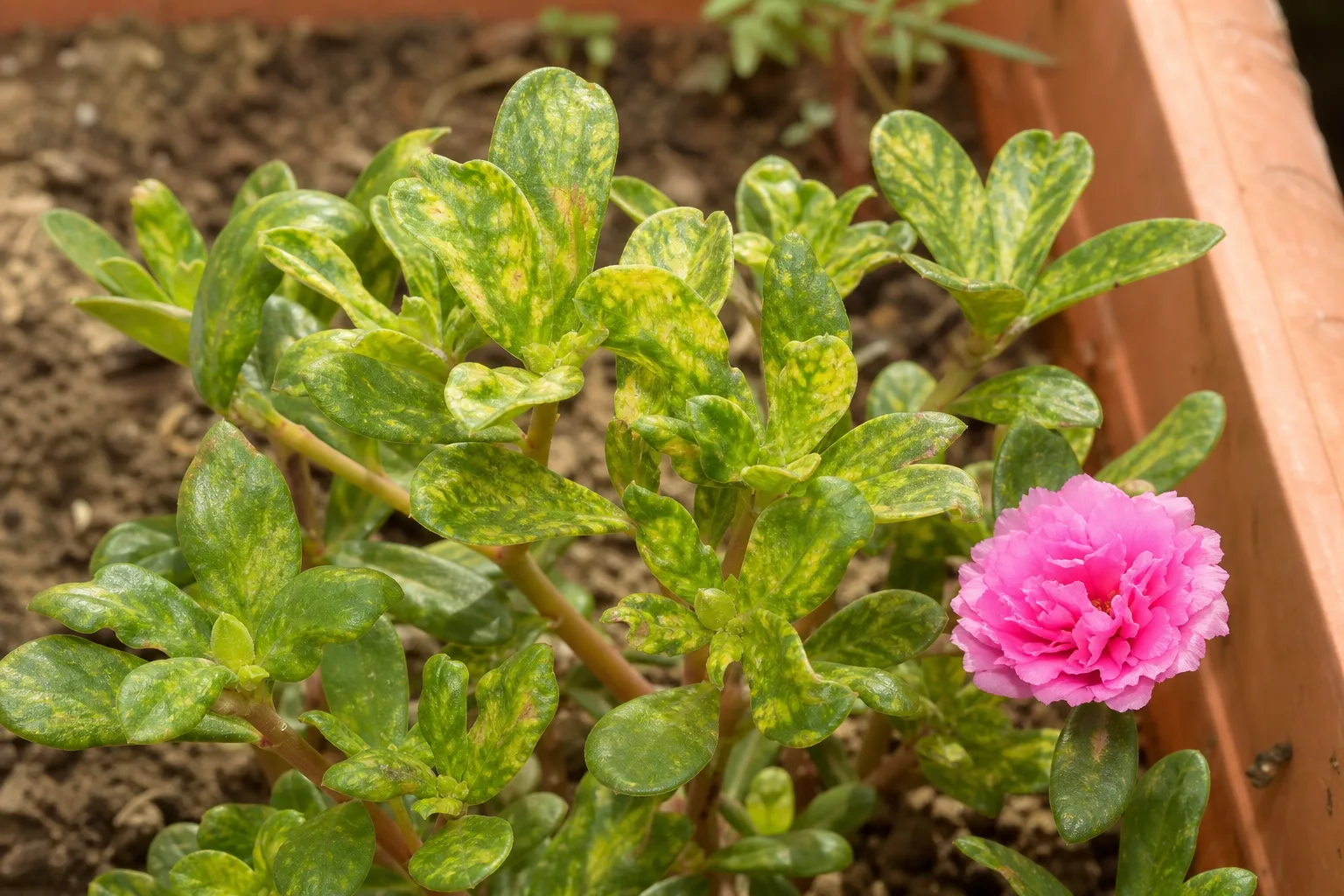
Mosaic Virus on Portulaca: Causes, Checks & Fixes
This guide covers mosaic virus on Portulaca. See also the general Mosaic Virus guide, watering, and light pages for this plant.
Mosaic Virus on Portulaca: Causes, Checks & Fixes
Quick answer
Mosaic virus on Portulaca (Portulaca grandiflora, Moss Rose) almost always means Alternanthera mosaic virus (AltMV)-not a fungal leaf disease you can fix with airflow or fungicide. AltMV produces light-and-dark green mottling, chlorotic flecks, strap-like twisted leaves, and stunted runners that worsen over weeks even when watering and light are correct.
First step: isolate the affected pot immediately and stop pinching, pruning, or moving Moss Rose until you confirm virus versus aphids on the newest growth. AltMV spreads mechanically through infected sap on hands, shears, and bench surfaces-not through insects. Touching healthy trailing stems after a symptomatic plant is the fastest way to spread mosaic through a sunny terrace display.
What mosaic virus looks like on Portulaca
AltMV symptoms on Moss Rose vary by strain and plant age, but the pattern is distinct from drought stress or ordinary leaf spot.
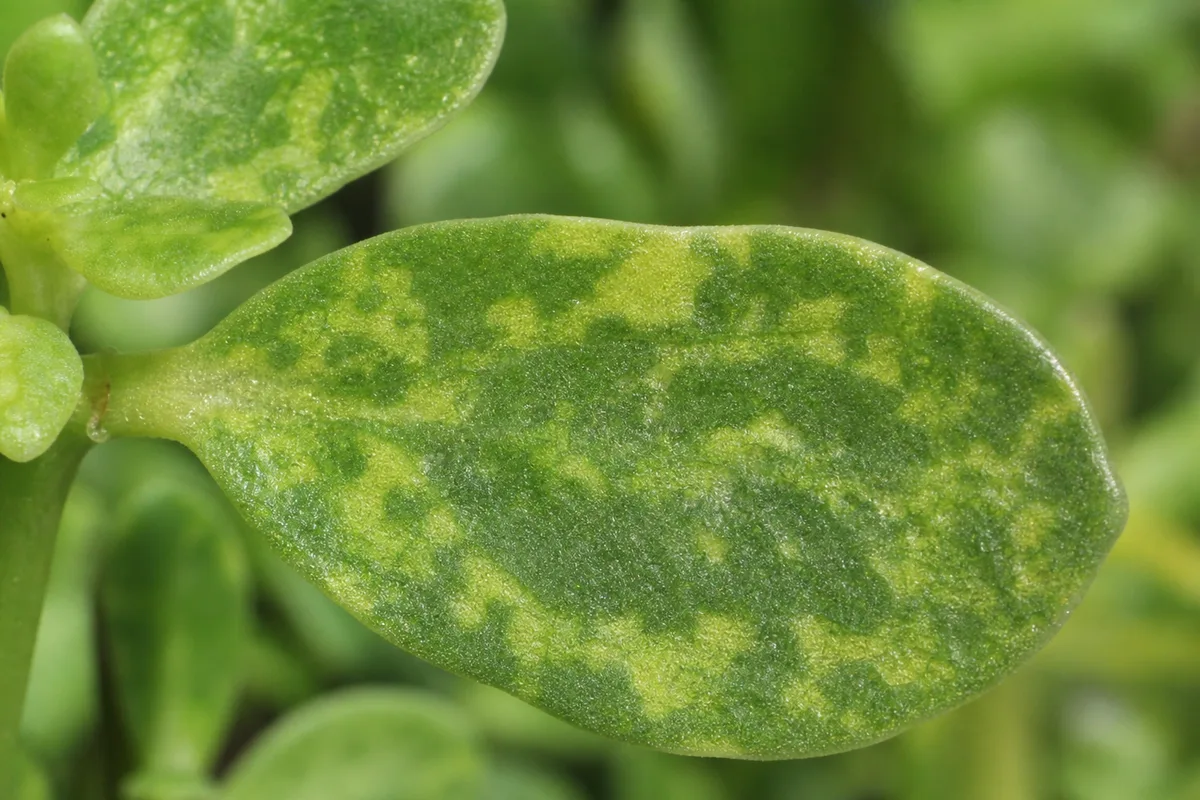
Mosaic Virus symptoms on Portulaca - compare with healthy tissue on the same plant.
Mottling and uneven color:
- Light-and-dark green patches or yellowed irregular areas across multiple leaves-not uniform yellowing from wet soil
- Chlorotic flecks or spots that look like pale paint splatter on fleshy cylindrical leaves
- Wavy-line or mosaic patterns that are faint early and easier to spot against healthy Moss Rose on the same bench
Distorted new growth:
- Newest leaves look narrower, strap-like, or twisted at margins while older whorls still show mottling
- Flower buds fail to open cleanly or abort before the daily bloom flush Portulaca needs in Portulaca light guide
- Runners stay short and stiff compared to trailing neighbors in the same pot
Whole-plant decline:
- Symptoms spread to new leaves weekly regardless of watering adjustments
- Multiple stems show matching patterns-not damage limited to one side of a basket
- No insects, honeydew, or ant trails despite ongoing distortion (rules out aphids as the primary cause)
Early AltMV can look subtle on heat-tolerant Moss Rose because thick succulent leaves hide faint mottling until distortion appears on soft new tips. Compare suspect plants to clean stock on the same bench-side-by-side contrast often reveals mosaic before individual leaves look dramatic.
Fungal leaf spot produces discrete brown or black spots with yellow halos. Powdery mildew coats foliage with white powder. overwatering on Portulaca yellows lower stems at the soil line without mosaic patches on upper runners. Herbicide drift often affects one exposed side of a pot days after nearby lawn treatment-not progressive whole-plant mottling.
Why Portulaca gets mosaic virus
Portulaca is a documented host of Alternanthera mosaic virus, a potexvirus first identified on the weed Alternanthera pungens and later found on Moss Rose, celosia, phlox, angelonia, and dozens of other greenhouse ornamentals. Research isolates including AltMV-MU have been purified directly from Portulaca grandiflora plants showing mosaic symptoms.
Mechanical transmission is the main route on Moss Rose. AltMV spreads when infected sap contaminates hands, pruning shears, pins, pot surfaces, or trailing stems that rub healthy plants during routine pinching and deadheading. Ball Seed notes that sap containing the virus can remain infectious for up to six months on contaminated tools and surfaces. Cornell e-Gro alerts confirm AltMV is not known to be spread by insects or mites-unlike many mosaic viruses on other crops.
Portulaca’s growth habit increases exposure. Moss Rose pushes constant soft stem tips in full sun and lean sandy mix, and growers pinch runners throughout the season to keep baskets full. Mixed annual containers on shared benches let one infected liner spread AltMV when workers shear multiple pots without sanitizing between plants.
Stress from brief overwatering, shade, or aphid feeding does not cause AltMV. Those problems may weaken Moss Rose and make mottling easier to notice, but the virus must enter through contaminated sap-not from dry soil or nutrient shortage alone.
How to confirm mosaic virus on Portulaca
Work through these checks before you destroy plants or spray fungicide:
- Isolate first - Move the suspect pot away from neighbors before any inspection that requires handling stems. Do not pinch healthy Moss Rose after touching symptomatic tissue.
- Mottling pattern - Random light-and-dark patches across several leaves and stems support AltMV. Uniform base yellowing on wet mix points to rot instead.
- New growth inspection - Examine the newest two to three leaf whorls and buds with a hand lens. Strap-like twisted margins plus mottling without insects fit virus better than aphid tip damage.
- Aphid cross-check - Soft green or black aphid clusters, sticky honeydew, and ant trails on trailing stems mean treat insects first and re-evaluate in one week. Mosaic that persists after aphids are gone confirms AltMV.
- Spread speed - AltMV symptoms on new leaves each week despite stable care. Aphid distortion can stabilize once colonies are knocked down.
- Bench neighbors - Several Moss Rose pots with matching faint mottling suggest mechanical spread through shared handling-not random care stress on one container.
- Recent handling history - Note whether pots were sheared, pinned, or moved among symptomatic plants on the same day. That timeline fits AltMV when lab confirmation is unavailable.
When symptoms are faint, send tissue to a plant diagnostic lab or use a commercial immunostrip test. e-Gro recommends diagnostic lab or Agdia test kits because early mosaic on Portulaca is easy to miss on thick leaves.
First fix for Portulaca mosaic virus
Isolate the affected Moss Rose pot and stop all pinching, pruning, and bench-to-bench handling until you know whether aphids or AltMV are responsible.
Bagging at the bench-not carrying open pots past healthy baskets-limits sap contact on trailing stems. Wash hands and sanitize shears with soap and 70% alcohol before touching any other Portulaca. Do not compost clippings from mottled plants.
If aphids are present on new tips, blast them with water and re-check mottling after one week. If mottling spreads with no insects, proceed to removal-do not wait for leaves to recover.
Do not apply fungicide as a first response. Mosaic is viral; fungicides do not clear AltMV. Do not increase fertilizer on a mottled plant hoping color will return.
Step-by-step response
After isolation and initial inspection:
- Confirm or rule out aphids - Strong morning water sprays on newest tips dislodge colonies. If honeydew and insects are gone but mottling worsens on new leaves, assume AltMV.
- Remove AltMV-positive plants - Bag the pot at the bench and trash it. There is no cure for viral infections on ornamentals; infected Moss Rose will not outgrow mosaic.
- Rogue contact plants - Pull neighboring Portulaca that shared shears, pins, or bench space with symptomatic pots-even if mottling is faint. AltMV spreads before symptoms show clearly.
- Sanitize tools and surfaces - Disinfect shears, pins, and pot rims with 10% bleach solution or a labeled virucide. Ball Seed recommends heat sterilization at 300°F (149°C) for metal tools when appropriate.
- Replace gloves and wash hands - Warm soapy water followed by 70% ethanol between symptomatic and healthy plants reduces sap transfer on Moss Rose runners.
- Scout survivors weekly for six weeks - Watch for faint flecking on new growth. Early removal stops a second wave through the display.
- Restart from clean stock - Moss Rose is a fast-growing seasonal annual inexpensive to replace from verified clean liners or seed mid-season.
Recovery timeline
AltMV-infected Portulaca does not recover. Mottled and distorted tissue stays damaged for the life of the plant. Symptoms typically worsen over two to four weeks as new leaves emerge with heavier mosaic and stunting.
If aphids caused tip distortion without virus, new normal leaves may appear within two to three weeks after insect control-judge by clean new whorls, not old mottled foliage.
Replacement Moss Rose from clean stock should show normal cylindrical leaves and daily bloom opening in full sun within one to two weeks after planting. Six weeks of scouting on remaining pots is prudent after any bench outbreak.
Lookalike symptoms to rule out
Aphid distortion clusters on soft tips with honeydew, ants, or visible insects. Mosaic from AltMV spans multiple stems without sap feeders present.
Nutrient deficiency often yellows older leaves uniformly from the base up. AltMV produces patchy mosaic on individual leaves at various stem heights.
Fungal leaf spot shows circular brown or black spots with halos-not irregular light-and-dark green patches across leaf blades.
Spider mites cause fine stippling and webbing in hot dry weather, not progressive mosaic mottling on thick Moss Rose leaves.
Herbicide drift cups leaves on the exposed side of a pot shortly after nearby spray events. AltMV spreads through the whole plant over weeks without a one-sided pattern.
Normal succulent leaf color - Portulaca leaves are naturally thick and slightly gray-green. Mosaic means clearly irregular pale and dark zones that worsen on new growth-not uniform healthy succulent tone.
Mistakes to avoid
Do not mist mottled Moss Rose leaves hoping humidity helps. Wet foliage on crowded baskets invites fungal disease that complicates diagnosis.
Do not compost infected Portulaca. AltMV sap on debris can contaminate tools and hands when you turn the pile.
Do not handle healthy trailing stems after pinching symptomatic plants without washing and sanitizing. Mechanical spread is the primary AltMV route on Portulaca.
Do not assume faint mottling will clear with better watering. Moss Rose already tolerates drought; mosaic worsens while soil moisture is correct.
Do not treat AltMV with repeated fungicide or antibiotic sprays. Removal and sanitation are the only effective responses.
Do not save cuttings from mottled runners for propagation. Vegetative material carries AltMV even when top growth looks partially healthy.
How to prevent mosaic virus on Portulaca
Buy clean liners and quarantine new Moss Rose baskets for two weeks before mixing them into terrace displays or combo pots.
Sanitize shears, pins, and pot edges between every Portulaca lot-especially after any prior AltMV case on the bench. Wear disposable gloves when pinching large Moss Rose plantings.
Avoid handling healthy plants after symptomatic ones. Work infected pots last, or use separate tools marked for removal jobs.
Control aphids early on new tips so insect stress does not mask or accompany mosaic. Scout weekly during warm weather when Moss Rose pushes constant soft growth.
Grow in full sun with lean, gritty, well-drained mix. Over-fertilized soft tips attract aphids and increase handling during corrective pinching.
Keep weeds out of greenhouse and nursery areas. AltMV’s original host is a weedy Alternanthera species that can harbor virus near ornamental production.
When to worry
Treat as urgent when mottling spreads across most of the plant within two weeks, multiple Moss Rose pots show matching mosaic, or you already handled healthy baskets after symptomatic plants without sanitizing.
Remove and bag plants immediately when buds abort before opening on AltMV-suspect Moss Rose during peak bloom season-waiting costs clean neighbors on shared benches.
A single faint fleck on one leaf with no spread after two weeks of isolation and clean aphid checks may be watch-and-wait-not emergency removal. Lab confirmation helps when symptoms stay subtle.
Conclusion
Mosaic virus on Portulaca means Alternanthera mosaic virus in most real cases-mottled uneven coloring, chlorotic flecks, and twisted new leaves that worsen weekly without insects present. Isolate first, confirm aphids are not the driver, then remove infected Moss Rose and sanitize tools rather than fighting viral mosaic with fungicide or fertilizer. That approach protects clean trailing baskets on sunny terraces where one contaminated shear pass can spread AltMV through an entire Moss Rose display.
When to use this page vs other Portulaca guides
- Portulaca watering guide - Use for routine moisture checks before assuming mosaic virus is the main issue.
- Portulaca problems hub - Browse all 50 common issues on this species.