Damaged Roots on Portulaca: Causes, Checks & Fixes
Quick answer
Damaged roots on Portulaca usually follow rough repotting or wet, compacted mix around shallow roots. First step: stop watering, gently unpot with soil attached, trim only mushy roots, and repot into dry sandy mix without disturbing firm tissue.
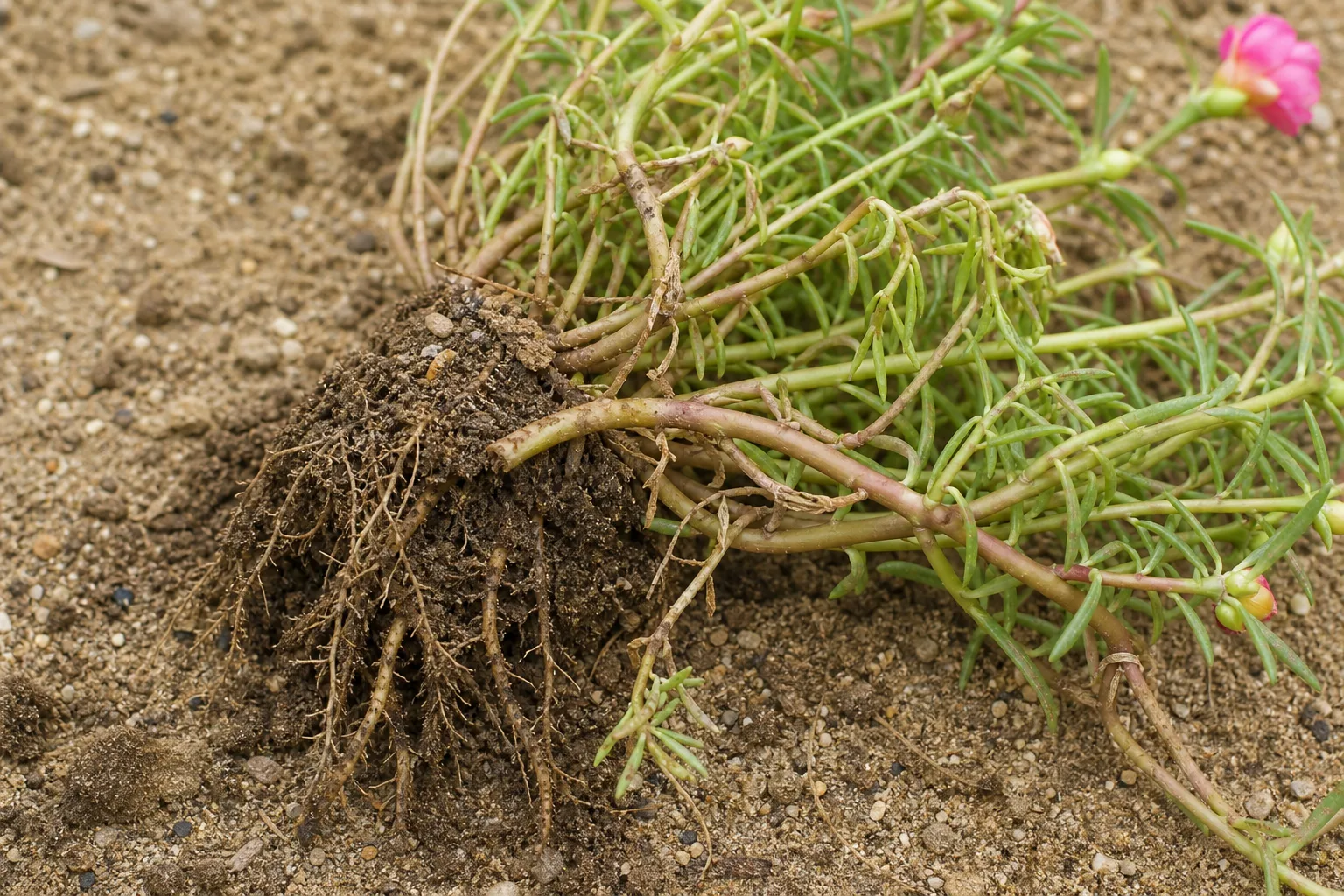
Damaged Roots on Portulaca: Causes, Checks & Fixes
This guide covers damaged roots on Portulaca. See also the general Damaged Roots guide, watering, and light pages for this plant.
Damaged Roots on Portulaca: Causes, Checks & Fixes
Quick answer
Damaged roots on Portulaca (Portulaca grandiflora, Moss Rose) usually follow rough repotting, bare-rooting a nursery pack, or wet, compacted mix sitting around shallow fibrous roots. First step: stop watering, gently unpot while keeping soil attached to the root ball, trim only mushy roots, and repot into fresh dry gritty mix without disturbing firm pale tissue.
Scope of this page: Use this guide for repot trauma, broken shallow roots, and early mixed damage after transplant or handling. If mushy root decay clearly predates any repot event-chronic overwatering with sour soil and no recent disturbance-start on the dedicated root rot guide instead. For roots visible at the surface without recent repot, see exposed roots; for tight circling mats before you repot, see root-bound.
Portulaca stores water in fleshy leaves and stems, so top growth can look acceptable briefly while roots fail underground. Recovery depends on how much healthy root tissue remains and how quickly the mix dries in full direct sun.
Reviewed by LeafyPixels Review Board · Author: sai-ananth
When to use this page vs. sibling guides
| Symptom pattern | Best guide | Why |
|---|---|---|
| Wilt or stall within days of repotting, division, or nursery-pack transplant | This page | Mechanical / repot-trauma specialty |
| Mushy roots, sour smell, wet-soil wilt with no recent repot | Root rot | Confirmed decay rescue |
| Pale firm roots visible on the surface, mix washed away | Exposed roots | Erosion or settling, not always repot shock |
| Tight circling mat before you disturb the pot | Root-bound | Crowding escalation |
| Chronic heavy wet pot, no handling event | Overwatering | Moisture habit, not mechanical injury |
| Full gentle-repot protocol and timing | Repotting guide | Step-by-step transplant care |
If unsure, note timing: symptoms that begin right after you lifted, divided, or bare-rooted the plant point here first.
What damaged roots look like on Portulaca
Wilting or stalled growth soon after repotting is the classic sign-especially if you lifted the plant bare-root, yanked stems from a nursery cell, or teased apart a tight mat aggressively. Yellow lower stems on still-wet soil suggest roots cannot take up water. Flowers may stay closed on sunny afternoons when the plant is stressed, which differs from normal species-type closure at night or on cloudy days.
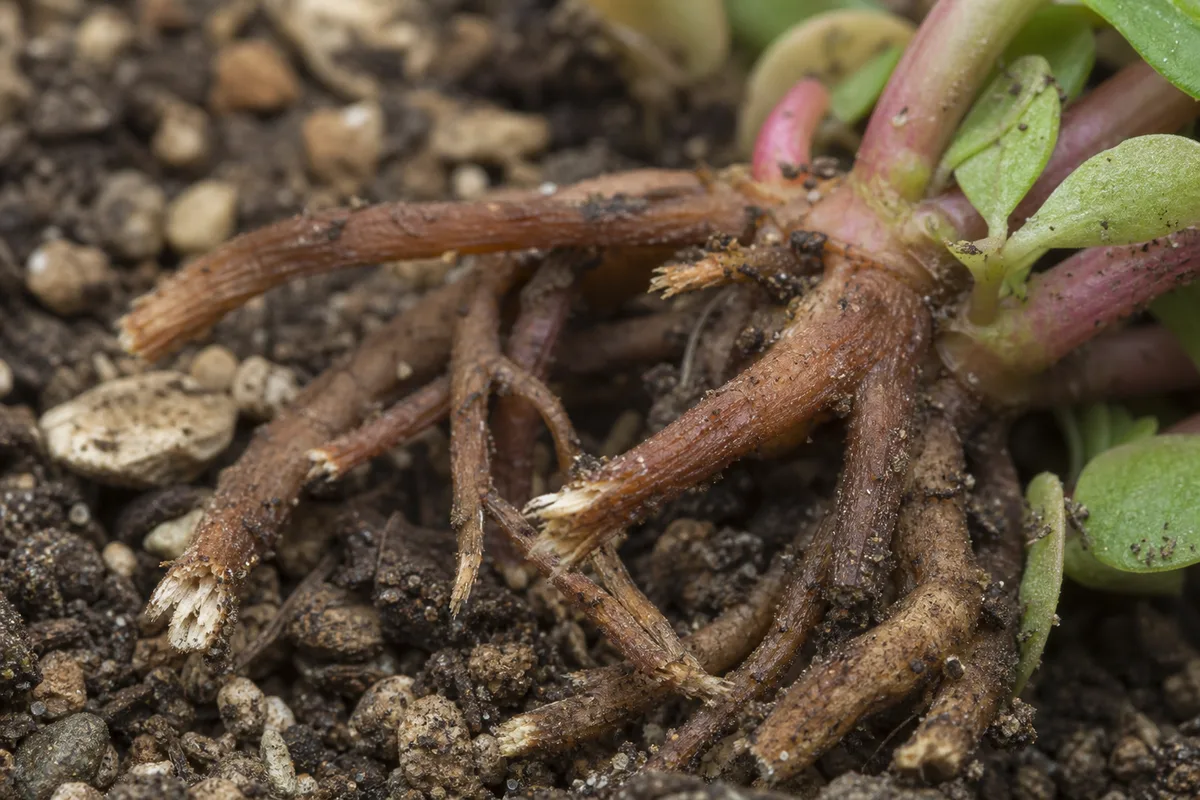
Damaged Roots symptoms on Portulaca - compare with healthy tissue on the same plant.
Unpotting reveals the real picture: healthy Moss Rose roots are pale, firm, and fibrous near a shallow central crown. Damaged roots turn brown or black, feel mushy, or break away when rinsed. A sour or musty smell from drainage holes points to anaerobic rot layered on injury-not simple transplant pause.
Severity ladder
| Severity | Root picture | Stem base | Realistic outcome |
|---|---|---|---|
| Mild repot bruising | Mostly firm pale feeders; a few broken tips | Firm reddish stems | New buds in 1–2 weeks after dry gritty repot |
| Moderate trim case | Up to half the mat mushy; firm crown | Slight yellow at soil line only | 2–4 weeks to reliable flowering; some lower yellow persists |
| Severe crown involvement | More than half mushy; roots slip off crown | Soft or black at soil line | Main plant unlikely-propagate stem cuttings same day |
Judge success by firm new tips, not by old yellow tissue greening up.
Why Portulaca gets damaged roots
Moss Rose forms a shallow fibrous root system from a low central crown-roots spread horizontally rather than deep. Proven Winners notes portulaca is shallow rooted, making plants more prone to rot if overwatered and more prone to physical injury during repotting, division, or pulling plants from nursery packs. They don’t take well to transplanting and care should be given when handling seedlings.
Overwatering in slow-draining mix is the second major path-often overlapping after repot trauma when bruised roots sit wet. Portulaca needs well-drained sandy or rocky soils in full sun; poorly drained soils may lead to crown rot. Stem or root rots can be a problem in wet soils on Moss Rose. Dense peat-heavy mix, oversized pots, and shaded balconies keep roots wet long enough to suffocate fine tips even when you water lightly.
Root binding in a small seasonal pot can also stress uptake: a tight circling mat has little fresh substrate left to hold air and moisture evenly. Physical breaks plus chronic wetness often overlap after a rough late-season repot-see root-bound before you disturb the plant again.
Hanging baskets vs. ground beds
In hanging baskets, shallow roots sit in a thin soil column that dries fast in terrace sun-bruised feeders desiccate if you skip water after repot, yet the same basket can stay soggy for days in monsoon overcast if mix is peat-heavy. In ground beds or wide bowls, trailing mats mask a soft crown until collapse; lift foliage at the soil line when inspecting. Same species, different dry-down speed-match recovery watering to this container, not a calendar.
How to confirm the cause
Work through these checks before changing multiple variables at once:
- Timing - Did symptoms start within a few days of repotting, division, or a hard knock to the pot?
- Pot weight - Heavy and wet for many days after one drink suggests rot or compaction, not drought.
- Root texture - Firm white or tan roots vs. brown mush that slips off the crown.
- Stem base - Softness at the soil line means crown involvement; firm reddish stems above suggest salvageable tissue.
- Smell - Sour anaerobic odor confirms rotting roots, not mere repot pause.
- Light - Dim sites slow drying and extend root stress after any injury; compare with light needs.
First fix for Portulaca
Stop watering immediately. Gently unpot while keeping as much intact root ball as possible-lift with a spoon or small trowel and soil attached, as shallow roots tear easily when bare-rooted. Rinse lightly only if you need to see root color.
Trim only black, mushy roots with clean scissors; leave firm pale tissue alone. Let trimmed roots air-dry for a few hours, then repot into fresh dry gritty mix per the soil guide-roughly 40% potting mix, 40% coarse sand or perlite, and 20% fine gravel. Choose a pot sized to the root mass with open drainage holes. Do not water for several days unless the plant sits in full sun and the mix is bone-dry at depth.
Make this one change first. Stacking fertilizer, heavy pruning, and fungicide on the same day hides what actually helped.
Step-by-step recovery
- Unpot gently; discard sour or compacted substrate-do not reuse wet peat plugs.
- Trim mushy roots; score circling mats lightly if firm, not if rotting.
- Repot at the same depth; crown sits just above mix line per the repotting guide.
- Place in full sun (6 or more hours of direct sunlight) so the pot cycles moisture faster.
- Wait until soil is completely dry before the first light drink-use the watering guide finger test at 2–3 cm depth.
- Hold fertilizer until new firm tips appear.
- If stems stay firm but growth is slow, pinch lightly after two weeks to redirect energy.
- If more than half the root mass was mushy or the crown softens, start stem cuttings the same day as backup.
Recovery timeline
Mild repot shock with mostly healthy roots may show new buds within one to two weeks once watering resumes on a dry-down schedule. Rot trimmed early often needs two to four weeks before flowers open reliably again. Yellow or soft lower stems rarely return to perfect form-judge success by firm new growth, not old leaf color.
Worked example: A balcony grower lifted a nursery six-pack cell by pulling stems; half the shallow mat tore at the crown. After gentle repot with soil clinging to the remaining roots, dry gritty mix, and five dry days in full sun, firm side shoots appeared at week two and blooms returned by week three-while yellow lower stems were left in place.
Lookalike symptoms
Use this matrix before repotting again or flooding the pot:
| Pattern | Repot history | Soil moisture | Root appearance | Stem base | First action |
|---|---|---|---|---|---|
| Damaged roots (this page) | Recent transplant or handling | Often wet after repot | Pale firm + some breaks, or fresh mush at torn tips | Usually firm unless advanced | Stop water; gentle repot with soil attached |
| Root rot | No recent disturbance | Chronic wet, sour smell | Widespread brown mush | Soft on wet mix | Root rot rescue |
| Underwatering | Any | Bone-dry throughout | Firm pale roots | Firm; limp trails only | One deep soak; wait for dry-down |
| Heat wilt | None needed | Dry, light pot | Healthy when checked | Firm | Shade midday only; no repot |
| Not enough light | Optional | Dry to normal | Healthy if inspected | Leggy, pale, firm | Move to full sun |
- Simple underwatering - Light pot, loose dry mix throughout, slight wilt that perks after one drink.
- Root rot from chronic overwatering - Overlaps after repot; smell and mushy texture across most of the mat confirm active decay predating handling. See the dedicated root rot guide when rot was not triggered by transplant.
- Not enough light - Leggy pale stems with dry mix point to shade stress, not root injury.
- Heat wilt on dry soil - Midday limpness on an otherwise light pot in full sun; recovers overnight without repotting.
Mistakes to avoid
Do not keep watering because leaves look limp when soil is already wet-damaged roots cannot use more moisture. Do not yank or bare-root a Moss Rose unless rot forces full inspection; shallow roots snap at the crown. Do not repot again within the same month unless mix is clearly failing. Do not fertilize to “strengthen” roots that are still healing. Do not reach for fungicide on cultural damage-fix drainage, sun, and trim only.
Wear gloves when trimming-Portulaca is toxic to cats and dogs because of soluble calcium oxalates. If a pet chews trimmings or soil, call ASPCA Animal Poison Control at (888) 426-4435 or your veterinarian. See the portulaca overview for fuller toxicity detail.
How to prevent damaged roots on Portulaca
Water the night before transplanting so soil clings to shallow roots, then replant quickly with roots just below the surface-full protocol on the repotting guide. Use sandy fast-draining mix, avoid oversized tubs, and keep full sun so pots dry predictably. Refresh substrate each season rather than reusing collapsed peat. Handle nursery packs by lifting the whole cell, not pulling stems.
Stem pieces broken during handling can root in moist sandy mix if the main plant is beyond saving-broken pieces will root if the soil is moist enough, making cuttings a practical backup. Iowa State Extension lists moss rose among annuals propagated from stem cuttings.
Practical checks
Urgency check
Treat as urgent if stem bases soften, blackening climbs upward, or the plant wilts on wet soil after trimming. Same-day action also applies when bare-rooted roots bake dry on a hot terrace before you can repot.
Best inspection order
Recent repot history, pot weight, soil smell, drainage flow, stem bases, then roots.
Portulaca care cross-check
Moss Rose wants full sun and dry-down watering. If the pot stays heavy for days after fixing roots, improve light and mix before the next drink-not watering frequency alone.
Related Portulaca guides
- Portulaca overview - full care hub
- Repotting - gentle transplant protocol
- Root rot - confirmed mushy-root decay rescue
- Exposed roots - surface erosion and top-dress
- Root-bound - circling mat before repot
- Overwatering - chronic wet soil without handling
- Watering - dry-down schedule
- Soil - gritty mix ratios
- Propagation - stem-cutting backup after severe loss