Root Bound on Portulaca: Causes, Checks & Fixes
Quick answer
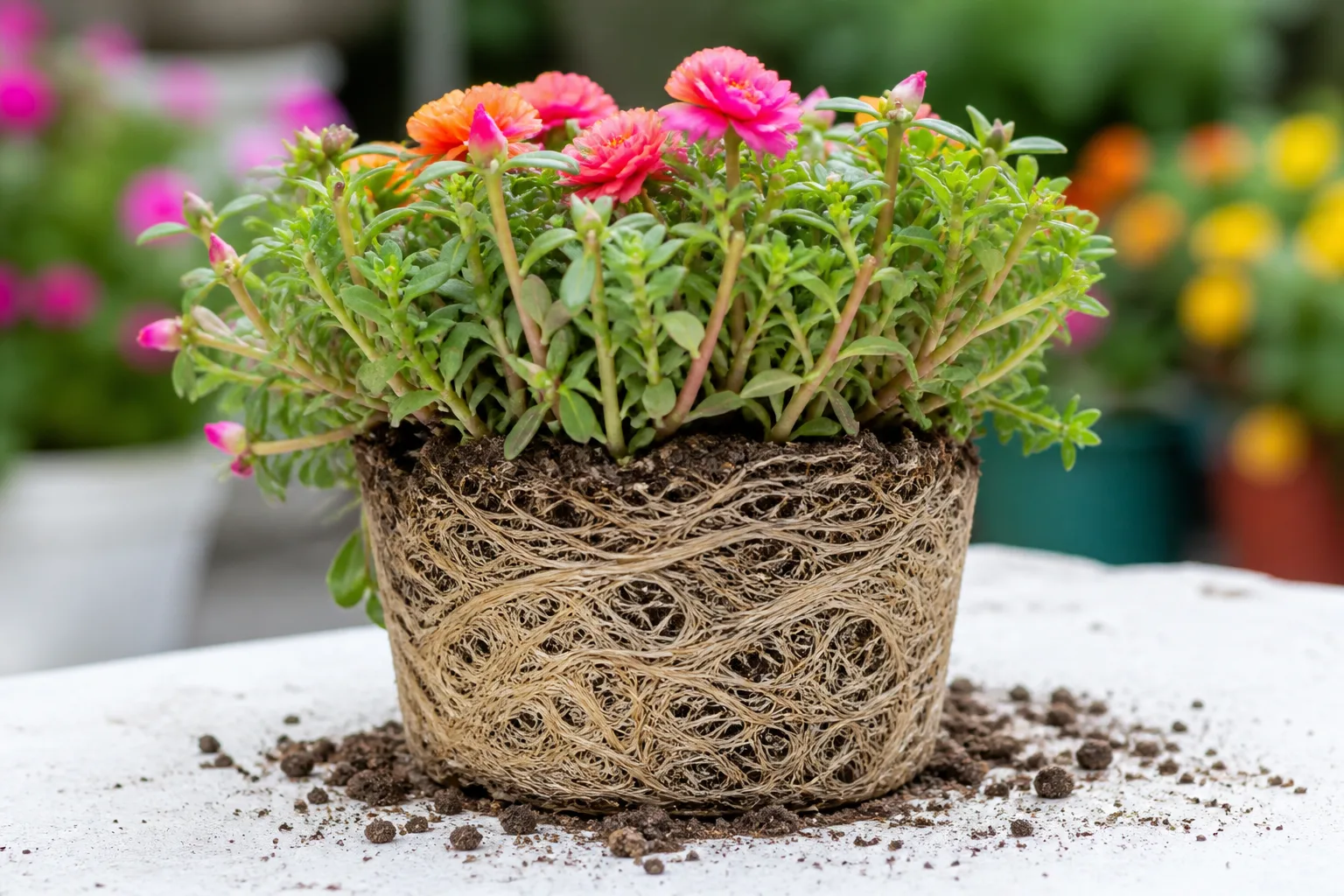
Root-bound Portulaca shows water running straight through the pot, fewer flowers in full sun, and circling roots at drain holes. First step: Gently slide the plant out to confirm a tight root mat, then repot one size up into fresh sandy mix without bare-rooting.
Root Bound on Portulaca: Causes, Checks & Fixes
This guide covers root bound on Portulaca. See also the general Root Bound guide, watering, and light pages for this plant.
Root Bound on Portulaca: Causes, Checks & Fixes
Quick answer
Root-bound Portulaca (Portulaca grandiflora, Moss Rose) fills its container with a shallow mat of fibrous roots, dries out unusually fast after watering, and blooms less even in bright sun. Water may run straight through while the root core stays dry, and you may see pale tips circling drain holes.
First step: Gently slide the plant out to confirm a tight root mat, then repot one size up into fresh sandy mix without bare-rooting. Moss Rose does not take well to transplanting, so keep soil clinging to shallow roots and avoid aggressive teasing unless rot forces inspection.
Scope of this page: Use this guide when a tight circling root mat in the same pot explains fast dry-down, sparse flowers, or roots at drain holes. If mushy decay with sour smell predates crowding-chronic wet soil with no space issue-start on the dedicated root rot guide instead. For repot trauma or broken roots after handling, see damaged roots; for routine seasonal transplant timing, see the repotting guide.
Reviewed by LeafyPixels Review Board · Author: sai-ananth
When to use this page vs. sibling guides
| Symptom pattern | Best guide | Why |
|---|---|---|
| Tight circling mat, fast dry-down, sparse flowers before you disturb the pot | This page | Root-crowding diagnosis and gentle upsize |
| Mushy roots, sour smell, wet-soil wilt with no crowding history | Root rot | Active decay rescue |
| Wilt or stall within days of repotting or bare-root handling | Damaged roots | Mechanical / transplant trauma |
| Pale firm roots visible on the surface | Exposed roots | Erosion or settling |
| Chronic heavy wet pot, no space exhaustion | Overwatering | Moisture habit |
| Routine seasonal refresh and transplant timing | Repotting guide | Step-by-step transplant care |
If unsure, lift the plant: a firm root pancake retaining the pot shape points here; widespread brown mush with odor points to root rot even when the pot is small.
What root bound looks like on Portulaca
Above-ground signs
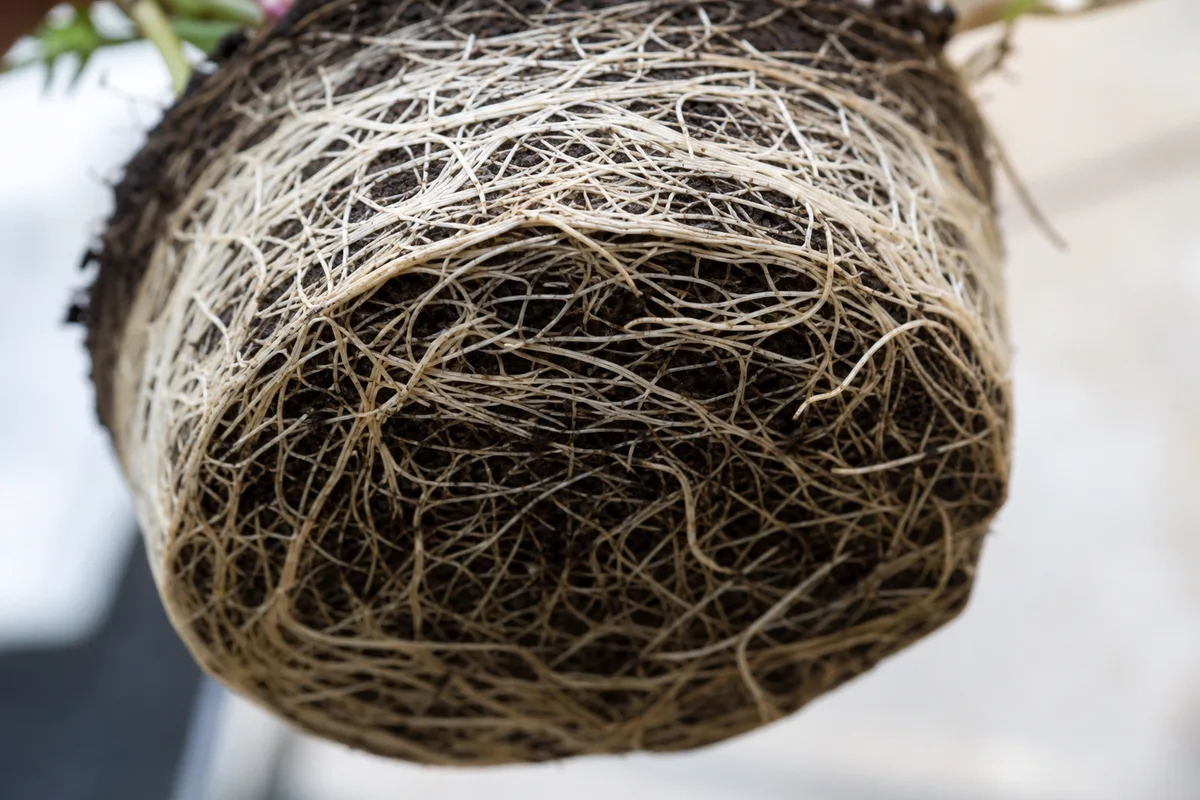
Root Bound symptoms on Portulaca - compare with healthy tissue on the same plant.
- Flowers stay closed or sparse on sunny days when they used to open reliably
- New stems look thin and pale despite regular watering
- Pot feels light within hours of a full soak in hot weather
- Lower leaves yellow while surface mix still feels slightly damp
- Trailing stems stall short of pot edges even with full sun
- Plastic nursery packs bulge, lift, or show roots through sidewall slots
Below-ground signs (visible when tipped out)
- Pale firm roots wrapped tightly around a shallow root ball
- Little loose mix left-the mass holds the shape of the old pot
- Roots emerging from drain holes or creeping over the rim
- Water channels through dry gaps when you irrigate
- In advanced cases, brown mush at the center if the mat stayed wet too long-texture and smell separate binding from active rot
Root-bound Moss Rose rarely smells sour unless the congested core has stayed soggy. Firm circling roots with fast dry-down point to space exhaustion; black mush and odor point to root rot instead.
Binding severity ladder
| Severity | Root picture | Flowers in full sun | Realistic outcome after gentle upsize |
|---|---|---|---|
| Mild crowding | Circling at walls; some loose mix in center | Fewer blooms; some still open | New buds in 1–2 weeks with dry-down watering |
| Moderate binding | Solid pancake; little mix visible | Mostly closed on sunny afternoons | 2–3 weeks to reliable flowering |
| Severe mat + soggy core | Firm outer ring but mush at center | Closed or absent | Trim rot first; may need stem cuttings backup |
Why Portulaca gets root bound
Moss Rose is a heat-tolerant annual with a low-growing mat from a central fibrous root system. Roots spread horizontally in shallow soil rather than deep-a structure that maxes out small nursery cells and hanging-basket liners quickly when temperatures climb.
Portulaca grows vigorously in full sun and well-drained sandy or rocky soil. A 10 cm pack that looked fine in late spring can become a solid root cylinder by midsummer if the plant sits on a hot terrace with regular drinks. Gardeners often miss binding because fleshy stems store water in leaves and stems, so top growth stays green while underground space runs out.
Same small pot all season, planting multiple Moss Rose starts in one tight bowl, and choosing deep tall containers for shallow roots all accelerate circling. Dense peat-heavy mix that collapses by late summer mimics binding symptoms but still needs fresh substrate per the soil guide-not more fertilizer on depleted soil.
Hanging baskets vs. ground beds
In hanging baskets and narrow liners, shallow roots hit the sidewall within weeks in terrace heat-the thin soil column dries fast on the outside while a bound core stays impenetrable, so water runs through in seconds. In ground beds or wide bowls, trailing mats can spread outward and delay binding longer, but a Moss Rose left in the same nursery cell all summer still forms a pancake regardless of bed size. Match pot width to expected spread; see the portulaca overview for mature dimensions.
Proven Winners notes portulaca is shallow rooted, making plants more prone to rot if overwatered once a bound mat traps moisture at the center-a common overlap with overwatering on peat-heavy mix.
How to confirm the cause
Work through these checks before repotting:
- Pot-to-spread ratio - A mat 30 cm across in a 10 cm nursery cell is a binding risk regardless of leaf color.
- Water behavior - After a thorough soak, if water passes through too quickly and is not absorbed adequately so the center stays dry, roots likely dominate the volume. Mix wet for days suggests compaction or overwatering instead.
- Partial lift test - Slide the plant out 5–8 cm. Tight masses of roots encircling the pot perimeter confirm binding without full disturbance.
- Root texture - Healthy binding roots are firm and pale tan. Mushy black roots with sour smell indicate rot; treat that on the root rot guide before or during repot when more than roughly one-third of the mat is mush.
- Flower pattern - Fewer blooms in unchanged full sun suggests root limitation. Patchy yellowing with constantly wet soil may implicate rot or poor drainage.
- Season history - Binding builds over weeks in the same container. Sudden wilt right after a recent repot suggests transplant shock, not binding.
If two or more binding signs appear and roots look firm, proceed with a gentle upsize. If roots are mostly mush, trim rot first-see the dedicated root rot guide.
First fix for Portulaca
Repot into a pot one size larger with fresh sandy gritty mix, keeping the root ball intact and disturbing roots as little as possible.
This is the correct first response for confirmed root-bound Moss Rose-not foliar fertilizer, not repeated deep watering, and not sliding the entire congested pancake into a pot three sizes larger.
Choose a shallow wide container with open drainage-Moss Rose is shallow-rooted and does not need a deep pot. Increase diameter by roughly 2–5 cm, not a huge jump. Use fast-draining mix with coarse sand or perlite per the soil guide. Water the day before so soil clings to roots, then lift by supporting the root ball from below rather than pulling stems.
Hold fertilizer for two to three weeks after repotting while feeder roots colonize fresh mix. Place in full sun (6 or more hours of direct sunlight) so the pot cycles moisture predictably. Resume watering only when soil is completely dry throughout-details on the watering guide.
Step-by-step recovery
Prepare materials
Use a clean pot one size up with multiple drain holes. Mix roughly 40% potting soil, 40% coarse sand or perlite, and 20% fine gravel-or any open blend that matches Moss Rose’s well-drained lean soil preference. Full mix guidance is on the soil guide. Have clean scissors ready only if you find mush.
Repot with minimal disturbance
- Water lightly the day before so roots flex instead of snapping.
- Turn the pot and let the plant fall into your hand with soil attached-do not yank by stems.
- Inspect the bottom and sides. If roots are strongly root-bound with tight circling mats, score the outer 1 cm lightly with a knife only when firm-not when rotting.
- Set the root ball at the same depth as before; crown sits just above mix line per the repotting guide.
- Fill fresh gritty mix around the sides; firm gently without packing into a brick.
- Do not water for several days unless the plant sits in full sun and mix is bone-dry at depth.
- Resume watering only when soil is completely dry throughout-use the watering guide finger test at 2–3 cm depth.
Backup: stem cuttings
If the main plant is too stressed after binding, firm 5–8 cm stem pieces can root in moist sandy mix-broken pieces will root if the soil is moist enough. That is often faster than nursing a severely circling annual into late season-see the propagation guide.
Recovery timeline
Mild binding with mostly healthy roots may show new buds within one to two weeks once dry-down watering resumes in warm sun. Severe congestion trimmed lightly often needs two to three weeks before flowers open reliably again. Yellow lower stems rarely return to perfect form-judge success by firm new growth and daily flower opening, not old leaf color.
Worked example: A terrace grower noticed a six-pack Moss Rose drying out within hours after watering by midsummer; a partial lift showed a solid root pancake in each cell. After a one-size-up move into gritty mix with soil attached and five dry days in full sun, new side buds appeared at week two and daily blooms returned by week three-while yellow lower stems were left in place.
Mild droop for a few days after repot is normal on a species sensitive to handling. Persistent wilt beyond two weeks with wet mix suggests rot, oversize pot staying soggy, or repotting during cool weather when root activity is slow.
Lookalike symptoms
Use this matrix before repotting again or flooding the pot:
| Pattern | Pot weight / moisture | Root appearance | Flowers in sun | First action |
|---|---|---|---|---|
| Root bound (this page) | Light soon after watering; center stays dry | Firm pale circling mat | Sparse or closed | Gentle one-size-up repot |
| Underwatering | Light; dry throughout | Firm pale; space in pot | May close on stress | One soak; watering guide |
| Overwatering / root rot | Heavy; wet for days | Brown or black mush; sour smell | Closed on wet mix | Root rot rescue |
| Not enough light | Normal to dry | Healthy if inspected | Leggy; few blooms | Move to full sun |
| Peat collapse | Variable; depleted mix | Roots firm but no fresh substrate | Declining mid-season | Refresh mix per soil guide |
- Underwatering - Light pot, loose dry mix throughout, slight wilt that perks after one drink. Rehydrate on schedule; no repot needed unless binding is also present.
- Overwatering and root rot - Mix stays wet for days, stems soften at the base, roots are brown or black with sour smell. Crown rot may occur in poorly-drained soils. Reduce water, trim rot, repot into dry gritty mix on the root rot guide.
- Not enough light - Leggy pale stems with dry mix and no circling roots. Move to full sun; repot does not fix shade stress.
- Transplant shock - Wilt and paused growth immediately after a rough repot without prior binding signs. Stabilize light and moisture on the damaged roots guide; avoid re-handling for several weeks.
Mistakes to avoid
- Upsizing without fresh mix - A huge pot around an intact root pancake stays wet at the edges while the center remains impenetrable, inviting stem or root rots in wet soils.
- Bare-rooting Moss Rose - Shallow fibrous roots tear at the crown; keep soil attached.
- Aggressive root teasing - Light scoring on firm mats only; ripping circling roots shocks this annual.
- Deep narrow containers - Shallow wide pots match horizontal root spread.
- Watering immediately after repot - Wait until mix is dry unless heat and sun demand a light drink.
- Fertilizing on day one - Stressed roots cannot use nutrients; wait until new tips appear.
- Ignoring mush at the center - Trim rot before repotting; binding and rot can coexist in a soggy mat-escalate to the root rot guide when mush dominates.
Wear gloves when handling cut stems-Portulaca is toxic to cats and dogs because of soluble calcium oxalates. The ASPCA notes kidney failure is possible in cats (rare in dogs and cats overall) alongside tremors and salivation. If a pet chews trimmings or soil, call ASPCA Animal Poison Control at (888) 426-4435 or your veterinarian. See the portulaca overview for fuller toxicity detail.
How to prevent root bound on Portulaca
Plan to upsize or refresh mix before roots circle the entire wall-especially on hot terraces where summer growth is fastest. Use shallow containers with open drainage and lean sandy mix per the soil guide. Avoid cramming multiple starts into one small bowl unless you intend to divide or repot within weeks.
Check drain holes and partial lifts monthly during peak heat. Starting fresh from seed or cuttings next season is often simpler than forcing an exhausted late-season mat through another bind cycle-see the propagation guide. Routine seasonal upsize timing is on the repotting guide.
When to repot vs. replace (late-season annuals)
Moss Rose is a warm-season annual in most climates. By late summer, a plant that has already been upsized once may not justify another disturbance if stems are thin, flowers stay closed in full sun, and the root mat is a solid pancake with collapsed peat.
Repot again when stems are still firm, at least half the roots are pale and healthy, and you have six or more weeks of frost-free heat ahead. Replace with cuttings or fresh starts when growth has stalled for weeks, the mat is mostly circling with little viable mix, or a second upsize would land the plant in an oversized tub that stays soggy. Stem pieces root quickly in moist sandy mix-often the practical path from August onward. Full cutting protocol is on the propagation guide.
Practical checks
Urgency check
Treat as urgent if stems wilt on wet surface soil, blackening climbs from the base, or the pot cracks and crowns desiccate between superficial waterings. Crown involvement on a soggy bound mat needs same-day action on the root rot guide.
Best inspection order
Pot size versus spread, water absorption speed, drain-hole roots, flower opening in sun, stem bases, then full root lift.
Portulaca care cross-check
Moss Rose wants full sun and dry-down watering. If the pot stays heavy for days after fixing binding, improve light and mix before the next drink-not watering frequency alone.
Related Portulaca guides
- Portulaca overview - full care hub
- Repotting - gentle transplant protocol and seasonal timing
- Root rot - confirmed mushy-root decay rescue
- Damaged roots - repot trauma and broken shallow roots
- Exposed roots - surface erosion and top-dress
- Overwatering - chronic wet soil without crowding
- Underwatering - drought mimic on fast-drying pots
- Watering - dry-down schedule after repot
- Soil - gritty mix ratios
- Propagation - stem-cutting backup and late-season replacement
- Light - full-sun placement for post-repot recovery