Powdery Mildew on Portulaca: Causes, Checks & Fixes
Quick answer
Powdery mildew on Portulaca shows as white dusty patches on fleshy leaves, stems, or flower petals-often after humid nights or crowded balcony pots. First step: isolate the plant and snip off heavily coated tissue before improving airflow.
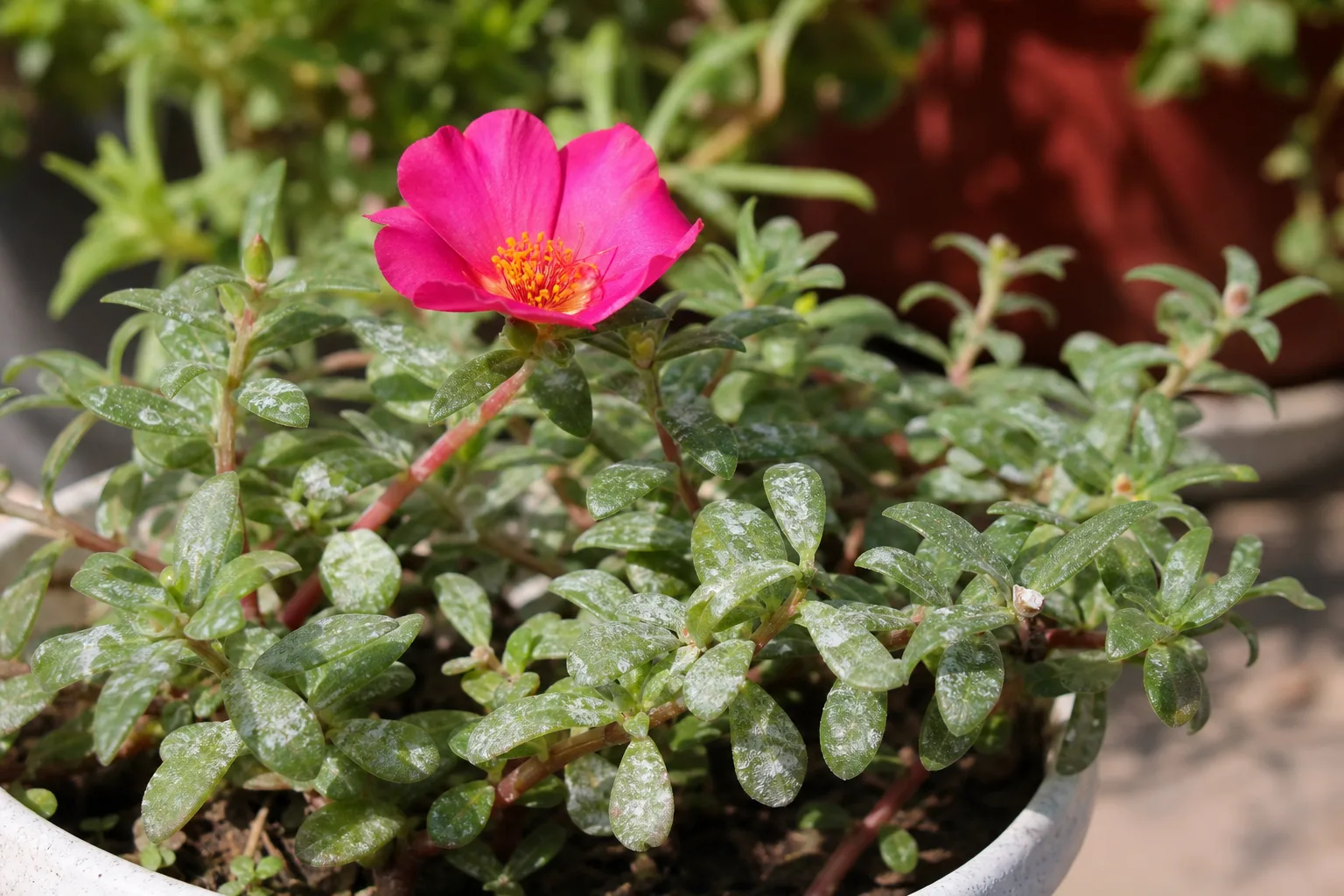
Powdery Mildew on Portulaca: Causes, Checks & Fixes
This guide covers powdery mildew on Portulaca. See also the general Powdery Mildew guide, watering, and light pages for this plant.
Powdery Mildew on Portulaca: Causes, Checks & Fixes
Quick answer
Powdery mildew on Portulaca (Portulaca grandiflora, Moss Rose) shows as white dusty patches on fleshy leaves, stems, or flower petals-often after humid nights or crowded balcony pots. First step: isolate the plant and snip off heavily coated tissue before improving airflow.
Moss Rose is built for full sun and fast-draining sandy mix, yet powdery mildew can still coat trailing stems when stagnant humid air sits inside a crowded hanging basket. The fungus does not need wet leaves to infect-moderate temperatures and shade favor it even on drought-tolerant succulents.
What powdery mildew looks like on Portulaca
On Moss Rose, the classic sign is a white or gray powdery film on leaf surfaces, stem joints, and sometimes open flowers. Patches often start small on one or two leaves in the center of a trailing cluster, then expand across neighboring foliage. Rub a coated area lightly-powder comes off on your finger and the underlying tissue may look dull green or slightly yellow.
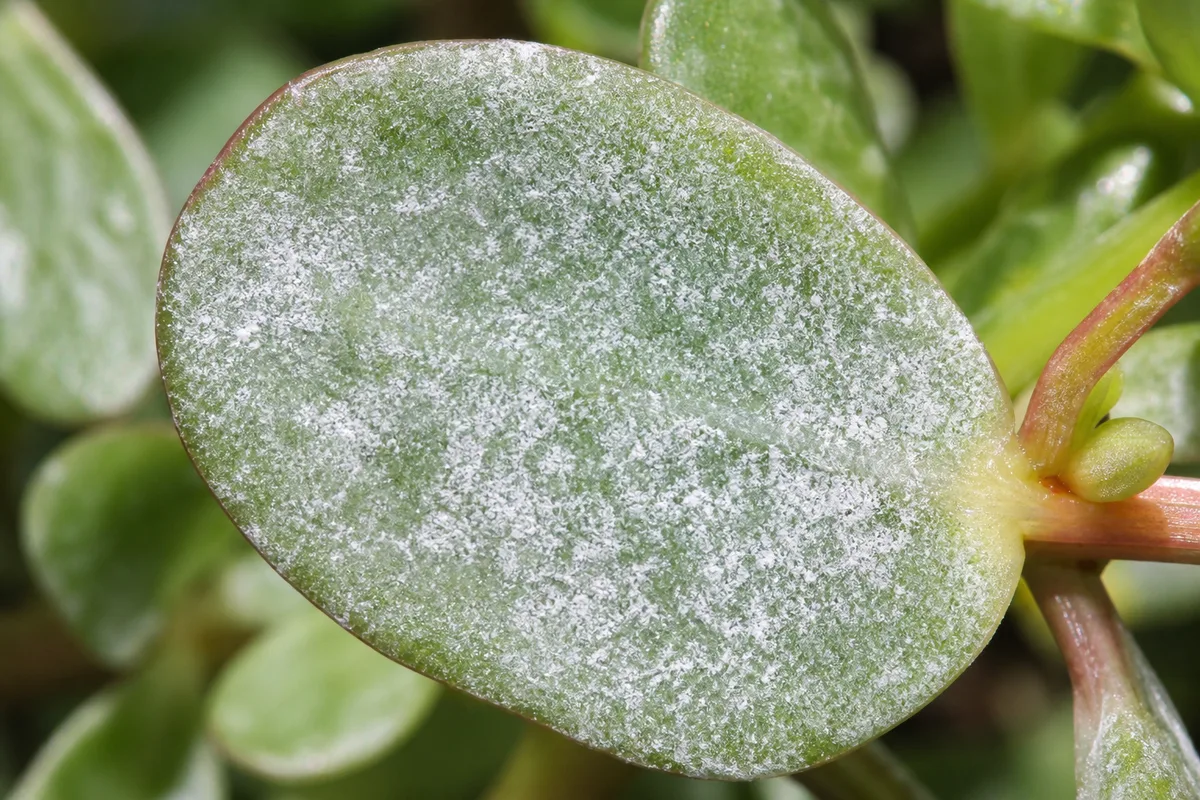
Powdery Mildew symptoms on Portulaca - compare with healthy tissue on the same plant.
Leaf and stem signs: Fleshy leaves may twist, cup, or look stunted compared with healthy runners. Severe infections cause yellowing and early leaf drop on outer trailers. Flower signs: White dust on pink, yellow, or orange petals can distort blooms and stop Moss Rose from opening fully in bright sun-a red flag on a plant that normally flowers only in direct light.
Compare new tips with old runners. If only lower, shaded leaves inside a dense mat show powder while outer sun-facing growth stays clean, airflow and microclimate are likely drivers.
Why Portulaca gets powdery mildew
Portulaca’s drought culture does not make it immune. Powdery mildew fungi germinate and infect without free water on the leaf surface and thrive when relative humidity stays high (often above 90% at night) with moderate daytime temperatures (about 60–80°F) and reduced airflow inside the plant canopy.
Common Moss Rose setups that create those conditions:
- Crowded terrace trays where trailing stems from several pots overlap and trap humid air.
- Monsoon or cloudy humid spells when soil stays damp longer than usual and leaves do not dry between evenings.
- Overhead watering or evening misting that raises humidity around packed leaf clusters-even though the fungus itself does not require standing water to start.
- Shaded corners where Moss Rose gets less than its preferred six or more hours of direct sun, because shade encourages powdery mildew on many ornamentals.
- Excess nitrogen from frequent feeding, which pushes soft, shaded new growth that stays coated longer.
MOBG notes no serious disease problems on Portulaca in ideal open-sun beds-but balcony and container culture changes the microclimate enough that mildew appears when humidity and spacing slip.
How to confirm the cause
Work through these checks before spraying everything on the terrace:
- Surface test - White dust rubs off cleanly; no sticky honeydew, webbing, or visible insects (rules out aphids, mealybugs, spider mites).
- Hand lens or bright light - Fine white spore chains on the leaf surface support mildew; mealybugs show distinct cottony bodies with legs.
- Pattern - Coating on shaded inner leaves and stem crotches inside a dense mat points to mildew; uniform crispy scorch on sun-facing outer leaves without powder suggests heat or sun damage.
- Humidity context - Recent humid nights, fog, or trays with standing saucer water match mildew timing; bone-dry soil and firm stems without powder point elsewhere.
- Spread - Multiple pots on one bench with matching white patches after shared pruning or splash increases suspicion.
- Downy mildew cross-check - True downy mildew prefers cooler wet conditions and often shows on lower leaf surfaces with different spore structures; Moss Rose in hot dry sun rarely fits that profile.
If powder rubs off and spores are visible, treat as powdery mildew even before lab confirmation.
First fix for Portulaca
Isolate the affected pot away from other Moss Rose, shared saucers, and runoff paths. Snip off leaves, stems, or flower heads with heavy white coating using clean scissors. Bag and discard trimmings in trash-not home compost on a balcony where spores can blow back.
Make this one decision before fungicides or Portulaca repotting guide: remove coated tissue and separate the sick plant. Secondary steps-spacing pots, adjusting watering, or applying a labeled spray-come after isolation and cleanup.
Step-by-step recovery
- Quarantine - Move the infected pot several feet from healthy trailing baskets.
- Prune coated tissue - Cut back runners with dense powder; thin inner stems that block airflow at the crown.
- Improve airflow - Separate terrace pots; avoid letting Moss Rose trailers from adjacent containers overlap.
- Water at soil level - Irrigate in mid-morning so any splash dries quickly; mid-morning irrigation also limits other foliar fungi.
- Hold fertilizer - Do not feed until new tips stay clean for two weeks; lush nitrogen-driven growth is easier for mildew to colonize.
- Apply treatment if spread continues - After cultural cleanup, use horticultural oil or neem oil labeled for ornamentals, or sulfur before infection spreads widely. Avoid oil sprays above 90°F on heat-stressed Moss Rose; test a small section first.
- Monitor neighbors - Inspect adjacent pots daily for two weeks; sanitize shears between plants.
Recovery timeline
Unlike drought stress, which Moss Rose can bounce back from within hours after watering, powdery mildew recovery is measured in weeks of clean new growth. Old leaves that were heavily coated usually stay dull or drop; petals on infected flowers do not reopen normally.
Expect firm, powder-free new tips within two to three weeks if airflow improves and repeat treatments cover new foliage as it expands. Severe mats may need cutting back to short clean stems and regrowing from the crown. If white coating returns on every new flush after two treatment cycles, discard the plant and restart from clean stock rather than risking the collection.
Lookalike symptoms on Moss Rose
| Pattern | Likely cause | Key difference |
|---|---|---|
| White powder rubs off; no insects | Powdery mildew | Spore chains on surface; humid, crowded context |
| White cottony clumps with insects | Mealybugs | Honeydew, waxy bodies; alcohol wipe exposes pests |
| Fine stippling, webbing at nodes | Spider mites | Moving dots; hot dry stress; no powdery film |
| Crispy brown on sun-facing leaves only | Sun scorch / heat | No rub-off powder; outer leaves first |
| Circular brown spots with yellow halos | Leaf spot fungi | Discrete lesions, not uniform dust |
What not to do
Do not mist leaves hoping humidity will help a stressed Moss Rose-high canopy humidity feeds mildew. Do not overhead water in late evening when trays stay humid overnight. Do not apply horticultural oil in blazing midday heat or within two weeks of sulfur on the same plant-oil above 90°F can injure tissue. Do not compost infected trimmings where spores can spread. Do not repot on day one unless soil is sour or roots are mushy; surface mildew often clears with pruning and airflow alone. Wear gloves when handling cut stems-Portulaca is toxic to cats and dogs.
How to prevent powdery mildew on Portulaca
Grow Moss Rose where full direct sun and gritty, fast-draining mix are realistic all day-not only where the basket looks decorative. Space pots so trailers do not form a continuous humid mat. Water when soil is fully dry; reduce frequency during cloudy humid weeks. Quarantine new baskets two weeks before mixing them with older terrace stock. Sanitize pruners between pots during deadheading.
Clemson HGIC recommends good air circulation, avoiding overhead irrigation, and removing infected material as core prevention-steps that fit Moss Rose containers even though the plant tolerates heat better than most ornamentals.
Portulaca care cross-check
Healthy Moss Rose culture-dry-down watering, poor-soil tolerance, and maximum sun-overlaps with mildew prevention. Chronic shade, soggy peat, and crowded saucers weaken the plant and create the humid canopy mildew favors. Match drought-tolerant basics first, then treat mildew as the disease-specific layer when white powder appears despite otherwise correct culture.
When to worry
Escalate if white coating spreads to multiple runners within a week, flowers fail to open across the whole pot, or more than one Moss Rose on the same tray shows matching patches after shared tools or splash. Discard severely infected seasonal plants rather than nursing them through monsoon humidity-replacement from clean stock is often faster than repeated fungicide cycles on a mat of coated trailers.
Conclusion
Powdery mildew on Portulaca is a fungal surface disease, not a sign that Moss Rose needs more water. The tell is white powder that rubs off on fleshy leaves, stems, or petals-often after humid nights and crowded balcony airflow. Isolate first, remove coated tissue, improve spacing and morning soil-level watering, then use labeled oil or sulfur only if clean new growth still gets reinfected.
When to use this page vs other Portulaca guides
- Portulaca watering guide - Use for routine moisture checks before assuming powdery mildew is the main issue.
- Portulaca problems hub - Browse all 50 common issues on this species.