Bacterial Wilt on Portulaca: Causes, Checks & Fixes
Quick answer
Bacterial wilt on Portulaca often starts as one or two leaves wilting in afternoon heat while soil is still moist, then evening recovery before the whole plant collapses. First step: isolate the pot immediately and run a stem-streaming test before touching nearby plants.
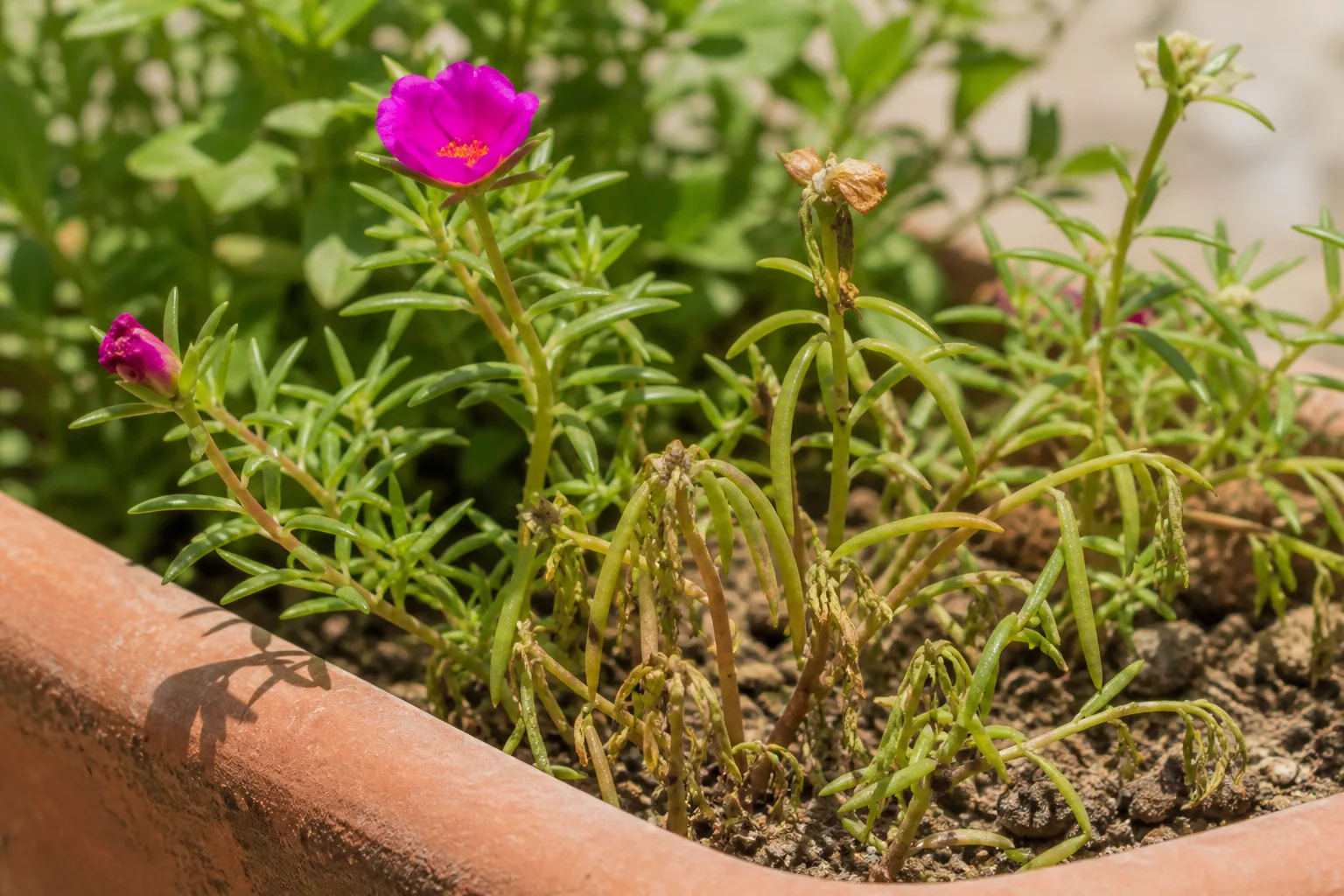
Bacterial Wilt on Portulaca: Causes, Checks & Fixes
This guide covers bacterial wilt on Portulaca. See also the general Bacterial Wilt guide, watering, and light pages for this plant.
Bacterial Wilt on Portulaca: Causes, Checks & Fixes
Quick answer
Bacterial wilt on Portulaca (Portulaca grandiflora, Moss Rose) often starts as one or two leaves wilting in afternoon heat while soil is still moist, then evening recovery before the whole plant collapses. First step: isolate the pot immediately and run a stem-streaming test before touching nearby plants.
This is not ordinary drought wilt on a drought-tolerant succulent annual. Bacterial wilt clogs the water-conducting tissue inside stems, so Moss Rose can look thirsty even when the mix is damp-a pattern that root rot on Portulaca and underwatering on Portulaca do not share.
What bacterial wilt looks like on Portulaca
Early on, one or two leaves or a short stem section may wilt during the hottest part of the day while the rest of the plant still looks normal. By evening, those leaves often perk back up when temperatures drop and water demand falls-a pattern typical of bacterial wilt when vascular tissue is beginning to fail. That afternoon–evening cycle is a hallmark of vascular wilt, not simple underwatering.
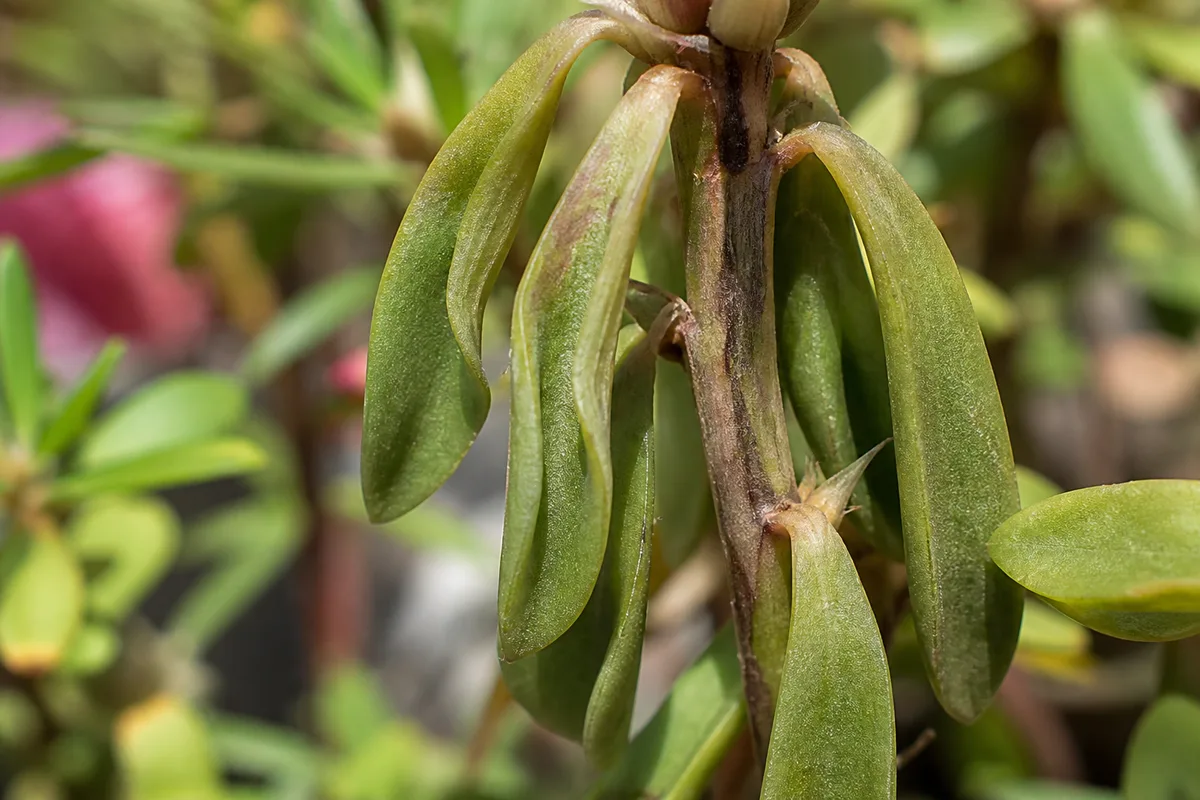
Bacterial Wilt symptoms on Portulaca - compare with healthy tissue on the same plant.
As the infection spreads, wilting becomes permanent. Leaves may die and dry in place without turning yellow first-unlike nutrient stress or many fungal issues. Stems can stay upright while foliage collapses. Brown streaking may appear inside cut stems when you slice through the base. Advanced plants stop opening flowers even in Portulaca light guide.
On a terrace full of Moss Rose in matching pots, bacterial wilt often appears on one plant first, then neighbors if tools, runoff, or splashed soil carry the pathogen.
Why Portulaca gets bacterial wilt
Southern bacterial wilt is caused by soilborne bacteria in the Ralstonia solanacearum species complex. The pathogen enters through roots or wounds, multiplies in xylem vessels, and blocks water flow-so leaves wilt despite moist soil.
Ralstonia has a very wide host range among herbaceous ornamentals and vegetables. Related purslane (Portulaca oleracea) is a documented weed host, and Moss Rose shows the same vascular wilt pattern when infected. Overhead watering, crowded pots, reused contaminated mix, and unsanitized pruners move bacteria between containers faster than Portulaca’s usual drought stress ever would.
Portulaca’s shallow, fast-draining culture does not prevent infection. Warm summer root zones and frequent handling during deadheading create entry points. Stress from brief overwatering on Portulaca or shade does not cause bacterial wilt by itself, but weakened tissue is easier for the pathogen to colonize once present in soil or tools.
How to confirm the cause
Work through these checks before Portulaca repotting guide or watering again:
- Wilting rhythm - Afternoon collapse with temporary evening recovery on moist soil points to vascular blockage, not drought.
- Soil moisture - Heavy or damp pot weight rules out thirst. Sour smell and mushy stem bases suggest root rot instead.
- Stem cross-section - Slice a wilted stem near the base. Light tan to brown discoloration in the vascular ring supports bacterial wilt.
- Streaming test - Place a freshly cut stem base in a clear glass of water. Milky-white ooze streaming from the cut end within minutes is a strong field sign of Ralstonia.
- Spread pattern - Multiple pots wilting on the same bench after shared pruning or runoff increases suspicion.
- Lookalikes - Drought wilt on bone-dry mix; root rot with soft stems and sour substrate; heat shock after cold nights without internal stem streaks.
If streaming is positive, treat the plant as infected even before lab confirmation.
First fix for Portulaca
Isolate the affected pot immediately. Move it away from other Moss Rose, shared saucers, and runoff paths. Do not prune, repot, or water until you have clean gloves and sanitized shears ready.
Bag and discard infected plants if the streaming test is positive or vascular streaking is obvious. There is no reliable cure once xylem is colonized. Make this one decision first-secondary cleanup comes after the sick plant is separated.
Step-by-step recovery and cleanup
- Quarantine - Isolate suspect and confirmed pots at least several feet from healthy stock.
- Test before cutting - Run the water streaming check on one wilted stem before trimming across the collection.
- Remove infected plants - Pull roots and all, bag foliage, and discard in trash-not home compost on a terrace.
- Sanitize tools - Wipe pruners with alcohol between every pot; wash hands and gloves before touching clean plants.
- Replace contaminated mix - Do not reuse substrate from a positive pot. Refresh gritty sandy mix for replacements.
- Hold fertilizer - Do not feed stressed survivors until new growth is firm and streaming-negative on test cuttings.
- Monitor neighbors - Watch adjacent Moss Rose for the afternoon wilt pattern daily for two weeks.
Recovery timeline
Unlike drought wilt, which can recover within hours after a deep drink, bacterial wilt does not reverse once xylem plugging is advanced. Plants that pass a negative streaming test and show only mild midday limpness may survive if isolated early, but full recovery is rare.
Replacement Moss Rose from clean stock often outperforms prolonged rescue attempts. Judge success by new firm tips on cuttings taken above healthy tissue, not by hoping collapsed leaves rehydrate.
Lookalike symptoms on Moss Rose
| Pattern | Likely cause | Key difference |
|---|---|---|
| Wilts in afternoon, recovers at night, moist soil | Bacterial wilt | Internal stem streaks; positive streaming test |
| Wilts on wet soil, soft stem base, sour smell | Root rot / crown rot | Mushy roots; no milky streaming from healthy-looking stem |
| Wilts on very dry soil, firm stems | Drought | Pot is light; perks up after one deep watering in sun |
| Uniform wilt after cold night | Temperature shock | Firm stems, no vascular browning, forecast-linked timing |
What not to do
Do not pour extra water because leaves look limp when soil is already moist-that worsens rot lookalikes and splashes bacteria. Do not compost infected Moss Rose on a balcony where runoff reaches other pots. Do not reuse pruners, stakes, or drip trays without cleaning. Do not treat bacterial wilt with fungicide alone; fungi are not the primary agent here. Wear gloves when handling cut stems-Portulaca is toxic to cats and dogs.
How to prevent bacterial wilt on Portulaca
Start each hot season with pathogen-free plants and fresh gritty mix. Space terrace pots so leaves and saucers do not touch. Water at soil level to limit splash. Quarantine new Moss Rose batches for two weeks before mixing them with older containers. Sanitize tools between plants during deadheading.
Because Ralstonia persists in soil and debris, avoid saving mix from wilted pots. Rotate where you place replacement containers if a bench had a confirmed case last season.
Portulaca care cross-check
Moss Rose wants full direct sun and well-drained sandy mix, and dry-down watering. Chronic shade and soggy peat invite rot that mimics wilt-but true bacterial wilt can still appear on well-drained pots when contaminated tools or stock introduce the pathogen. Match culture to the plant, then manage sanitation as the disease-specific layer.
When to worry
Escalate immediately if afternoon wilting spreads to multiple stems on moist soil, streaming test is positive, or more than one pot on the same tray shows the same rhythm. Contact your local extension plant diagnostic clinic if you need official confirmation-some Ralstonia strains are regulated and require reporting in commercial settings.
Conclusion
Bacterial wilt on Portulaca is a vascular disease, not a watering mistake. The tell is afternoon collapse on damp soil with temporary evening recovery, confirmed by stem streaking or a positive streaming test. Isolate first, discard infected plants, sanitize tools and mix, and restart from clean Moss Rose rather than chasing a cure that extension sources do not support.
When to use this page vs other Portulaca guides
- Portulaca watering guide - Use for routine moisture checks before assuming bacterial wilt is the main issue.
- Portulaca problems hub - Browse all 50 common issues on this species.