Leaf Spot Disease on Portulaca: Causes, Checks & Fixes
Quick answer
Leaf spot on Portulaca shows as circular brown, black, or yellow-edged spots on fleshy leaves, usually after foliage stays wet overnight. First step: remove the worst spotted leaves with clean shears and stop overhead watering.
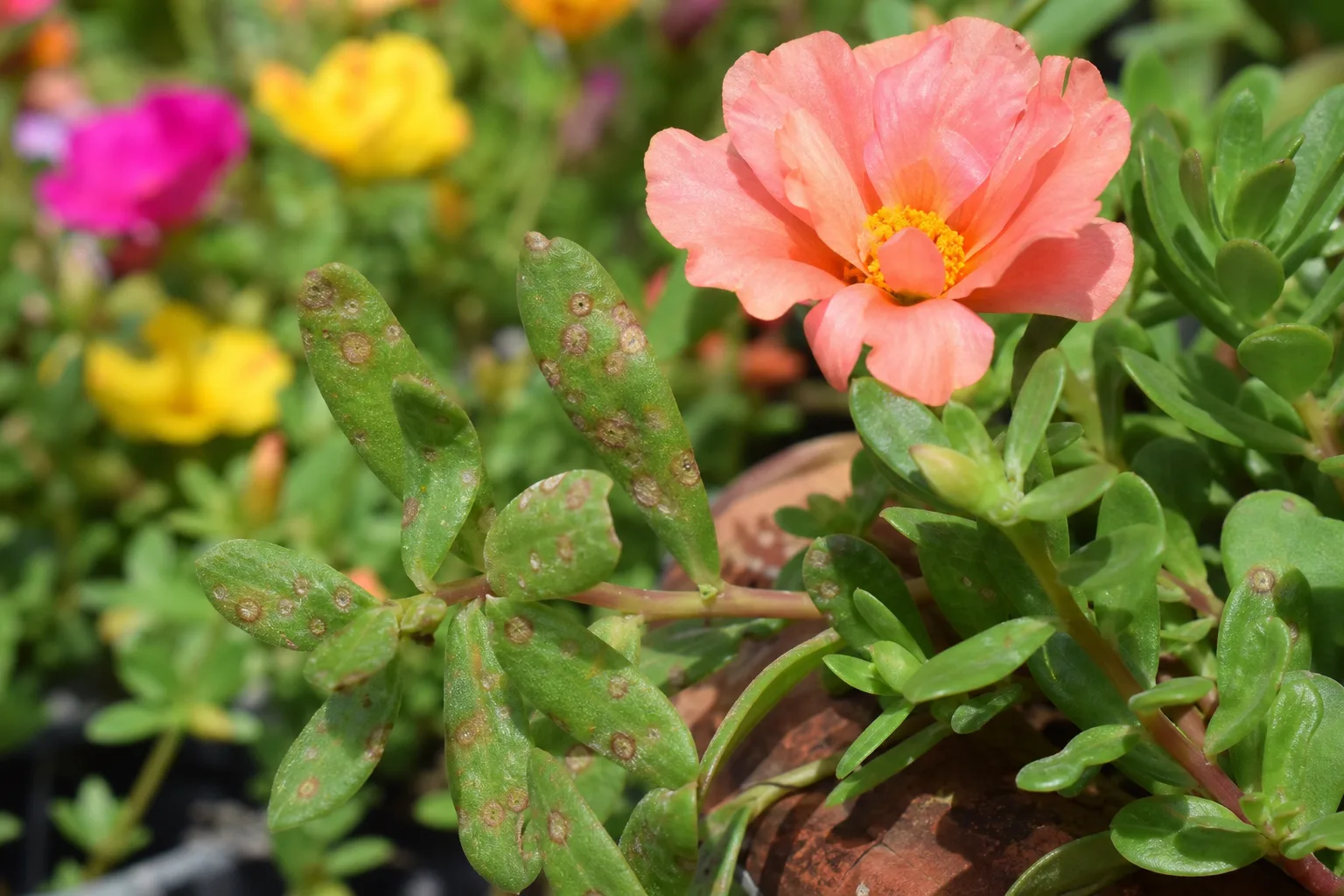
Leaf Spot Disease on Portulaca: Causes, Checks & Fixes
This guide covers leaf spot disease on Portulaca. See also the general Leaf Spot Disease guide, watering, and light pages for this plant.
Leaf Spot Disease on Portulaca: Causes, Checks & Fixes
Quick answer
Leaf spot disease on Portulaca (Portulaca grandiflora, Moss Rose) shows as circular brown, black, or yellow-edged spots on fleshy leaves, usually after foliage stays wet overnight. First step: remove the worst spotted leaves with clean shears and stop overhead watering.
Moss Rose is built for heat and dryness-high drought and heat tolerance with well-drained sandy soils in full sun-so leaf spot is almost always a moisture-on-foliage problem, not a sign the plant needs more water.
What leaf spot looks like on Portulaca
On Moss Rose, leaf spot appears as small to medium circular or irregular lesions on the cylindrical, succulent leaves. Spots are often brown or black with a yellowish margin, and in humid weather they may show a concentric ring or target pattern-a pattern typical of fungal leaf spots. Tiny dark dots (fungal fruiting bodies) sometimes appear inside dead tissue.
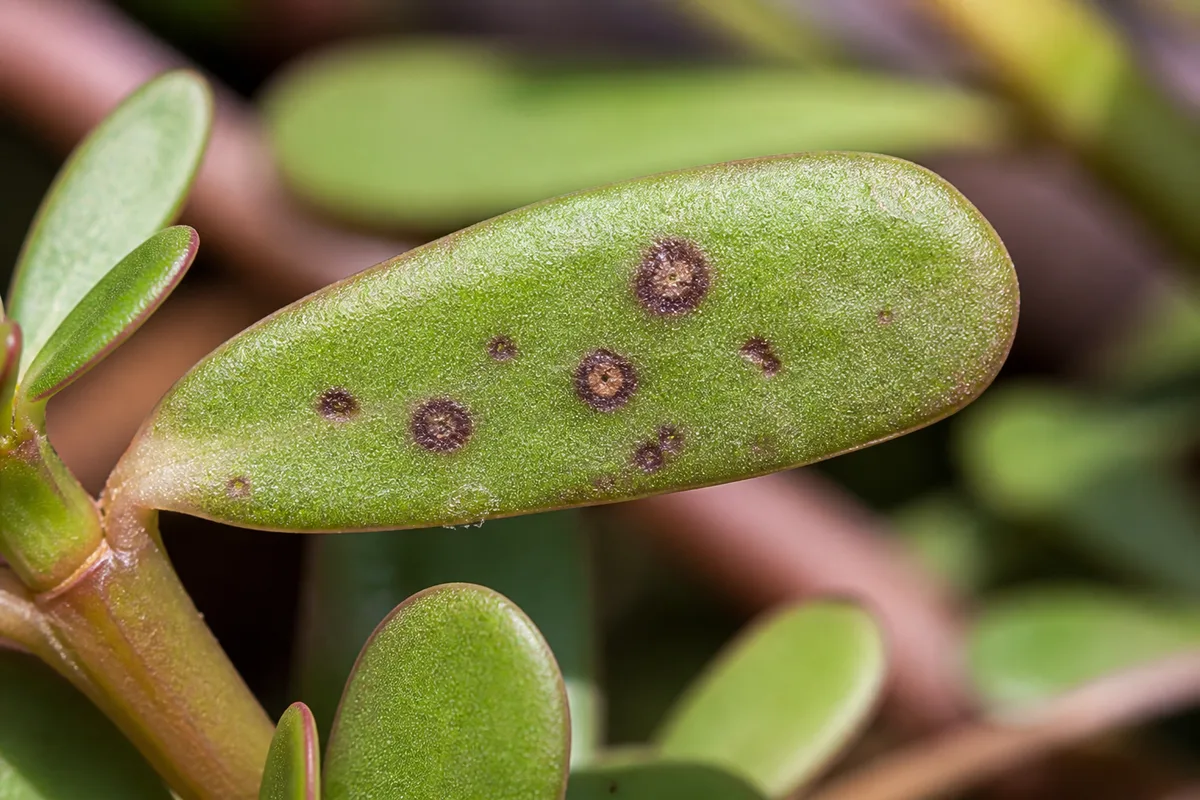
Leaf Spot Disease symptoms on Portulaca - compare with healthy tissue on the same plant.
Early infections may hit only a few lower leaves on trailing stems. As lesions merge, leaves can wither and drop while stems remain firm-a different picture from crown rot, where the base turns soft on wet soil. Flowers may stay closed on cloudy days normally, but heavy spotting plus stalled new growth signals active disease.
Compare upper sunny tips with shaded inner foliage: spots clustered where dew or splash collects, or after monsoon-style humidity on a crowded balcony, fit leaf spot better than uniform sun scorch on exposed leaves only.
Why Portulaca gets leaf spot disease
The most common trigger is water sitting on leaves too long. Overhead watering, late-day misting, or evening rain on dense trailing mats keeps fleshy needle-like leaves wet for hours-the environment fungal leaf-spot pathogens need. Portulaca prefers dry air and fast drainage; chronic damp foliage in partial shade or crowded pots is the opposite of its natural niche.
Poor airflow between terrace containers traps humidity around leaves and speeds spore spread. Splashing water from saucers, shared trays, or dirty pruners moves pathogens plant to plant. Weakened plants recovering from brief overwatering on Portulaca, shade, or transplant shock are more susceptible, though leaf spot can appear on otherwise healthy Moss Rose when weather turns humid.
Fungal leaf spots survive on dead plant debris in or on soil. Fallen spotted leaves left on the pot surface reinfect new growth after the next rain or watering.
Less often, bacterial leaf spots appear as uniform water-soaked lesions that may ooze in wet conditions-management overlaps (remove tissue, dry foliage, copper-based protectants), but bacteria do not show the classic concentric fungal rings.
How to confirm the cause
Work through these checks before spraying fungicide:
- Spot pattern - Round brown lesions with yellow halos on firm stems suggest fungal leaf spot; angular water-soaked patches may suggest bacterial spot.
- Leaf wetness history - Recent overhead watering, evening rain, or misting on Moss Rose strongly supports leaf spot over drought or nutrient issues.
- Stem and soil check - Firm stems on dry or moderately dry mix rules out active crown rot; soft base on sour wet soil is rot, not surface spotting alone.
- Spread speed - Spots enlarging over several days on multiple leaves indicate active infection; static brown tips on old leaves only may be aging or salt burn.
- Neighbor plants - Matching spots on adjacent pots after shared watering points to splash or tool spread-isolate suspects.
- Underside inspection - No webbing, honeydew, or insects rules out pest damage; uniform spots without bugs fit disease.
If more than a third of foliage is spotted and dropping, treat as moderate to severe and isolate the pot.
First fix for Portulaca
Remove heavily spotted or dead leaves with clean, sharp shears and stop wetting foliage. Bag trimmed tissue and discard in trash-not home compost on a balcony. This single step cuts the spore load and is the safest first action before any spray.
After removal: water at the soil line only, early in the day so foliage dries before cooler evenings. Space pots for airflow. Empty saucers so splash does not re-wet lower leaves.
Hold fungicide unless spots keep spreading after a week of dry-leaf culture. Fungicides protect new growth but do not reverse existing spots-cultural fixes come first on drought-adapted Moss Rose.
Step-by-step recovery
- Isolate spotted Moss Rose away from healthy containers.
- Pinch or cut all leaves with merged lesions or dark fruiting bodies.
- Clear fallen debris from the soil surface.
- Relocate to the sunniest, best-ventilated spot-full direct sun supports fast drying.
- Water only when soil is completely dry; never mist leaves.
- Sanitize shears with alcohol before touching other plants.
- If spread continues after seven to ten days, apply a labeled copper soap or biofungicide per Clemson HGIC guidance for fungal leaf spots-spray outdoors in shade if using RTU products on houseplants.
- Hold fertilizer until new tips look clean and firm.
Recovery timeline
Mild leaf spot often stabilizes within one to two weeks once leaves stay dry and infected tissue is removed. New clean leaves may appear within two to four weeks on fast-growing summer Moss Rose. Spotted tissue never re-greens-judge success by stopped spread and healthy new tips.
Severe defoliation on a small pot may not recover aesthetically before season end; replacing with fresh stock in dry, sunny grit is sometimes faster than repeated fungicide rounds.
Lookalike symptoms
| Pattern | Likely cause | Key difference |
|---|---|---|
| Circular brown spots with yellow halos, firm stems | Fungal leaf spot | Follows wet foliage; spreads slowly leaf to leaf |
| Crispy brown on old lower leaves only, dry soil | Aging or drought | No halos; no enlarging spots on new growth |
| Soft dark stems at base, wet sour soil | Crown rot / root rot on Portulaca | Whole plant collapses; not discrete surface spots |
| White powder on leaves | Powdery mildew | Powdery coating, not brown necrotic circles |
| Holes, sticky residue, visible insects | Pest damage | Spots lack uniform fungal halos; bugs present |
What not to do
Do not mist Moss Rose to “help humidity”-wet leaves worsen leaf spot. Do not overhead water to cool plants in midday heat. Do not compost infected leaves where runoff reaches other pots. Do not apply fungicide as the first step before removing spotted tissue and fixing watering. Do not fertilize stressed plants to force recovery. Wear gloves when pruning-Portulaca is toxic to cats and dogs.
How to prevent leaf spot on Portulaca
Water at soil level when mix is completely dry. Plant in sandy or rocky, fast-draining mix in full sun. Space containers so trailing stems do not mat wet against neighbors. Deadhead and prune with sanitized tools. Remove fallen leaves promptly. Avoid growing Moss Rose in chronically shaded, humid corners where foliage stays damp overnight.
Quarantine new Moss Rose batches for two weeks before mixing with established terrace pots.
Portulaca care cross-check
Moss Rose is a low-growing succulent annual that closes flowers on cloudy days-normal behavior, not disease. Leaf spot becomes likely when culture drifts toward shade, overhead watering, or crowded monsoon-season groupings. Align care with dry sun first; disease management is the second layer.
When to worry
Escalate if spots enlarge daily despite dry-leaf culture, if more than a third of leaves drop within a week, or if multiple pots on the same tray develop matching lesions after shared tools or runoff. Replace severely defoliated plants rather than chasing curative sprays that extension sources do not support for already necrotic tissue.
Conclusion
Leaf spot on Portulaca is a foliar fungal problem driven by wet leaves in humid, crowded conditions-not underwatering on Portulaca. Confirm round brown lesions with yellow halos on firm stems, remove infected foliage first, keep Moss Rose dry and sunny, and reserve fungicide for persistent spread. Recovery shows in clean new growth at the stem tips, not in healed old spots.
When to use this page vs other Portulaca guides
- Portulaca watering guide - Use for routine moisture checks before assuming leaf spot disease is the main issue.
- Portulaca problems hub - Browse all 50 common issues on this species.